
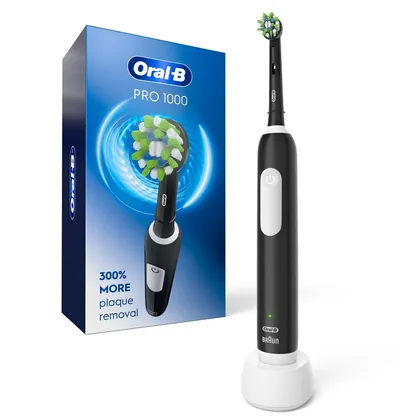
Oral-B Pro 1000 CrossAction Black
2 магазина

Основной язык SavingsHook — английский. Другие языки добавляются постепенно; пока страница не переведена, ссылка ведёт на английскую версию.
Руководство по покупке
How to Choose an Electric Toothbrush in 2026: что важно, ключевые компромиссы и товары, которые стоит сравнить перед покупкой.
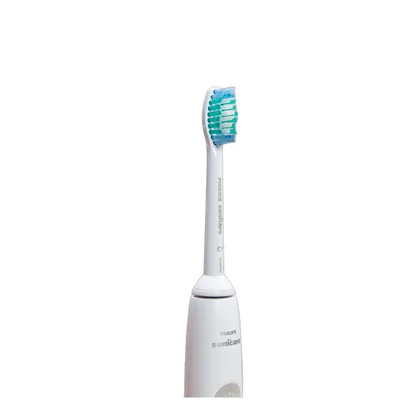
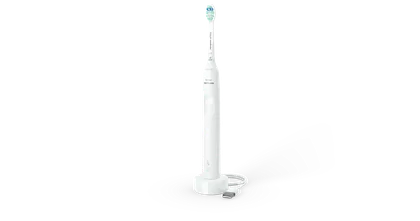
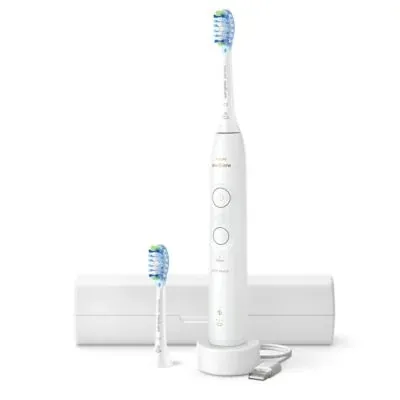
Откройте товар, чтобы перейти к разбору. Актуальную цену и рейтинг продавца проверяйте непосредственно у продавца.
Choose a rechargeable brush for its two-minute timer, gentle pressure feedback and easy-to-find soft replacement heads—not its app or mode count. No motor compensates for missing the gumline or skipping twice-daily brushing with fluoride toothpaste [1][34].
ADA suggests wider handles for arthritis [17]. Gingivitis-index reductions were 6% and 11%, respectively [3]. These percentages describe changes in plaque and gingivitis index scores, not cavities prevented; long-term clinical significance remains uncertain [3].
Skip the upgrade if a soft manual brush already works for you and you cannot justify proprietary heads. Either type should be used with fluoride toothpaste for two minutes twice daily [1][2]. Neither replaces cleaning between teeth once daily [4].
Oscillating-rotating brushes use a small round head. The Oral-B Pro 1000 CrossAction Black moves tooth by tooth; avoid forceful scrubbing. A smaller circular head may also help some people who gag with large brush heads, according to Cleveland Clinic [26].
Sonic brushes have elongated heads that vibrate rapidly.
A 2026 analysis of 19 trials ranked oscillating-rotating above sonic brushes, but only two trials compared them directly. Seven assessed one session, seven had bias concerns and most were manufacturer-funded. The ranking does not mean every round-head model beats every sonic model [18].
Rule of thumb: Choose the head shape you can guide gently for two minutes. Comfortable technique matters more than which motor sounds powerful.
A two-minute timer with four 30-second intervals spreads brushing across the mouth. Philips confirms these features on its 4100 [5]; our Pro 1000 dossier documents similar reminders.
Cover all tooth surfaces, especially the gumline and inner faces of back teeth. ADA's general brushing guidance angles soft bristles about 45 degrees toward the gumline [1]; follow the powered handle's instructions for its motion. Pause a round head briefly on each tooth; guide a sonic head steadily. Do not scrub or press hard to make the motor feel stronger.
Timing is not coverage [2]. The two-minute timer is a minimum routine, not proof that you reached the gumline, back molars and inner surfaces.
Pressure feedback may change vibration, LEDs, beeps or pulses; check whether your model has the sensor enabled [19]. The Oral-B Pro 1000 reduces pulsation if pressed too hard. The Oral-B iO Series 5 indicates excessive, insufficient or correct force; the Oral-B iO Series 6 adds an interactive display, and the Oral-B iO Series 9 has a pressure ring and charging travel case.
The Sonicare 4100 warns and reduces vibration [5]; the Sonicare 9900 Prestige automatically adjusts intensity according to its dossier. Persistent bleeding or pain warrants dental evaluation. Evidence certainty was very low, with inconsistent abrasion findings [24]. A pressure sensor is feedback, not a recession-prevention guarantee. A separate 2026 trial subgroup followed 90 adults with existing gum recession for 36 months: the tested oscillating-rotating brush reduced air-jet sensitivity more than manual brushing, but the effect was small and exploratory, not a reason to expect relief from every electric brush [35].
ADA recommends new heads every three to four months, earlier if bristles are frayed: roughly three or four heads per user annually [1].
Oral-B iO and Pro heads are incompatible [6]; the Pro 1000 CrossAction and iO Series 6 cannot share replacements. Most Philips Sonicare handles use click-on heads, but Philips One has proprietary heads and older Essence models may use screw-on heads [11]. AquaSonic uses its own head family. Our Philips Sonicare 5950 includes two heads; the AquaSonic Black Series dossier describes eight, potentially around two years of changes. Verify compatible head codes and ongoing availability.
Rule of thumb: Identify compatible heads before buying the handle. Budget for routine replacements, not just the initial bundle.
Endurance varies with mode, age and use. Our Sonicare 4100 dossier specifies 14 days at two two-minute sessions daily, with USB charging and no wall adapter in its documented kit. Pro 1000 testing suggests roughly 10–12 days; actual results vary.
Consider how the brush charges and whether its stand fits the bathroom. The Oral-B iO Series 5 includes a magnetic charger and travel case; the iO Series 9 includes a charging travel case. For international trips, confirm charger input voltage. For flights, FAA recommends keeping lithium-powered devices in carry-on baggage. A rechargeable brush in checked luggage must be fully switched off and protected from damage or accidental activation; spare lithium batteries and power banks go in carry-on only [25].
The ADA Seal of Acceptance evaluates evidence for a specific product and claim. The ADA lists AquaSonic Toothbrush for plaque and gingivitis control [7]. Confirm the accepted model matches its package [8].
Our AquaSonic Black Series Ultra Whitening dossier describes four modes, a two-minute timer and no pressure sensor. Its name does not prove bleaching effectiveness: acceptance for plaque and gingivitis control is not a whitening claim. Verify the exact accepted variant.
| Type | Best when | Main drawback |
|---|---|---|
| Entry-level round-head electric | Straightforward tooth-by-tooth brushing | Round head and mechanical feel need adjustment |
| Basic sonic | Familiar elongated brushing head | Some models lack pressure sensors |
| Pressure-sensing mid-range | Learning to avoid excessive force | Head replacements still required |
| App-enabled premium | People who regularly use personalized coaching | Software and additional complexity |
| Travel-oriented electric | Frequent travel and overnight stays | Charging accessories can take more space |
| Soft manual brush | No charging or proprietary parts | Manual timing and technique required |
Beginners: Prioritize a soft head, timer and easy grip. The Oral-B Pro 1000 uses a round head; the Philips Sonicare 1100 is an entry-level sonic option. Neither needs an app.
Students and shared homes: Keep chargers dry and label individual heads. Air-dry them separately [1]. If housemates share a compatible handle, each must have a dedicated head; never share a head. Wipe the handle connection and keep it away from standing water. In a cramped bathroom, a stable charging spot and accessible replacements matter more than a large accessory kit.
Braces and heavy use: The American Association of Orthodontists recommends brushing around brackets after meals, using interproximal brushes and flossing daily [16]. Check bristles regularly; replace frayed heads early.
Families: Use child-size soft heads. ADA specifies a rice-grain smear of fluoride toothpaste under age 3 and a pea-sized amount at ages 3–6 [1]. Supervise brushing; CDC suggests checking with a dentist or physician about fluoride paste under age 2 [15]. Do not share heads.
Sensitive teeth or gums: The Oral-B iO Series 5 lists Super Sensitive mode; the iO Series 6 lists Sensitive. Neither can treat decay or cracks; persistent sensitivity merits dental care [22].
Strong gag reflex: Try a small round head, mild toothpaste and short breaks without skipping back teeth [26].
Short-term benefits versus sonic brushes were clearer than long-term differences [31]. Ask your implant clinician which soft head, interdental brush or irrigator suits the restoration [30][31].
Arthritis or limited grip: ADA suggests wider electric handles or adapted manual grips [17]. The Sonicare 9900 Prestige has automatic intensity adjustment, but a secure comfortable grip comes first.
Seven modes: More settings do not guarantee better cleaning.
“Ultrasonic” and high vibration counts: The AquaSonic Black Series is described by its maker as sonic, despite some product-listing “ultrasonic” labels. A strokes-per-minute figure does not establish better plaque removal or replace gentle, thorough technique.
“Ultra Whitening”: Surface-stain removal is not bleaching [7].
Bluetooth and colored displays: Apps may help interested users review habits. Oral-B says its iO brushes work without the app [9].
Rinse and air-dry heads routinely [1].
Oversized bundles: Count only compatible, soft, usable heads.
Heads: Replace every three to four months, sooner if frayed [1]. On compatible Sonicare handles, BrushSync tracks brushing time and pressure to indicate head wear; this requires a smart head [33].
Handle and shaft: Rinse residue and air-dry uncovered. Avoid microwaves and dishwashers [1]. Philips advises weekly rinsing beneath the head [12]; Oral-B advises separately cleaning iO heads and handles [13]. Dry before storing.
Charger: Unplug before wiping, keep out of standing water and replace damaged parts with compatible ones.
Battery and service life: Oral-B says an iO may last five years or longer, but its US warranty is two years; this is not a measured failure-rate estimate [14]. Do not pry open sealed handles: EPA advises recycling nonremovable batteries with the device at an appropriate collection point, not in trash [10].
Weak vibration: Philips advises checking the charge (up to 24 hours), EasyStart's 14-session ramp-up, head wear and mode before assuming a defect [21]. Seek warranty service rather than opening a sealed handle.
Annual consumables: Allow three to four heads per user or 12–16 for four people, plus charging [1]. Over three years, one person may use 9–12 heads; four users may use 36–48, even if every handle still works. Count compatible heads included in the box, check local replacement availability, and compare the long-term commitment before selecting a proprietary system. Do not share heads or mix iO and Pro replacements [6].
Mode count: Choose useful timers and heads instead.
Ignoring replacement compatibility. Oral-B iO and Pro use different systems; Philips One also requires its own heads [6][11].
Pressing hard or skipping floss. Reduce force when warned, and clean between teeth daily [4].
Brushing immediately after acidic drinks. Rinse with water and wait an hour instead [28].
Assuming fixed battery endurance. Mode, age and charging habits change runtime.
Replacing every head after a cold. ADA says healthy people generally need not replace brushes solely due to minor illness; never share heads [27].
[1] ADA: Brush technique, soft bristles and replacement intervals [2] ADA: Twice-daily fluoride toothbrushing recommendations [4] ADA: Cleaning between teeth and floss [5] Philips: Sonicare 4100 pressure sensor, timer and pacer [6] Oral-B: iO and Pro brush-head compatibility FAQ [7] ADA: AquaSonic Toothbrush Seal entry [8] ADA: What the Seal of Acceptance means for consumers [9] Oral-B: iO model comparison and optional app features [10] EPA: Used household batteries and recycling [11] Philips: Which brush head fits my Sonicare toothbrush? [12] Philips: How to clean a Sonicare toothbrush [13] Oral-B: Cleaning the iO electric toothbrush [14] Oral-B: Toothbrush service life and US warranty FAQ [15] CDC: Oral health tips for children and toothpaste supervision [16] American Association of Orthodontists: Oral hygiene during orthodontic treatment
[17] ADA: Aging and dental health—adapted toothbrush handles [18] Luo et al., June 2026: Electric toothbrush technology network meta-analysis [19] Philips: How Sonicare pressure-sensor feedback works [20] Philips: Adjusting Sonicare brushing intensity [22] ADA MouthHealthy: Causes of sensitive teeth and when to see a dentist [25] FAA: Portable electronic devices containing lithium batteries in baggage [26] Cleveland Clinic: How to avoid gagging while brushing [27] ADA MouthHealthy: Cold and flu season toothbrush care [28] ADA MouthHealthy: How dietary acids affect teeth [29] NHS: Spit, do not rinse immediately after brushing [30] Implant care in dental practice [33] Philips: How BrushSync tracks brush-head wear [34] NIDCR: Oral hygiene and fluoride toothpaste