Snapmaker U1 vs Prusa XL: Which Toolchanger 3D Printer
Snapmaker U1 (4 heads, 270 mm) vs Prusa XL (5 heads, 360 mm): build volume, tool change, repairability, maturity and catches compared.
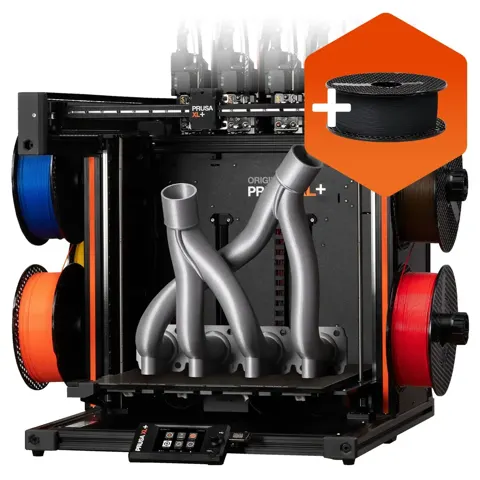
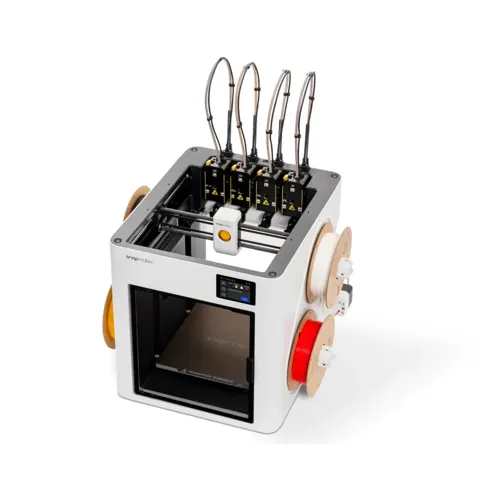
| Product | Original Prusa XL 3D Printer (5-toolhead) | Snapmaker U1 3D Printer (4-toolhead) |
|---|---|---|
| Brand | Prusa Research | Snapmaker |
| Price | from $3,561.50 | from $699.00 |
| Key spec | 360 x 360 x 360 mm build volume | 270 x 270 x 270 mm build volume |
| Stores | 6 stores | 7 stores |
| Read review | Read review |
Prices are snapshots. Check the current price with the store.
Short answer: both are CoreXY toolchangers that keep complete hotends parked, so multi-color prints skip most purge waste. The Snapmaker U1 brings four heads and a 270 mm cube to a price well under a thousand dollars, at the cost of first-generation teething problems. The Prusa XL costs several times more and offers a 360 mm cube, up to five heads, a 16-zone bed and an unusually good repair ecosystem. Most home users get more for the money from the U1. The XL is for big parts, mixed-nozzle work and owners who plan to repair the machine themselves.
Key differences
| Prusa XL (5-head) | Snapmaker U1 | |
|---|---|---|
| Toolheads | Up to 5 Nextruder heads | 4 SnapSwap heads |
| Build volume | 360 x 360 x 360 mm | 270 x 270 x 270 mm |
| Bed | 16-zone segmented heated bed | Textured PEI sheet, up to 100 °C |
| Tool change | Slower mover, fewer purges | About 5 s claimed (10-12 s measured on beta) |
| Hotends | Separately sold parts | Proprietary, replaced as a whole assembly |
| Firmware | Prusa, offline printing | Klipper with Moonraker and Fluidd |
| Enclosure | Bought separately | Top Cover optional |
Pick the Prusa XL if
- You print parts larger than a 270 mm cube.
- You want five materials or different nozzle sizes mounted at once.
- Repairability matters: public service docs, boards and toolheads sold separately, round-the-clock live chat.
Pick the Snapmaker U1 if
- You want true multi-color printing without premium toolchanger money.
- You want automatic calibration, toolhead offset calibration and runout detection out of the box.
- You have less space; it is compact for a four-head machine.
Catches
Prusa XL: it is enormous, and the cable loops need far more vertical clearance than the frame. More heads mean more docking and nozzle-seal failure points, and owners still report docking hiccups and clogs. Judge the legacy five-head unit against the newer XL+.
Snapmaker U1: filament load and unload jams are the top complaint, and clearing a deep jam can mean a long teardown. Some units show toolhead-swap anomalies that can ruin long prints. It is loud, and the hotend is not serviceable part by part.