Creality Space Pi V2 vs SUNLU FilaDryer S2: Budget Filament Dryers
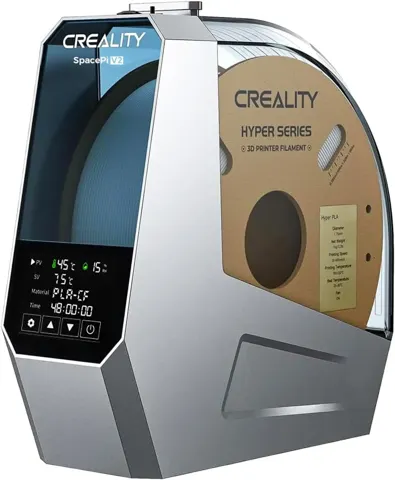
Space Pi V2 reaches 75 C with 360-degree airflow; SUNLU S2 tops out at 70 C, has full specs and owner history. Heat, sensor, specs and catches compared.
| Product | Creality Space Pi V2 Filament Dryer (2-Spool) | SUNLU FilaDryer S2 |
|---|---|---|
| Brand | Creality | SUNLU |
| Price | from $56.00 | from $39.99 |
| Key spec | 75°C max drying temperature | 360° surround heating |
| Stores | 4 stores | 8 stores |
| Read review | Read review |
Prices are snapshots. Check the current price with the store.
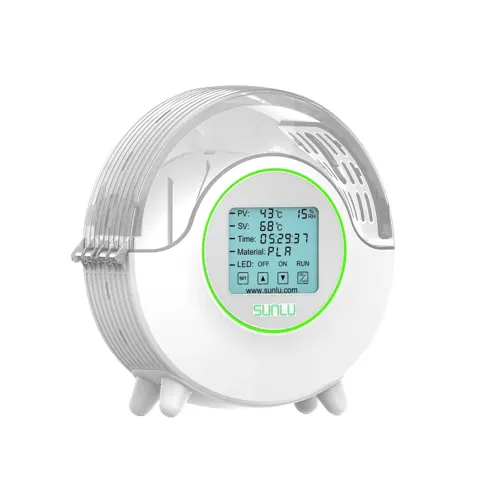
Short answer: the SUNLU FilaDryer S2 is the known quantity and the Creality Space Pi V2 is the newer, hotter unknown. The S2 has a full spec sheet, a manual and years of owner reports: 35-70 °C, 48 W, one spool up to 210 x 85 mm, and a feed hole to print straight from the box. The Space Pi V2 goes to 75 °C with 360° hot-air circulation, but Creality publishes only five lines about it: no power rating, chamber size, spool count or noise figure. If you dry PLA and PETG and want to know what you are buying, lean S2. If you want a few more degrees for PETG and ABS and can live with an unpublished spec sheet, lean Space Pi V2.
Key differences
| Creality Space Pi V2 | SUNLU FilaDryer S2 | |
|---|---|---|
| Max temperature | 75 °C (maker setpoint) | 70 °C (range 35-70 °C) |
| Airflow | 360° hot-air circulation | Upper and lower plates plus a bottom fan |
| Controls | Touch control, smart presets | 4.6-inch touchscreen, one-touch material presets |
| Power | Not published | 48 W max, 0.05 W standby |
| Capacity | Not published | One spool, up to 210 x 85 mm |
| Print while drying | Not published | Yes, feed hole |
| Owner history | None for the V2 yet | Years of reviews and owner posts |
Pick the Space Pi V2 if
- You want the higher 75 °C ceiling for PETG and ABS.
- You already run Creality gear and want a dryer from the same parts channel (Creality sells a replacement blower fan for the Space Pi line).
- You accept buying on the maker’s description alone.
Pick the SUNLU S2 if
- You want published numbers: power draw, spool size, filament diameters, timer.
- You print straight from the dryer and need the feed hole.
- You want a design whose problems are already known and have workarounds.
Catches
Space Pi V2: no independent test and no owner history for this exact model. On earlier Space Pi dryers the top outlet grommet does not hold a PTFE tube, and owners of the family report an E4/EA heating fault and blower fans going noisy.
SUNLU S2: the chamber is not airtight and has no vents, so moisture can stay inside and the humidity reading can climb; owners prop the lid open now and then. One reviewer says not to trust the humidity sensor, and early units shipped without an internal fan.