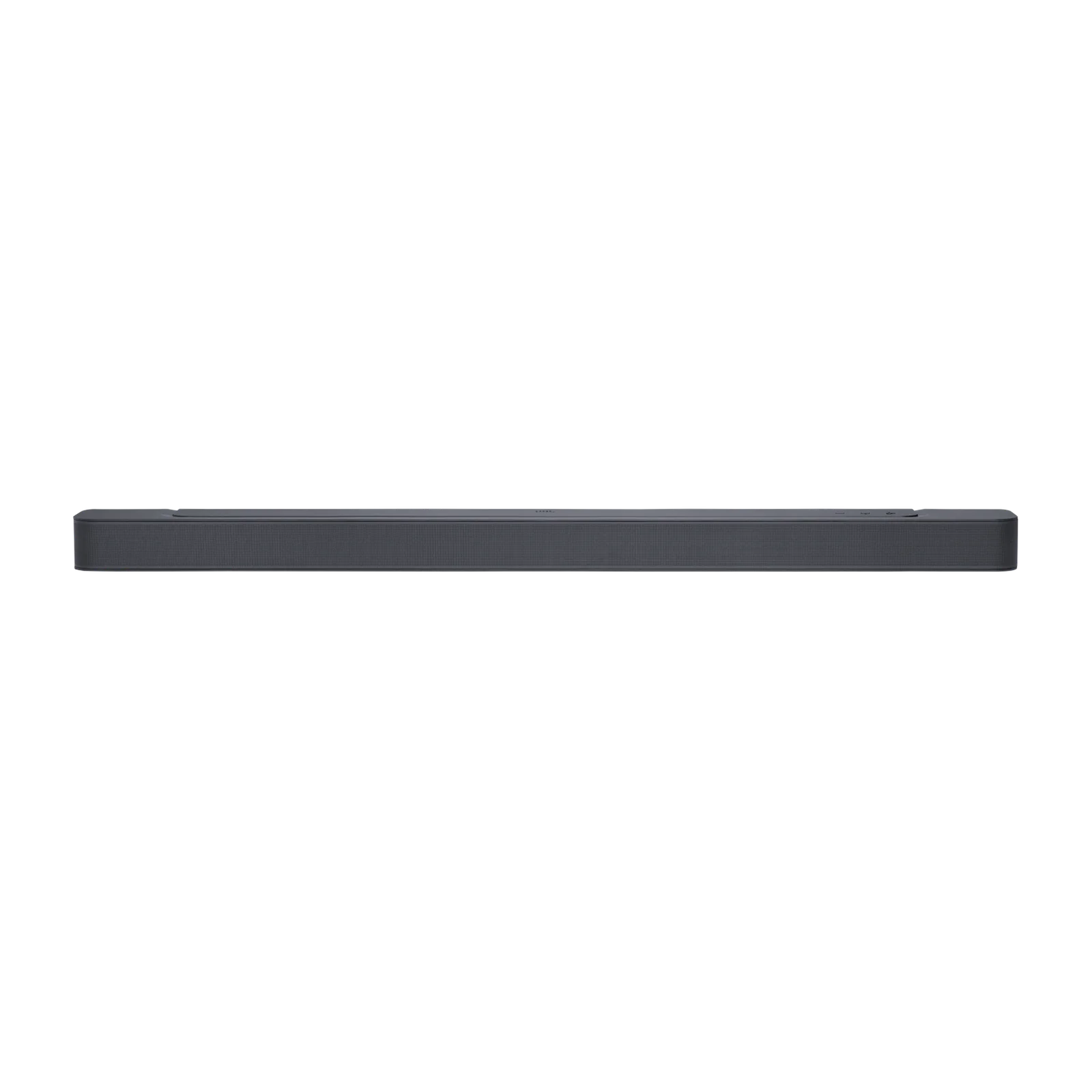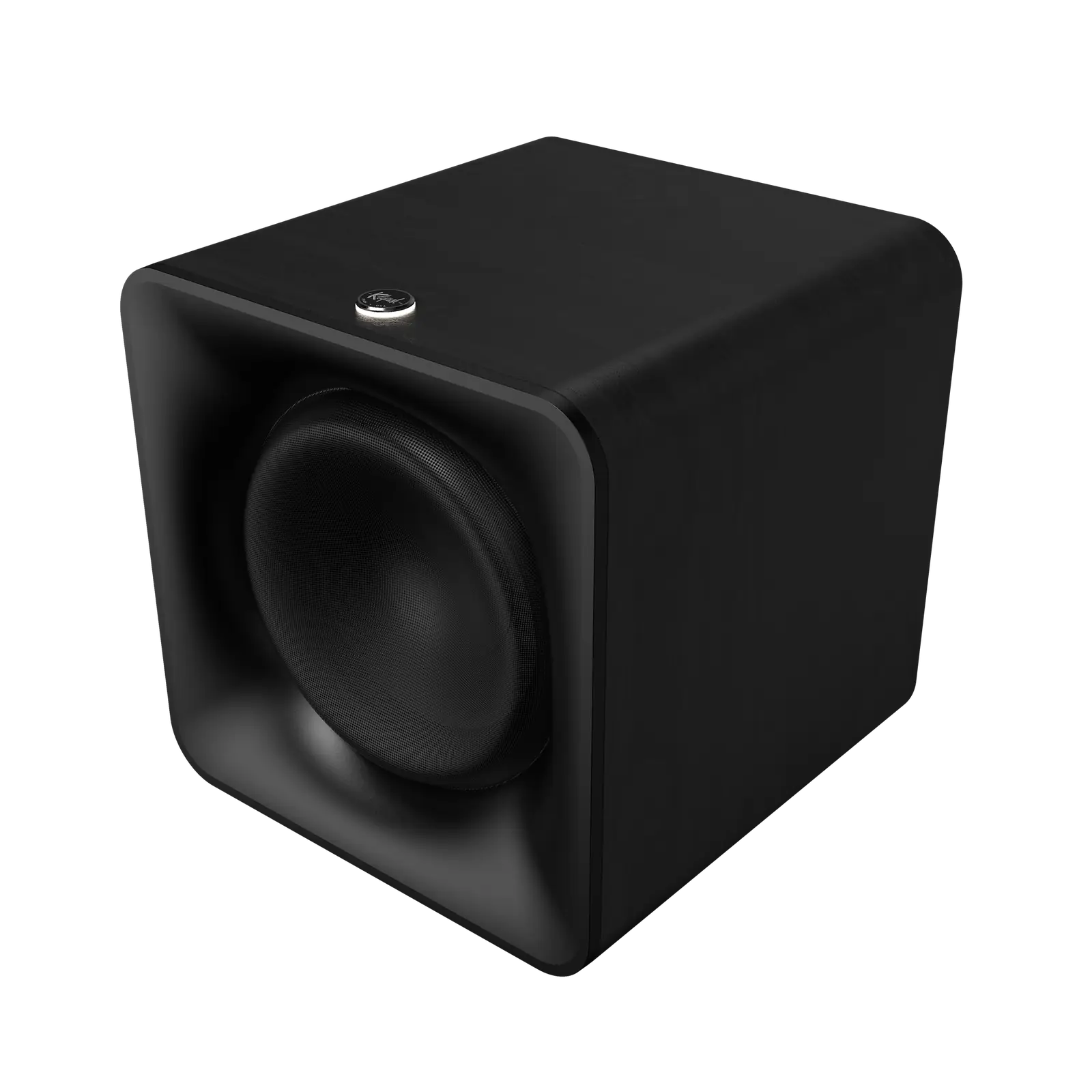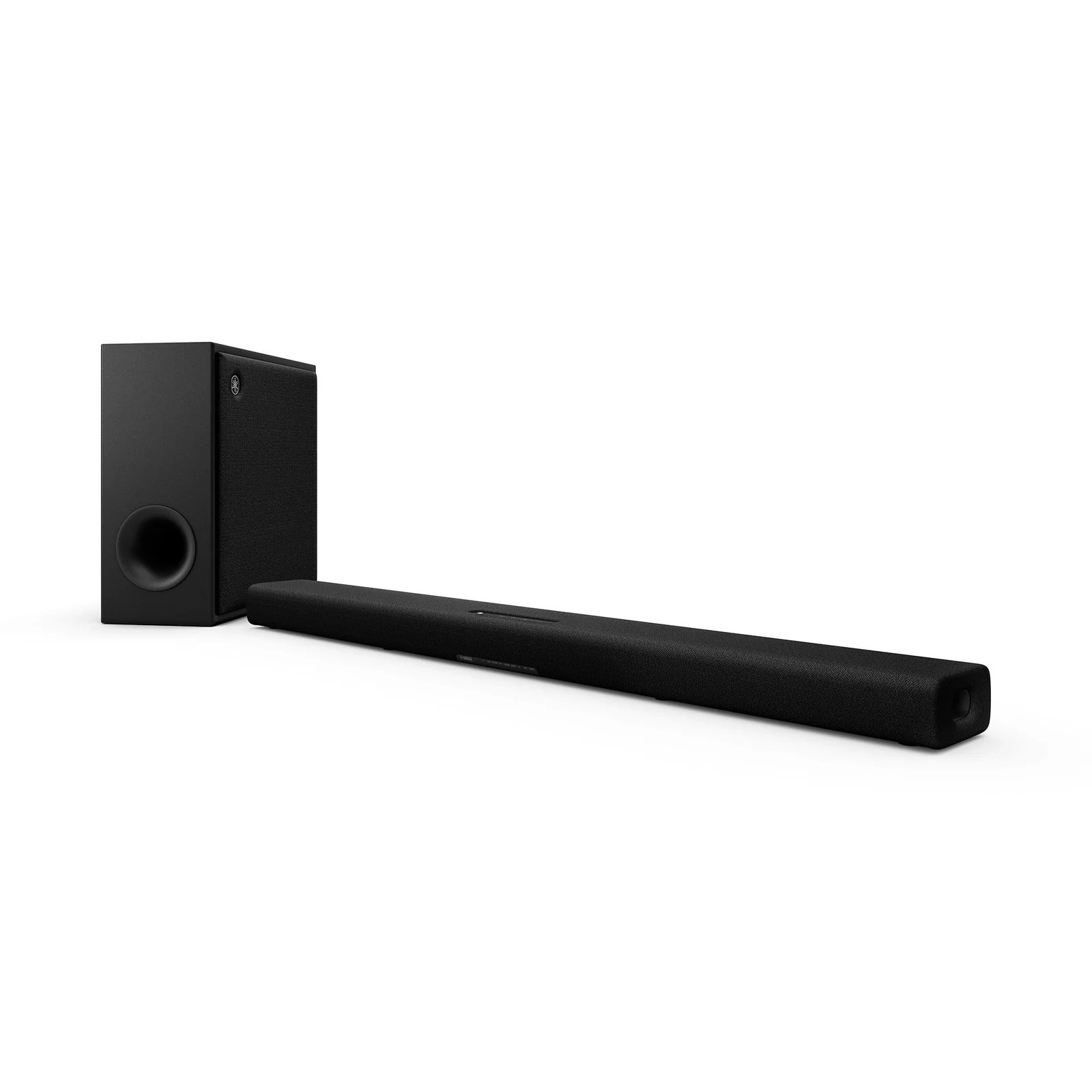
Yamaha True X Bar 50A Dolby Atmos sound bar with wireless sub
By Yamaha · Soundbars · Desk & Streaming Setup
- 1 HDMI in / 1 HDMI out with eARC, 4K pass-through, HDMI-CEC and auto lip-sync up to 500 ms
Price not listed
- YamahaView at Yamaha
- Best BuyView at Best Buy
- eBayView at eBay
- eBay (used) eBay: used, open-box, refurbishedView at eBay (used)
Stores are listed in a fixed order, never by price or commission. Prices are snapshots. Check the current price with the store.
Summary
A 2.1.2 Dolby Atmos soundbar with a wireless powered subwoofer and up-firing height drivers, aimed at people who want movie and TV sound in a mid-sized living room. Check the accessories before you buy: Yamaha’s US listing marks the bar discontinued, and the optional WS-X1A rear speakers are hard to find.
Strengths
- A real external subwoofer with a 160mm cone, not a bass radiator hidden in the bar.
- A spare HDMI input lets a console or box feed the bar directly when a TV handles formats badly.
- AirPlay 2, Spotify Connect, Tidal Connect, Ethernet and built-in Alexa cover music and voice.
- The remote and the buttons on the bar work over HDMI and optical with no app or network setup.
- The optional WS-X1A rears double as portable Bluetooth speakers away from the television.
Weaknesses
- Yamaha’s US listing marks the bar discontinued, and the WS-X1A rear speakers are hard to source.
- The bar is 2.1.2, not 5.1.2: dialogue is built from left and right processing, with no dedicated center driver.
- No DTS or DTS:X decoding, no analog input, and optical cannot carry lossless multichannel Atmos.
- Owners report a subwoofer that will not pair, a bar that freezes, and a remote that died.
- Only one HDMI passthrough input, so anything beyond a single source needs the TV or an HDMI switch.
- No Chromecast, no MusicCast multiroom, and no room calibration or multiband EQ.
Verified specifications
| Model | Yamaha TRUE X BAR 50A, SR-X50A; US black retail variant SR-X50ABL, sold as a bar with a 5GHz-linked external powered subwoofer. |
|---|---|
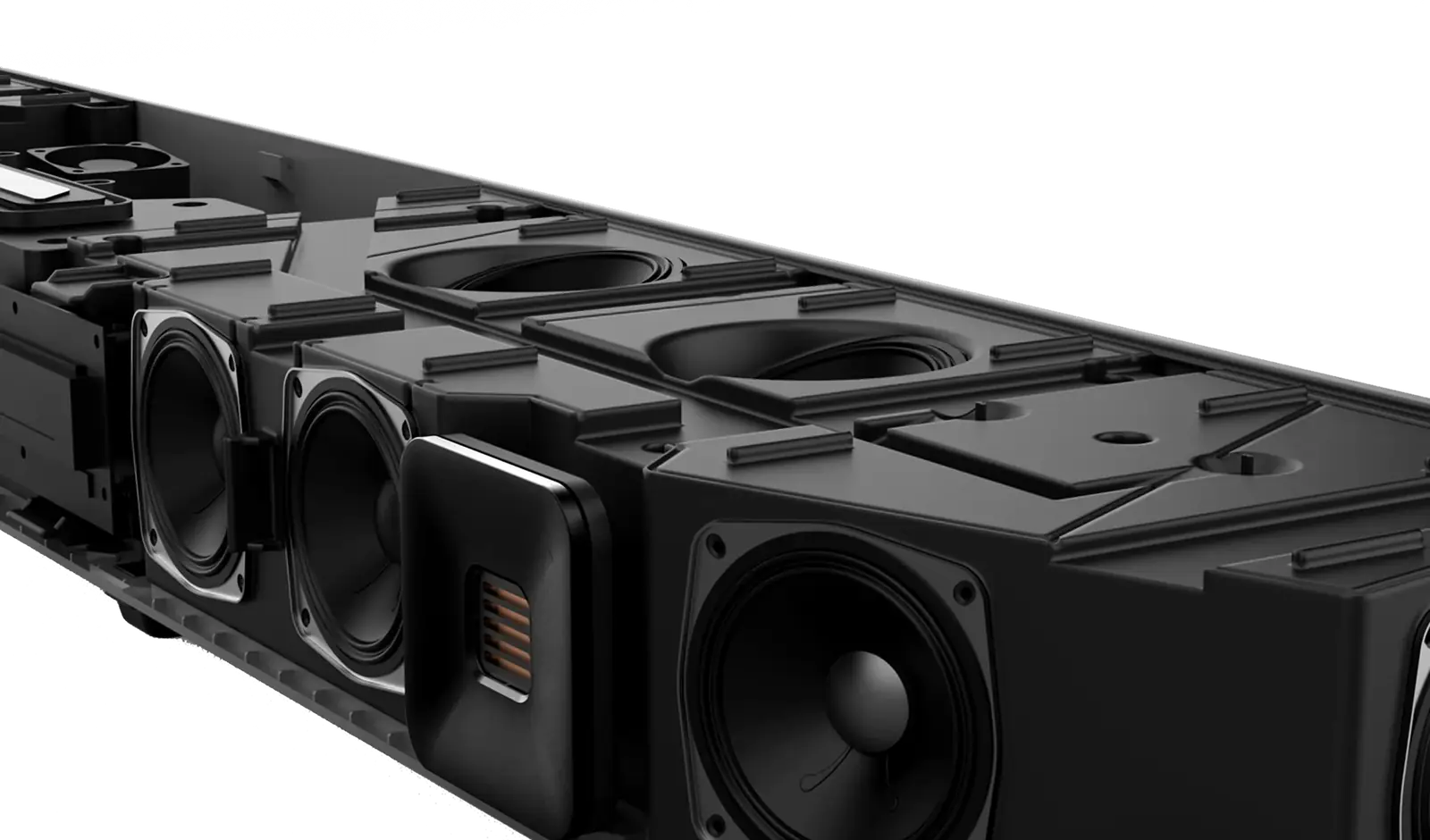
| Channel layout | front left and right, height left and right, plus two integrated 3-inch bass drivers in the bar and one 6.25-inch woofer in the subwoofer. No discrete center driver. |
| Drivers | two 46 × 66mm oval front cones, two upward-firing 52mm cones and two 75mm bass cones in the bar; the subwoofer uses one 160mm cone with a rated 35–100Hz driver response. |
| Dimensions | bar 1015 × 63 × 112mm (W × H × D), 3.9kg (8.5lb); 120mm deep with the wall-mount spacers. Subwoofer 187 × 407 × 409mm, 9.4kg (20.7lb). |
| Inputs and outputs | one HDMI input, one HDMI output with eARC/ARC, one Toslink optical input, an Ethernet port, and one USB port limited to firmware updating. No analog 3.5mm input. |
| Audio formats | Dolby Atmos and Dolby TrueHD over a compatible HDMI path, HDMI-CEC and 4K video passthrough. No DTS or DTS:X. Optical carries conventional audio but not lossless multichannel Atmos. |
| Wireless and network | dual-band 2.4/5GHz Wi-Fi (802.11a/b/g/n/ac), Ethernet 10/100 and Bluetooth 5.0 with SBC and AAC at roughly 33ft line of sight. The control app is Yamaha Sound Bar Controller, and this is not a MusicCast multiroom speaker. |
| Streaming and voice | Spotify Connect, Tidal Connect, AirPlay 2 and built-in Alexa. No Chromecast. |
| Sound modes | Standard, Stereo, Game, Movie, plus ALL when compatible surrounds are paired, with separate Clear Voice and Bass Extension controls. No room calibration and no graphic EQ. |
| Rear speakers | two optional WS-X1A TRUE X SPEAKER 1A units, about 88×105×88mm and 0.5kg each, IP67, Bluetooth 5.0, with built-in rechargeable batteries rated up to 12h per charge and about 3h of USB-C charging. The CC-T1A cradle is optional and sold separately. |
| Power | bar 100–120V, 50/60Hz, 36W rated; subwoofer 18W rated. Bar standby is 0.5W with network standby and HDMI control off and around 2W in network-enabled modes; subwoofer standby 2W. |
| In the box | bar, powered wireless subwoofer, remote with battery, an optical digital cable and wall-mount provisions. No HDMI cable, no surround speakers and no cradles. |
| Launch price | $699.95 US MSRP in 2023. Yamaha’s US product page shows $499.95 with $699.95 crossed out and the model marked discontinued. |
Full research notes and sources
Sound and dialogue
Reviewers agree the dialogue is the strong part. What Hi-Fi and Sound+Image, testing the bar and subwoofer as a standalone system, found it clear, powerful and intelligible. A later What Hi-Fi group test liked the agility and the integrated bass but said the height and scale were not expansive, and Expert Reviews found the overhead effects modest.
Height effects depend on the recording, the ceiling and the room, so treat the disagreement between reviewers as a normal difference of opinion rather than a defect. The same caution applies to the numbers: Yamaha’s 35Hz figure for the subwoofer driver is a manufacturer specification, not a measured in-room extension, and nobody has published a room-condition frequency response for the bar on its own.
Connections and formats
One HDMI input and one eARC output is unusual slack for a soundbar. You can plug a source into the bar and let the bar pass video to the TV, or use the spare input when a TV handles formats badly. The catch is the cable: WIRED’s sample came with an optical digital cable but no HDMI cable, so budget for an eARC-compatible one that suits your TV and source.
Lossless Dolby Atmos needs the HDMI path. Optical carries conventional audio but not lossless multichannel Atmos, so check what your player and TV support before you connect anything. HDMI-CEC handles TV volume and power, and initial eARC setup was straightforward for WIRED. There is no analog input, no USB audio playback, and the single USB port is for firmware only. With one passthrough input, a console and a set-top box need a TV with the room or an HDMI switch.
Wireless, the bar offers AirPlay 2, Spotify Connect, Tidal Connect, Bluetooth 5.0 with SBC and AAC, and Ethernet. The app is Yamaha Sound Bar Controller, and the bar is not a MusicCast multiroom speaker.
What owners report
Owner threads in r/Soundbars cover the failure modes you would expect from a wireless subwoofer and a bar that depends on HDMI handshakes.
One owner reported on April 27, 2025 that the subwoofer’s CONNECT light blinked rapidly despite resets, power cycling and repeated pairing attempts. In a September 10, 2026 follow-up he said Yamaha replaced the subwoofer under warranty after a service-center inspection, and it kept working. That owner also estimated around $165 for a replacement outside warranty; treat it as a dated anecdote, not a published spare-part price.
Check the HDMI cable, the source bitstream setting, the TV’s eARC and CEC setup and the firmware before you call it dead hardware.
In August 2025 an owner moving up from a Yamaha YAS-207 said the 50A froze several times and sounded bright, with too little bass for ordinary television even with the subwoofer turned up. That is one room and one unit, and other owners in the same thread praise the bass. On the rear speakers, a January 2025 owner said they did not wake on battery and needed permanent USB-C power, while a June 2025 owner said the CC-T1A cradles brought back automatic operation. In June 2025 another owner reported the original remote had failed, which left him unable to press SETUP to reconnect the surrounds.
Buy the surrounds carefully. In October 2026 buyers say they ordered WS-X1A speakers and received WS-B1A units, with dealers explaining that the WS-X1A is discontinued and on backorder. Yamaha’s US page now shows the WS-X1A as discontinued too, so check what you actually receive before you build a system around it.
Running costs and what you have to buy
Required recurring Yamaha consumables: $0 a year. The bar and subwoofer run on mains power, with no filters, refills or scheduled battery swaps. The remote runs a CR2025 lithium coin cell that you replace when it stops responding.
Standby is the one running number. Yamaha rates the bar at 0.5W with network standby and HDMI control off, around 2W in network-enabled modes, and the subwoofer at 2W. Left on standby around the clock, that is roughly 21.9kWh a year with networking off and about 35.0kWh with the bar’s network standby on, which works out to roughly $4.38 against $7.01 a year at an illustrative $0.20/kWh. Those are nameplate calculations, not a metered bill.
Active use moves the number. Three hours of television a day at the rated 54W for the bar and subwoofer comes to about 59.13kWh a year, and with 21 hours of low standby about 78.29kWh, or $15.66 a year at the same illustrative rate. With the bar’s network standby on it is roughly 89.79kWh, or $17.96.
Parts are thin on the ground. There is no published US price for a spare subwoofer, and Yamaha’s parts pages ask you to know the part number before ordering; the one owner estimate for an out-of-warranty sub was about $165. The optical cable is included, an eARC HDMI cable is not. The WS-X1A rears are extra, and the CC-T1A cradle does not include a charging cable.
Is it worth it?
The bar launched at $699.95 in 2023. Yamaha’s US page shows $499.95 with the original price crossed out and the model marked discontinued, which is a list reference rather than proof you can buy a sealed unit from Yamaha. Best Buy’s original SR-X50ABL listing (SKU 6554405) compares at $499.99 new, while the same store’s soundbar category page showed $299.99, a $199.96 saving against $499.95. Other Best Buy views show $269.99 to $299.99, and those can be marketplace sellers or colour and condition variants rather than new sealed stock from an authorized dealer. A refurbished excellent unit is listed at $229.50 (Best Buy, SKU 10755114), and open-box units were shown at $474.99 to $479.99, barely under the new figure and possibly without the remote or optical cable.
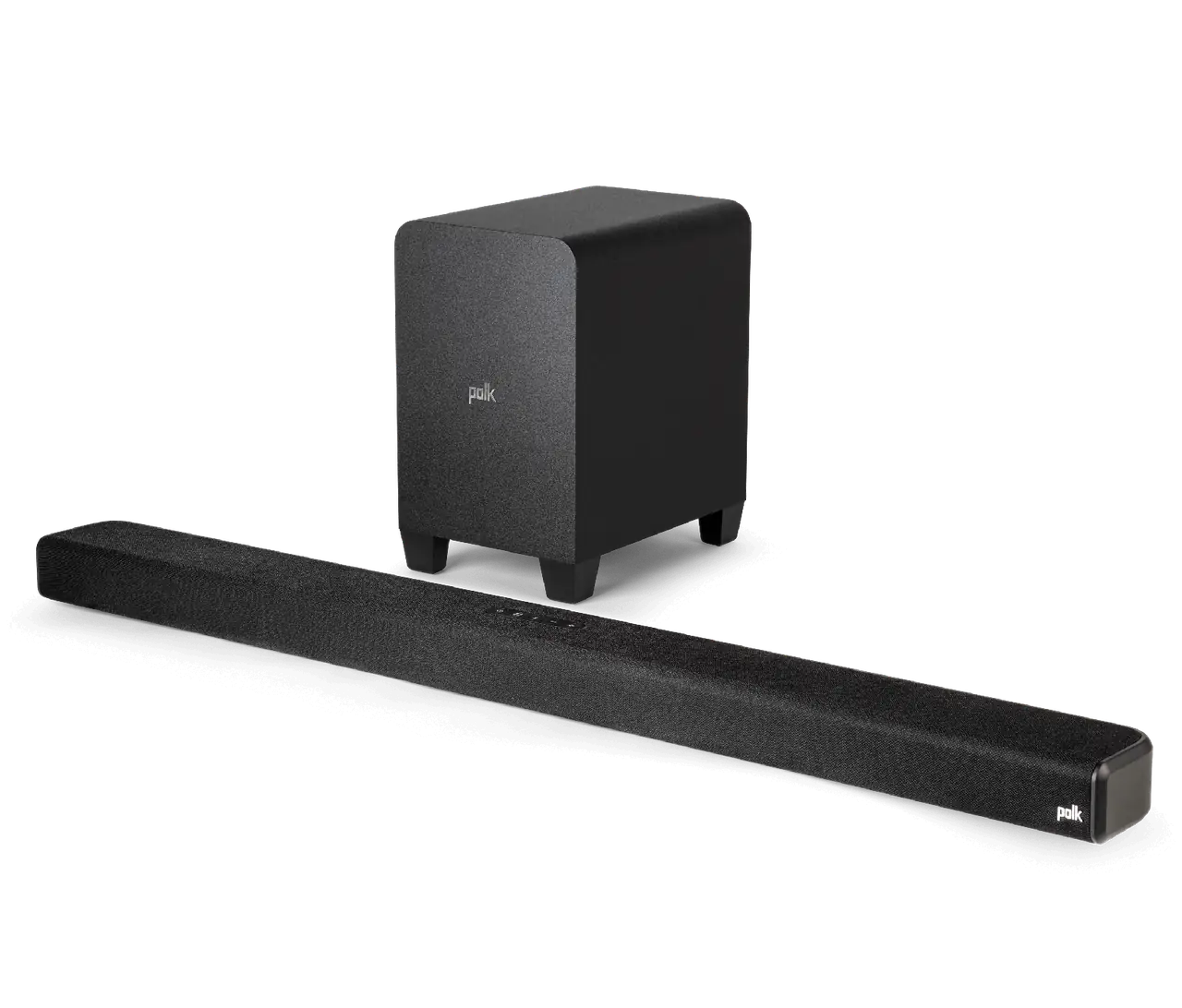
Under $250 new, from a dealer you can trace, with the subwoofer and remote in the box, this is a good deal on sound. Between $250 and $320 it still makes sense for a confirmed-new system with return rights. From $320 to $400 you should weigh it against Polk’s Signa S4D at $299 and Signa S4 at $359, both sold direct by Polk: they are 3.1.2 bars with a real center driver and voice enhancement, and they sidestep the Yamaha surround problem, though they lack the spare HDMI input and the same set of network music features. Yamaha’s own SR-B30A is listed at $279.95 in the Best Buy soundbar category: one bar with built-in bass and virtualized Atmos, no external subwoofer and no up-firing pair.
Above $400, buying into a discontinued system with no easy path to rear speakers stops making sense. If you want Dolby Atmos with DTS:X and separate surround speakers from day one, VIZIO’s 5.1 SE (SV510X-0806) sits on the current lineup, but no purchase price was verified for it.
Which model this is
This page covers the Yamaha TRUE X BAR 50A, model SR-X50A, sold in the US as the black SR-X50ABL. The box contains the bar and the powered wireless subwoofer only; the WS-X1A TRUE X SPEAKER 1A rear speakers are separate purchases, and Yamaha marks them discontinued as well. Do not confuse the WS-X1A with the WS-B1A speakers some buyers were sent in October 2026, and do not confuse the 50A with the SR-B30A, a single-chassis bar with built-in bass and no external subwoofer.
Sources
Manufacturer:
- Yamaha — SR-X50A user guide with amplifier, input, electrical and dimension specs
- Yamaha — SR-X50A support: TV HDMI, wireless and subwoofer setup
- Yamaha — SR-X50A troubleshooting, reset, remote battery and subwoofer connection
- Yamaha USA — WS-X1A battery life, USB-C charging and IP67 specs
- Yamaha USA — CC-T1A charging cradle and compatibility
- Yamaha USA — TRUE X series launch announcement with the original MSRPs
- Yamaha USA — firmware listing for SR-X50A, SR-X40A and ATS-X500
- Yamaha USA — ordering genuine parts and the qualified-service warning
- Yamaha USA — AV warranty policy and authorized dealer terms
Independent reviews:
- What Hi-Fi? — Yamaha TRUE X system review
- What Hi-Fi? — Yamaha TRUE X soundbar system comparison
- VIZIO — current soundbar lineup including the 5.1 SE
Owner reports:
- Subwoofer will not pair, later replaced under warranty (r/Soundbars)
- SR-X50A and WS-X1A setup thread with intermittent sound (r/Soundbars)
- Freezing and thin bass after upgrading from a YAS-207 (r/Soundbars)
- Why I chose the TRUE X 50A, and battery rear issues (r/Soundbars)
- WS-X1A shortages and returns (r/Soundbars)
Stores: