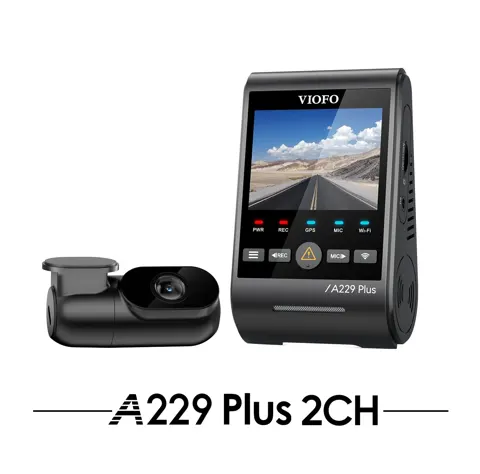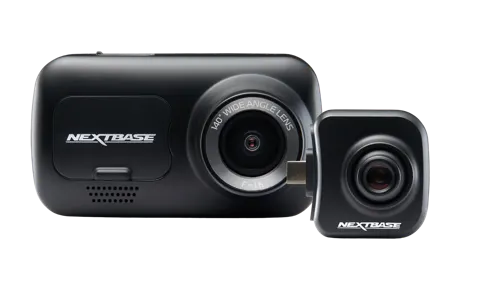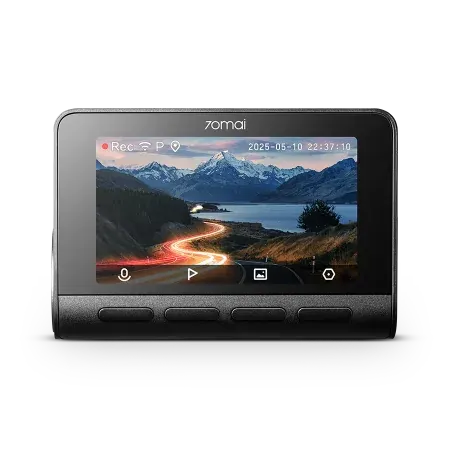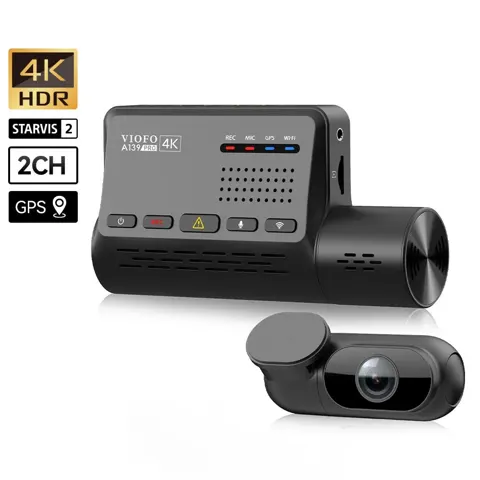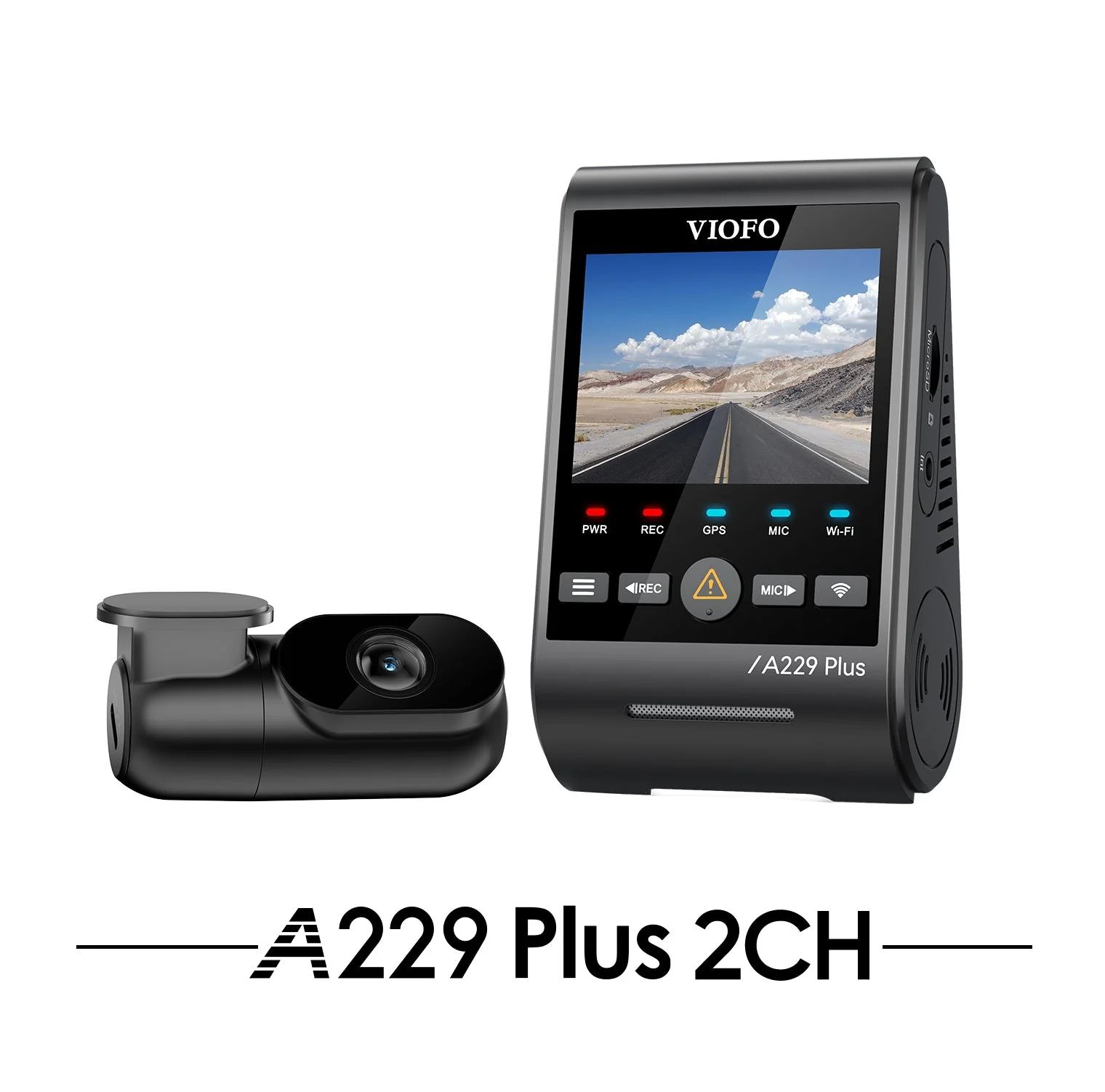
VIOFO Dual Dash Cam 2K 1440P 60fps+1080P 30fps
By VIOFO · Dash Cams · Audio & Electronics · More from VIOFO
- Front: 2K 1440P 60fps + Rear: 1080P 30fps
- Sony STARVIS sensors: Front 5MP IMX335 / Rear 2MP IMX307
- F1.6 aperture with 140° front FOV / 160° rear FOV
- Built-in GPS & 2.4GHz Wi-Fi
- HDR support for balanced day & night recording
Price not listed
- VIOFOView at VIOFO
- WalmartView at Walmart
- AmazonView at Amazon (paid link)
More on eBay (1)
- eBayView at eBay
- eBay (used) eBay: used, open-box, refurbishedView at eBay (used)
Stores are listed in a fixed order, never by price or commission. Prices are snapshots. Check the current price with the store.
Summary
A front-and-rear dash cam system with a 2K 1440P 60fps Sony STARVIS sensor up front, 1080P 30fps at the back, built-in GPS and a super capacitor instead of a lithium battery. Check the parking mode wiring before you buy: it needs a hardwire with a low-voltage cutoff, or it can drain your vehicle battery.
Strengths
- Sony STARVIS sensors give clean daylight footage with a 2K 60fps front channel.
- The super capacitor avoids the swollen-lithium failures that hit battery-powered dash cams in hot cars.
- 140° front and 160° rear coverage catches more of the road edges.
- Built-in GPS logs speed and position without extra hardware.
- Owners rate installation as straightforward once parking mode is set up.
Weaknesses
- The mobile app is the most criticized part: bugs, thin features and patchy Wi-Fi connections.
- Parking mode needs careful hardwiring and low-voltage cutoff settings to avoid draining the vehicle battery.
- Owners report occasional microSD card corruption and trouble managing loop recordings.
- Wide lenses bend straight lines at the edges, so footage looks distorted at the margins.
- Night footage varies, and there is no independent testing of this exact configuration.
- Third-party mounts and cables often do not fit this body design.
Verified specifications
| Front camera | 2K 1440P at 60fps. |
|---|---|
| Rear camera | 1080P at 30fps. |
| Sensors | Sony STARVIS, front 5MP IMX335, rear 2MP IMX307. |
| Aperture | F1.6 on both cameras. |
| Field of view | 140° front, 160° rear. |
| GPS | built in, logs location and speed data. |
| Connectivity | 2.4GHz Wi-Fi for app access. |
| Storage | microSD cards up to 256GB, Class 10/U3 recommended. |
| Recording | automatic loop recording overwrites the oldest files. |
| G-sensor | detects collisions and locks the footage. |
| Parking mode | low-power monitoring while parked, requires hardwiring. |
| Power | super capacitor, not a battery, rated -4°F to 158°F. |
| Input | 12V-24V DC. |
| Encoding | H.264 and H.265. |
| Audio | built-in microphone. |
| Dimensions | front camera about 3.0 × 1.5 × 1.2 in; rear camera about 2.8 × 1.3 × 1.0 in. |
| Mount | adhesive mount with adjustable angles. |
| Box | front camera, rear camera, brackets and adhesive pads, power cables, USB cable and user manual; a card is included in some packages. |
Full research notes and sources
Video quality day and night
The front camera records 2K 1440P at 60fps through a Sony STARVIS IMX335 sensor with an F1.6 aperture, and the rear camera runs 1080P at 30fps on an IMX307. Sony STARVIS sensors are the reason this kit sits above entry-level hardware, and owners generally report good video in daylight.
The 1440P 60fps figure is a maximum, not a promise. Real output depends on lighting and compression settings, and the wide 140° and 160° lenses introduce distortion along the edges. Night performance varies between owners, and no professional lab has published a low-light comparison for this exact dual-camera setup.
The G-sensor locks clips on impact, and GPS writes position and speed data into the files.
Parking mode and installation
Parking mode runs in low power while the car is parked, but it only works properly when the kit is hardwired with a low-voltage cutoff configured. Owners describe the setup as the fiddliest part of the job, and power draw in parking mode can drain a vehicle battery if the cutoff is left too high.
Mounting is adhesive with adjustable angles. Some third-party mounts and cables do not fit this chassis, so check what you already own before ordering spares. Wi-Fi access is 2.4GHz only, which is slow but enough for viewing footage and changing settings.
Running costs and upkeep
There is no battery to replace. The super capacitor handles cold and heat, though capacitors degrade over time with repeated temperature swings, and some owners say it may not last as long as expected in very high temperatures.
The recurring cost is the card. A Class 10/U3 microSD is recommended, and cards run $20 to $50. Expect to swap the card every 6 to 12 months depending on how much you drive, and clean the lens periodically. A professional hardwire installation runs $50 to $150. Damaged mounts or cables are another occasional expense. Firmware and settings live in the mobile app, so software updates are part of upkeep.
Is it worth it?
At or below $180 this is good value for a front-and-rear system with Sony sensors and a super capacitor. From $181 to $220 it is fair and competitive with other mid-range dual-camera kits. Between $221 and $250 you are into premium territory where models from Garmin, BlackVue or Thinkware add cloud connectivity or stronger low-light handling.
Above $250 the value is weak unless you specifically want the super capacitor and Sony sensors. Warranty terms vary by channel and region, with listings showing either one year or two years, so confirm what applies when you buy.
Which model this is
This page covers the VIOFO dual-camera system with a 2K 1440P 60fps front camera and a 1080P 30fps rear camera, sold as the A129 Duo in the VIOFO line. The listing identifier is ASIN B09LB69NM5. Do not confuse it with single-channel VIOFO models or other brands’ A129-named kits.
Sources
Manufacturer:
Independent reviews:
Owner reports: