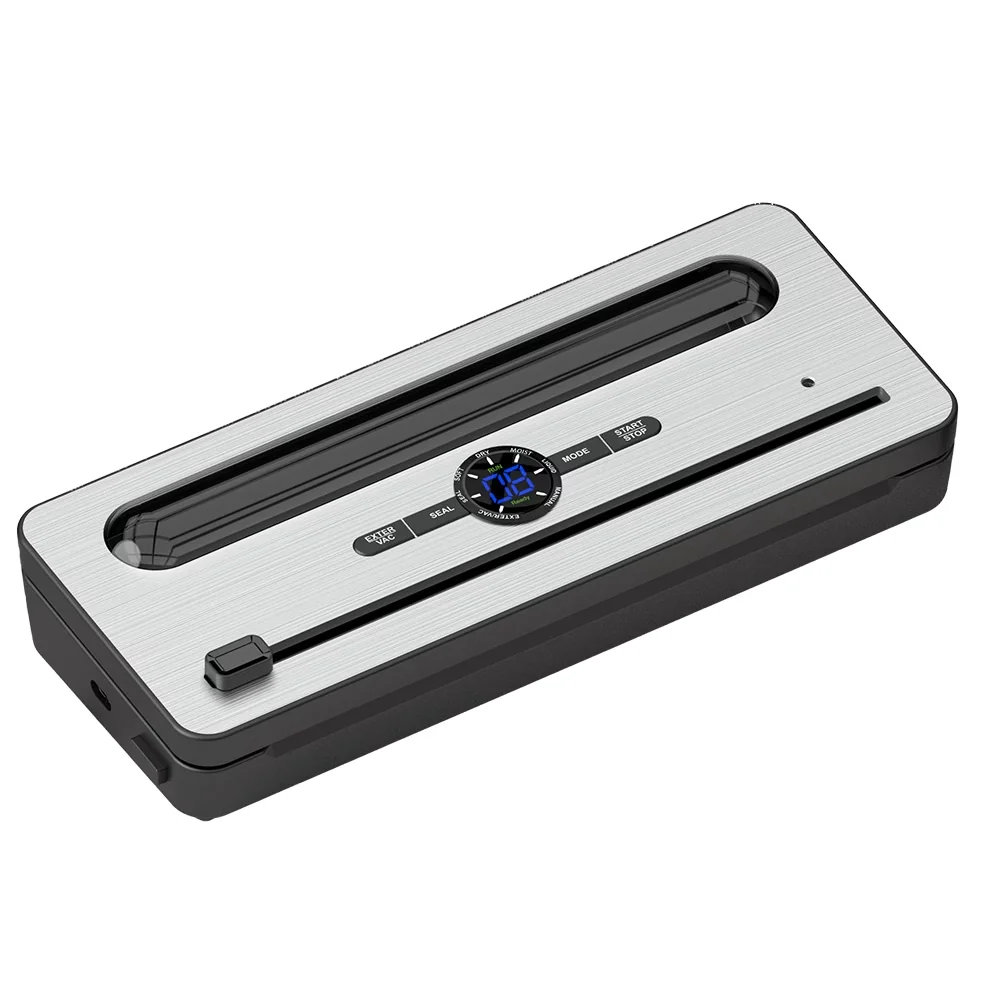
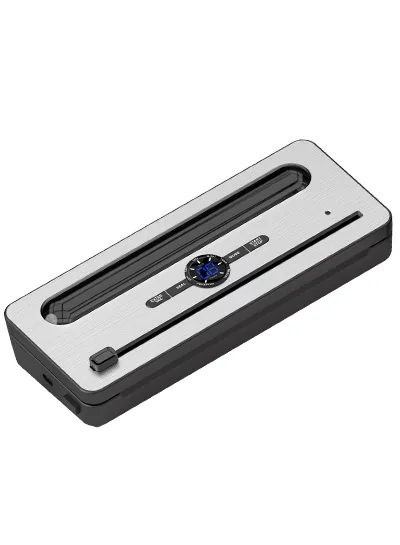
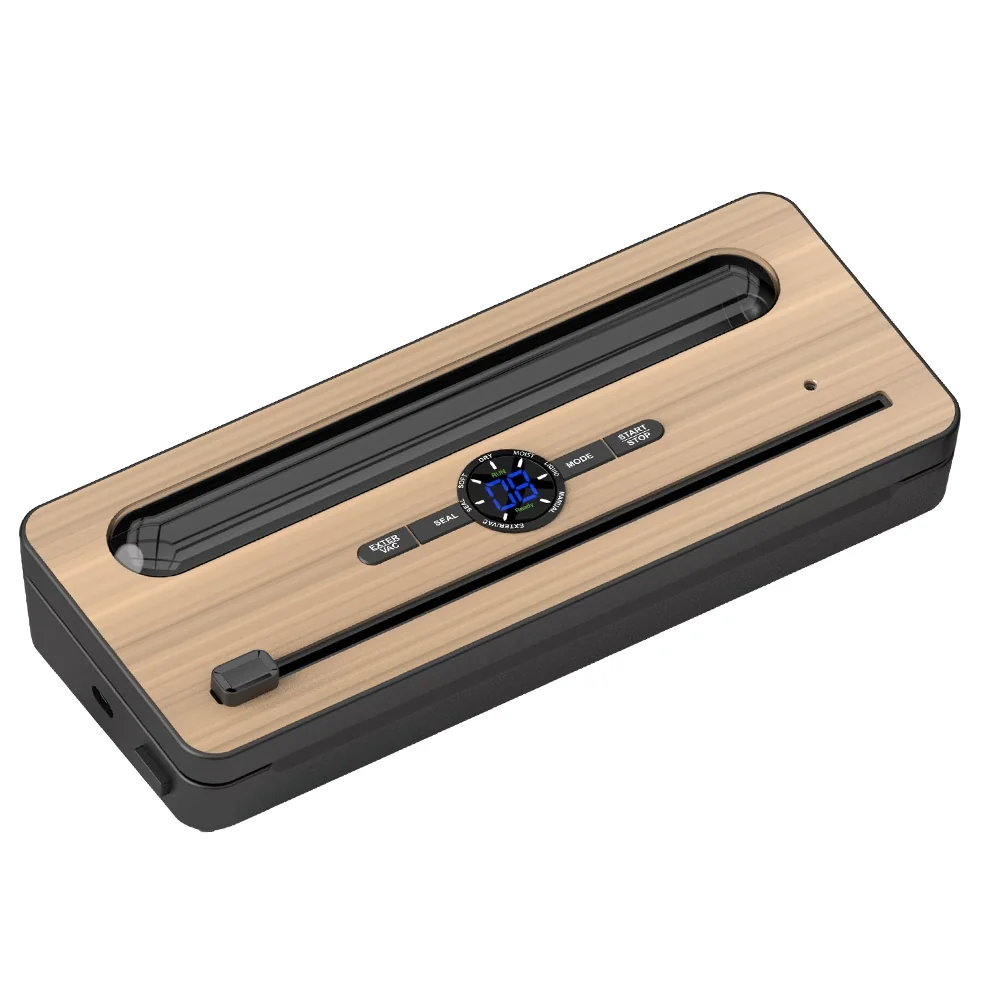
VANTASE VATA35 Dual-Pump Vacuum Sealer
By VANTASE · Vacuum Sealers · Kitchen & Cooking
Compare all Vacuum Sealers side by side →
The short version
✓ Why people buy it: Manufacturer specifies two nominal 3 mm sealing lines rather than only a vaguely described “wide” seal.
✗ Watch out for: No independent exact-VATA35 measurement establishes vacuum strength, airflow, dBA or cycle speed.
Prices at 3 stores ↓ · Will it fit? Size check ↓ · All 6 catches ↓
- 240W commercial external sealer
- Dual pumps rated 6 L/min + 12 L/min
- Claimed -35 to -90 kPa range
- 3 mm x 2 true double sealing lines
- 31 cm sealing width and external vacuum hose
Price not listed
- VANTASE / Shenzhen Fantastic Technology Co., Ltd.View at VANTASE / Shenzhen Fantastic Technology Co., Ltd.
More on eBay (1)
- eBayView at eBay
- eBay (used) eBay: used, open-box, refurbishedView at eBay (used)
Stores with a price are sorted lowest first; commission never changes the order. Prices are snapshots. Check the current price with the store.
Summary
The VANTASE VATA35 is a 240 W external-suction sealer marketed with twin pumps, a 31 cm sealing area and two nominal 3 mm heat-seal lines. It is offered primarily to distributors and private-label buyers, so the published engineering figures are worth examining, but an ordinary US shopper cannot rely on an established retail price, warranty or independently tested performance record.
Size in context

37.5 cm · 14.8 in (W) × 15.0 cm · 5.9 in (D) × 8.0 cm · 3.1 in (H) · Drawn to scale from the maker's stated dimensions, next to everyday objects.
Strengths
- Manufacturer specifies two nominal 3 mm sealing lines rather than only a vaguely described “wide” seal.
- A 31 cm work width accommodates several ordinary embossed bag sizes.
- The integrated roll bay and cutter can reduce the need for separate bag preparation tools.
- External port provides a path to compatible canister storage when the correct accessories are supplied.
- Standard embossed film reduces dependence on proprietary consumables.
- A detailed public model table makes the stated power, dimensions and pump figures inspectable before requesting a quote.
Weaknesses
- No independent exact-VATA35 measurement establishes vacuum strength, airflow, dBA or cycle speed.
- The two published pump-flow numbers have unclear relationships and must not be added together.
- “Commercial” positioning lacks a documented maximum duty cycle or cooldown schedule.
- Published voltage wording is inconsistent; a US-compatible plug and electrical rating are not guaranteed.
- No complete exact-model manual, warranty contract, consumer price or spare-parts catalog was found.
- Independent owner reports and service histories are too scarce to assess reliability.
Verified specifications
| Model | VANTASE VATA35, named on the manufacturer’s exact-model page and model comparison chart. |
|---|---|
| Construction class | countertop external-suction vacuum sealer, not a vacuum chamber machine. |
| Rated power | manufacturer lists 240 W; no independent power-consumption trace is available. |
| Vacuum range | maker advertises −35 to −90 kPa; exact achieved pressure has not been independently measured. |
| Pump description | manufacturer’s dual-pump system specifies 6 L/min and 12 L/min; it does not define the relationship between those values or confirm combined throughput. |
| Work width | up to 31 cm of sealing area according to the official product table. |
| Heater geometry | manufacturer specifies 3 mm × 2, explicitly describing a double sealing line; finished seam width, spacing and strength are unmeasured. |
| Bag material | standard embossed/channel vacuum pouches and rolls for external suction; no proprietary bag cartridge requirement. |
| Roll handling | manufacturer advertises integrated roll storage and a built-in cutter. |
| Canister connection | external vacuum port is advertised for compatible hose and rigid container lids, subject to the delivered accessory configuration. |
| Dimensions | 375 × 150 × 80 mm per VANTASE’s product table (approximately 14.76 × 5.91 × 3.15 in). |
| Weight | 1.8 kg is presented alongside the mail-order packaging specification, not a verified net weight of the machine. |
| Mail-order box | 415 × 100 × 185 mm per manufacturer, which should not be mistaken for appliance dimensions. |
| Input power | manufacturer’s line reads 100–240 V, 50–60 Hz; 220–240 V/50 Hz; the intended regional configurations are not reconciled. |
| Plug types | different regional plugs and OEM configurations are advertised; a specific US 120 V retail version is not established. |
| Enclosure | manufacturer does not reliably identify all housing materials or internal component grades for VATA35. |
| Accessories | an external connection and optional kits are described, but a fixed included hose, canister, roll count and instruction package are not confirmed. |
| Operating duty | no exact-model sealing interval, thermal shutdown time or commercial throughput specification has been published. |
| Manufacturer | Shenzhen Fantastic Technology Co., Ltd., a Shenzhen-based company working with OEM/ODM and private-label distributors. |
| Consumer support | exact-model US warranty duration, return policy, replacement-parts channel and authorized repair provision not verified. |
| Price | no defensible fixed US direct-to-consumer selling price; the official route is a specification and quotation inquiry. |
Full research notes and sources
What you would actually be buying
VANTASE is the brand used by Shenzhen Fantastic Technology Co., Ltd., a Chinese maker of vacuum sealers, textured bags and roll film. The company’s published information describes a business supplying OEM and ODM products, often customized for another seller’s logo, package and intended regional market. That is quite different from purchasing a conventional US kitchen appliance with a stable retail SKU, published checkout price and established manufacturer service network. The VATA35 listing is positioned for distributor enquiries, not a one-click US household order.
The factory states it was founded in 2017, which is useful company background but does not establish when VATA35 itself launched or how long units have been working in customer kitchens. Manufacturer marketing describes VATA35 as a flagship or commercial external vacuum machine, while the broader VANTASE range is presented as serving households, retailers and light-commercial buyers. The published pages do not reconcile that positioning through a named operating class or quantified sealing duty limit. Treat the business-to-business relationship and technical details as context, not as an independent quality certification.
The quotation process matters here. A distributor can request a custom logo, packaging, power plug and accessory kit. A unit with a VATA35 name may therefore arrive with different supplied bags, hose fittings or plugs depending on what its buyer requested. None of the evidence provides an exact US UPC, ASIN, retail seller page or serial-number reference for a single standardized VATA35 package. A listing for a visually similar private-label sealer should not automatically be treated as this exact machine. VANTASE’s related VATA32, VATA25P and other models share features but have differing nameplate power and heat-bar specifications.
The manufacturer’s catalog helps avoid one particularly easy mistake. It lists VATA35 at 240 W with two nominal 3 mm heater lines. The nearby VATA32 has a 135 W specification despite also claiming a double 3 mm heater arrangement and two stated pump capacity figures. Similar-looking photographs do not make their power supplies, gaskets or motors identical. If you are evaluating an import or private-label listing, request its true manufacturer model, nameplate photo and written configuration from the seller rather than inferring specifications from an image.
Electrical compatibility is more important than any advertised maximum vacuum. The VATA35 specification table combines a broad 100–240 V, 50–60 Hz range with a separate 220–240 V/50 Hz statement. Both appear on the same public product page, and VANTASE also offers different regional plugs. A different plug shape also does not prove that the internal electronics are universal-voltage. For an American kitchen, check the actual rating label, cord and electrical certification of the specific item before use, rather than relying on the generic website statement.
The dimensional information is comparatively clear. The manufacturer lists the appliance at 375 × 150 × 80 mm, a compact countertop footprint on paper. A separate 415 × 100 × 185 mm mail-order box is a shipping measurement. The 1.8 kg figure appears next to that box, so it is not safely interpreted as the unit’s net weight. No dependable full construction-material breakdown is published for the exact revision. Those missing details matter when a buyer wants to know whether a lid hinge is easy to repair, how much the machine weighs when carried or whether a specified shelf can accommodate opening the top cover.
An OEM supplier can be a legitimate manufacturer without offering a consumer warranty for every machine supplied through a reseller. The exact VATA35 page does not provide a fixed retail package, return policy, US service address or replacement-part ordering process. A buyer considering an imported sample should ask the actual seller to identify the entity responsible for defects and the means of obtaining support after a failure. That is the major distinction between the VATA35 and a machine supported directly through an established consumer retailer.
Understanding the pumps and the double seal
The VATA35 specification sheet looks more technical than most low-cost marketplace descriptions. These three kinds of number refer to different properties. The rated wattage concerns electrical input. Pressure describes how far the equipment may lower the pressure inside a connected bag. Flow rate describes how quickly air may move under some operating conditions. They should not be treated as interchangeable measurements or as evidence of equal performance under actual food loads.
The dual-flow line is the most important unresolved ambiguity. VANTASE prints the values in a combined notation, but does not explain whether they refer to two individual pumps, separate stages of one system, selectable modes, or different operating pressure points. The page does not disclose the experimental conditions for either figure. Adding the values and calling the machine an 18 L/min sealer would manufacture a result that the producer did not specify. Even if two pumps exist, their usable combined output depends on how they are connected and on the changing pressure during evacuation. The published specifications are insufficient to determine the result.
Maximum vacuum is likewise a manufacturer figure, not an independently demonstrated achievement of a retail sample. No credible exact-VATA35 test was found using a calibrated pressure gauge, known-volume container and reproducible timing method. This means an impressive −90 kPa endpoint cannot be used to predict how quickly the VATA35 evacuates a large bag of meat, a container of snacks or a partly filled bag of vegetables. The manufacturer does not specify a timed one-liter or two-liter container evacuation, and no independent review establishes comparable numbers. Airflow often decreases as pressure falls, making a single nominal flow number a poor proxy for full-cycle speed.
The heat-seal construction is more specifically described. The official product table says 3 mm × 2 and explicitly calls it a double sealing line. VANTASE’s multi-model comparison repeats that distinction. It also shows other appliances using a single 5 mm line or two narrower strips, which supports treating the VATA35 two-line arrangement as a deliberate product specification rather than assuming that “double” simply means one unusually thick band. Still, the exact finished weld widths, spacing between lines and uniformity on different films have not been independently measured on an assembled VATA35.
A double heat seal can provide an extra physical barrier when a small defect affects only one seam. It cannot make an unsuitable bag seal reliably, compensate for fluid spread over the entire opening or prevent a puncture elsewhere in the pouch. The company’s phrase “double seal” does not give a standardized leak rate, failure probability or sous-vide endurance result. Without instrumented seal-strength testing, buyers should treat two 3 mm lines as a specified heater arrangement, not a proven claim that food stays fresh for a particular multiple of time. The bag itself and the way its mouth is placed still matter.
The 31 cm sealing area is useful because it permits some wider embossed food bags. A maximum work width describes how much flat film can lie across the heating bar, not a guarantee that every commercially labeled 31 cm bag fits with adequate side margin, nor proof that a very thick specialty film will receive the right heat. The manufacturer recommends embossed or channel material for this external-suction configuration. Check the bag’s real opening width and heat-sealing suitability against the working area before bulk ordering film.
Noise is absent from the technical table. VANTASE supplies no confirmed exact-model sound-pressure level in dBA, microphone distance or report of the motor’s audible character. No independent sound recording with calibration was located either. The presence of two pumps and a 240 W nameplate does not prove the sealer is quiet or loud. A higher-pitched sound can be more irritating than a low hum at the same measured level, but nothing in the evidence supports a specific VATA35 sound profile. It should not be advertised as the quieter choice on theoretical motor size alone.
There is also no reliable continuous-use figure. The manufacturer’s page describes food prep, catering and wholesale programs, yet does not publish a mandatory rest between seals, a maximum number of consecutive cycles, a thermal shutdown threshold or a validated bags-per-hour rate. Factory-level quality-testing claims on VANTASE’s website are not a published endurance test for this exact machine. The word commercial is therefore a statement of intended market, not demonstrated permission to run a heating bar and pump continuously for a full workday. If batch throughput matters, a prospective distributor needs a physical sample and a documented test procedure rather than estimating duty from power.
Bags, accessories, maintenance and after-sale support
VATA35 is an external suction sealer and therefore depends on embossed/channel bags to evacuate flexible pouches. The textured surface keeps an air path open when the lid presses the two plastic layers together. Smooth pouches intended for a chamber machine can seal off that path before air has escaped. VANTASE sells compatible embossed PA/PE roll film as part of its wider packaging business, but the VATA35 product page does not specify a proprietary roll profile. Generic suitable channel rolls should be viable when their width, texture and heat-sealing characteristics match the appliance.
The integrated roll-storage compartment and cutter reduce the work of producing bags in different lengths. Cut enough material for the food and a clean closing margin, close one end, add food and then evacuate and seal the remaining open end. The advertised cutter is a manual integrated convenience, not evidence that a large bulk reel will automatically feed through it. VANTASE publishes no precise maximum roll diameter for the VATA35’s internal compartment. A 50- or 100-foot roll might need to be cut outside the machine rather than inserted whole.
Liquid handling is another reason to understand what this type of equipment can and cannot do. VATA35 evacuates a flexible bag through its opening. If a bag contains freely flowing liquid, the machine may draw that liquid toward the pump before the heater closes the film. No manufacturer manual confirming an exact VATA35 liquid catch system, sensor or protective cutout was found. For soups and sauces, partially freezing the contents before bag sealing is a sensible external-suction practice; placing perishable liquids directly into an unknown vacuum channel is not.
A two-line seam is most useful when the bag mouth is clean, dry, flat and free of folds. Wipe moisture or fatty residue from the intended weld area. Be cautious with sharp bones, hard edges and fragile foods; a puncture away from the seal will defeat even an otherwise good weld. Vacuum sealing does not sterilize food or replace refrigeration or freezing. Food handling and storage procedures remain necessary, regardless of the marketing about catering, meal prep and shelf life.
The machine also has an external vacuum port for canister-style storage. Its published description says the port can be paired with compatible hoses and container lids where equipped. Because VANTASE offers configurable OEM accessory kits, this cannot be converted into a guarantee that every shipped VATA35 comes with a hose, valve adapter, canister or ready-to-use jar connection. Check the actual supply list and compatibility before buying external containers. No exact-port diameter, verified cross-brand valve standard or measured rigid-container evacuation time was located.
Serviceability is harder to evaluate than film compatibility. The public model material does not list a replacement foam gasket, heat strip, PTFE heater covering, lid latch, motor, control board or other repair part with a VATA35 stock code. There is no exact-model teardown or illustrated service manual showing which parts an end user may safely replace. The manufacturer may be able to provide parts through an OEM channel, but that possibility is not the same as an established consumer-accessible catalog or guaranteed inventory.
Routine external-suction machines typically depend on a clean bag opening, undamaged gaskets and a usable heating bar. If a purchased VATA35 stops reaching pressure, checking whether the bag is punctured or incorrectly positioned is sensible before declaring a pump failure. If a seam remains open, remove food residue and let the heating area cool before another attempt. In the absence of manufacturer service details, avoid asserting a specific gasket-cleaning chemical, replacement interval or lid-storage rule for this model.
The manufacturer has an accessible company contact and an OEM quotation workflow, but no published US consumer-warranty term or repair address specific to VATA35 was found. The company-level statement that it performs quality inspections is not an independently documented multi-year service history. Before paying for a unit, a buyer should obtain in writing the seller’s warranty duration, exclusions, treatment of consumable parts, shipping expenses and available remedy if a pump or control board fails. A seller’s promise matters most when a product is hard to buy from a conventional US retail channel.
No traceable community corpus establishes how the VATA35 holds up over several seasons of household use. There were no dependable exact-model Reddit reports, specialist repair histories or independently recorded failure frequencies in the accessible research. This does not prove that the equipment is unreliable. It means no defensible estimate of its lifespan or rate of seal failure can be given. Buying it therefore involves accepting a genuine information gap, not merely choosing between two differing technical specifications.
Is it worth it?
No established US consumer street price, ordinary checkout listing or model-specific retail return window was found. The official page is for enquiries and customized regional supply. A distributor quotation may include quantities, packaging variations, shipping, import fees or accessories that have little in common with a single consumer retail unit. Without a comparable final landed price, labeling it a bargain or an overpriced sealer would be speculation.
The positive case is its specified feature set. A 31 cm working width, two nominal 3 mm heat lines, roll storage and an accessory port are useful when sealing different portions. They do not establish faster evacuation, a more durable weld, lower noise or a continuous commercial cycle. Those claims need a controlled physical comparison, not a reading of the highest figures on a model chart.
A potential buyer should first resolve the electrical configuration. Ask for a picture of the actual nameplate, a clear statement of the plug supplied for the intended market and a statement of whether the specific unit is rated for 120 V operation. Next confirm whether the quotation is for a finished consumer package or a customizable OEM batch. Identify the exact machine revision, accessories included and what would happen if a gasket or heating element became worn during normal use.
The warranty should be obtained before purchase rather than inferred from the company’s size or experience. An OEM manufacturer can deliver good factory hardware while delegating end-user support entirely to a retailer or importer. The seller responsible for a specific unit must supply the promised warranty duration, any exclusions, return procedure, repair options and actual shipping costs. Without those details, even an unusually low offer can produce a high lifetime cost when a minor wear part is unavailable.
For a hobbyist prepared to test and possibly import a niche machine, the VATA35’s two-line seal specification may justify investigating a distributor quote. For a normal household that wants predictable service in the US, a sealer with a published instruction manual, clear consumer warranty, independent performance data and replacement gaskets is a less uncertain purchase at a comparable landed price. These are different purchase circumstances, not a claim that the VATA35 has been proven to perform worse.
If evaluating a sample in person, the tests that would actually change this assessment are straightforward: vacuum a known-volume container with a pressure gauge, record the time under defined conditions, inspect the spacing and integrity of both heat-weld lines, note real resting requirements during repeated bag sealing and measure sound with a stated microphone setup. None of those exact-model results was available in the published record. Until they are, the buyer is paying for a manufacturer’s described design and whatever protection the seller puts in writing.
Sources
Manufacturer:
- VANTASE VATA35 product page
- VANTASE about page
- VANTASE product catalog
- VANTASE cross-model vacuum sealer specification table
- VANTASE embossed roll-film specifications
- VANTASE OEM quotation and manufacturing workflow
- VANTASE official contact details
- Vacsealing company about page
Independent reviews:
- No independent test of this exact model was found; everything above rests on manufacturer material.
Owner reports: