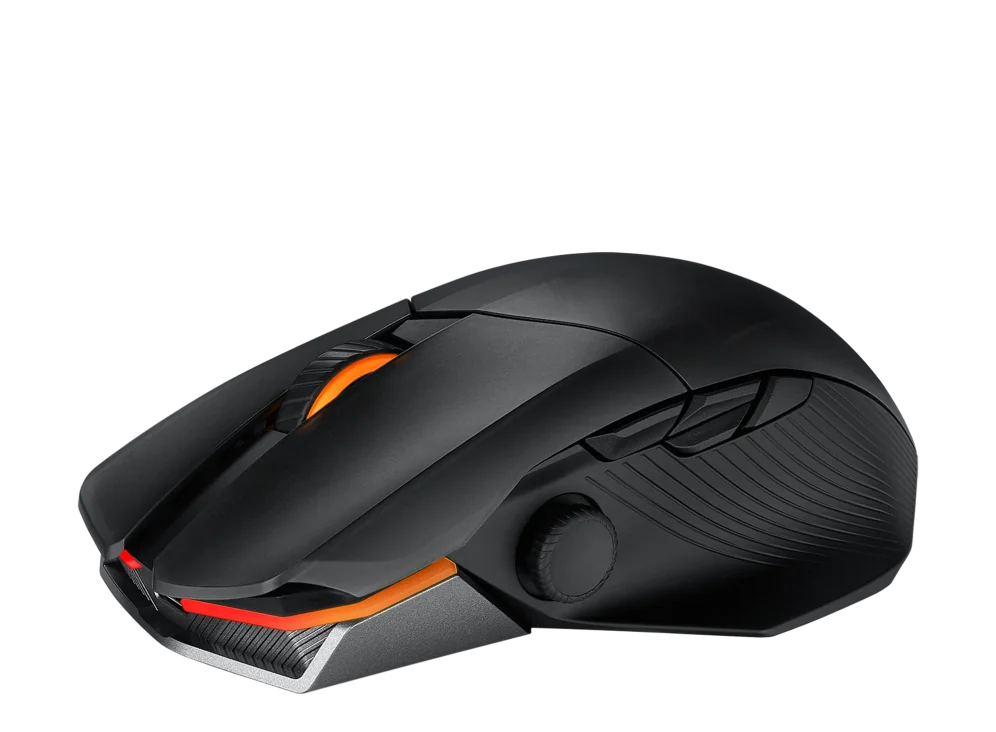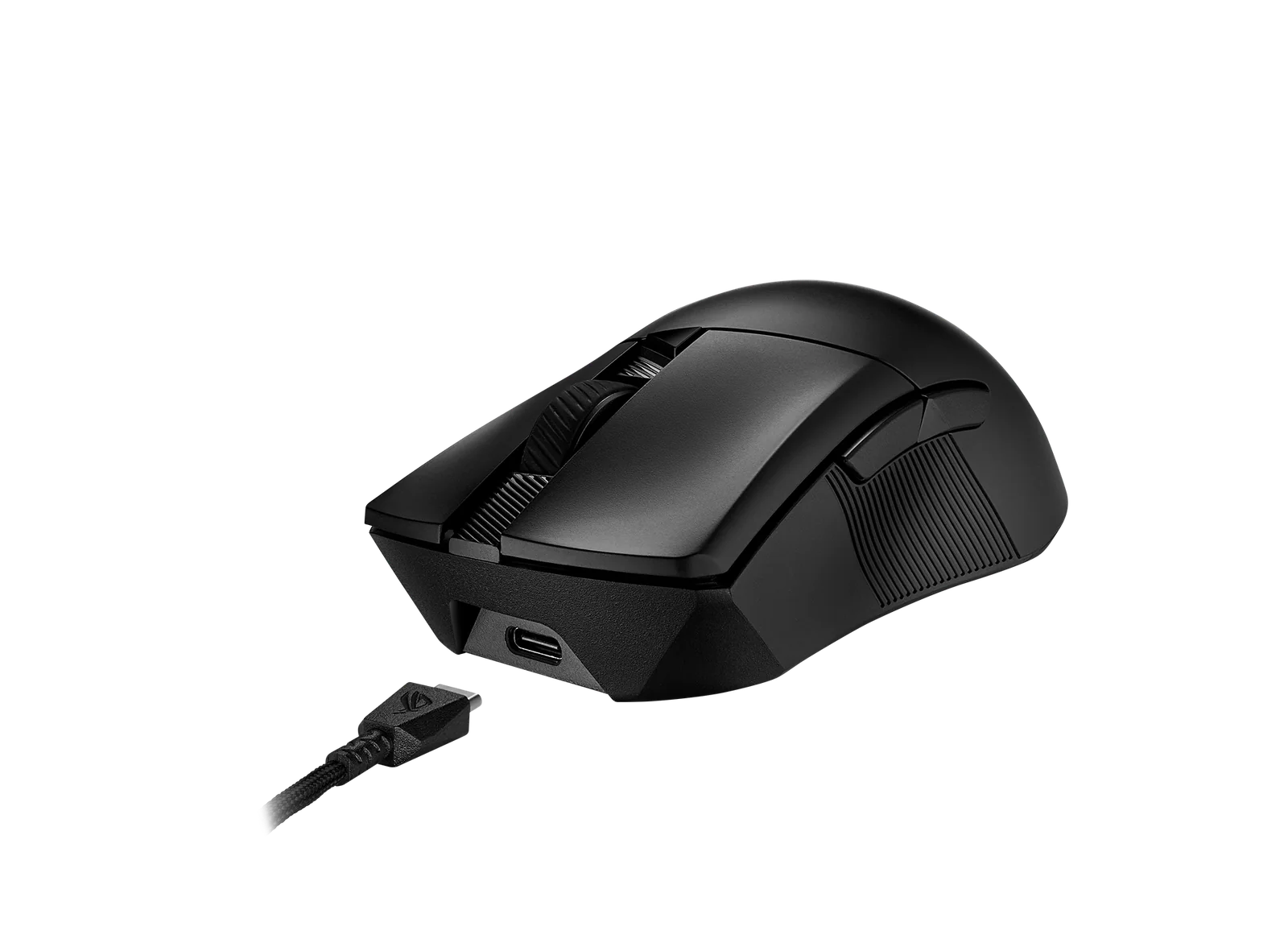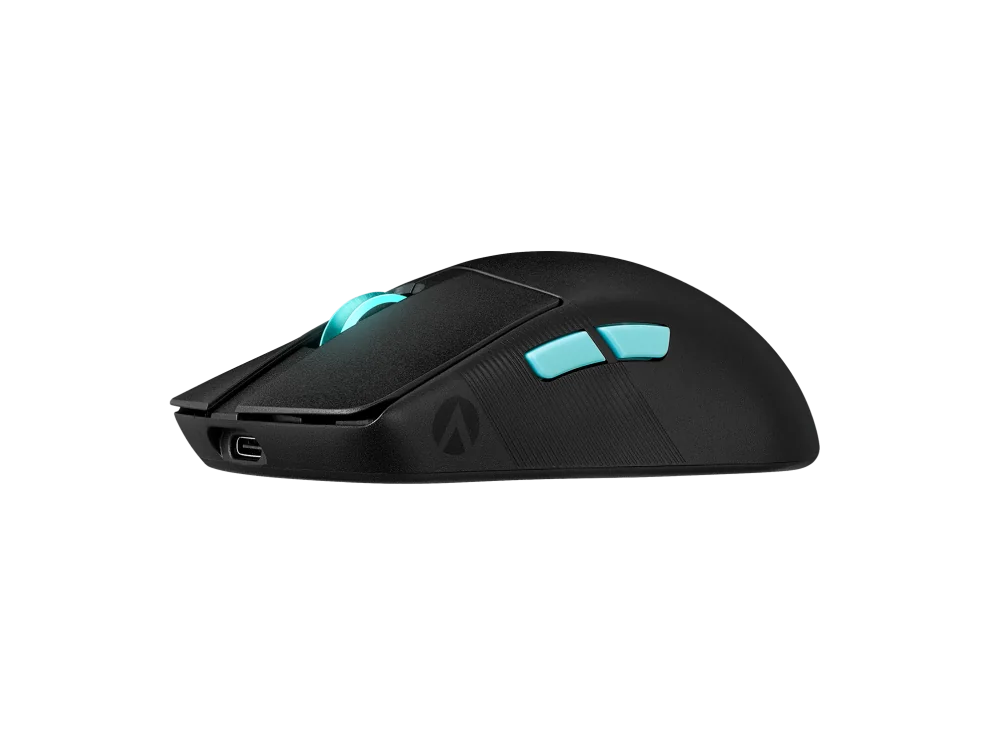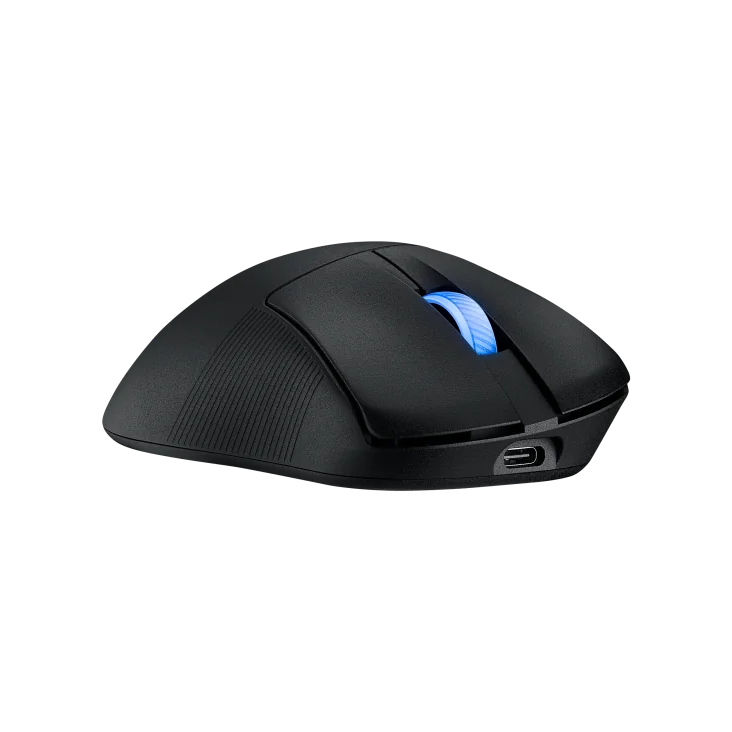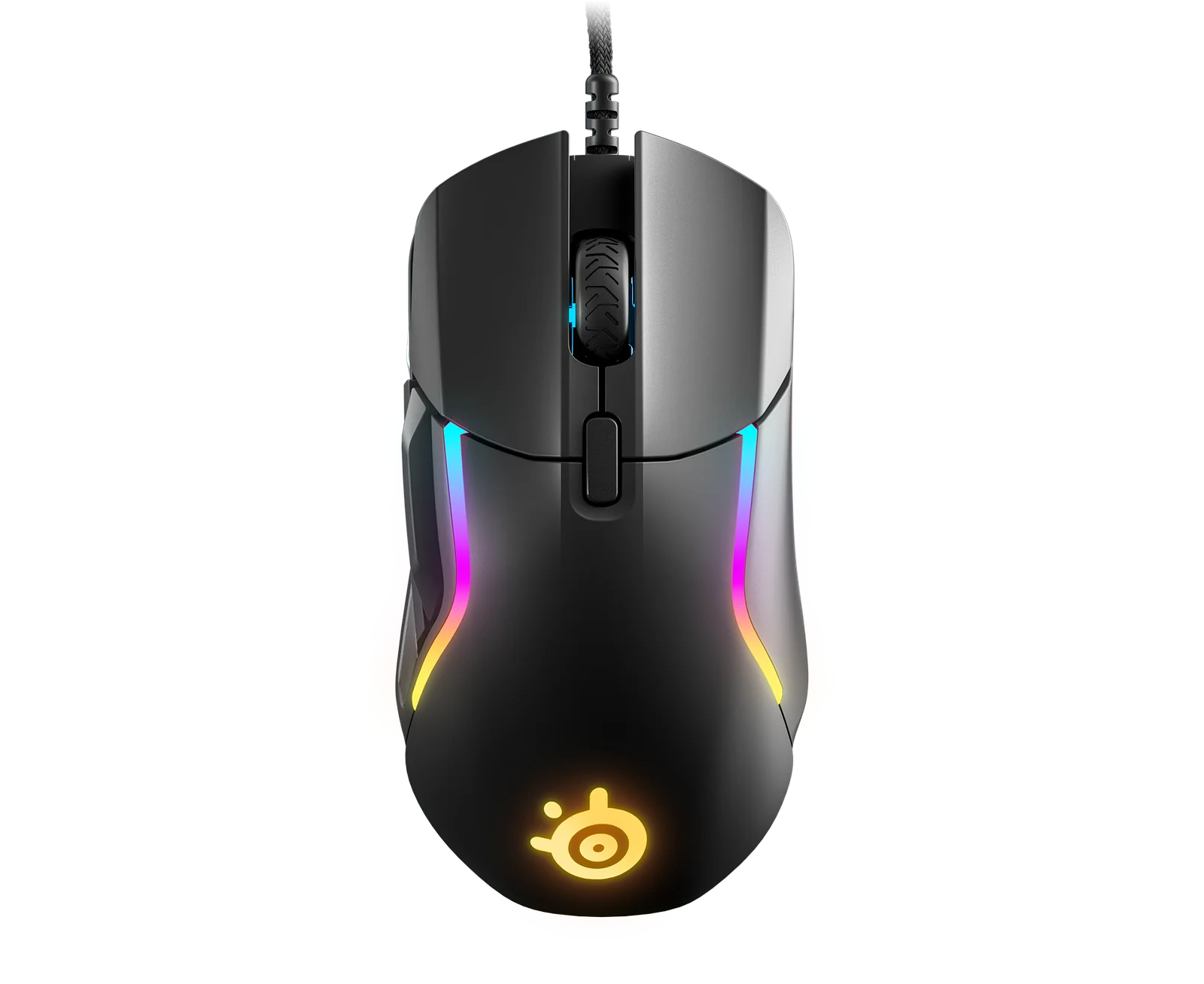
SteelSeries Rival 5 wired gaming mouse with 18K sensor and RGB
By SteelSeries · Computer Mice · Desk & Streaming Setup · More from SteelSeries
Price not listed
- SteelSeriesView at SteelSeries
- CdwView at Cdw
- Best BuyView at Best Buy
- eBayView at eBay
- eBay (used) eBay: used, open-box, refurbishedView at eBay (used)
Stores are listed in a fixed order, never by price or commission. Prices are snapshots. Check the current price with the store.
Summary
The SteelSeries Rival 5 is a wired, right-handed multi-genre gaming mouse built on SteelSeries’ TrueMove Air sensor, with nine programmable buttons and an 86 g shell. Check the measured sensor behaviour before you buy: it is a PAW3335-class design that smooths above 6200 CPI and has no lift-off adjustment.
Strengths
- Nine programmable buttons and SteelSeries GG give FPS, MOBA and MMO players a lot of on-board control.
- Tom’s Guide called it “an excellent mouse, particularly for its modest price” and gave it Editor’s Choice.
- Tracking is clean at 1000 Hz: no angle snapping, very low speed-related accuracy variance, no malfunction up to 4.5 m/s.
- An 86 g shell in a large, bulky shape with no externally visible holes, which TechPowerUp called very commendable.
- The flexible paracord-like cable and PTFE feet suit long play sessions.
- A two-year warranty and 80M-click main switches are the reliability anchors.
Weaknesses
- CPI accuracy is below average out of the box; deviation is exclusively positive, inconsistent and significantly large at 400, 800, 1600 and 3200 CPI.
- The sensor smooths from 6200 CPI and shows significant jitter at 11,700 CPI and above.
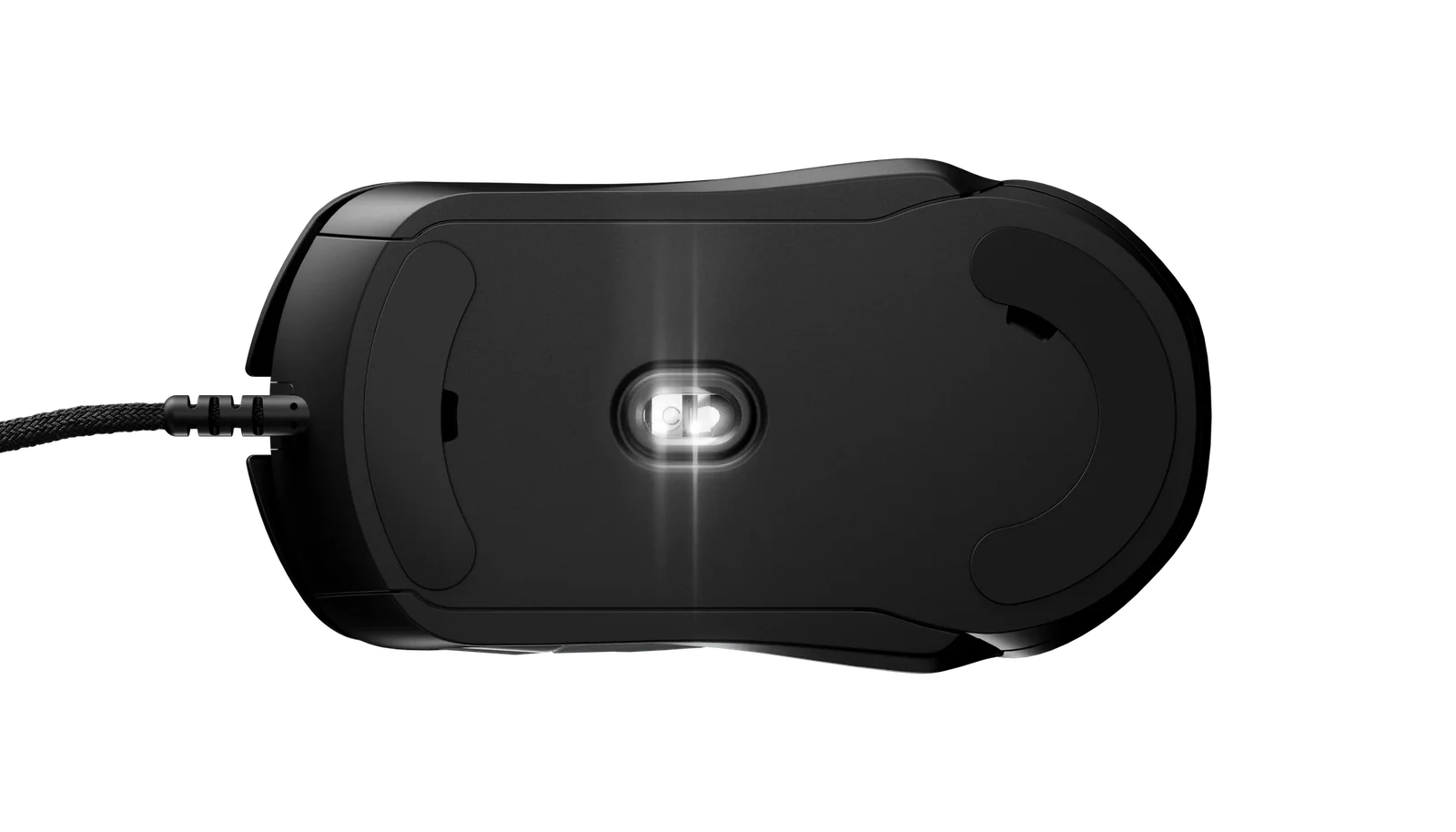
- Lift-off distance is fixed at about one DVD (under 1.2 mm) and cannot be adjusted.
- Click latency is about +9.5 ms against the Ikari baseline in TechPowerUp’s comparative test.
- Polling shows outliers at 125, 250 and 500 Hz; only 1000 Hz is clean.
- Tom’s Guide’s reviewer never found a use for the bidirectional paddle, and it shrinks the two thumb buttons.
Verified specifications
| Model | SteelSeries Rival 5, wired (TrueMove Air sensor, 10-zone PrismSync RGB). |
|---|---|
| Sensor | SteelSeries TrueMove Air, designed by PixArt and SteelSeries; 100–18,000 CPI, 400 IPS (10.16 m/s), 40G acceleration, tilt tracking. TechPowerUp identifies it as the PixArt PAW3335 with a custom SROM. |
| CPI steps | 100 CPI increments; out-of-box presets are 400, 800, 1200, 2400 and 3200 CPI. |
| Polling rate | 125, 250, 500 and 1000 Hz, with 1000 Hz as the default. |
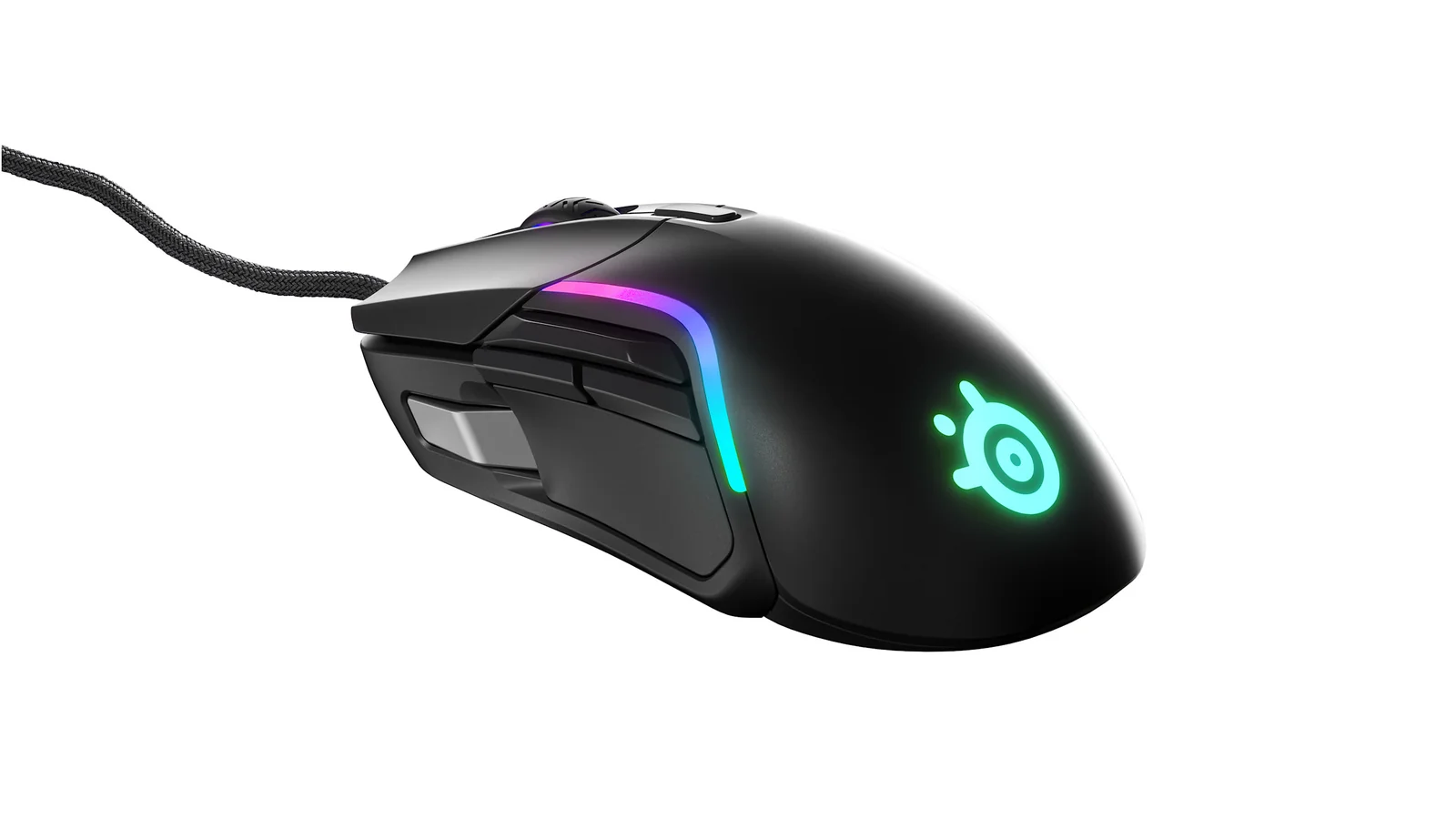
| Buttons | 9 programmable, including the wheel click; a 5-button side panel with a bidirectional toggle switch and a front sniper button. |
| Main switches | SteelSeries Golden Micro IP54, rated 80 million clicks; TechPowerUp identifies the parts as TTC Golden Micro Dustproof (80M). |
| Wheel | mechanical encoder with a single fixed resistance; no adjustable ratchet or free-spin mode. |
| Lighting | 10-zone PrismSync RGB, 16.8 million colors, two side LED strips plus a lit logo. |
| Software | SteelSeries GG; the first-party page lists Windows, Mac, Xbox and Linux support. |
| Cable | 2 m braided “Super Mesh”; TechPowerUp measured 2 m of paracord-like braid with above-average flexibility. |
| Weight | 85 g claimed by SteelSeries, 86 g (±1 g) measured; Tom’s Guide lists 3.0 oz. |
| Dimensions | 128.80 × 68.15 × 42.00 mm (5.07 × 2.68 × 1.65 in). |
| Materials | ABS plastic core; black-dyed PTFE feet with removal indentations. |
| Power | wired USB only; no batteries or charging. |
| In the box | mouse and quick start guide only. |
| Warranty | two years per TechPowerUp’s specification table. |
Full research notes and sources
Sensor and tracking
TechPowerUp’s instrumented test shows the character of the TrueMove Air. Base motion delay sits at 1.5–2 ms at all times, then grows to about 4.5–5 ms at 6200 CPI and about 8 ms at 11,700–18,000 CPI, the two points where the sensor starts smoothing. Speed-related accuracy variance is very low, and there was no malfunction up to 4.5 m/s, inside the claimed 400 IPS range. The paint test found no angle snapping, no jitter at 1600 CPI, minor jitter at 6200 and significant jitter at 11,700 and above, plus some lens movement. Click latency measured about +9.5 ms versus the Ikari baseline, with a 0.79 ms standard deviation. Polling is stable at 1000 Hz and shows outliers at the lower rates; RGB effects do not change polling.
Buttons, wheel and cable
The hardware complaints are specific. Tom’s Guide’s reviewer never found a genre where the bidirectional paddle helped, and its presence shrinks the two normal thumb buttons, so the three side inputs take a steep learning curve to tell apart in a split second. The scroll wheel has one fixed resistance with no ratchet or free-spin toggle, a feature several competitors offer. On the positive side, the two side LED strips are visible during use even though the palm logo is covered, and the 9 buttons plus SteelSeries GG cover a wide range of games. The 2 m paracord-like cable is more flexible than average, though not quite as good as SteelSeries’ own Aerox 3 Wireless cable, and the black-dyed PTFE feet glide well and have indentations that make them easier to remove.
Reliability, warranty and running costs
The main switches are rated for 80 million clicks with IP54 dust and water resistance, and TechPowerUp’s spec table lists a two-year warranty. That is a rating, not a longevity study. There are no recurring costs: the mouse is wired with no batteries or dock, and SteelSeries GG is free. Aftermarket or official spare parts for the feet and cable were not confirmed.
Value in 2026
Tom’s Guide reviewed the Rival 5 as a $60 peripheral in May 2021, and TechPowerUp listed it at $59.99 in July 2021. At or under about $60 it is defensible on its launch-era evidence: Editor’s Choice, clean 1000 Hz behaviour, no angle snapping, very low speed-related accuracy variance, 9 buttons and a two-year warranty, at the cost of an aging sensor class that smooths above 6200 CPI and has no lift-off control. Wirecutter’s 2026 guide, updated 2026-04-02, does not carry the Rival 5 among its picks or named competition; it anchors quality wired mice at $50–$80, with its own wired pick at $44 and its budget wireless pick at $30. Above about $60 the confirmed instrumented weaknesses and the aging sensor class argue against it, and above $80 lighter, higher-IPS competitors with adjustable lift-off exist for less.
Which model this is
This page covers the wired SteelSeries Rival 5 multi-genre mouse. It is right-handed, wired-only and built on an ABS plastic core, and it is distinct from the separate Rival 5 Wireless model. SteelSeries’ first-party US page is the identity anchor, but the exact model number or SKU was not confirmed there, and no hardware revision of the wired Rival 5 was found in the sources read.
Sources
Manufacturer:
Independent reviews:
Owner reports:
No owner discussion was gathered for this pass; the sources above are professional reviews only.