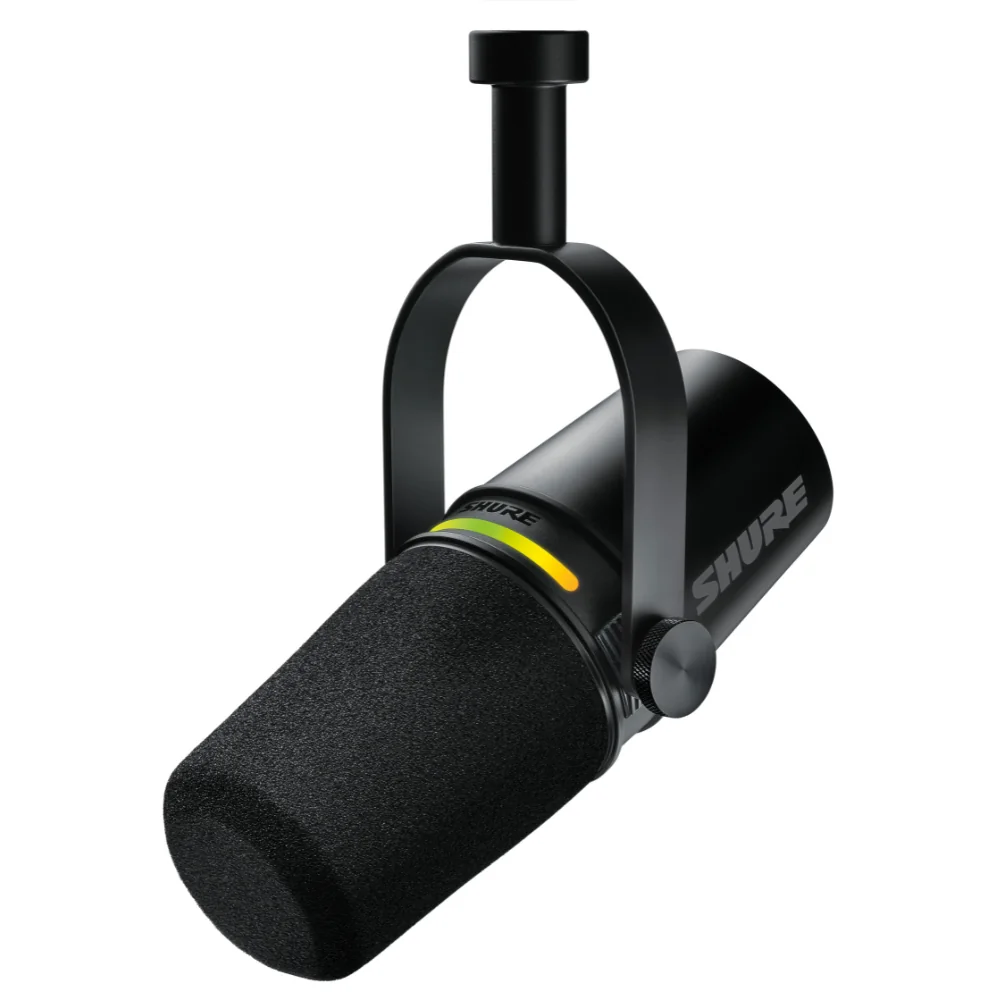


Shure MV7i
By Shure · USB Microphones · Desk & Streaming Setup
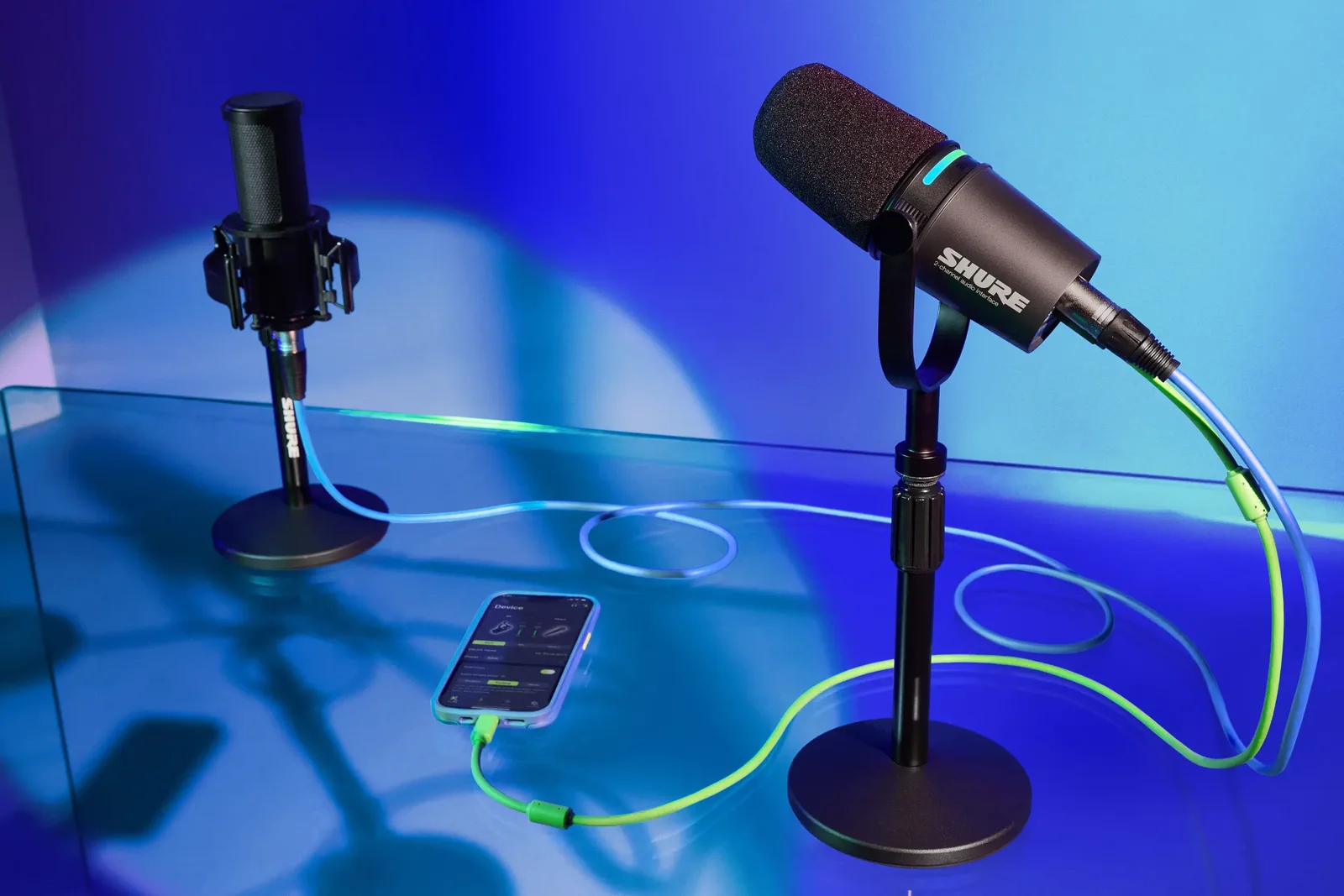
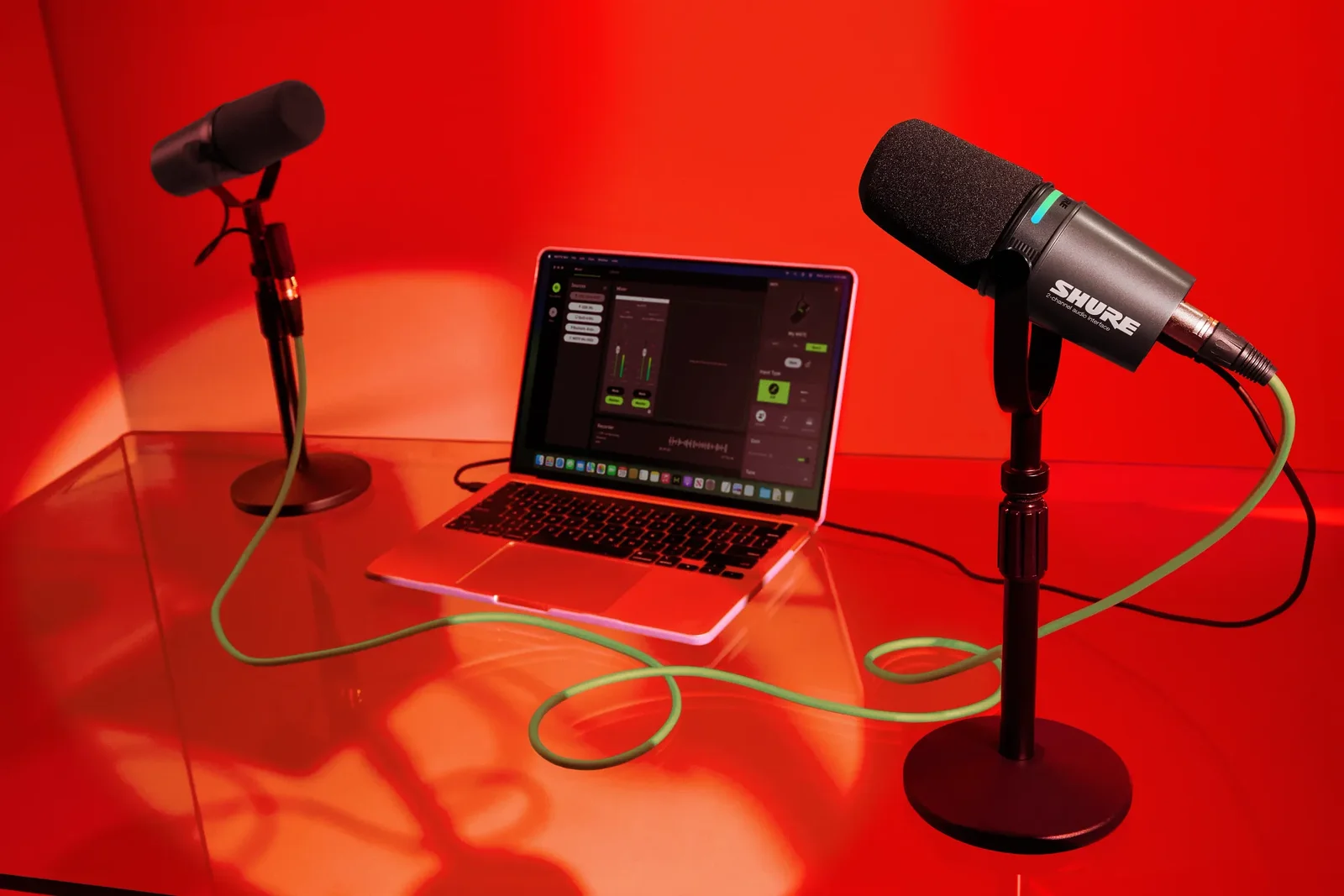
- Dynamic USB-C microphone with built-in two-channel interface
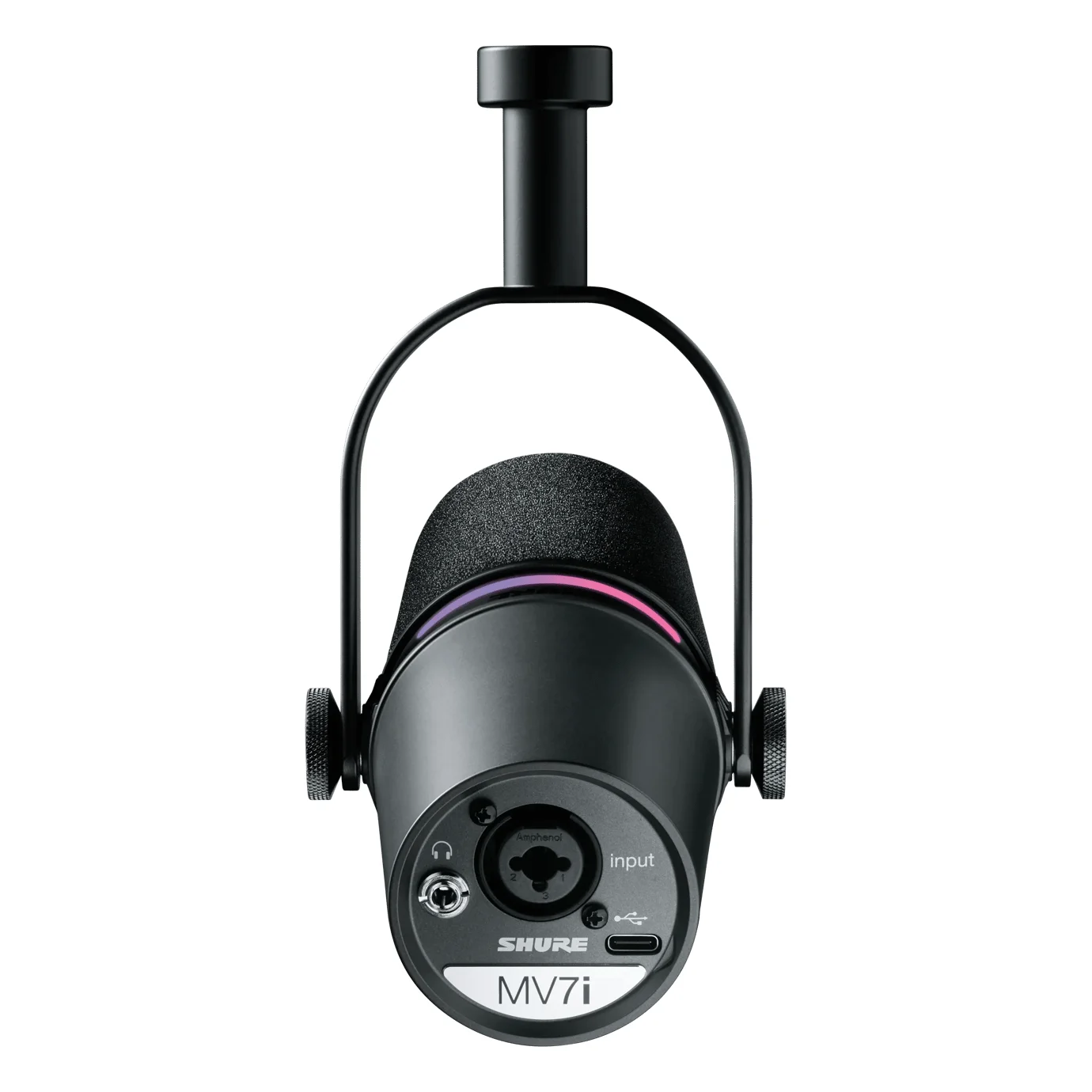
- Combo XLR and 1/4-inch input for a second microphone or instrument
- Color-customizable LED touch panel for mute control
- 3m USB-C to USB-C cable included
- Compatible with Mac, Windows, iPhone and iPad
Price not listed
- ShureView at Shure
- eBayView at eBay
- AmazonView at Amazon (paid link)
- eBay (used) eBay: used, open-box, refurbishedView at eBay (used)
Stores are listed in a fixed order, never by price or commission. Prices are snapshots. Check the current price with the store.
Summary
A dynamic USB-C microphone that doubles as a two-channel audio interface, so a second mic or instrument plugs straight into the back. Budget for a stand: none is in the box, and the mic is tuned for close vocal work rather than studio tracking.
Strengths
- Warm, mid-forward vocal sound that reviewers describe as broadcast-ready out of the box.
- The +60 dB second input runs a gain-hungry dynamic like the SM7B without an inline booster.
- Onboard DSP covers auto gain, denoiser, popper stopper, EQ, compression and reverb.
- Three routing modes let you record the mic and the second input as separate tracks.
- All-metal body with an internal shock mount and a foam windscreen.
- Plug-and-play over USB-C on Mac, Windows, iPhone, iPad and Android.
Weaknesses
- No stand or boom arm is included, so mounting hardware is an extra cost.
- The USB stream is fixed at 48 kHz, which rules out higher-rate recording workflows.
- The moving-coil capsule produces audible hiss on very quiet sources.
- The denoiser can sound aggressive on music.
- The yoke locking screws can loosen and let the microphone droop.
Verified specifications
| Model | Shure MV7i, dynamic USB-C microphone with a built-in two-channel interface. |
|---|---|
| Polar pattern | cardioid. |
| Capsule | dynamic (moving-coil). |
| Frequency response | 50 Hz–16 kHz. |
| Max SPL | 128 dB. |
| Sensitivity | −33 dBFS/Pa at 1 kHz, minimum gain in flat mode. |
| Bit depth | 16/24-bit. |
| Sample rate | 44.1/48 kHz; up to 24-bit/48 kHz on Mac and PC, 16-bit/44.1 kHz on iOS. |
| Mic gain | 0 to +36 dB, auto or manual. |
| Second input | combo XLR / 1/4-inch for microphone or instrument, 0 to +60 dB gain and 48 V phantom power. |
| Host connection | USB-C, MFi certified; not compatible with Lightning-port iOS devices. |
| Headphone output | 3.5 mm with zero-latency monitoring and a monitor mix. |
| Routing modes | Mixdown, Multi-Track and Stereo. |
| Controls | 36-bit color LED touch panel with split or combined metering and tap to mute. |
| Software | MOTIV Mix on Windows 10+/macOS 12+ (8 GB RAM minimum); MOTIV Audio/Video on iOS 16+/Android 12+. |
| Dimensions | 90 × 207 × 164 mm (H × L × D). |
| Weight | 567 g (1.25 lb). |
| Thread | 5/8-inch, with a 5/8-to-3/8 adapter included. |
| In the box | microphone, 3 m (9.8 ft) USB-C to USB-C cable, quick-start guide. |
| Power | bus-powered over USB-C; the 48 V phantom supply for the second input comes from the USB connection. |
Full research notes and sources
Two sources in one mic
The MV7i is a dynamic USB-C microphone that also works as a two-channel interface. The mic itself connects to a Mac, Windows PC, iPhone, iPad or Android device over USB-C, while a second microphone or instrument plugs into a combo XLR/1/4-inch input on the rear with up to +60 dB gain and 48 V phantom power. The catch is that the rear jack is an input only. There is no XLR output, so the mic cannot feed an external interface or mixer, and the interface half is idle unless you have a second source to plug in.
MOTIV Mix, routing and controls
All the processing lives in Shure’s MOTIV Mix software: auto level with SmartGate, voice isolation, a real-time denoiser, a digital popper stopper, tone presets, a high-pass filter, compression, a limiter and reverb. You can record in Mixdown (a mono sum), Multi-Track (two separate mono tracks) or Stereo. The mic keeps its settings once you set them, so it stays configured on the next machine. The trade-offs are a learning curve and overlap: the app and the mic’s own DSP both expose mixing controls, and there is no way to change the recording quality from the desktop app. The LED panel handles mute and metering, but its pulsing meter is a distraction and tap-to-mute can fire by accident depending on how the mic is positioned.
Mounting and running costs
Nothing mounts the mic out of the box: the box holds the microphone, a 3 m (9.8 ft) USB-C to USB-C cable and a quick-start guide. The body uses a standard 5/8-inch thread with a 5/8-to-3/8 adapter, so most boom arms and desk stands fit, but you supply one. To use the interface you also need a second XLR microphone or an instrument. There is no capsule or accessory lock-in beyond that. Shure lists the mic at $349, and Thomann (US) sells it for $345; Best Buy and B&H list it at $389. Maintenance is limited to wiping the foam windscreen and mesh, keeping the combo input and 3.5 mm jack clear of debris, and updating firmware through MOTIV Mix.
Is it worth it?
At Shure’s $349 list price the MV7i is a fair deal for podcasters and streamers who need two-source recording without a separate interface, given the build, the DSP and the +60 dB, 48 V second input. Paying the $389 that Best Buy and B&H ask weakens the case, and single-mic buyers can get most of the same DSP from the MV7+ at $279 or the MV6 under $175. A Focusrite Scarlett 2i2 (about $200) plus two Samson Q2U mics (about $140) costs roughly the same as the MV7i alone, though you give up the integrated DSP and the portability. Reviewers rate it well, but no instrumented lab test has been published, so the sound verdicts rest on listening impressions.
Which model this is
This page covers the Shure MV7i, SKU MV7i, a dynamic USB-C microphone with a built-in two-channel interface, finished in black. It is not the MV7, MV7+, MV7X, MV6 or SM7B. The giveaway is the rear combo XLR/1/4-inch input where the MV7+ has an XLR output. The Amazon listing is ASIN B0DNTZ22M5. No hardware revisions or color variants were documented in the sources checked.
Sources
Manufacturer:
Independent reviews:
Owner reports: