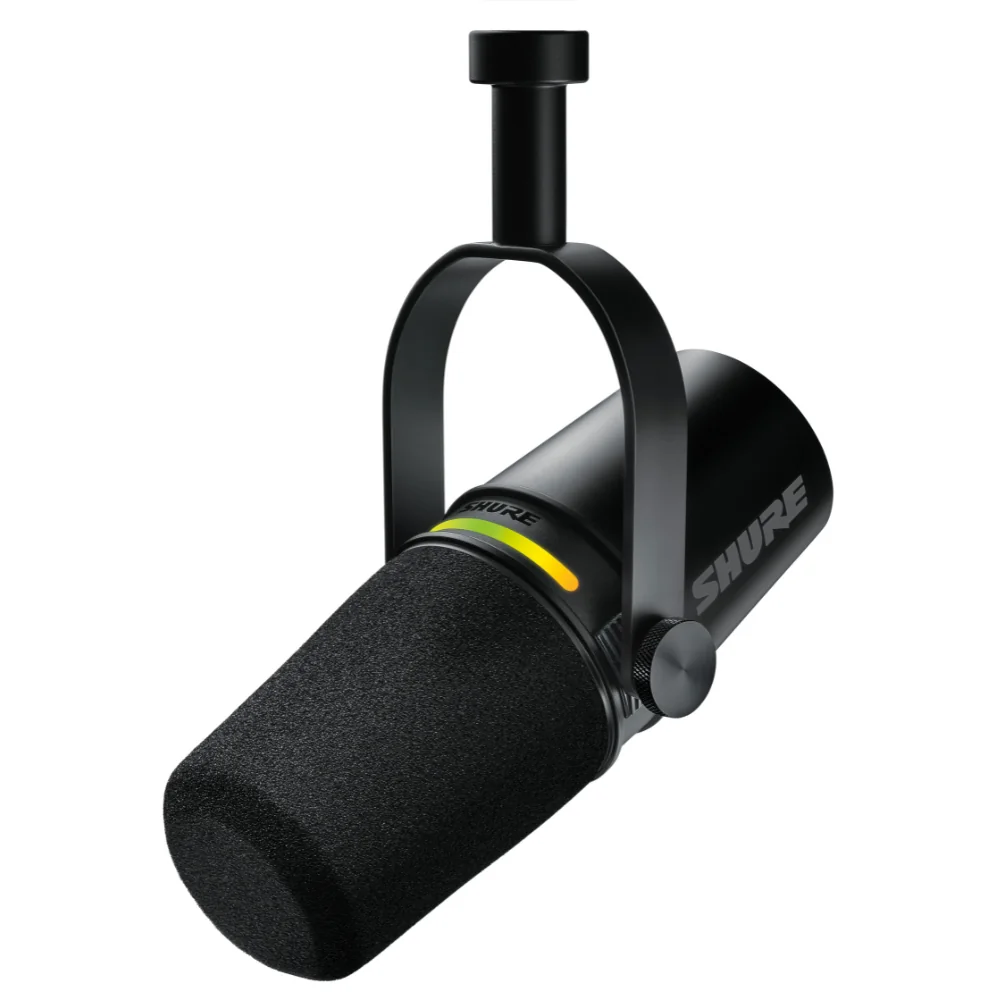
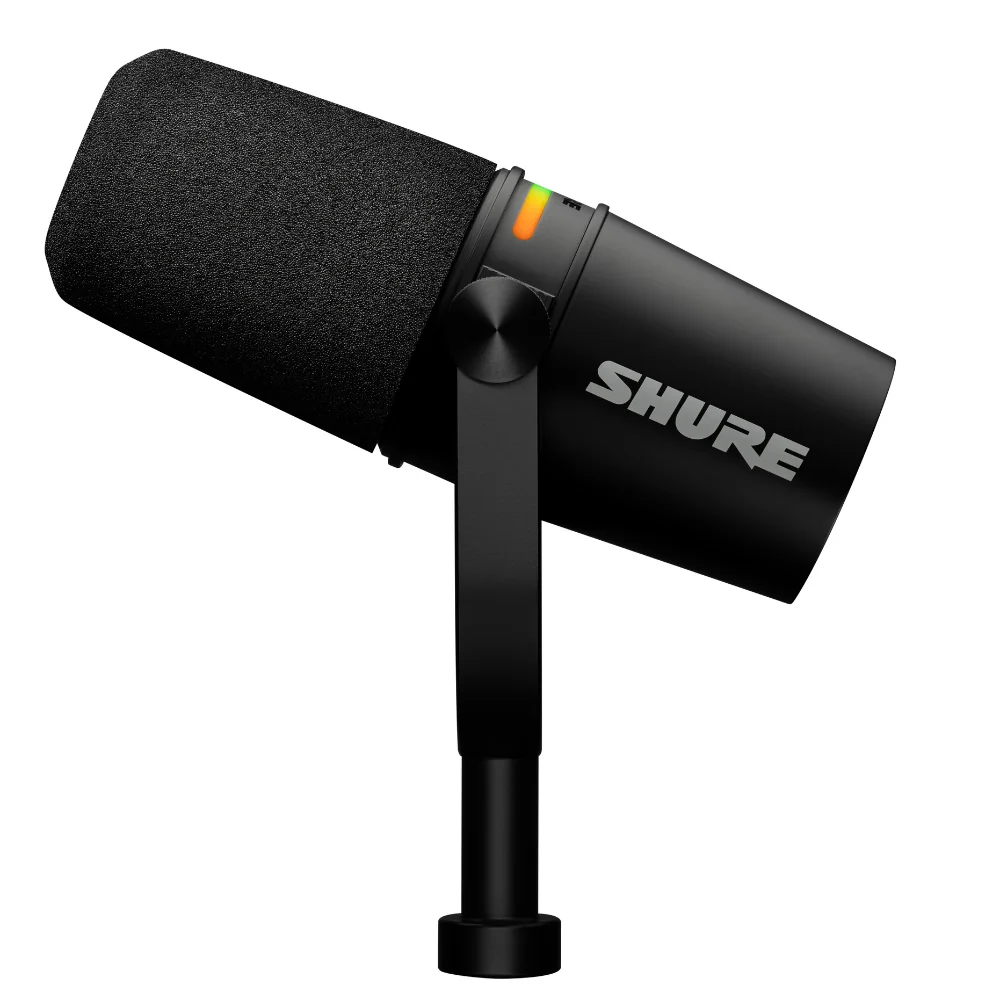
Shure MV7+
By Shure · USB Microphones · Desk & Streaming Setup
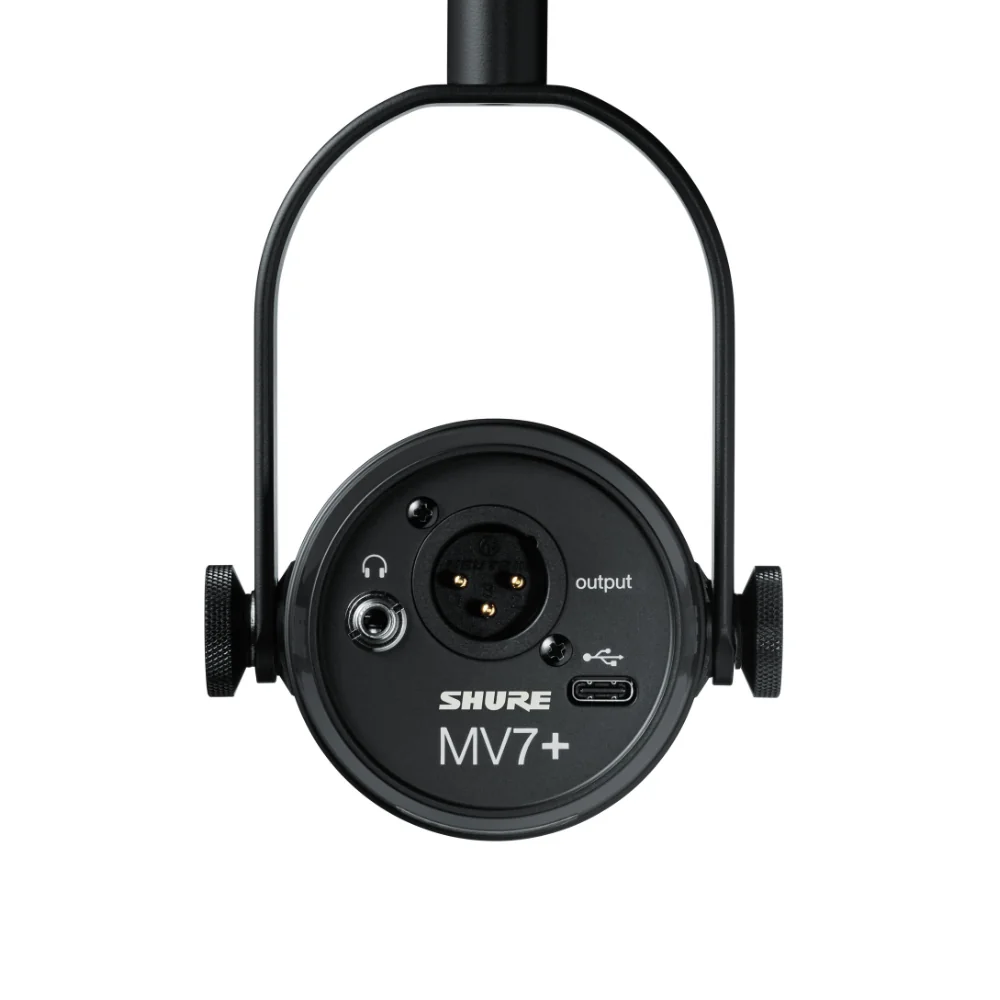
- Dynamic microphone with USB-C and XLR outputs
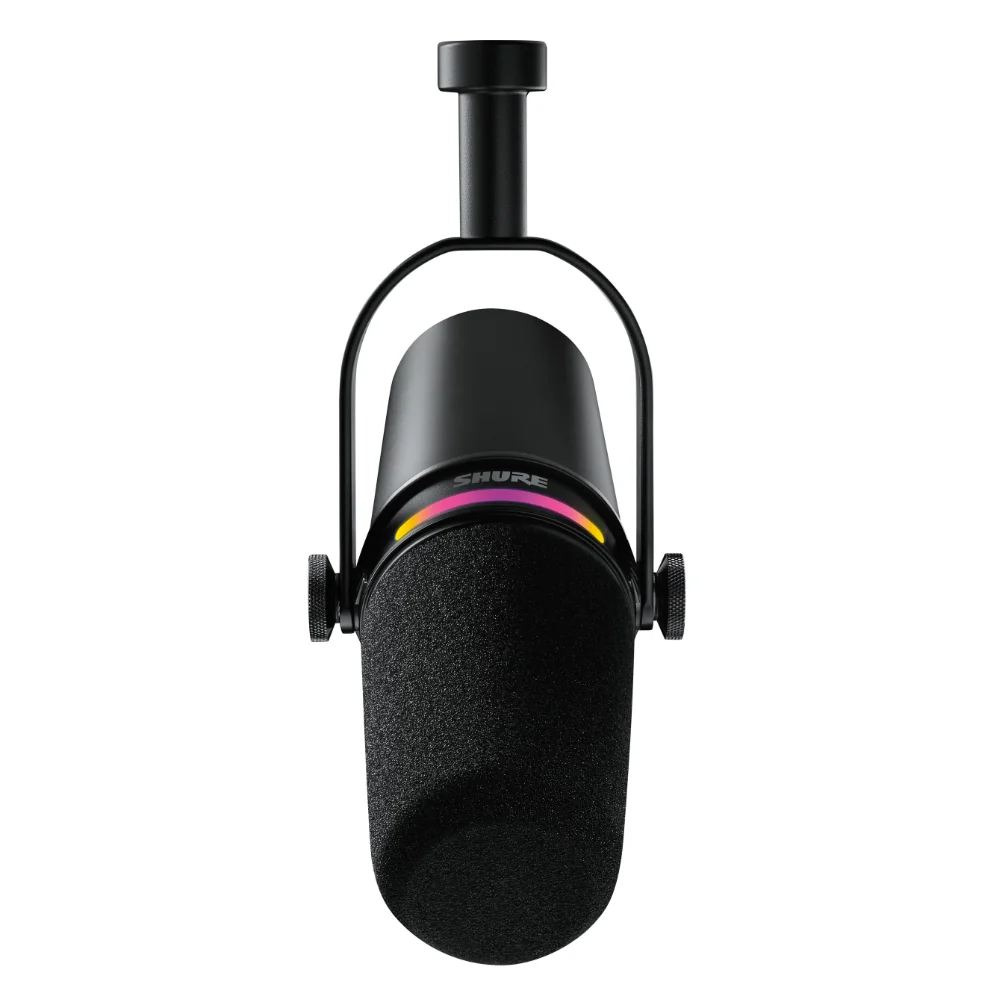
- Customizable LED touch panel
- Real-time Denoiser and Auto Level Mode
- Digital Popper Stopper and adjustable reverb
- Voice Isolation
Price not listed
- ShureView at Shure
- eBayView at eBay
- AmazonView at Amazon (paid link)
- eBay (used) eBay: used, open-box, refurbishedView at eBay (used)
Stores are listed in a fixed order, never by price or commission. Prices are snapshots. Check the current price with the store.
Summary
A dynamic podcast microphone that runs over USB-C and XLR at the same time, with a customizable LED mute panel and on-board DSP for untreated rooms. Check the box before you buy: the $279 base package includes no stand or boom arm, only a yoke mount.
Strengths
- Warm, clear, broadcast-leaning vocal tone that reviewers describe as radio-quality.
- USB-C and XLR can run at once, so you can record digitally and keep an analog backup.
- The LED panel doubles as a customizable mute button and level meter.
- The on-board denoiser and popper stopper genuinely help in untreated rooms.
- Solid diecast aluminum body on a standard 5/8-inch mount.
- OBS certification, which streamers notice.
Weaknesses
- No stand or boom arm in the base package; you need the $299 or $339 kit or your own mount.
- No physical gain or volume knob; every level is set in software.
- The XLR output is gain-hungry and can need a cloudlifter or a high-gain interface.
- The MOTIV Mix desktop app was in beta at launch and reviewers called it restrictive.
- Mobile use needs the MOTIV Audio app installed and open before the mic is recognized.
- The yoke has no shock absorption, and a tap on the mic can trigger mute.
Verified specifications
| Type | dynamic, cardioid (unidirectional). |
|---|---|
| Frequency range | 50 Hz – 16 kHz. |
| Sample rate and bit depth | 44.1 or 48 kHz at 16- or 24-bit. |
| Sensitivity | 40 dB. |
| Connectors | USB-C and XLR, usable at the same time, plus a 3.5 mm headphone jack for live monitoring. |
| LED touch panel | 16.8 million color options; works as the mute button and level meter. |
| DSP (USB mode only) | real-time denoiser, digital popper stopper, auto level mode, voice isolation, three reverb types (Studio, Plate, Hall), high-pass filter at off / 75 Hz / 150 Hz, tone profiles (Dark, Natural, Bright) and a compressor (light, medium, hard). |
| Software | MOTIV Mix desktop app (Windows 10+, macOS 12+, 8 GB RAM minimum); MOTIV Audio and Video mobile apps (iOS 16+, Android 12+). |
| Power | bus-powered over USB-C; no external supply. |
| Mount | 5/8"-27 thread with a 3/8-inch adapter in the box. |
| Output impedance | 350 ohm at 1 kHz. |
| Housing | diecast aluminum. |
| Weight | 573.5 g (1.26 lb). |
| Dimensions | 6.67 × 3.54 in body (D × W); 6.46 in tall on the yoke. |
| In the box | microphone, 3 m USB-C to USB-C cable, quick-start guide. |
| Warranty | two years from the original purchase date. |
| OBS certified. | |
Full research notes and sources
Sound and build
Reviewers agree on the character: warm, clear and mid-forward, closer to a broadcast mic than a bright USB mic. PCMag described a “clean, warm tone with a richness that lent my voice some of that sought-after, radio-quality sound.” The Podcast Host measured auto-gain output at -24 LUFS with a -4 dBFS true peak, and found the popper stopper tamed plosives and the denoiser left no obvious tone damage with a ceiling fan running. AppleInsider called it the best mic it had tested for natural, smooth vocals.
The body is diecast aluminum and weighs 573.5 g (1.26 lb), and it sits on a swiveling yoke with a 5/8"-27 thread. The MV7+ is slightly longer than the original MV7 because of a thicker pop filter built into the foam windscreen. There is no shock absorption in the yoke, so a knock on the desk or the mic itself can add resonance.
Connections, software and mobile
USB-C and XLR can run at the same time; SoundGuys recorded over USB in MOTIV Mix while tracking a clean XLR backup into a DAW. All the DSP - denoiser, popper stopper, auto level, voice isolation, reverb, tone profiles, high-pass filter and compressor - applies only in USB mode. Over XLR the mic sends an unprocessed signal, which is why it sounds closer to the SM7B on XLR than on USB.
Two practical catches. And the USB side is picky about the path: a USB-C to USB-A adapter or a hub can leave the mic visible but the DSP features inaccessible, so plug straight into a USB-C port.
MOTIV Mix handles setup, tone and levels on the desktop.
Stands, kits and what you pay
The $279 base package is the microphone, a 3 m USB-C cable and a quick-start guide - no stand. Shure sells a desktop-stand kit at $299 and a boom-arm kit at $339, and bundles with SRH440A headphones run up to $429. Tom’s Guide listed the mic at $269.10 at Sweetwater in August 2024.
Is it worth it?
The MV7+ is a premium single-mic solution, not a budget one. Reddit owners are split on value: sentiment aggregates at 76% positive, but some question whether it beats an ATR2100x at about $50, and one owner returned it because the USB-mode DSP felt inconsistent, adding that it “shines on XLR.”
Which model this is
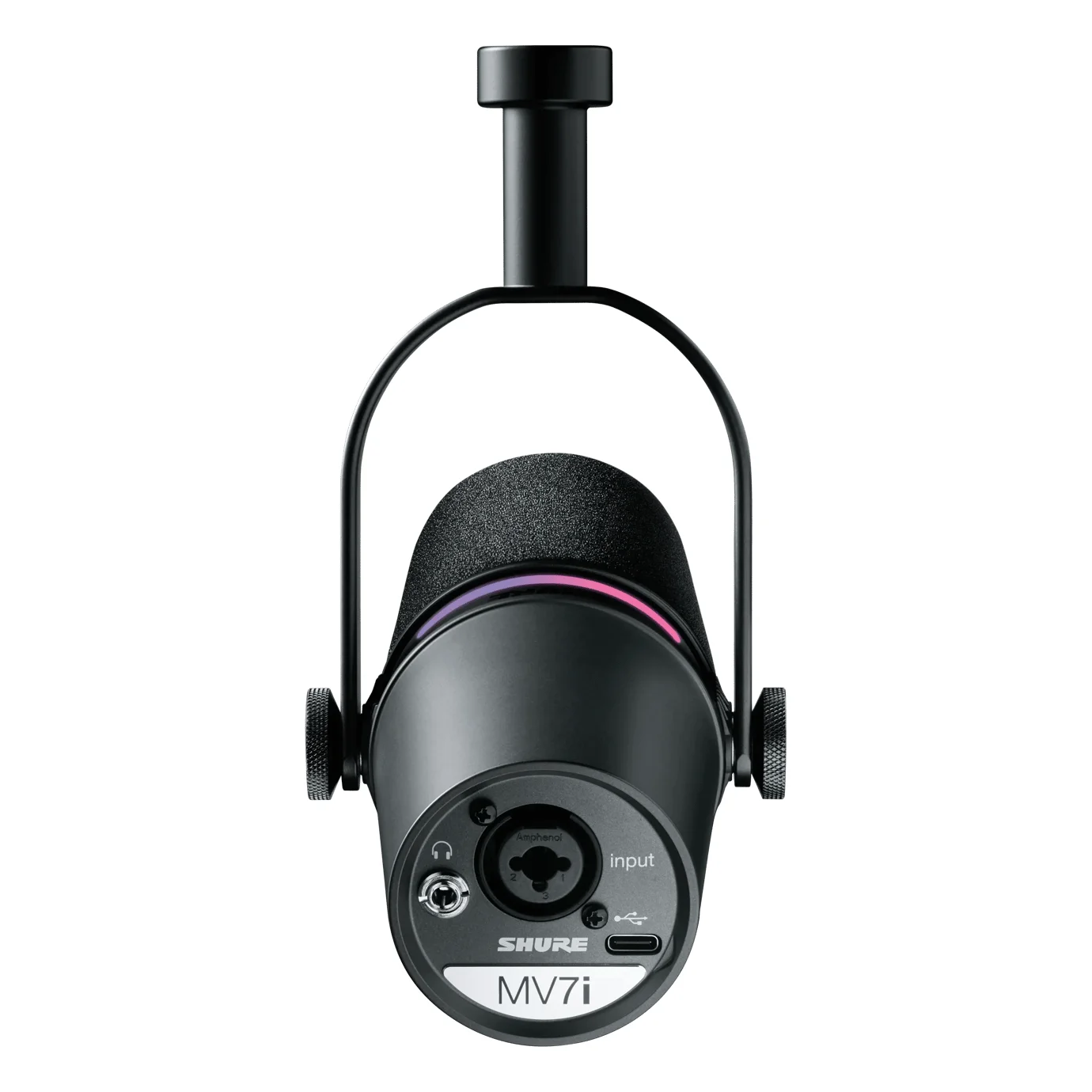
This page covers the MV7+ (MV7 Plus) in black, Shure’s 2024 refresh of the 2020 MV7. It adds the LED touch panel, the denoiser and USB-C over the original MV7, which used micro-USB. The black mic-only variant is ASIN B0CTJ7PVN1. Do not confuse it with the MV7i (2025), which adds a second analog input and drops the XLR output, or the analog-only SM7B.
Sources
Manufacturer:
- MV7+ Podcast Microphone (Shure)
- MV7+ user guide (Shure)
- MV7+ certified for streaming (Shure)
- Making a great mic even better: the new MV7+ (Shure France)
Independent reviews:
Owner reports:
Warranty and support: