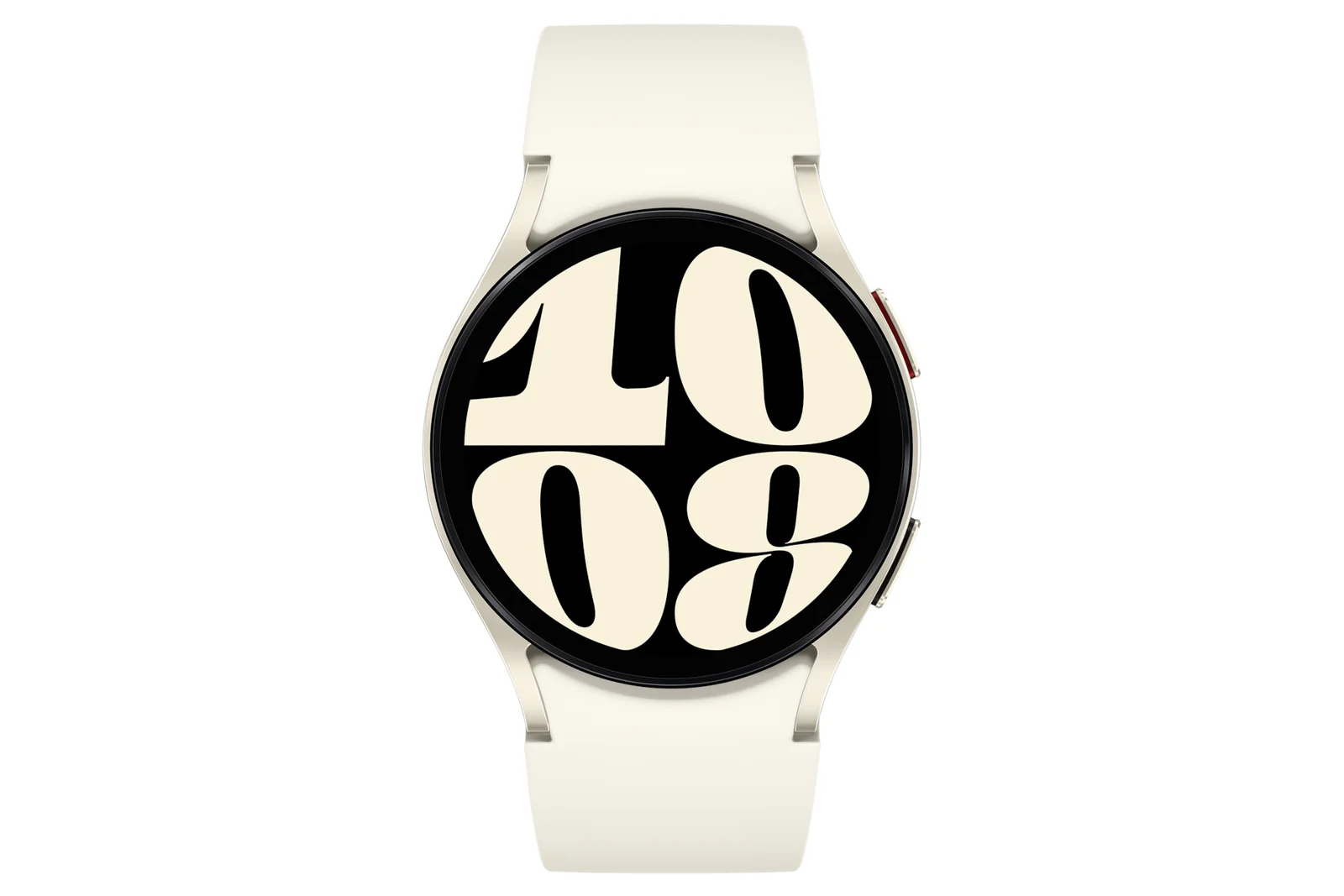
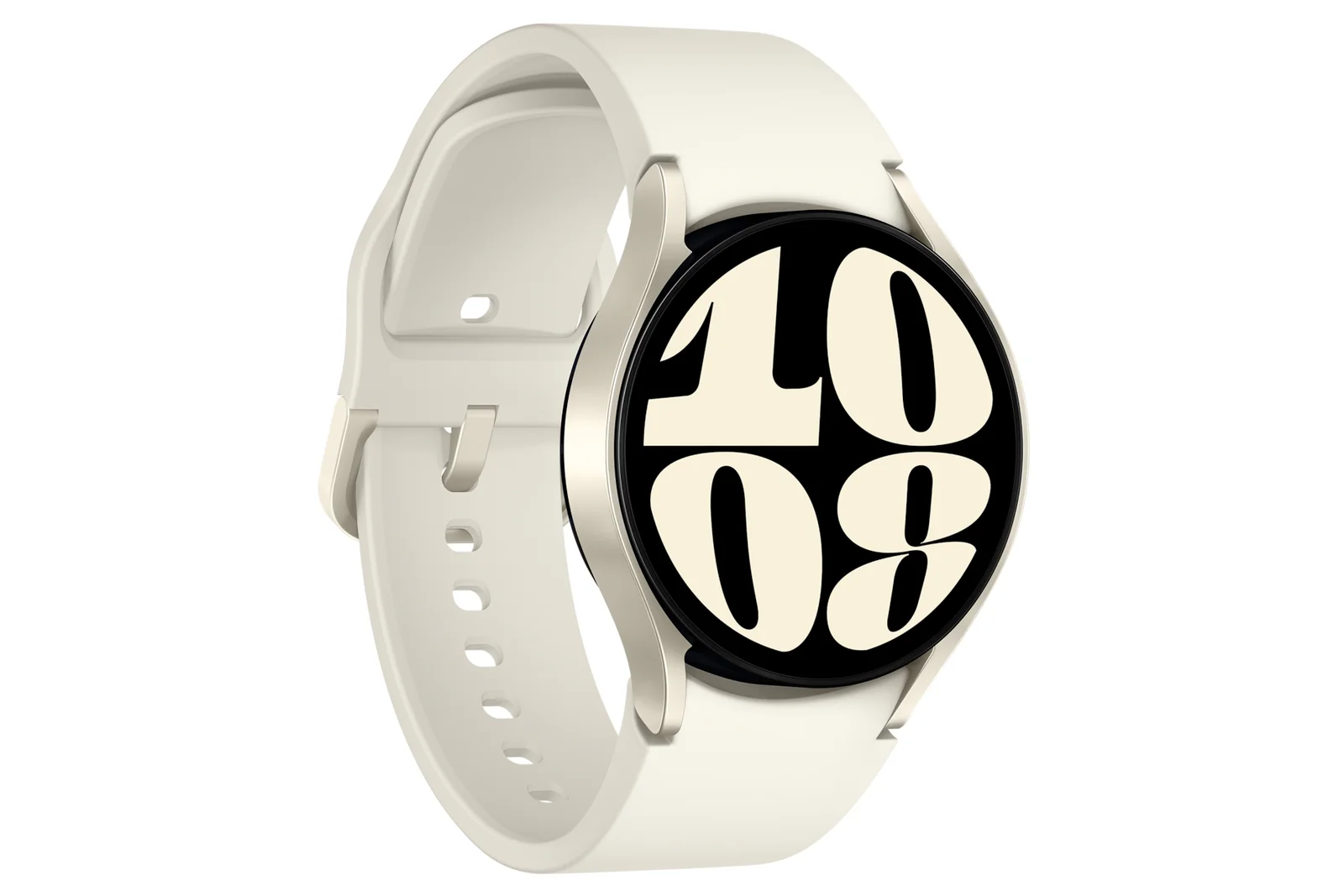
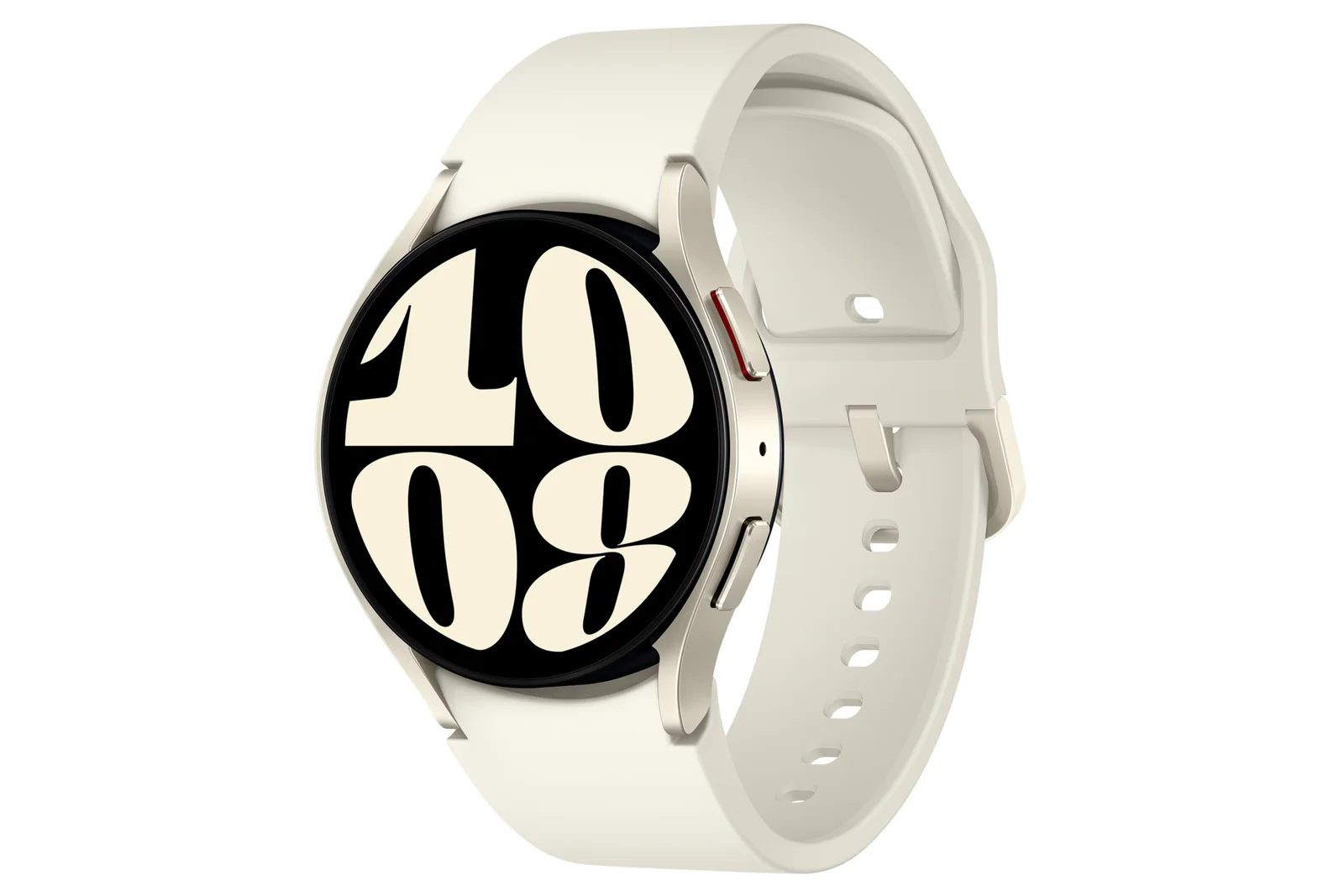
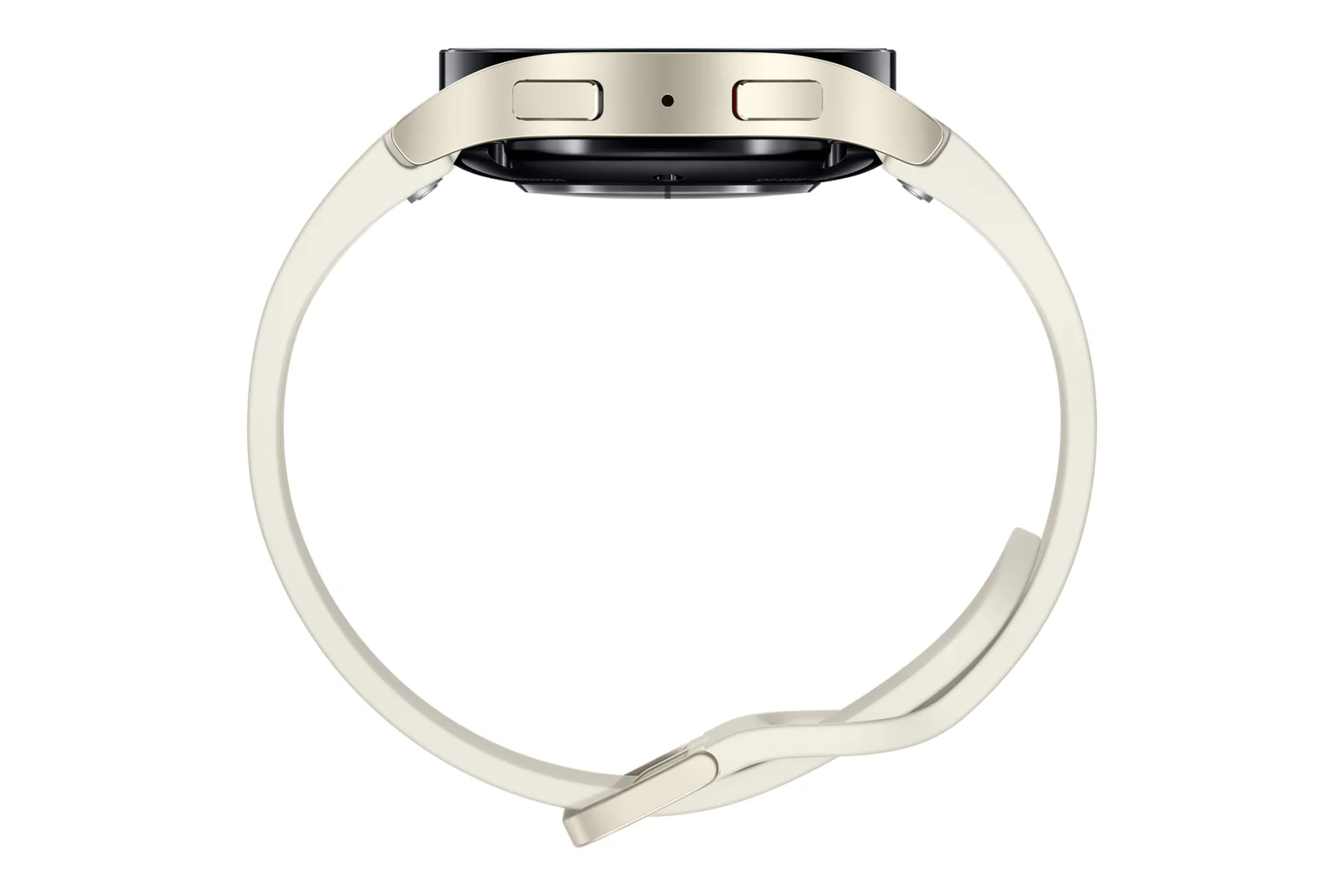
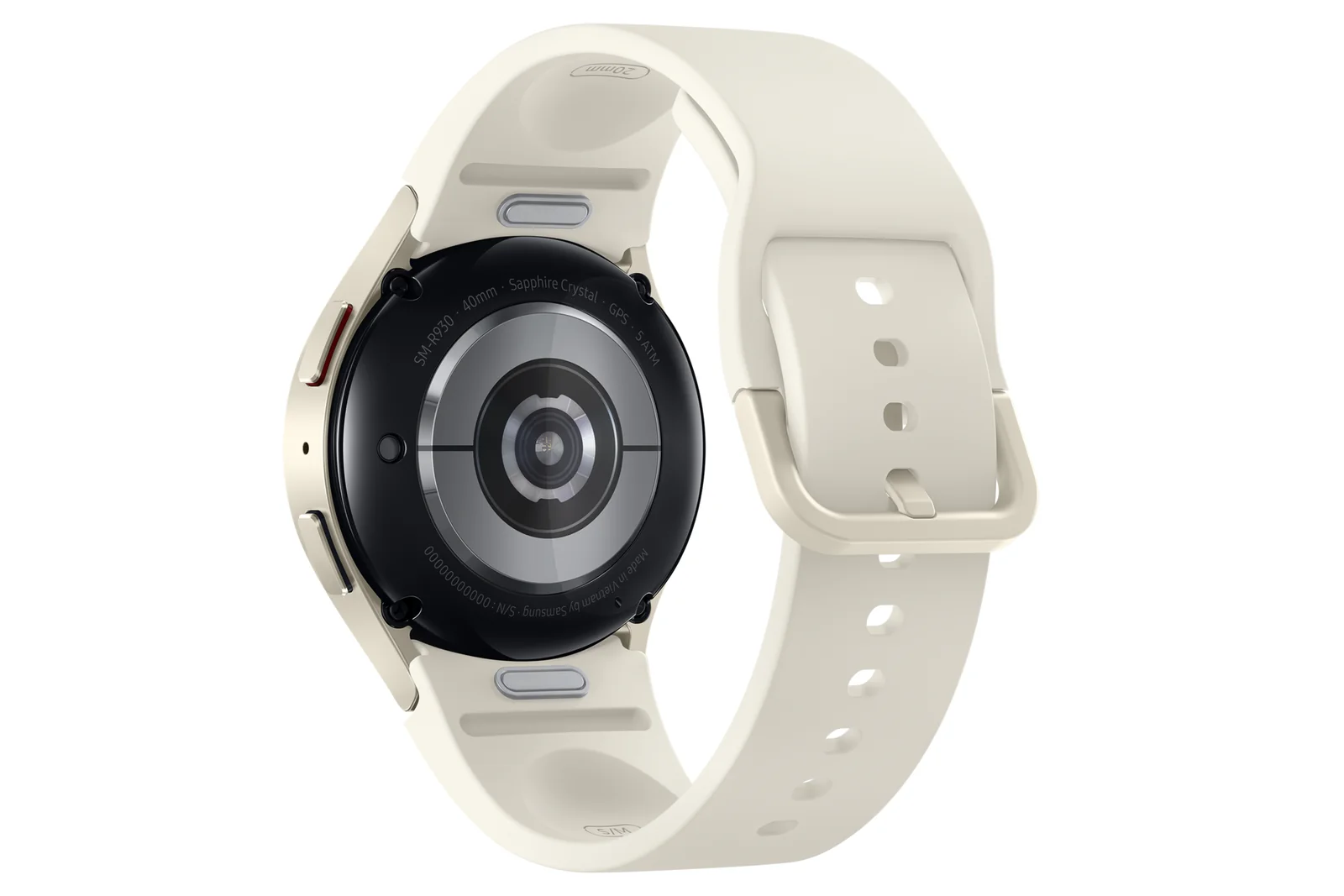
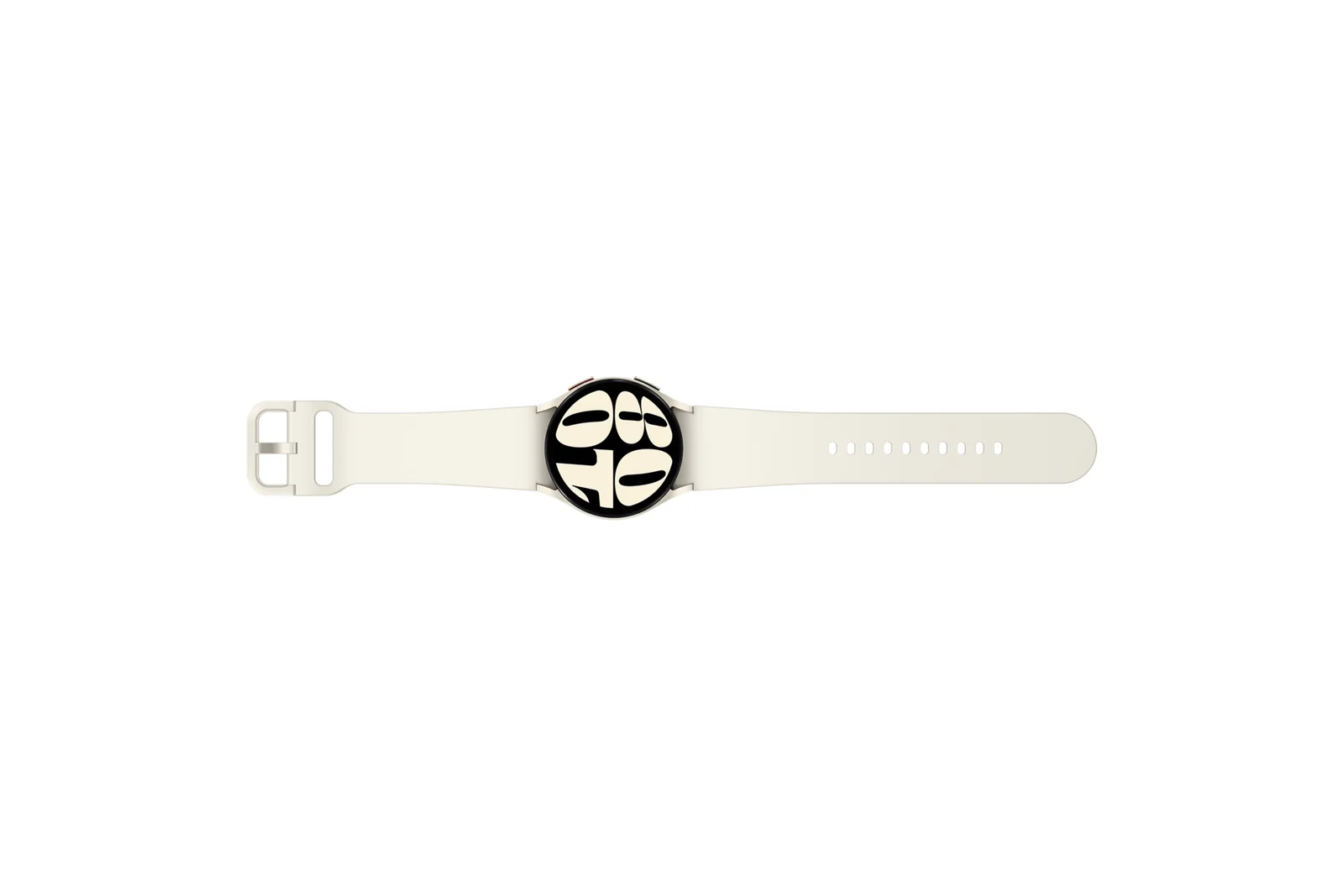
Samsung Galaxy Watch 6 40mm
By Samsung · Fitness Trackers · Phones & Computers · More from Samsung
- 40mm aluminum case
- 1.4-inch Super AMOLED display 360x360
- Exynos W930 dual-core 1.4GHz
- 2GB RAM, 16GB storage
- 590mAh battery, up to 40 hours
Price not listed
- SamsungView at Samsung
- eBayView at eBay
- WalmartView at Walmart
- AmazonView at Amazon (paid link)
- eBay (used) eBay: used, open-box, refurbishedView at eBay (used)
Stores are listed in a fixed order, never by price or commission. Prices are snapshots. Check the current price with the store.
Summary
The Galaxy Watch 6 40mm is Samsung’s small aluminum Wear OS watch with a sapphire-crystal display and a full health suite. Check two things before you buy: independent tests measured 22–32 hours of battery, well short of Samsung’s 40-hour claim, and the health features assume a Samsung phone.
Strengths
- The 2,000-nit sapphire-crystal display stays readable in direct sun; outdoor visibility was the most praised hardware trait in testing.
- The Exynos W930 with 2 GB of RAM keeps One UI Watch and the Play Store catalog smooth.
- The health suite is unusually complete for the class: ECG, irregular-rhythm alerts, body composition, SpO2 and skin temperature.
- Sleep tracking and coaching scored well in testing, and automatic workout detection is reliable.
- One-click bands work with older Galaxy Watch straps and stay comfortable enough for sleep.
Weaknesses
- Measured battery life lands at 22–32 hours in independent tests, well short of Samsung’s 40-hour claim.
- Post-update battery drain keeps recurring: owner waves in March 2024 and again in April and June–July 2026.
- ECG, irregular-rhythm alerts and the Camera Controller require a Samsung Galaxy phone.
- The 300 mAh battery is sealed in; Samsung’s guidance for aged units is service replacement, not DIY.
- The box has no power adapter, and third-party Qi charging reportedly does not work.
Verified specifications
| Model | Galaxy Watch6 40mm; SM-R930 (Bluetooth/Wi-Fi) and SM-R935 (LTE); announced 2023-07-26, released 2023-08-11. |
|---|---|
| Display | 1.31 in (33.3 mm) Super AMOLED, 432 × 432, sapphire crystal glass, Always-On Display, up to 2,000 nits peak. |
| Case | aluminum, 40.4 × 38.8 × 9.0 mm excluding the health sensor, 28.7 g without strap. |
| Chipset | Exynos W930 (5 nm), dual-core 1.4 GHz; 2 GB RAM, 16 GB storage. |
| Software | Wear OS 4 with One UI Watch 5 at launch; upgradable to Wear OS 6 / One UI Watch 8, with a Wear OS 7-based One UI 9 Watch beta in Korea. |
| Battery | 300 mAh, 10 W wireless charging; Samsung claims up to 40 h with Always-On Display off and 30 h with it on. |
| Durability | 5ATM + IP68 + MIL-STD-810H. |
| Connectivity | Bluetooth 5.3, dual-band Wi-Fi (2.4 and 5 GHz), NFC, GPS/GLONASS/Galileo/Beidou, LTE option (eSIM). |
| Sensors | optical heart rate, ECG, BIA body composition, SpO2, skin temperature, accelerometer, barometer, gyro, geomagnetic, light. |
| Bands | standard 20 mm straps with a one-click release; backward compatible with older Galaxy Watch bands. |
| In the box | watch body, strap, puck-style USB-C wireless charger, quick-start guide; no USB power adapter. |
| Warranty | 1-year limited warranty. |
| Dimensions | 40.4 × 38.8 × 9.0 mm excluding the health sensor (about 13 mm with it); 28.7 g without strap. |
Full research notes and sources
Battery life and charging
Samsung claims up to 40 hours with the Always-On Display off and 30 hours with it on. No reviewer reached either number. PCMag measured 22 hours with normal use and the display on, repeated twice with the same result, and about 28 hours with it off. The Verge saw the 40mm at 78% by 5PM on day one, with a maximum near 32 hours on frugal settings and about 25 hours with the display on. CNET hit 27 hours on the 43mm Classic with notifications, one 30-minute GPS workout and sleep tracking. TechGearLab’s 44mm test recorded 9.1 hours with GPS active and 62.5 hours in regular use.
Charging is quick in practice: PCMag measured about 70 minutes to full on the included puck, and Samsung claims 8 minutes of charge buys 8 hours of sleep tracking. CNET measured over an hour flat to full and notes reverse wireless charging from a Galaxy phone as a top-up path. Third-party Qi charging reportedly does not work, so the puck matters.
Owners in r/GalaxyWatch report real-world runtime between about 30 and 44 hours on the 40mm, with daily charging accepted. The recurring problem is software: owners reported faster drain and frozen screens after a March 2024 update, and the waves returned in April 2026 and June–July 2026 across Watch 6, 7 and 8, with Watch 6 owners describing 6–9 hours of runtime or drains of 1–2% per minute. Suggested fixes (cache clear, reboot, factory reset) help only some owners. One owner who previously got 13–16 hours with the display on reported 6–9 hours after degradation. Nobody has published a failure rate, so treat this as a known annoyance rather than a defect.
Health features and the Samsung phone
The hardware is unusually complete: ECG with irregular-heart-rhythm notifications, BIA body composition, SpO2 and skin temperature. The catch is software gating. ECG and irregular-rhythm alerts require a Samsung Galaxy phone, the Camera Controller app is missing on other phones, and one owner noted that automatic watch backup only really works with Galaxy phones. The long-press action of the bottom button is hard-coded to Samsung Wallet and cannot be reassigned to Google Wallet.
SpO2 readings can look alarming: CNET recorded overnight values as low as 87%, The Verge saw a one-off 72%, and PCMag’s heart-rate accuracy at rest matched a chest strap. An owner thread reports about 20% deviation from a Fitbit across most metrics after 12 days side by side. Samsung Health will not push indoor (non-GPS) workouts to Strava, so third-party apps are required.
Sports tracking and GPS
GPS acquisition is now fast — DC Rainmaker measured locks in seconds, and CNET saw good route accuracy. Accuracy is the weaker part: The Verge saw occasional distance wonkiness and recommends starting a workout manually after GPS lock, and one owner in r/GalaxyWatch calls the GPS “complete garbage and ludicrously inaccurate” on walks and runs, with a 10-mile jump. The Verge measured GPS costing 3–4% battery per mile. There is no native pairing of external sensors such as heart-rate straps or cycling sensors, and no route or navigation on the watch.
Is it worth it?
The calculation in 2026 is price, not novelty. The watch launched at $299.99 in August 2023; the series was discontinued at the Watch 7 launch in July 2024, and remaining stock is third-party. New listings in October 2026: $247.99 for the 44mm Bluetooth (Newegg), $289.99 for the LTE 40mm (Walmart), $292 (Newegg), and $303.99 for the 40mm Bluetooth. Refurbished 40mm units with a 1-year seller warranty go for $99.99 (Back Market, LTE) or $69.99 (ReCellExchange, watch only, no band or charger). For context, the newer Galaxy Watch 8 44mm Bluetooth lists at $235.99 (smartprix, 2026).
At under $150 new, the value is strong: sapphire crystal, a 2,000-nit display, the Exynos W930 with 2 GB of RAM and the full health suite at roughly half the launch price, with the battery and sensor limits known and priced in. Between $151 and $230 it stays good value for an Android user inside the Samsung ecosystem, with current software support. Above $290 it is weak value; refurbished units offer the same hardware for a fraction of the price.
Running costs are modest: 20 mm replacement bands, a replacement puck if you buy watch-only refurbished stock, a carrier plan only if you use LTE, and optional Samsung Care+. A USB-C power adapter is an extra if you do not have one.
Which model this is
This page covers the Galaxy Watch6 40mm in Graphite and Gold (Silver is 44mm-only on the standard Watch 6), model SM-R930 for Bluetooth and SM-R935 for LTE. The US listing this page tracks is ASIN B0CCW6C8FY; retailers use different ASINs for different colors, but the hardware is the same. Do not confuse it with the Watch 6 Classic, which has a stainless steel case and a rotating bezel.
Sources
Manufacturer:
- Samsung Galaxy Watch6 B2B spec sheet (US)
- Samsung Newsroom: Galaxy Watch6 and Watch6 Classic announcement
- Samsung US warranty policy
- Samsung US Support: wearables hub
Independent reviews:
Owner reports:
- 40mm battery life thread (r/GalaxyWatch)
- GPS completely inaccurate thread (r/GalaxyWatch)
- 12-day Fitbit comparison thread (r/GalaxyWatch)
- Battery dying already? (r/GalaxyWatch)
- Issues with my new Galaxy Watch 6 (r/GalaxyWatch)
- Android Authority: owners report abnormal battery drain again (July 2026)
- TechRadar: major battery drains after update (April 2026)
- Samsung Community: issues after the Watch UI 6 update
- Samsung Community: Watch6 draining at 1–2% a minute (October 2026)
- Samsung Community: battery drain and screen freezing after update (2024)
- Android Authority: One UI 8 Watch rollout in the US
- SamMobile: One UI 9 Watch (Wear OS 7) beta
Stores: