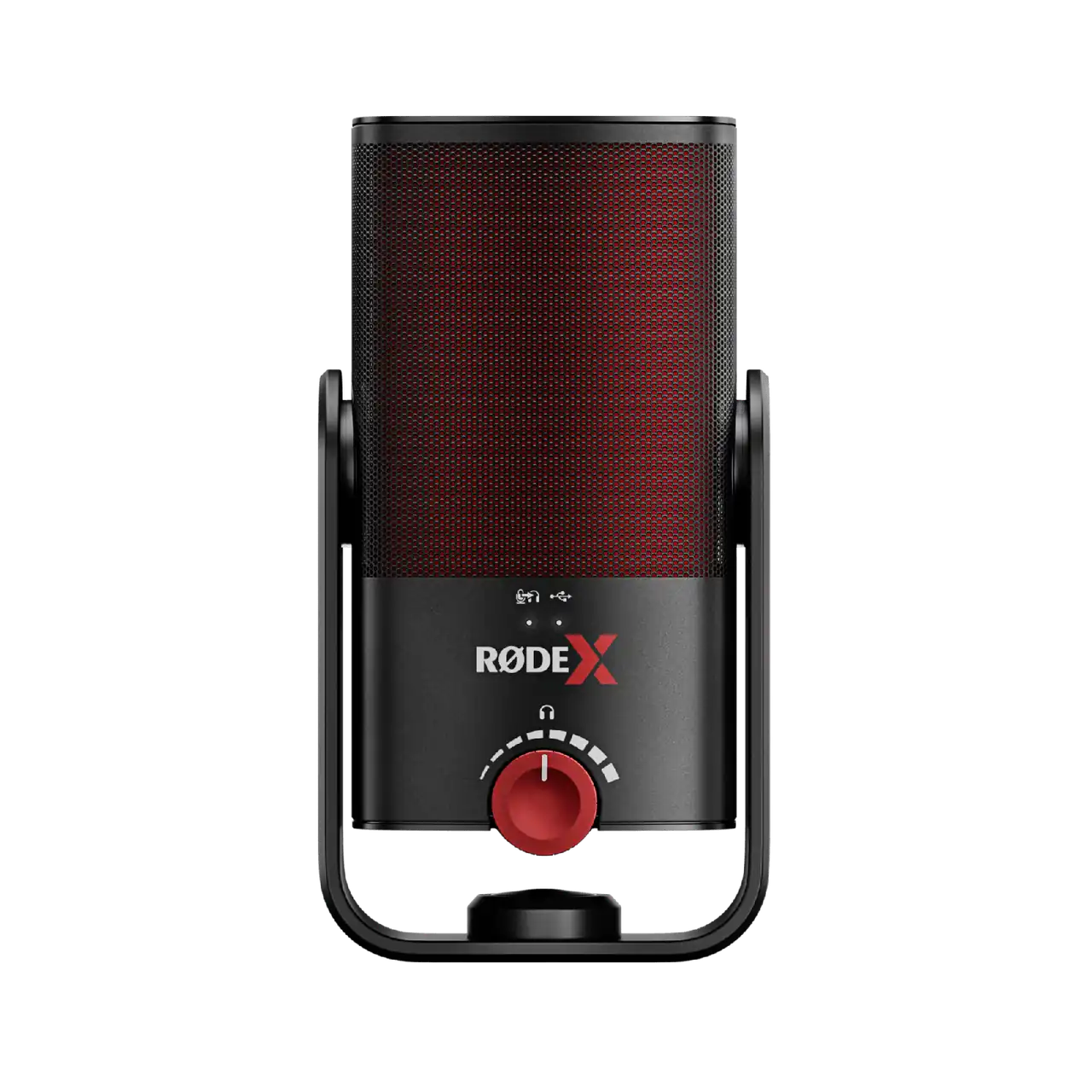
RØDE X XCM-50
By RØDE · USB Microphones · Desk & Streaming Setup
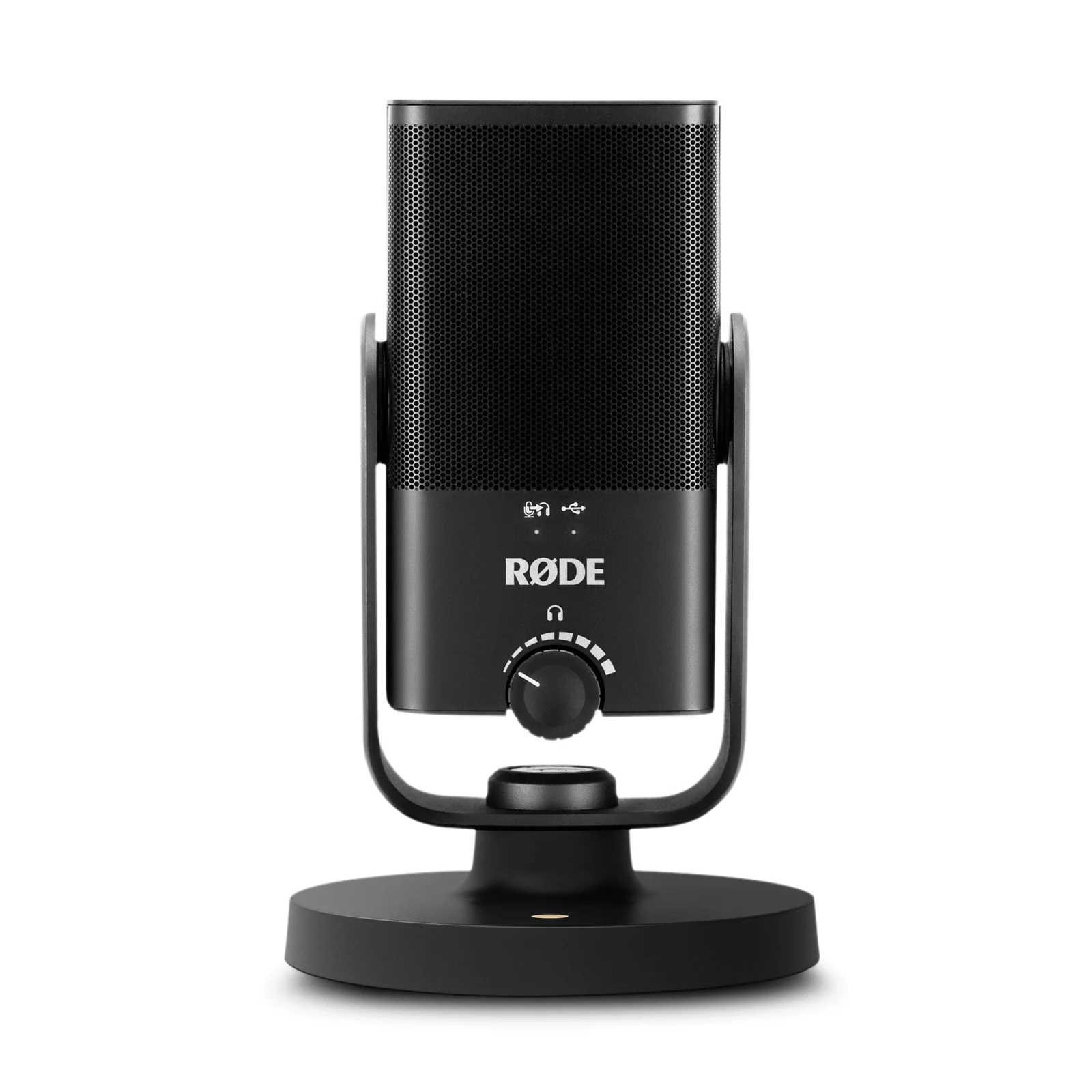
- Condenser USB microphone with USB-C connection
- All-metal body
- Integrated pop filter and capsule shock mount
- Internal Aphex voice processing through the UNIFY app
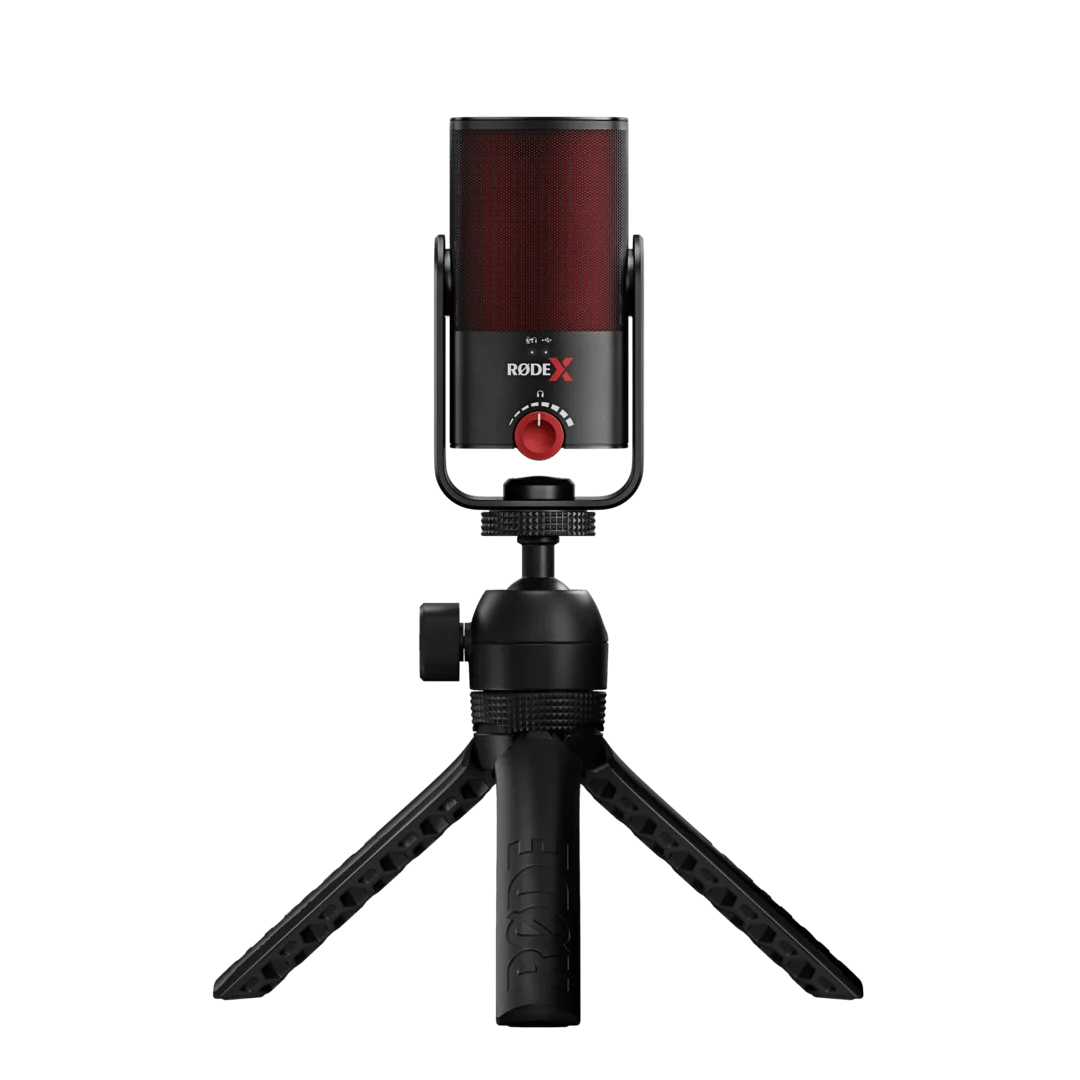
- Included desktop tripod stand
Price not listed
- RØDEView at RØDE
- eBayView at eBay
- AmazonView at Amazon (paid link)
- eBay (used) eBay: used, open-box, refurbishedView at eBay (used)
Stores are listed in a fixed order, never by price or commission. Prices are snapshots. Check the current price with the store.
Summary
The RØDE X XCM-50 is a compact side-address cardioid condenser USB-C microphone for gaming, streaming and chat, and independent tests like its warm, natural vocal sound. Check two things before buying: owners report the microphone’s input dropping out inside RØDE’s UNIFY software, and the microphone also works as a plain USB mic without it.
Strengths
- Independent voice tests: Tom’s Hardware called the raw speech warm, natural and full, louder than the NT-USB Mini with a low noise floor.
- Other outlets heard the same: GamesRadar found clear, natural detail across streaming, Discord and recording; TechRadar reported warm, crisp vocals.
- Sturdy metal body on a 360-degree swing mount, and GamesRadar found it easy to place on a boom arm.
- Zero-latency headphone monitoring plus a front mute button are practical for live calls.
- The microphone also works as an ordinary USB mic with no RØDE software installed.
- RØDE publishes its own firmware updater and a specific warranty entry for this model.
Weaknesses
- UNIFY has recurring owner reports of the microphone’s input dropping to zero until the software or computer restarts.
- No XLR output, so it cannot feed an audio interface or mixer directly.
- No physical microphone gain dial: the front knob only sets headphone level, which High Ground Gaming noted as a limitation.
- As a condenser it hears room reflections, fans, typing and background talk — a poor fit for loud, untreated rooms.
- The three-legged tripod takes up serious desk space; a boom arm fixes placement but costs extra.
Verified specifications
| Type | side-address cardioid condenser; talk into the front grille, not the top; no switchable omnidirectional or figure-eight patterns. |
|---|---|
| Audio | stated 20 Hz–20 kHz frequency range, 24-bit/48 kHz USB digital audio over USB-C — RØDE’s published specification, not an independently measured response. |
| Monitoring | 3.5 mm headphone output with zero-latency direct monitoring. |
| Controls | one front dial sets headphone level and doubles as mute, with status LEDs; there is no physical microphone gain dial. |
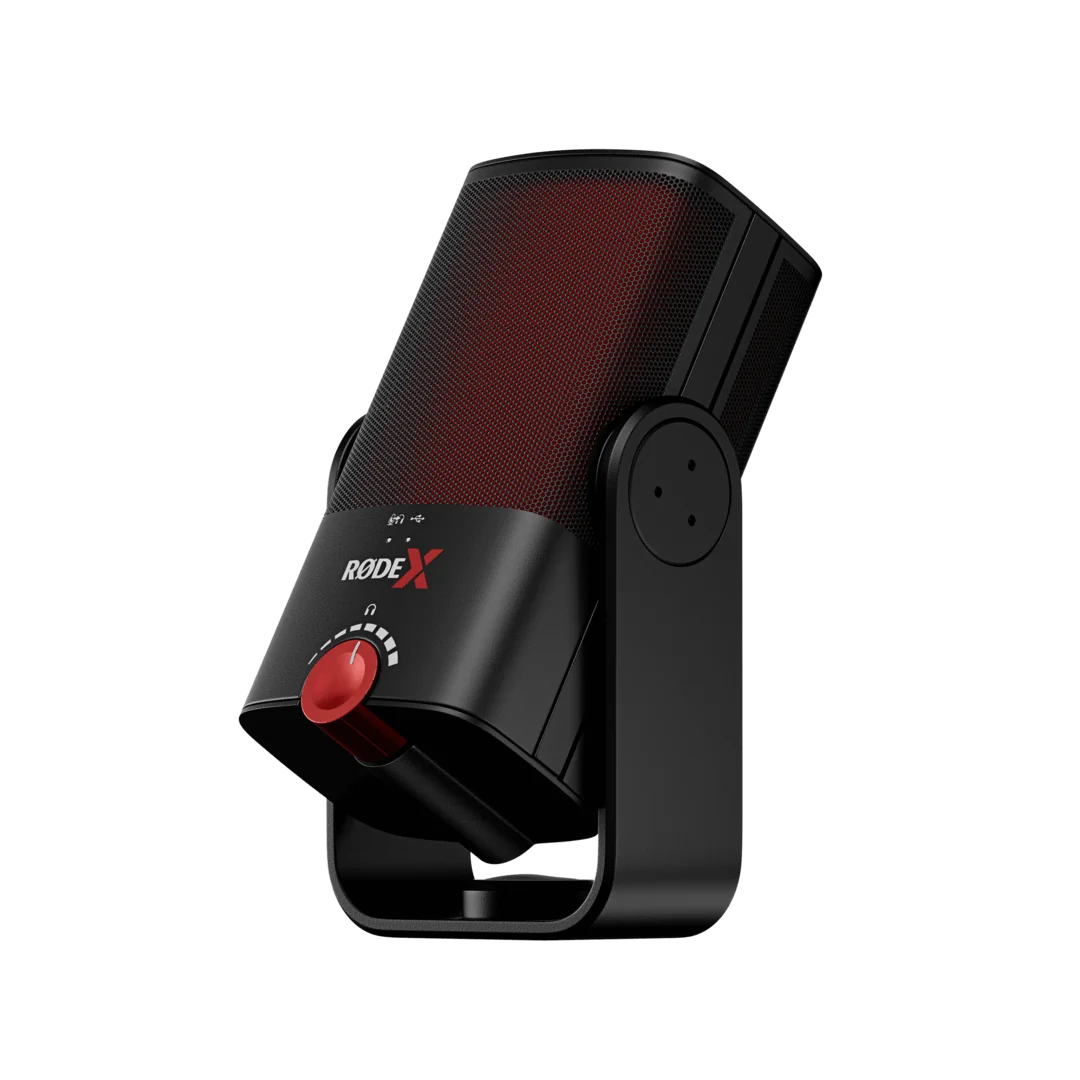
| Body | metal housing, 360-degree swing mount, internal pop shield and internal capsule shock mount. |
| Dimensions | 118 mm high × 62 mm wide × 42 mm deep, 492 g (1.08 lb) for the microphone assembly, excluding the tripod and shipping box. |
| Software | runs as a plain USB microphone with nothing installed. |
| UNIFY | adds separate virtual audio sources and mixes, APHEX voice processing, EQ, compressor, high-pass filter, gate, virtual effects and streaming routing on Windows 10 1803+ and macOS 12+. |
| Firmware | RØDE Central manages device settings and updates on Windows and Mac; the published table lists XCM-50 v1.0.9 and UNIFY v1.3.47 — not a promise that every retail unit arrives updated. |
| Not present | no XLR output, no battery, no user-swappable capsule, no onboard recorder. |
| Warranty | one year standard, extended to two years total for the XCM-50 once the original purchaser registers with proof of purchase; accessories stay at one year. |
Full research notes and sources
Sound and side-address technique
This is a condenser, not a dynamic broadcast mic: it picks up room reflections, fans, typing and background conversations. The cardioid pattern and the internal pop shield reduce some of that. Side-address means the capsule sits behind the front grille, so talk into the grille, not the top. Keep the grille close to your mouth and add software gating if the room is noisy — a gate is not soundproofing. The headphone jack sits at the back of the microphone, which can make cable routing awkward on a boom arm; the included 3 m extension cable fixes that.
Independent reviewers liked the raw sound. Tom’s Hardware described recorded speech as warm, natural and full, and found the input louder than the NT-USB Mini while keeping a relatively low noise floor — though a direct listening comparison in the same review found the differences were not enormous. GamesRadar heard clear, naturally detailed voice across streaming, Discord and recording sessions. TechRadar reported warm, crisp vocals and good focused pickup. High Ground Gaming praised the tonal balance and the concealed pop shield. Treat these as qualitative reviews, not calibrated measurements: nobody has published self-noise, maximum SPL or signal-to-noise figures for this model.
UNIFY software and dropout reports
RØDE’s UNIFY software splits the microphone into separate virtual audio sources and mixes, and adds APHEX voice processing, EQ, compressor, high-pass filter, gate, virtual effects and streaming routing. One independent review attributed six virtual audio devices to the software. That routing power comes with friction: owners in r/rode threads describe real application conflicts, and someone who wants one predictable input may prefer the microphone running as a plain USB device.
On September 25, 2025, an owner reported the XCM-50’s input randomly dropping to zero inside UNIFY while the headphone output still worked; quitting and restarting UNIFY temporarily restored capture, and no general hardware cause was confirmed. On May 11, 2026, another owner saw zero capture until a computer restart; RØDE’s community reply said UNIFY needs exclusive access and suggested removing conflicts from default Windows audio devices and testing another computer, while a different commenter said toggling a conflicting Intel USB audio driver solved their similar problem — that is a workaround, not an official fix. A December 2022 thread described settings not sticking between Windows boots and programs failing to grab audio devices; closing UNIFY and restoring physical Windows inputs and outputs helped, with no documented final repair outcome. In October 2024 an owner found the headphone mix selector disabled; reinstalling UNIFY was not enough, and removing old profile files before reinstalling fixed it — one self-report, not an official procedure. A July 2024 report said changing USB ports seemed to reduce disconnects, though the laptop kept losing headphone audio. In February 2025 an owner heard distorted, robotic monitoring through Bluetooth headphones; a RØDE reply’s 48 kHz sample-rate suggestion fixed their setup.
Nobody has published a failure rate, and the checked sources contain no reports of cracked cases, dead capsules or systematic early PCB failures. Treat the disconnects as a known annoyance rather than a measured defect. If you hit them, the isolation steps the reports support: test the microphone as a direct USB input without UNIFY, try another port and cable, close conflicting audio apps, then check firmware with RØDE Central before touching virtual-device profiles.
Running costs, parts and warranty
There is no subscription: the XCM-50 works as a standard USB microphone without UNIFY, and no filters, batteries or cartridges are specified — running costs are $0 a year in consumables. It is USB-powered; no wall-wattage measurement exists, so electricity cost is not quantified here.
The included SC29 USB-C cable and SC30 headphone extension can be replaced with any USB data-capable USB-C cable or an ordinary stereo extension; no original-part prices were confirmed, and neither cable has a replacement schedule. A lost or broken Tripod 2 runs $39 at B&H. The maker supports a PSA1+ boom arm; B&H sold an XCM-50 plus PSA1+ bundle at $217.57, a package price rather than the arm alone. The grille, pop shield, capsule and shock mount are internal, with no consumer-replaceable service parts or prices. Outside warranty, replacing the whole microphone could approach the $105–109 retailers asked in October 2026.
Warranty runs one year as standard, and the XCM-50 is eligible for two years total when the original purchaser registers with valid proof of purchase — RØDE’s official duration table lists XCM-50: 2 years. Accessories stay at one year, non-extendable. The extended warranty covers brand-new items from authorized sellers, and RØDE says the defective product is normally returned before repair or replacement, with no advance loaner. Support runs through the RØDE Help Centre; one December 2022 poster described a slow or absent callback, but no turnaround statistics or denial rates exist for this model, so don’t read forum frustration as a universal warranty failure.
Is it worth it?
When checked in October 2026, Sweetwater had the XCM-50 at $109 new with free shipping, and B&H showed $109 new with a separately indexed $105.57 view — an observed spread, not a guaranteed checkout price. It launched around $149 in 2022, according to Tom’s Hardware, GamesRadar and TechRadar; treat that as launch reference pricing, not a retailer price today.
The research thresholds: $80–95 new would be a strong deal (a target, not a verified offer); $100–110 is reasonable if you want a compact cardioid voice microphone with hardware monitoring and accept the UNIFY complaints; $111–130 means comparing alternatives; above $130–150 the value is weak. At that level the source names the NT-USB Mini at $105, a simpler and closely related USB condenser with a magnetic desktop base; the Elgato Wave:3 MK.2 at $169.99, with Wave Link, DSP, Clipguard 2.0 and VST inserts (a $119.99 promotion ended October 11, 2026); and the RØDE PodMic USB at $190, a dynamic cardioid with both USB and XLR and onboard DSP.
For speech in a reasonably quiet room, with the grille close and the headphone jack handling monitoring, the XCM-50 does the job at the $105–109 street. If you later need XLR for a mixer or interface, the PodMic USB is the flexible path. If you want one predictable input, skip UNIFY and use the microphone as a plain USB device.
Which model this is
This page covers the RØDE X XCM-50 (XCM50), the condenser microphone in RØDE’s X series for gaming and streaming. It is cardioid and side-address, with no switchable patterns, no XLR and no battery. Do not confuse it with the dynamic XDM-100, the NT-USB Mini or the PodMic USB — different capsules, bodies and connections.
Sources
Manufacturer:
- RØDE XCM-50 product page
- RØDE XCM-50 user guide
- RØDE XCM-50 datasheet (PDF)
- RØDE product warranty durations (XCM-50: 2 years)
- RØDE: Understanding Warranties
- RØDE firmware version table
- RØDE Central
Independent reviews:
Owner reports:
- XCM-50 randomly stops capturing in UNIFY (r/rode, May 2026)
- XCM-50 keeps cutting out (r/rode, September 2025)
- UNIFY exclusive-access and mix-reset complaints (r/rode, December 2022)
- Headphone mix selector disabled, user fix (r/rode, October 2024)
- USB-port and disconnect observations (r/rode, July 2024)
- Bluetooth monitoring distortion fixed at 48 kHz (r/rode, February 2025)
Stores and parts: