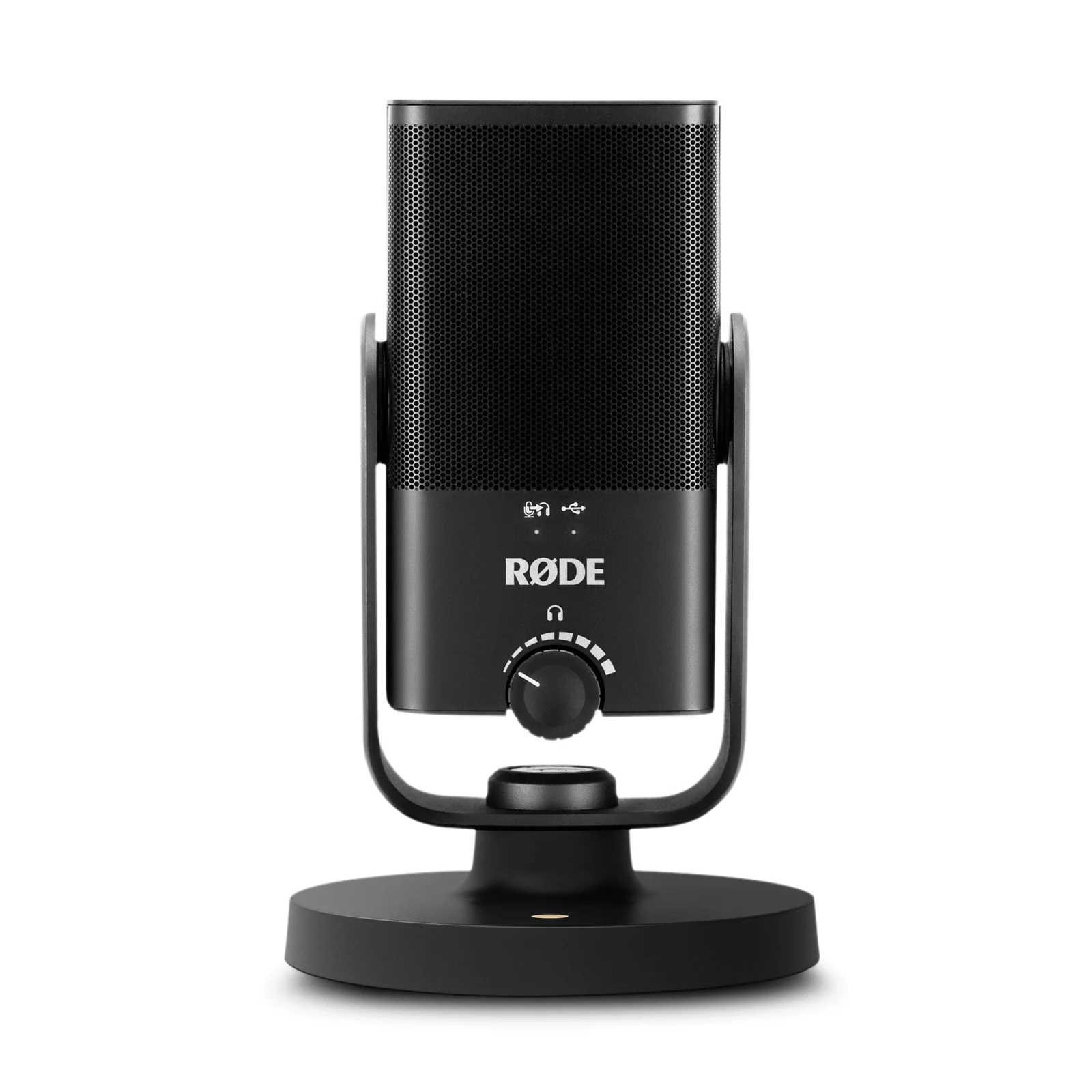
RØDE NT-USB+ Condenser Microphone
By RØDE · USB Microphones · Desk & Streaming Setup · More from RØDE
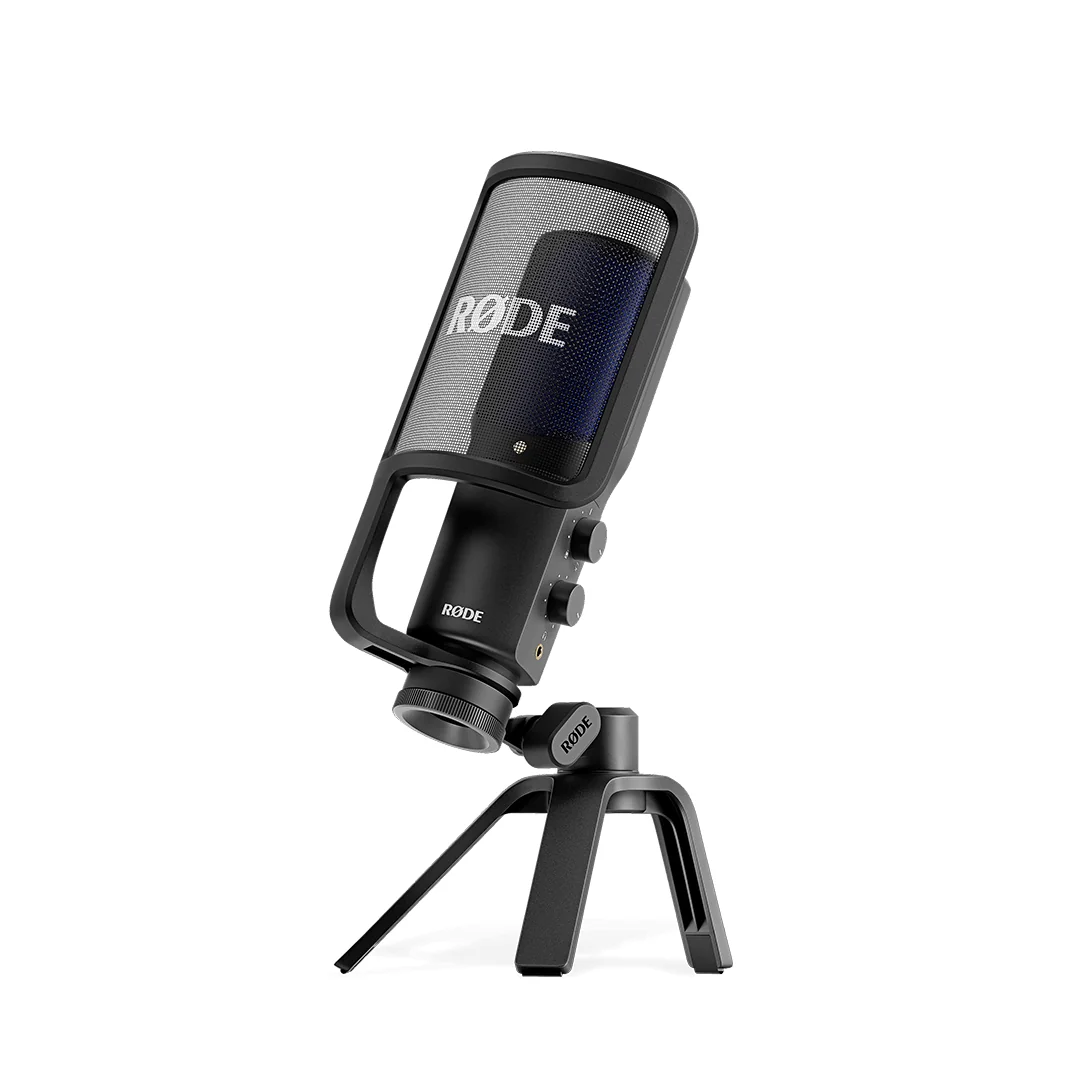
- Condenser studio microphone
- USB-C, class-compliant for computers and mobile devices
- Zero-latency headphone output with volume and mix controls
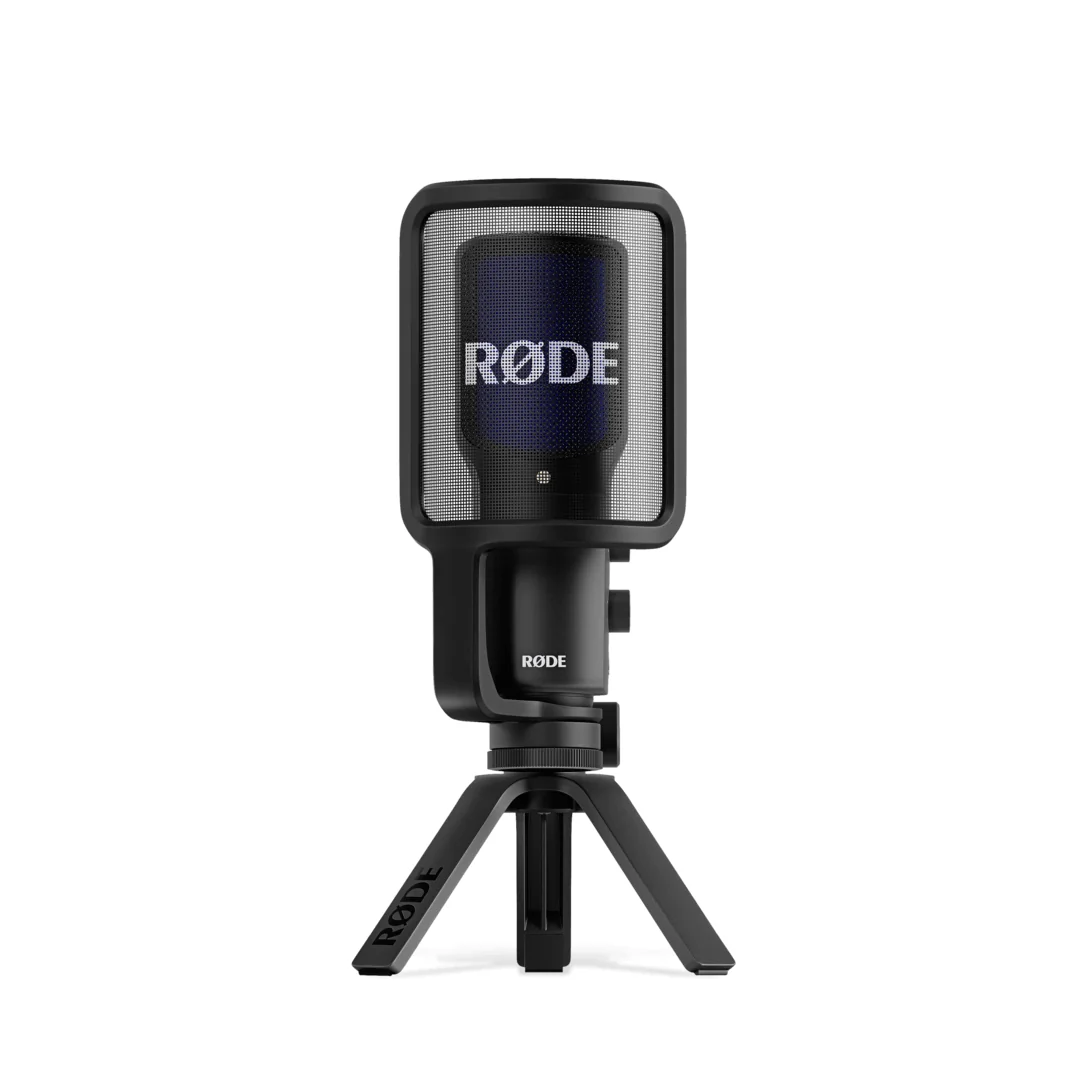
- Pop filter and desktop stand included
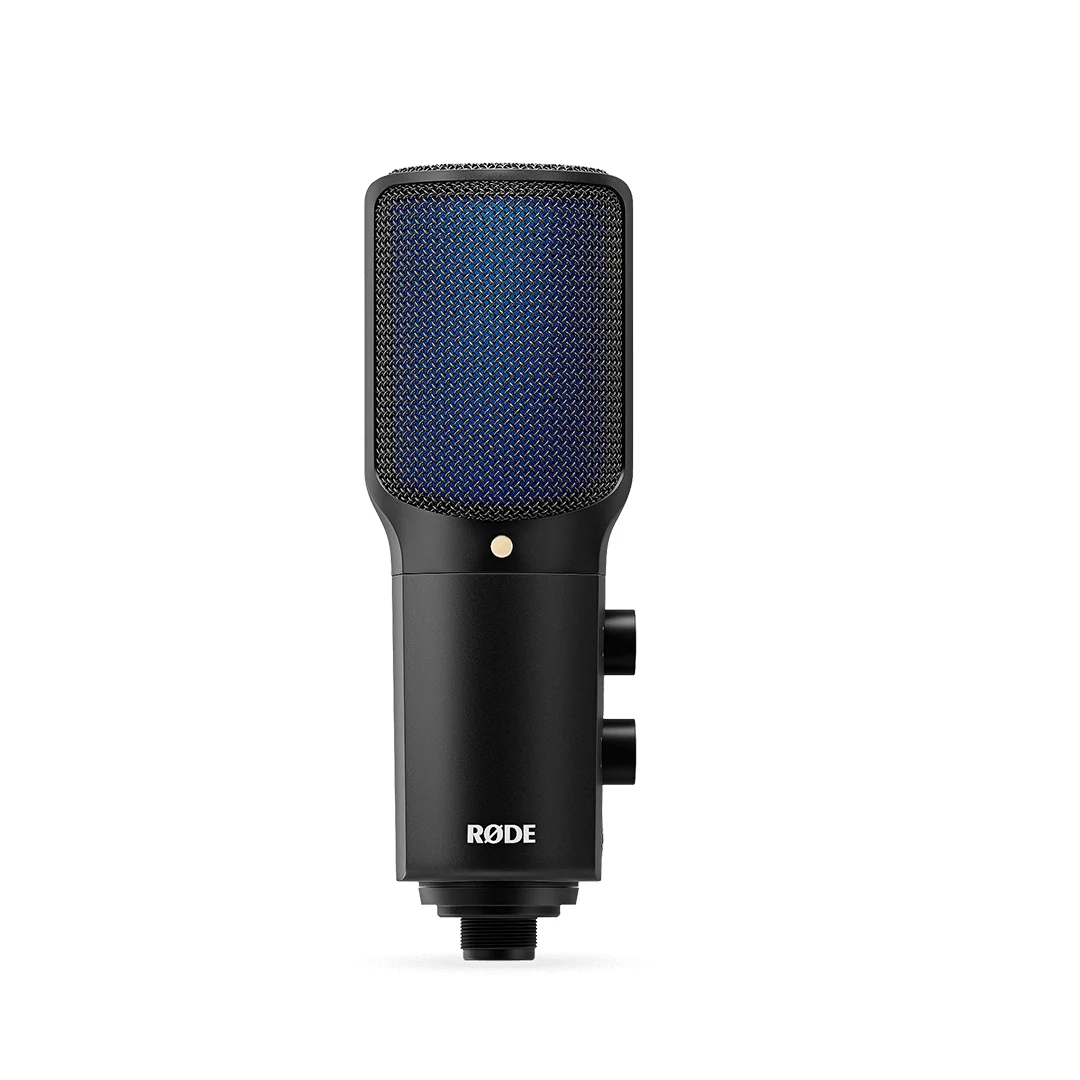
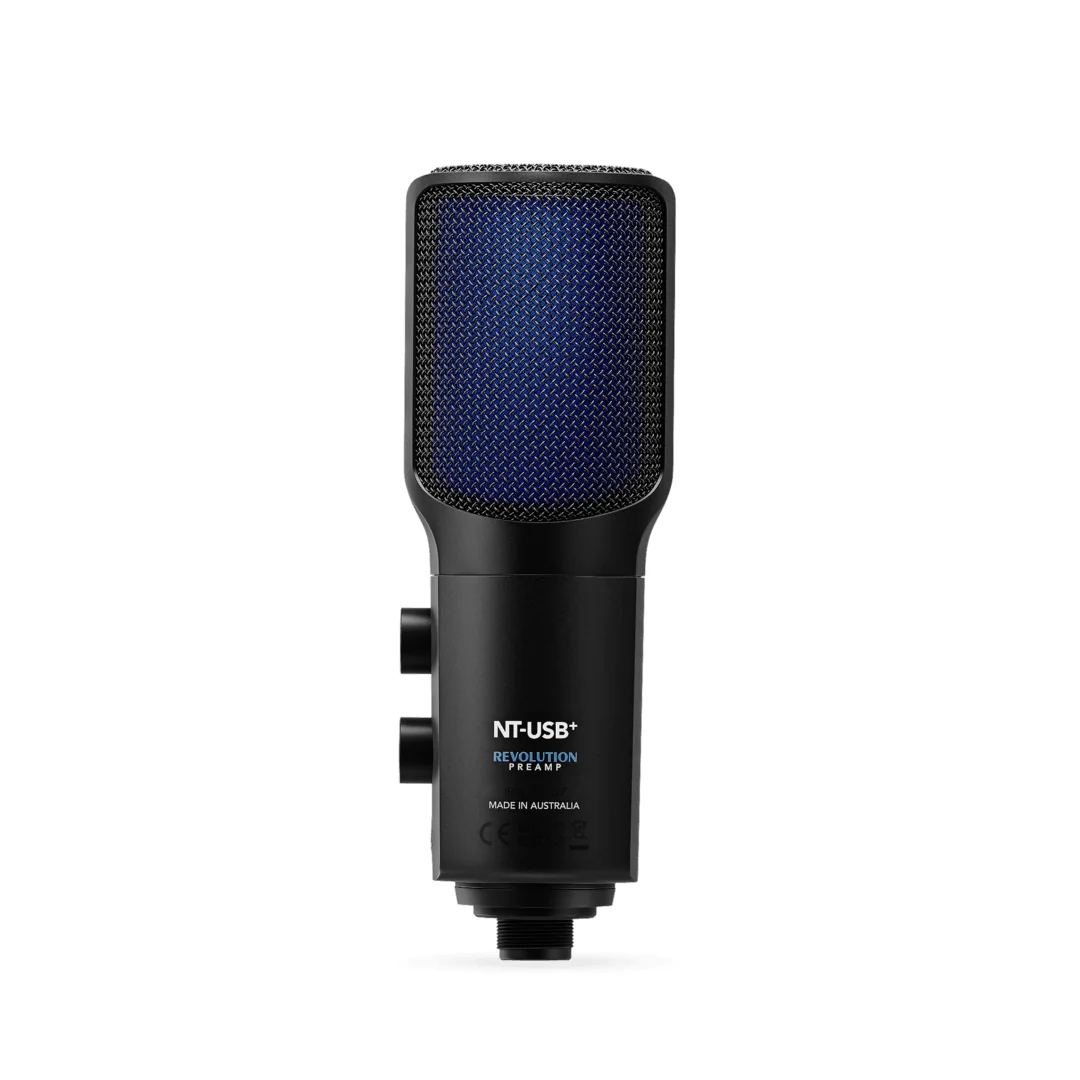
- All-metal body
Price not listed
- RØDEView at RØDE
- eBayView at eBay
- AmazonView at Amazon (paid link)
- eBay (used) eBay: used, open-box, refurbishedView at eBay (used)
Stores are listed in a fixed order, never by price or commission. Prices are snapshots. Check the current price with the store.
Summary
A cardioid USB-C condenser for vocals, podcasting and streaming, with clean 24-bit / 48 kHz capture and onboard DSP that saves to the mic. Check the accessories before you buy: there is no hardware gain knob, and the included plastic desk stand is the weak point, so budget for a boom arm.
Strengths
- Clean, hiss-free signal that independent tests found usable with no processing at all.
- Onboard DSP saves to the mic, so compressor, gate and filter settings work in any app.
- Class-compliant USB-C with no drivers and no external power supply.
- Solid metal body with good-feeling knobs and a generous pop filter in the box.
- Zero-latency headphone monitoring and free companion software with no subscription.
- The bundled stand, ring mount, 3 m cable and pop filter cover the basics.
Weaknesses
- No hardware gain knob; the level is set only in software.
- The included desk stand is all-plastic, light and tippy, with no shock isolation.
- Some Windows setups add static to the headphones, though it is not recorded.
- iOS use needs a separately sold USB-C-to-Lightning cable.
- PCMag and Windows Central both note the Blue Yeti X packs more features at the same price.
- The compressor and noise gate are fixed, with no adjustable parameters or threshold.
Verified specifications
| Type | side-address condenser, cardioid polar pattern, pressure-gradient acoustic principle. |
|---|---|
| Conversion | 24-bit / 48 kHz. |
| Frequency range | 20 Hz – 20 kHz. |
| Dynamic range | 97 dB @ 10% THD. |
| Input SPL | 118.0 dB @ 10% THD (IEC 60268). |
| Connectivity | USB-C, class-compliant; bus-powered at 5 V, 500 mA. |
| Headphone output | 3.5 mm jack with zero-latency monitoring. |
| Onboard DSP | compressor, noise gate, high-pass filter at 75 Hz or 150 Hz, APHEX Aural Exciter and Big Bottom. |
| Software | RØDE Central, RØDE Connect, RØDE Reporter and UNIFY; settings persist in the mic when unplugged, and RØDE Connect mixes up to four RØDE USB mics on one computer. |
| OS support | macOS 11 or later, and Windows 10 version 1803 or later for Central and Connect. |
| Dimensions | 184 × 62 × 50 mm (7.2 × 2.4 × 2.0 in). |
| Weight | 540 g mic only, 730 g with all accessories. |
| Body | metal, with a blue LED behind the front grille when connected. |
| In the box | desktop stand, adjustable ring mount with a removable 1/4" to 5/8" thread adapter, detachable mesh pop filter, 3 m USB-C to USB-C cable (RØDE SC29). |
| Sold separately | SC18 USB-A to USB-C cable (~$15) and SC19 USB-C to Lightning cable for iOS. |
Full research notes and sources
Build and mounting
The body is metal with a blue LED behind the front grille, and Windows Central found no rattling and knobs with good resistance. In the box you get a desktop stand, an adjustable ring mount with a removable 1/4" to 5/8" thread adapter, a detachable mesh pop filter and a 3 m USB-C to USB-C cable.
The desk stand is the weak point: PCMag, Windows Central and Home Brew Audio all call it light, tippy and free of shock isolation, and recommend a boom arm instead. Home Brew Audio says use a boom stand unless your mouth is 3–5 inches from the mic.
Recording quality and DSP
PCMag measured a clean, detailed vocal signal and rated the mic Good, with the 75 Hz high-pass filter subtle and the 150 Hz filter noticeably thinning deep voices. Windows Central heard no audible noise in untreated Audacity recordings next to a running PC, and found raw recordings usable without any software.
The onboard DSP is real-time and saves to the mic, but it is fixed-function: the compressor has no adjustable parameters and the noise gate threshold cannot be changed. RØDE does not publish a self-noise figure, so the ultra-low-noise claim has no number behind it.
Setup quirks and platform fit
The mic is class-compliant over USB-C, so it records through any compatible host without drivers. Gain, though, is set only in software, through RØDE Central, RØDE Connect, RØDE Reporter or the recording app; there is no hardware gain knob, which PCMag lists as a con. The mix knob blends mic and computer audio for the headphones only and does not change the recorded level.
iOS use is not plug-and-play: it needs an Apple-certified USB-C-to-Lightning cable such as the SC19, sold separately, and PCMag calls the mic too large to use comfortably on the go. Some Windows desktops put static in the headphones that never reaches the recording; RØDE’s own troubleshooting points at charging adapters, USB hubs and port type, and advises a direct connection. Nobody has published a failure rate, so treat that as a setup-dependent annoyance rather than a defect.
Is it worth it?
At around $150–$170 it is a competent but contested buy. PCMag preferred the Blue Yeti X at the same price for its gain knob, sturdier stand and extra polar patterns, while Windows Central preferred the NT-USB+ for its DSP and RØDE software. Below about $130 it is stronger value, because the included pop filter, 3 m cable and software set it apart from budget mics. Above about $180 it looks weak, with multi-pattern rivals and RØDE’s own NT-USB Mini at about $99 bracketing it.
RØDE set the MSRP at $169 at launch in 2022; PCMag saw it on the street at $166.90 in 2023, Windows Central found it at Sweetwater for $169 and Musician’s Friend for $179 in December 2022, and RØDE sells it direct for $179 (2026). An owner in a Twitch thread reported paying roughly $140 about eleven months before this check.
Which model this is
This page covers the RØDE NT-USB+ Professional USB Microphone, SKU NTUSBPLUS, UPC 698813009893, launched on 2022-11-09 as the successor to the original NT-USB from 2014. RØDE sells it only in black, and it is designed and manufactured in Sydney, Australia. The Amazon listing carries ASIN B00MMKQOEM.
Don’t confuse it with the smaller NT-USB Mini, the original NT-USB, or the RØDE X XCM-50 gaming mic.
Sources
Manufacturer:
- RØDE NT-USB+ product page
- RØDE NT-USB+ user guide and support
- RØDE announcement: the NT-USB+ Professional USB Microphone
- RØDE support centre
Independent reviews:
Owner reports:
Support: