
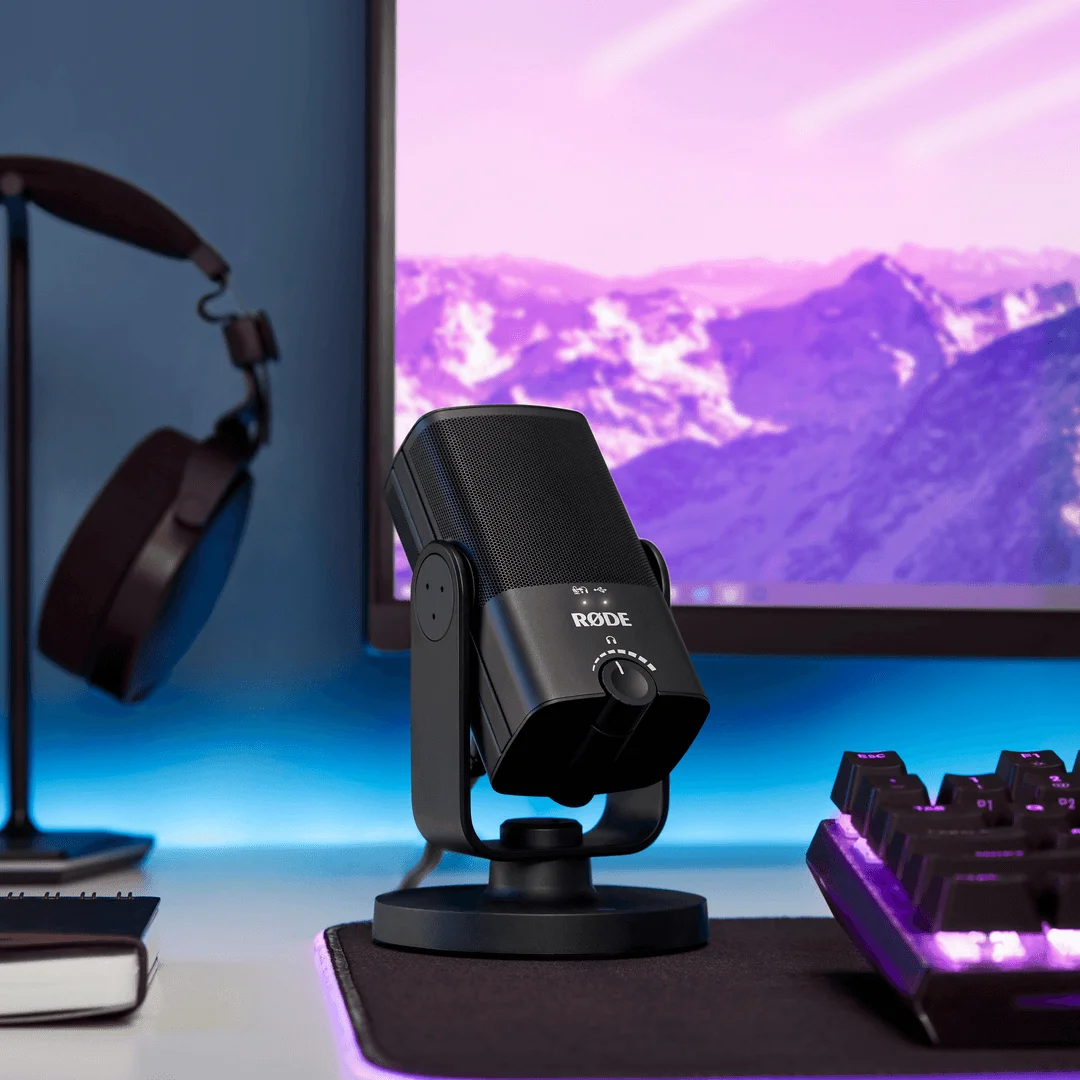
RØDE NT-USB Mini
By RØDE · USB Microphones · Desk & Streaming Setup
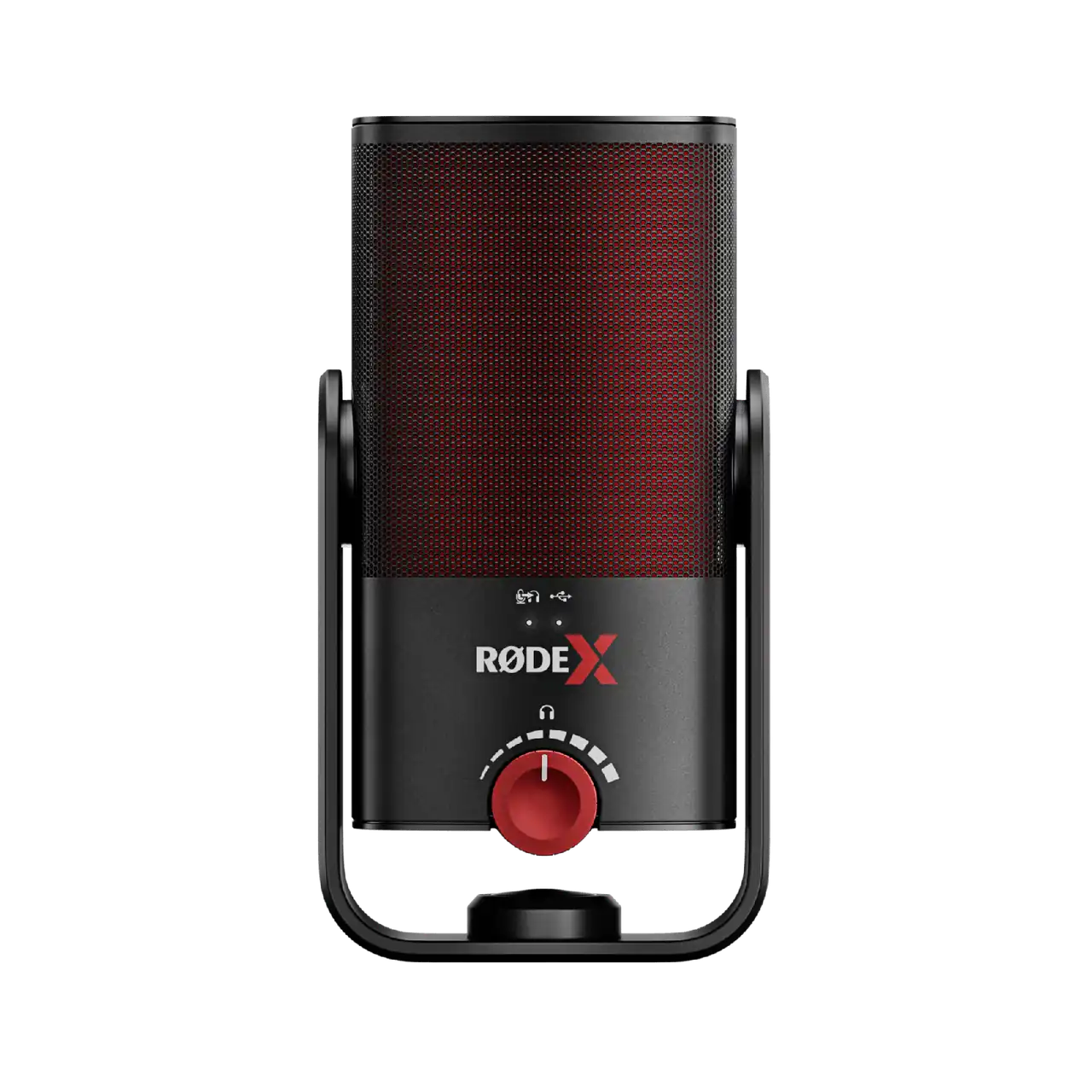
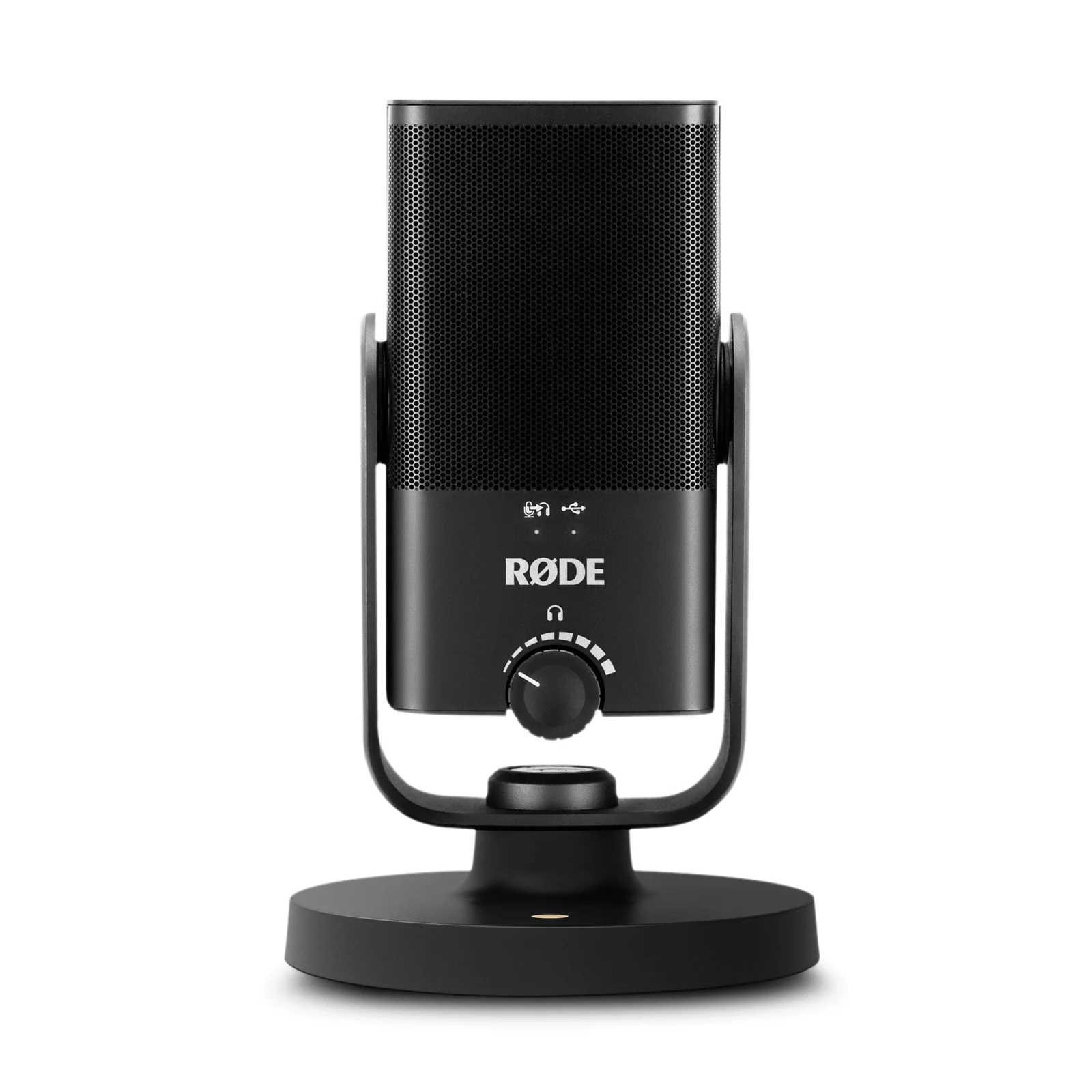
- Cardioid USB condenser microphone
- USB-C connection and 3.5 mm headphone output
- Zero-latency monitoring with a volume knob that also toggles the monitor mix
- Built-in pop filter
- Magnetic desktop stand included
Price not listed
- RØDEView at RØDE
- eBayView at eBay
- AmazonView at Amazon (paid link)
- eBay (used) eBay: used, open-box, refurbishedView at eBay (used)
Stores are listed in a fixed order, never by price or commission. Prices are snapshots. Check the current price with the store.
Summary
A compact, plug-and-play USB-C condenser microphone for podcasters, streamers and home recording, with a crisp sound and free processing software. Check the gain before you buy: the mic has no gain control of its own, and some owners report very quiet recordings even at high operating-system settings.
Strengths
- Plug-and-play class-compliant USB-C — no drivers needed for basic recording on macOS 10.12 or Windows 10.
- PCMag heard a crisp, DSP-free signal, with recordings at the recommended 4–6 inch distance ideal for podcasting and vocals.
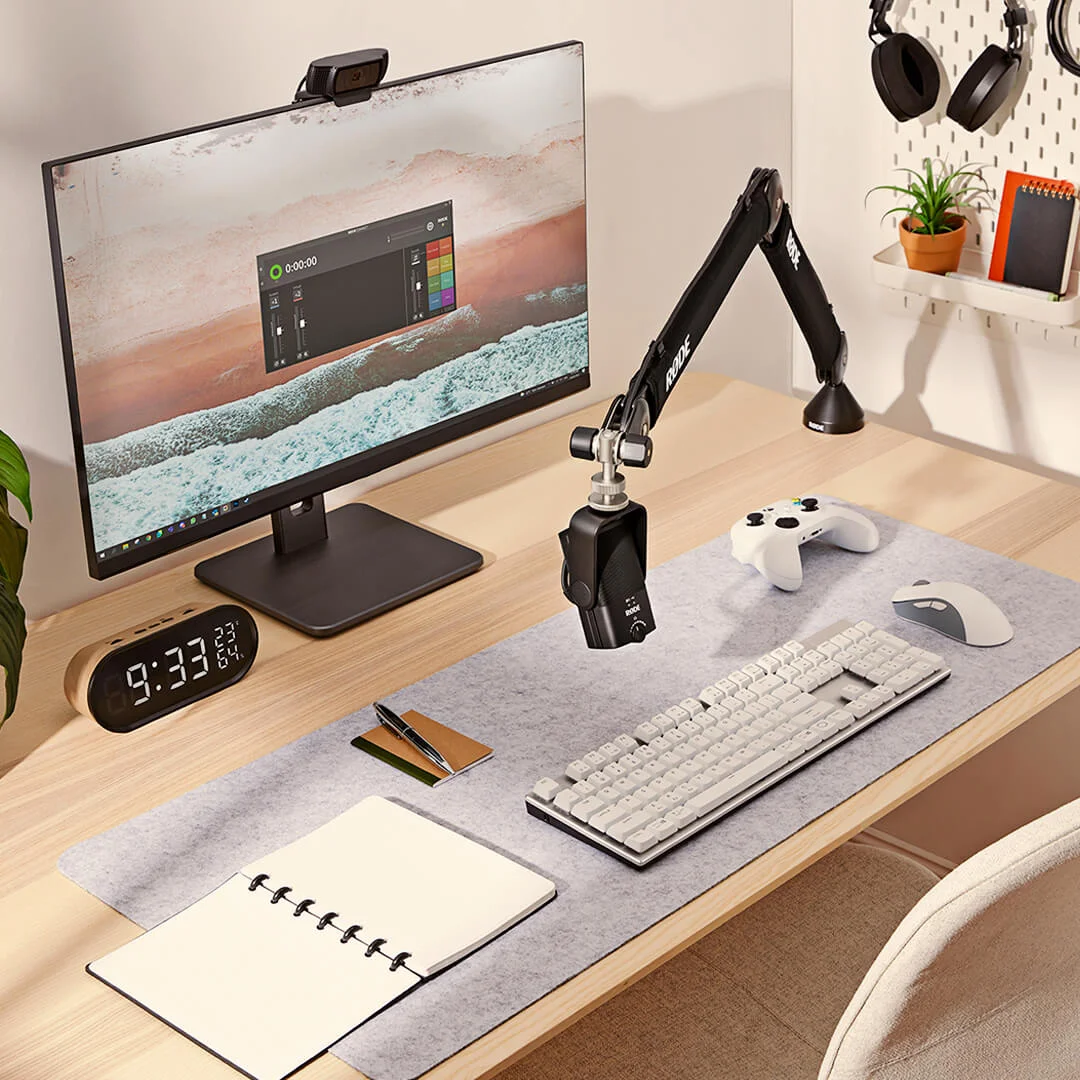
- Free RØDE Connect software adds a compressor, noise gate and APHEX processing, and runs up to four Minis on one computer.
- Zero-latency headphone monitoring works as advertised, and the magnetic stand is effective at isolating knocks.
- The steel-and-nylon body feels hefty and premium for the price, and the compact footprint travels between locations.
Weaknesses
- The front dial is headphone level only — no microphone gain control on the device, so recording level lives in the OS or in RØDE Connect.
- Multiple owners report very quiet recordings even at high OS gain, with static boosted alongside.
- Tom’s Guide called the sound gain-heavy and somewhat hollow, even in a sound-insulated room.
- The desk stand’s base is flat and non-adjustable, so you lean toward the mic instead of aiming it at yourself.
- The magnetic dock accepts one attachment orientation only, an unnecessary annoyance in IGN’s words.
- No carrying case is included, and RØDE does not sell one for this model.
Verified specifications
| Model | NT-USB Mini, released February 2020. |
|---|---|
| Type | compact USB-C condenser microphone; pressure gradient with electret condenser active electronics and a built-in A/D and USB interface. |
| Polar pattern | cardioid, fixed. |
| Frequency response | 20 Hz–20 kHz. |
| Max SPL | 121 dB (1% THD, A-weighted per IEC 651). |
| Conversion | 48 kHz, 24-bit; mono input and stereo output over one USB connection. |
| Connection | USB-C, bus powered — no external power supply. |
| Monitoring | 3.5 mm headphone jack with zero-latency monitoring; the front dial sets headphone level only. |
| Gain control | none on the microphone; set in the operating system or in RØDE Connect. |
| Built-in DSP | none on the signal itself; noise gate, compressor, APHEX Aural Exciter and Big Bottom run only in the free RØDE Connect software. |
| Minimum OS | macOS 10.12 or Windows 10. |
| Materials | steel and reinforced nylon resin, matte black finish. |
| Dimensions | about 2.1 × 5.6 × 3.5 in (54.5 × 141.9 × 89.3 mm). |
| Weight | 1.3 lb (585 g) per the datasheet; PCMag measured 1.2 lb with the stand. |
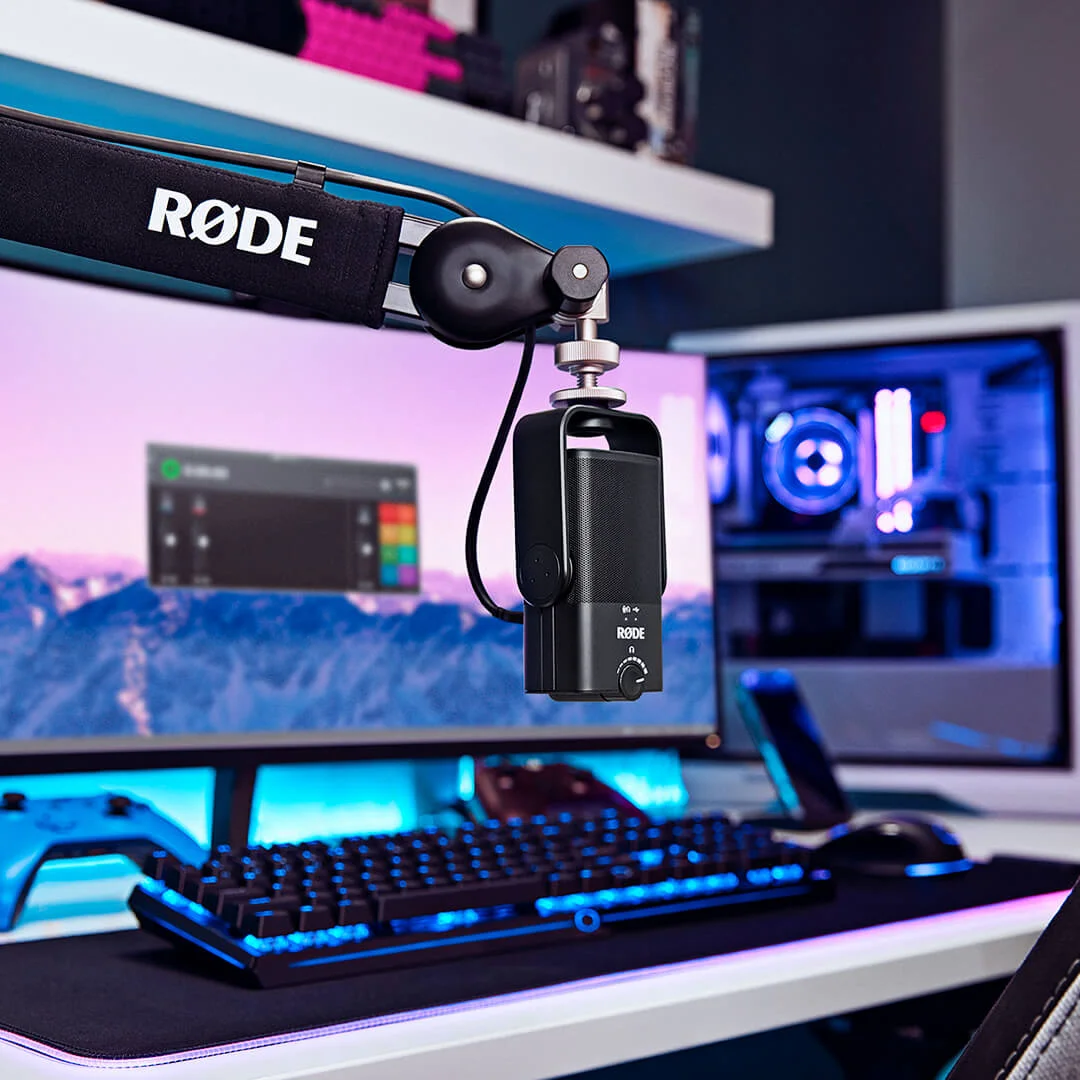
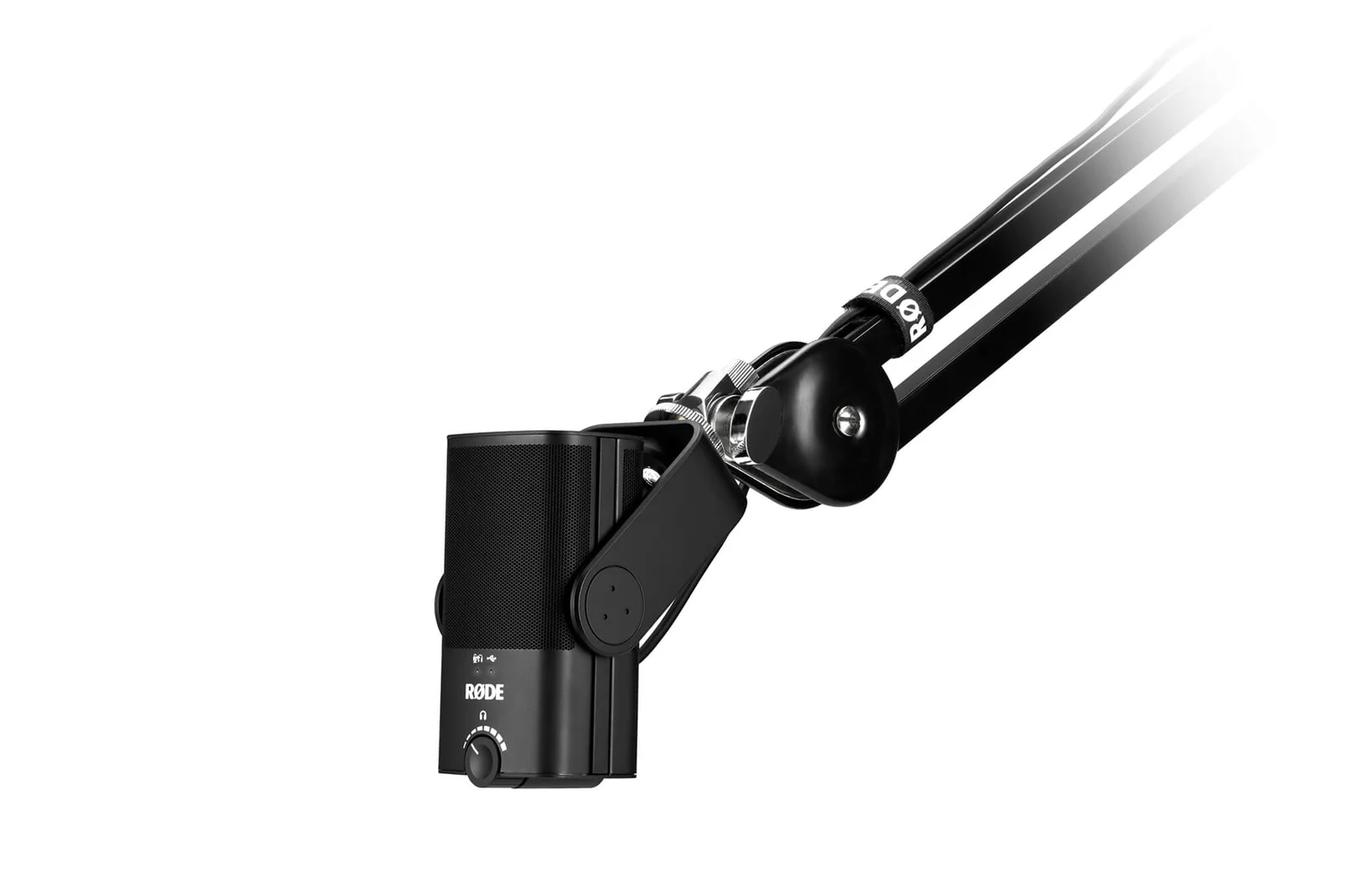
| Works with | PSA1+ and PSA1 boom arms, SC17 and SC18 cables, DS1 desktop stand, Tripod 2, COLORS ID tags. |
| Warranty | 1 year, extendable to 2 years with free registration; proof of purchase from an authorized dealer is required. |
Full research notes and sources
How it sounds
Against the Shure MV5, PCMag found the Mini a bit brighter, with perhaps a little less low-frequency and low-mid presence. Podcastage heard “a smooth mid forward sound with a somewhat crisp top end that’s not overbearing”, and Laptop Mag praised warm, clear vocals that capture subtle timbre without fine-tuning. PC Gamer and CameraLabs both liked it for voice work, with CameraLabs recommending the Mini wherever portability matters. Tom’s Guide was the holdout: gain-heavy audio, a somewhat hollow sound even in a treated room, and fixes that land in editing.
Owners add a harder edge. In r/letsplay and r/rode threads, multiple owners describe recordings that stay very quiet even at high OS gain; one August 2025 thread reports the mic “very quiet even on +40dB gain” across different cables and PCs, with static noise boosted alongside. Another owner says the Mini picks up every noise in the room, and a third says theirs has only worked properly three or four times. Nobody has published a failure rate — treat this as a consistent owner signal, not a measured defect.
Gain, software and monitoring
The front dial is a headphone level control only; pressing it toggles zero-latency monitoring, and nothing on the body sets recording level. Gain happens in the operating system or in RØDE Connect, the free software that adds a compressor, noise gate, APHEX Aural Exciter and Big Bottom processing and supports up to four Minis on one computer. Owners fighting room noise report that the software’s gain adjustment helps. The signal path itself carries no built-in DSP, so what you record is what the capsule captured.
Stand, size and what’s in the box
The datasheet gives 2.1 × 5.6 × 3.5 in (54.5 × 141.9 × 89.3 mm) and 1.3 lb (585 g); PCMag measured 1.2 lb with the stand. The magnetic desk stand is clever at isolating knocks, but a notch limits it to one attachment orientation and the flat base does not tilt, so you position yourself around the mic. In the box: the Mini, an SC20 USB-C to USB-A cable, a 3/8-inch thread mount adaptor and, per PCMag, a velcro cable tie. No carrying case is included, and RØDE does not sell one for this model. The built-in pop filter can be overwhelmed by closely recorded vocals; PCMag recommends an external pop filter on a traditional stand for that work.
Is it worth it?
RØDE’s own store lists the Mini at $109. PCMag and Tom’s Guide both quoted a $99 MSRP in 2020 and 2021, and Tom’s Guide’s 2026 page had Sweetwater at $94.50. At $99 or less it is strong value for a first USB microphone. From $100 to $110 it is still good, fair from $111 to $130; above $130 the feature set — no gain knob, fixed pattern, basic stand — is hard to justify. There are no running costs: RØDE Connect is free and no feature needs a subscription. Wirecutter’s guide doesn’t feature the Mini; its current picks are the Sennheiser Profile and the RØDE PodMic USB.
Which model this is
This is the RØDE NT-USB Mini released in February 2020 — a compact cardioid USB-C condenser, separate from the full-size NT-USB and the newer NT-USB+. RØDE itself says the Mini is “not just a shrunk down version of the larger NT-USB; it’s an entirely different audio product”. The US listing is ASIN B084P1CXFD.
Sources
Manufacturer:
- RØDE’s announcement of the NT-USB Mini
- NT-USB Mini product page (RØDE US)
- NT-USB Mini datasheet
- NT-USB Mini user guide and support
- RØDE product terms and warranty durations
Independent reviews:
- PCMag review
- Tom’s Guide review
- IGN review
- PC Gamer review
- CameraLabs review
- Laptop Mag review
- Podcastage review
- Wirecutter’s USB microphone guide
Owner reports: