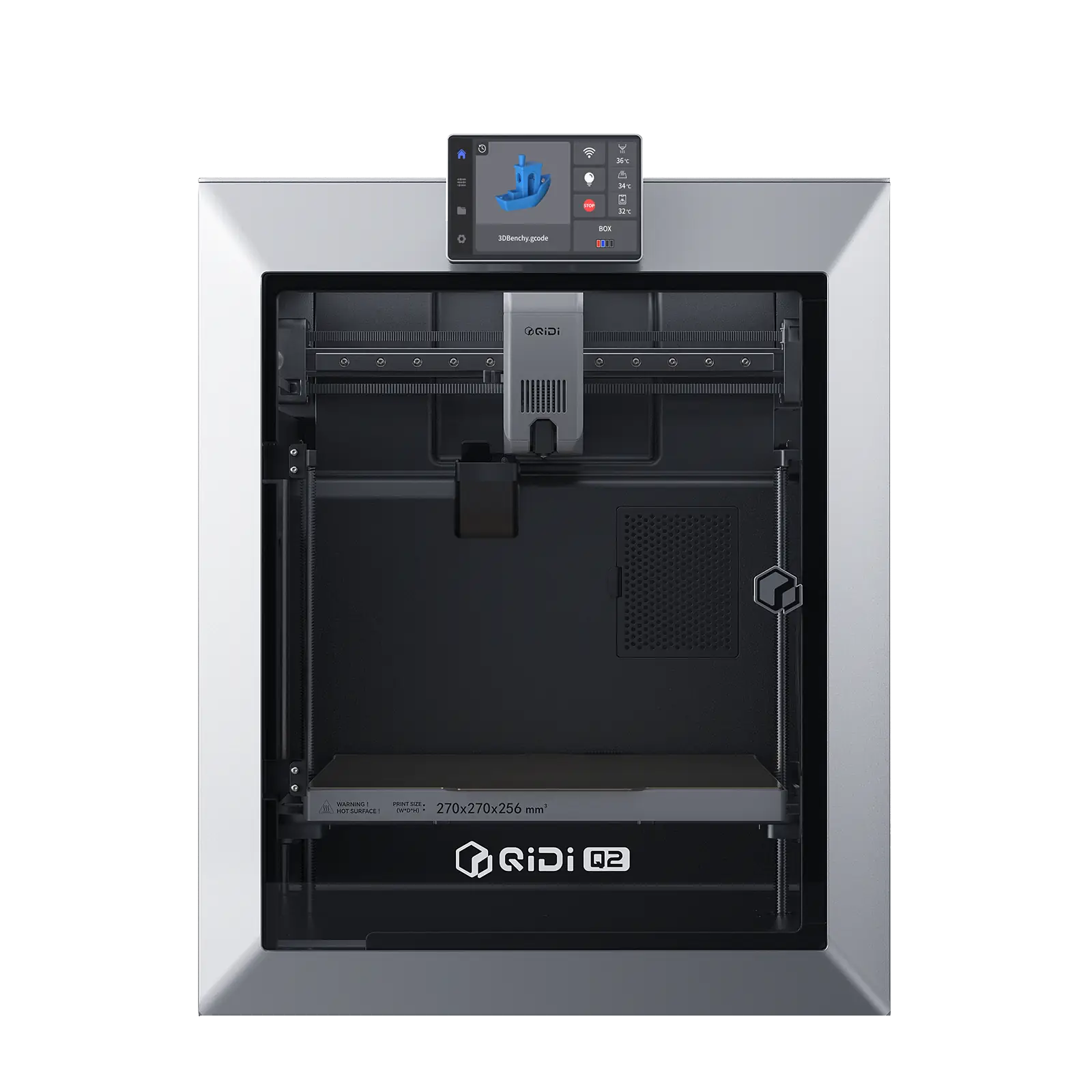
QIDI Q2 Combo
By QIDI · Enclosed 3D Printers · 3D Printing
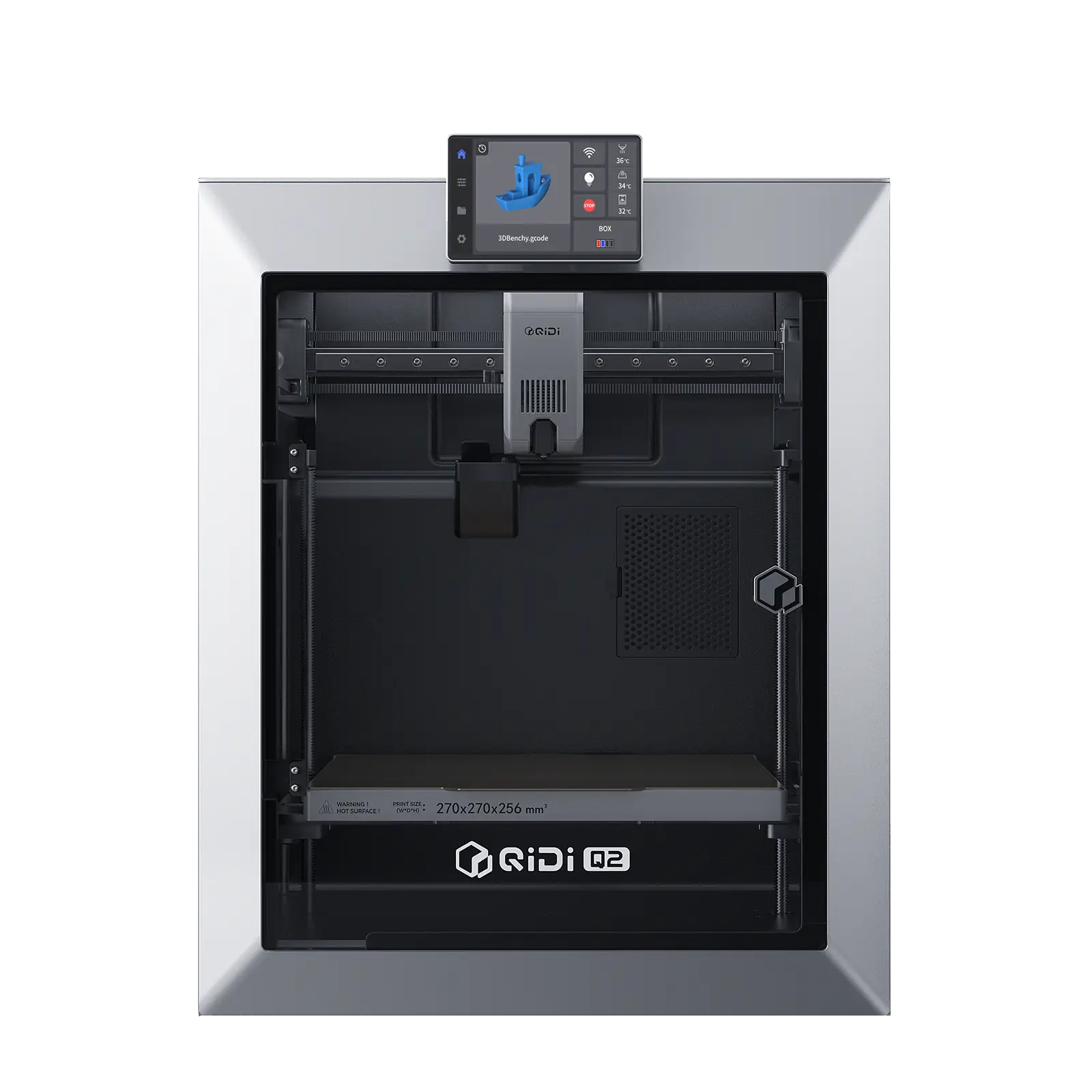
- Build volume 270x270x256 mm
- Max tool head speed 600 mm/s
- Nozzle up to 370 C
- Active chamber heating up to 65 C
- Multi-material box included in the Combo
Lowest price seen
~$649.00 (approx.)
from $649.00 at Amazon
- Amazon ~$649.00 (approx.)View at Amazon
- QIDIView at QIDI
- eBay (used) eBay: used, open-box, refurbishedView at eBay (used)
- eBayView at eBay
Prices are snapshots. Check the current price with the store.
Summary
An enclosed CoreXY FDM printer with active 65°C chamber heating and a manufacturer-rated 370°C nozzle, bundled with the QIDI Box four-color multi-material filament system. The printer itself is well-regarded for high-temperature filaments; the QIDI Box has documented reliability issues with its filament path.
Strengths
- Nozzle-as-sensor load-cell leveling delivers consistently excellent first layers with no manual Z-offset tweaking.
- Active chamber heating up to 65°C is rare at this price point and enables reliable ABS, ASA, Nylon, and carbon fiber printing.
- Open Klipper firmware with full SSH root access and Fluidd/Mainsail front-ends.
- MET safety certification (first entry-level printer to achieve it).
- 3-in-1 air filtration (G3 pre-filter + H12 HEPA + activated carbon) captures 99.5% of particles.
- 1.5GT belt system reduces Vertical Fine Artifacts compared to standard 2GT belts.
Weaknesses
- QIDI Box filament-path friction prevents reliable multi-material printing; Tom’s Hardware and BestChina3DPrinters both document the issue.
- Heat creep with PLA when the chamber is heated leads to clogs; fix is opening the lid or disabling chamber heating.
- Z-banding on prints, particularly on flat planar surfaces.
- Nozzle jam on first PLA print reported by PCMag; no extra nozzles included.
- QIDI Studio slicer has occasional bugs (interface freezes, profile syncing issues).
- Not beginner-friendly; requires calibration and Klipper tuning knowledge.
Verified specifications
| Build volume | 270 x 270 x 256 mm (manufacturer spec). |
|---|---|
| Max tool head speed | 600 mm/s (manufacturer spec); realistic quality printing speed 200-350 mm/s. |
| Nozzle temperature | manufacturer-rated up to 370°C. |
| Heated bed temperature | up to 120°C. |
| Chamber temperature | active heating up to 65°C. |
| Motion system | CoreXY with linear rail (X axis) and linear rods (Y axis). |
| Extruder | direct drive, hardened steel dual-gear, 8.9:1 gear ratio. |
| Nozzle | 0.4mm bimetal with hardened steel insert. |
| Build plate | double-sided PEI spring steel flex plate. |
| Leveling | automatic with load cell sensor (nozzle-as-sensor). |
| Filament runout sensor | yes. |
| Connectivity | Wi-Fi (2.4G & 5G), Ethernet, USB, QIDI Cloud. |
| Interface | 4.3-inch color touchscreen (480x272). |
| Air filtration | G3 pre-filter + H12 HEPA + activated carbon (3-in-1). |
| Safety certification | MET (US/Canada), IECEE CB (international). |
| Camera | HD AI camera, up to 1080P. |
| Firmware | Klipper (open access, SSH root, Fluidd/Mainsail). |
| Slicer | QIDI Studio (reskinned OrcaSlicer), compatible with OrcaSlicer and PrusaSlicer. |
| Printer dimensions | 402 x 438 x 494 mm. |
| Printer weight | 18.1 kg net per QIDI official; 23.5 kg per Tom’s Hardware; 35 kg per PCMag. Discrepancy unresolved; likely net vs gross shipping weight differences. |
| Acceleration | up to 20,000 mm/s². |
| Volumetric flow rate | approximately 40 mm³/s. |
Full research notes and sources
The QIDI Box: multi-material and drying
The QIDI Box is the key differentiator of the Combo and the key risk. Tom’s Hardware’s 2025-11 review found the Box’s filament path had excessive friction that prevented reliable four-color printing, even with DIY modifications. QIDI acknowledged the issue and stated the review unit was early-production. BestChina3DPrinters confirmed the same issues. The Box does function well as a filament dryer with active heating up to 65°C—a capability the Bambu Lab AMS lacks.
Printing experience and materials
Tom’s Hardware found the printer itself performed exceptionally well on high-temperature filaments (PPS, PAHT, PA6, PA11, PA12, PC) and handled ABS/ASA without difficulty. 3D Tech Valley noted heat creep with PLA as the most frequently reported issue. The stock print profiles may need adjustments for best quality; some reviewers note visible flow inconsistencies at full speed with out-of-the-box profiles.
Slicer and software
QIDI Studio is a reskinned OrcaSlicer with occasional bugs including interface freezes and profile syncing issues. Multiple sources recommend switching to native OrcaSlicer. The Q2 runs Klipper firmware with full open access (SSH root, Fluidd/Mainsail), pressure advance tuning, and input shaping.
Is it worth it?
The QIDI Box adds multi-material capability and drying-while-printing, but documented reliability issues with the filament path make it a risk. Tom’s Hardware explicitly recommended skipping the Box given the issues. The standalone Q2 is the safer purchase unless multi-material printing is essential. Best for intermediate-to-advanced makers, engineers, and prototypers who need engineering-grade materials and value open firmware control.
Which model this is
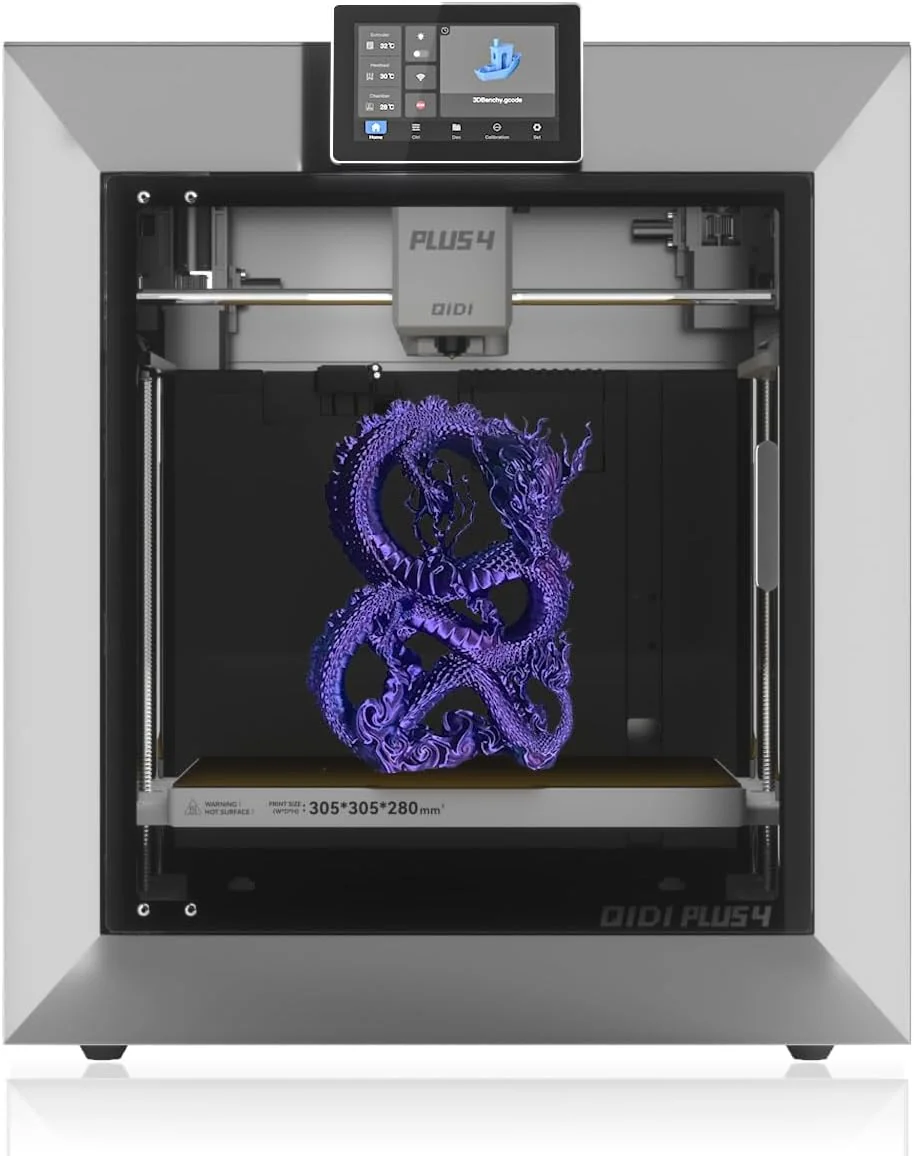
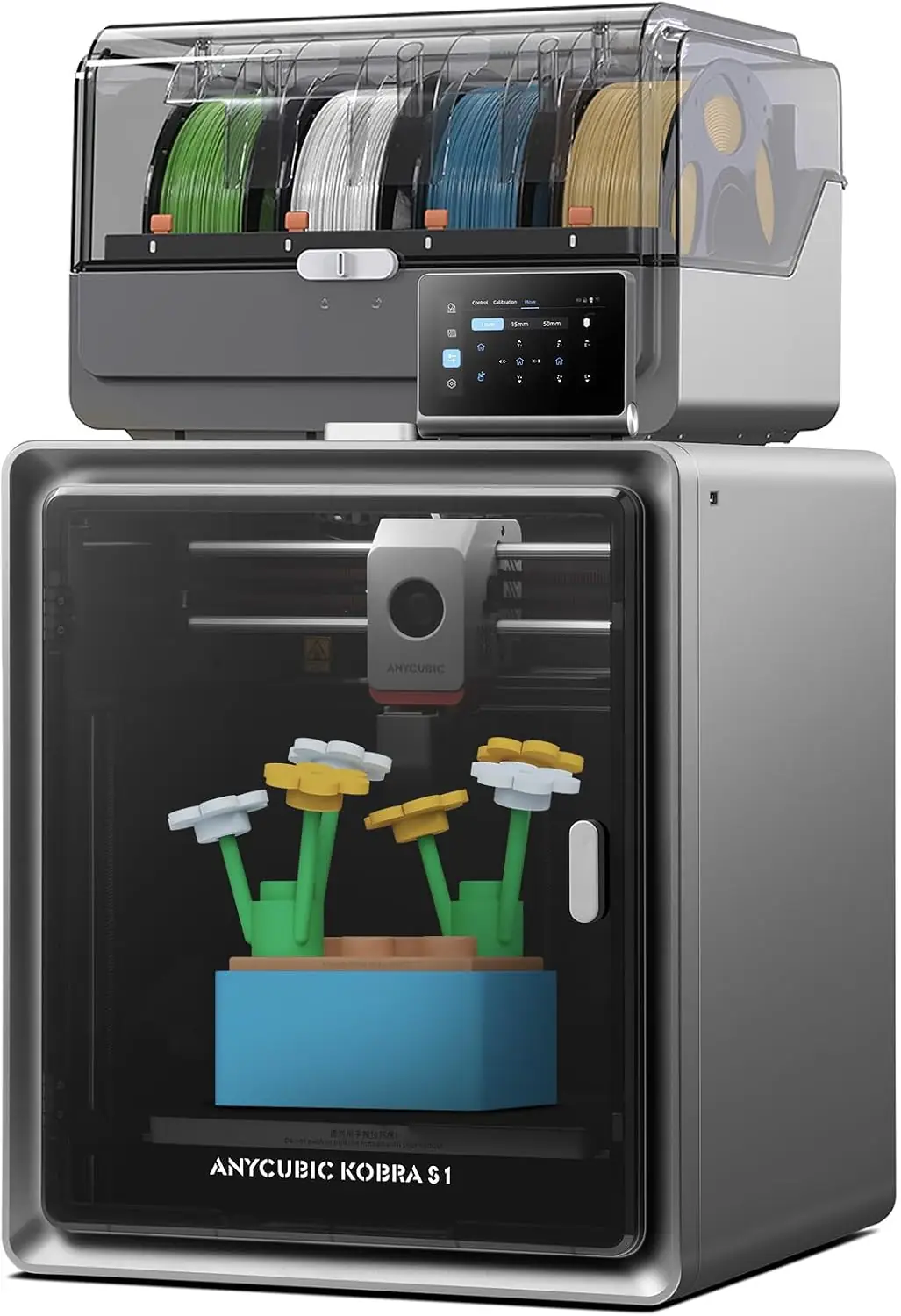
This page covers the QIDI Q2 Combo (ASIN B0G399G3WB), which bundles the Q2 printer with the QIDI Box four-color multi-material filament system. Do not confuse it with the Q2C (a lower-cost variant without active chamber heating), the Q2 standalone, or the larger QIDI Plus4.
Sources
Manufacturer:
Independent reviews: