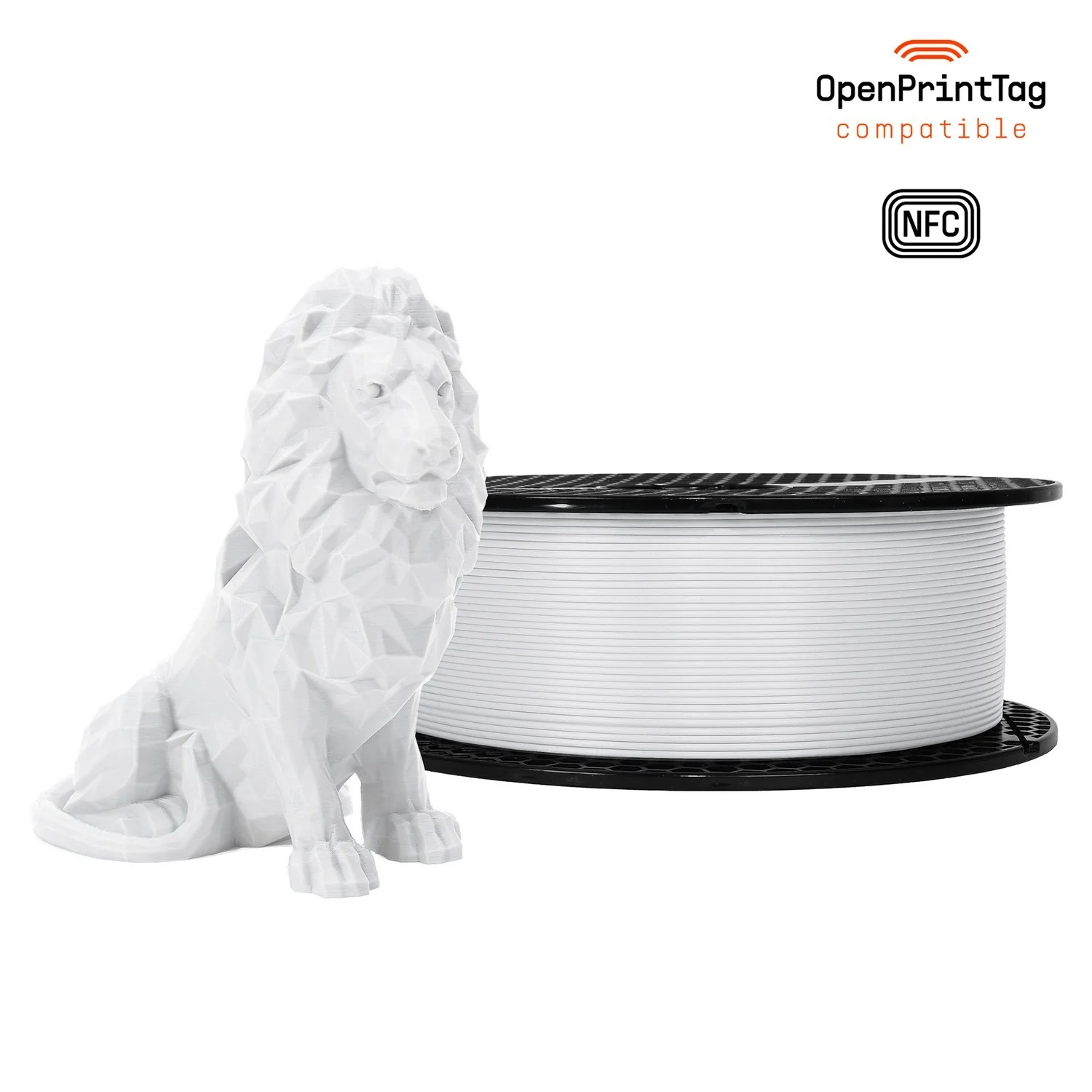
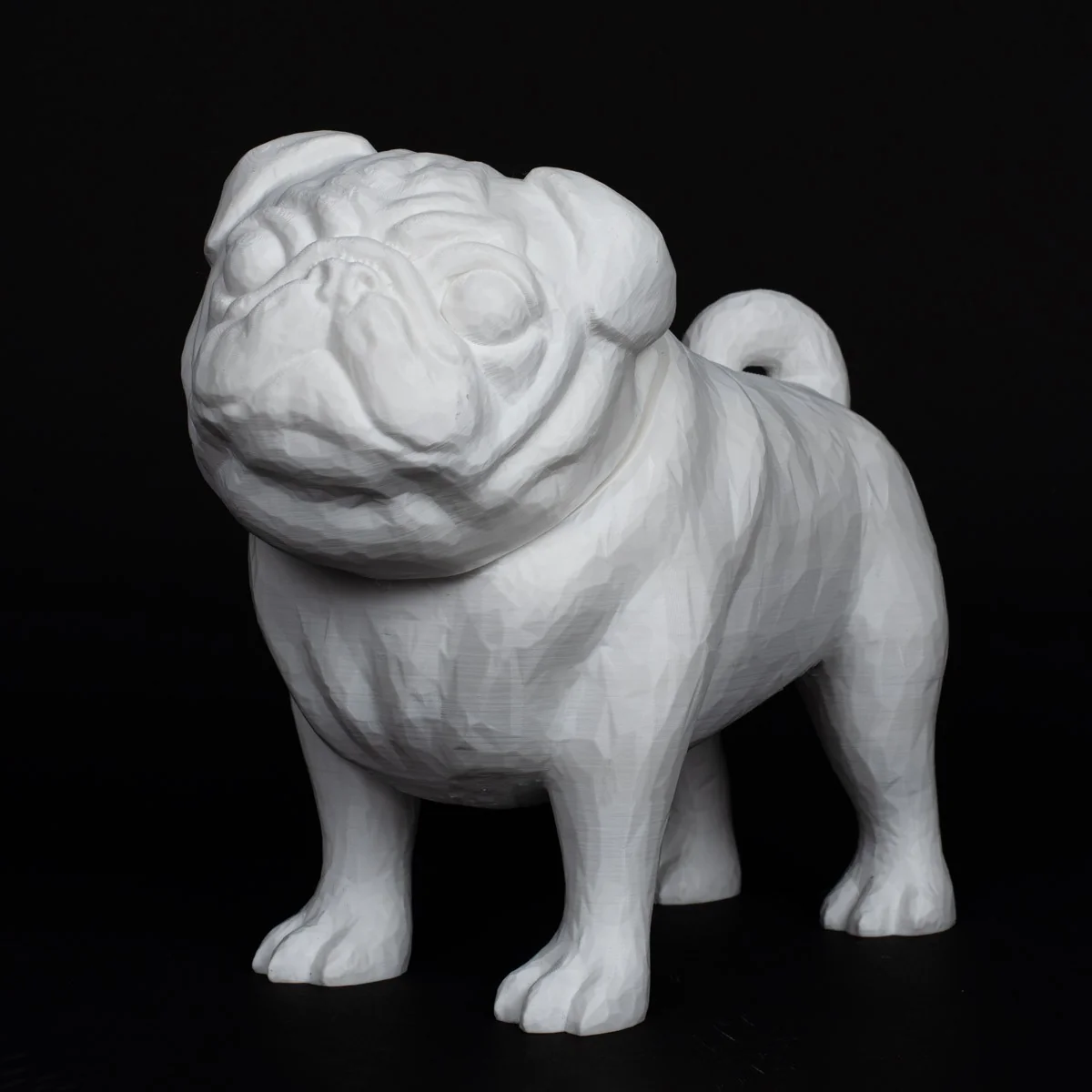
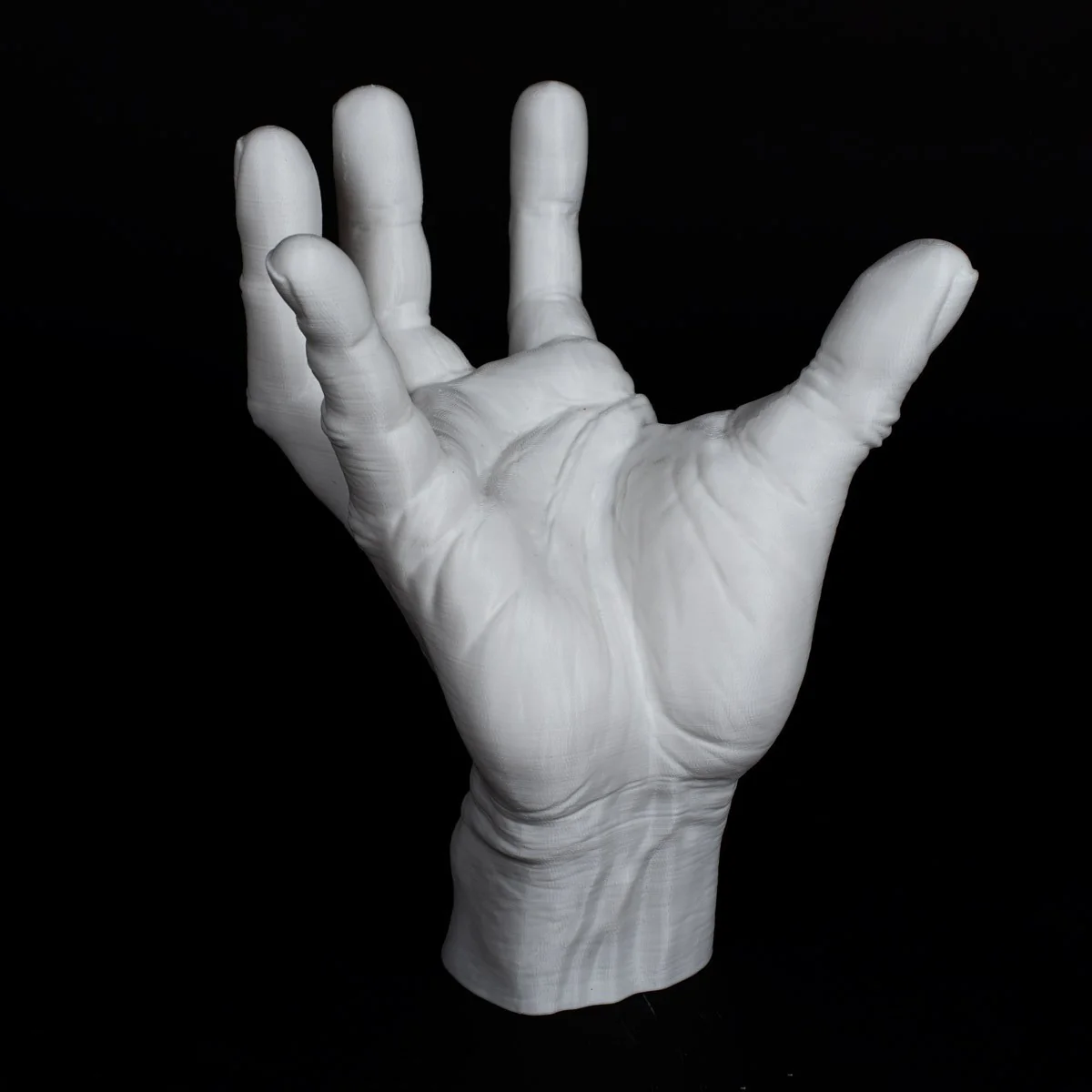
Prusament Premium PLA Pristine White 1.75mm 1kg
By Prusament · Filament & Resin · 3D Printing · More from Prusament
- 1.75 mm filament diameter
- ±0.02 mm diameter tolerance
- 1 kg spool
- 215 °C nozzle temperature
- 50-60 °C heatbed temperature
Price not listed
- PrusamentView at Prusament
- eBayView at eBay
- AmazonView at Amazon (paid link)
- eBay (used) eBay: used, open-box, refurbishedView at eBay (used)
Stores are listed in a fixed order, never by price or commission. Prices are snapshots. Check the current price with the store.
Summary
Prusament PLA Pristine White is an unfilled standard PLA filament on Prusa’s factory-wound 1 kg spool, aimed at detailed indoor prints and color-critical white parts on calibrated 1.75 mm FDM printers. Check your printer’s first-layer setup before you buy: several exact-color owners report adhesion trouble that traced to slicer profile or bed cleanliness rather than the spool.
Strengths
- Published diameter control of ±0.02 mm with per-spool manufacturing logs and spectroscopic color matching, though these are maker QC claims rather than independent metrology.
- Official ecosystem support: PrusaSlicer presets, Prusa PLA guidance, and all Prusa FDM printers listed as supported; standard 1.75 mm profiles work on non-Prusa machines after tuning.
- PLA’s low warping suits detailed indoor parts, prototypes and visual components, with smooth and satin sheets helping small contact patches.
- Machine-controlled color matching between batches is aimed at decorative multi-part work where two white pieces sit side by side.
- Positive exact-color owner reports exist: a May 2025 MK4S/Core One user printed several parts with no issues, and an October 2026 Reddit user reported excellent adhesion on a smooth sheet.
- The redesigned NFC spool has a removable reusable shell and offline material data, an improvement over the older tightly pressed cardboard-hub spool.
Weaknesses
- Exact-color first-layer complaints recur: a May 24, 2025 MK4 owner saw poor first layers on two dried spools, and a March 2025 thread described under-extrusion and stringing; sheet surface and calibration remain plausible factors.
- An October 16–17, 2026 Core One owner initially blamed the spool for adhesion failures, then found an incorrect slicer profile; two other owners in the same thread reported opposite results.
- September 25, 2026 stringing on a 0.25 mm nozzle with a newly opened spool had no confirmed root cause or post-drying reprint in the accessible thread.
- Heat and UV limits: 55°C heat-deflection temperature and softening above about 60°C rule out hot dashboards, warm enclosures and outdoor mechanisms.
- Standard PLA is brittle; it is a poor choice for impact-critical parts.
- No independent pigment-specific data exists: no CIELAB, opacity or TD value for Pristine White, and no controlled lab benchmark against Bambu or Inland under identical conditions.
Verified specifications
| Material | unfilled standard PLA, Pristine White color, 1.75 mm nominal diameter, 1000 g net filament per spool. |
|---|---|
| Diameter tolerance | ±0.02 mm for this PLA grade (±0.03 mm for Prusament PLA Blend). |
| Manufacturer start profile | 215°C nozzle, 50–60°C bed, 0.4 mm brass nozzle; smooth PEI, satin and textured sheets all named as usable, with official PrusaSlicer profiles. |
| Older TDS profile | 210 ±10°C nozzle, 40–60°C bed, 100% cooling, up to 200 mm/s. |
| Physical values (generic TDS) | density 1.24 g/cm³; melt flow rate 9–11 g/10 min at 210°C/2.16 kg; Shore D hardness 81. |
| Thermal | heat-deflection temperature 55°C at 0.45 MPa and 1.80 MPa; parts soften above about 60°C; not for long-term outdoor UV exposure. |
| Mechanical | raw filament tensile yield 57 ±1 MPa; interlayer adhesion 17 ±3 MPa; printed specimen tensile yield about 51 ±3 MPa horizontal and 59 ±2 MPa vertical-xz under Prusa’s MK3/0.20 mm recipe. |
| Moisture | 0.13% mass gain over 24 h and 0.19% over 7 days at 24°C/22% RH. |
| Spool | recycled-polycarbonate OpenPrintTag NFC spool with reusable locking hub, introduced October 31, 2025; filament drying recommendation 45°C for 6 h. |
| In the box | one manufacturer-wound 1 kg spool. No nozzle, build plate, dryer, filament sensor or slicer subscription is included. |
| Warranty and returns | 1 year “rest of the world” (including US) for filament as a consumable, listed as “after opening or 1 year”; 60-day returns on unopened spools only. |
| Color | sold as Pristine White, with no published RAL, Pantone or CIELAB coordinate; perceived whiteness varies with lighting, wall thickness and pigment. |
Full research notes and sources
First-layer adhesion and stringing
Owner reports span first use and later setup changes, with no diagnosed production defect or affected serial lot. A May 2025 Prusa Forum thread shows one MK4 owner with poor first layers on two dried Pristine White spools while other PLAs worked, plus a second user who printed the same color on MK4S and Core One without issues. The October 2026 Reddit thread adds a Core One owner whose two spools both failed to stick while ELEGOO PLA+ worked, with replies split between adhesion success and failure; that owner later found an incorrect slicer profile and attributed the failure to setup. A separate March 2025 thread covers under-extrusion, stringing and first-layer trouble on MK4/MK3.9, with commenters pointing to nozzle diameter in slicer and firmware, extrusion multiplier, nozzle temperature, volumetric flow and filament dryness. A September 2026 thread reports heavy wisps from a newly opened spool on a 0.25 mm nozzle, with drying suggested but no confirmed fix.
The practical reading is that white pigment may expose first-layer sensitivity, but sheet cleanliness, nozzle size and profile selection are equally plausible causes. Clean smooth PEI with appropriate methods, set an accurate first layer, use a small brim for tricky geometries, and verify the slicer material profile before blaming the spool. Prusa recommends 45°C for 6 h when drying is warranted, preferably in a temperature-controlled dryer rather than an oven that can overshoot.
Heat, UV and material limits
Standard PLA is the wrong material for hot or sun-exposed parts. The generic TDS lists a 55°C heat-deflection temperature at 0.45 MPa and 1.80 MPa, and Prusa’s PLA guidance says parts soften and deform above roughly 60°C and warns against long-term outdoor UV use. Use PETG, ASA or another engineered material when heat, UV or impact requirements genuinely exceed PLA’s limits. The white color itself is not a UV-stable pigment system for outdoor fixtures.
Running costs
The spool has no electricity draw or subscription; purchased filament and waste are the ongoing cost. At the promotional $23.99/kg, raw filament costs $0.02399/g, so 100 g of consumed material is about $2.40, 250 g about $6.00 and 1 kg about $23.99, before supports, failed jobs, nozzle purge, taxes and shipping. At Printed Solid’s $37.99/kg, the same examples become $3.80 per 100 g, $9.50 per 250 g and $37.99 per kg. These are mathematical examples, not verified printed-part selling prices.
Using the generic TDS density of 1.24 g/cm³ and a 1.75 mm circular cross-section, 1 kg corresponds to about 335 m of filament, assuming ideal nominal dimensions. At 6 kg consumed per year, six full spools cost $143.94 at $23.99 each or $227.94 at $37.99 each; at 12 kg per year, $287.88 or $455.88 respectively, before tax and material lost to failures. Drying energy is separate and depends on the appliance and frequency.
Is it worth it?
At $23.99 or less delivered, the spool is strong value for tight process control and consistent white color. Between $25 and $30 it is reasonable if repeatable color and per-spool logging matter. Above $30 it is harder to justify for everyday non-critical whites: Bambu PLA Basic white lists at $19.99 in its US storefront and Inland PLA Basic White at $9.99 in-store at Micro Center, though both are different polymers, color recipes and filament tolerances with ±0.03 mm tolerance, and neither has been shown identical to Pristine White. Compare with-spool selections and freight rather than spool-less refills or quantity discounts, and note the Micro Center offer is in-store pickup only.
The bigger caveat is the checkout route: Prusa’s US page shows $23.99 reduced from $29.99 and in stock, while Printed Solid lists the same SKU 17752 at $37.99 with free domestic shipping only above $50, so a single spool may carry shipping. Whether the $23.99 offer applies to the selected US shipping route was not verified by completing checkout.
Which spool this is
This page covers the 1 kg Prusament PLA Pristine White on its original manufacturer spool, Prusa internal identifier 17752, also listed by Printed Solid as SKU 17752 on the NFC spool. It is ordinary PLA, not PLA Blend, PLA+, Vanilla White, Pearl White, a spool-less refill, a 2 kg spool, or a PETG/ASA engineering grade. Prusa’s October 31, 2025 redesign introduced recycled-polycarbonate OpenPrintTag NFC spools with a reusable locking hub; the filament itself still follows the 45°C/6 h PLA drying recommendation, and the spool’s rated polymer temperature must not be applied to the filament. Do not confuse the $26.99 legacy refill (SKU 016627564580) with this full spool, since it does not mount on the new NFC hub.
Sources
Manufacturer:
- Prusa US product page
- Prusa PLA filament family
- Prusament PLA technical data sheet v1.1
- Prusa knowledge base: PLA
- Prusa blog: OpenPrintTag spool redesign
- Prusa knowledge base: drying filament
- Prusa knowledge base: warranty
- Prusa knowledge base: refunds and returns
Independent reviews:
- No independent lab test of this exact color was found.
Owner reports:
- Prusa Forum: Pristine White first-layer thread
- Reddit r/prusa3d: white Prusament adhesion complaint
- Reddit r/prusa3d: Pristine White extrusion case
- Reddit r/prusa3d: new spool stringing
Stores and parts: