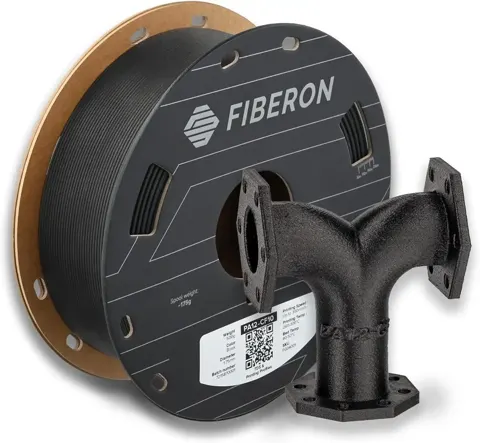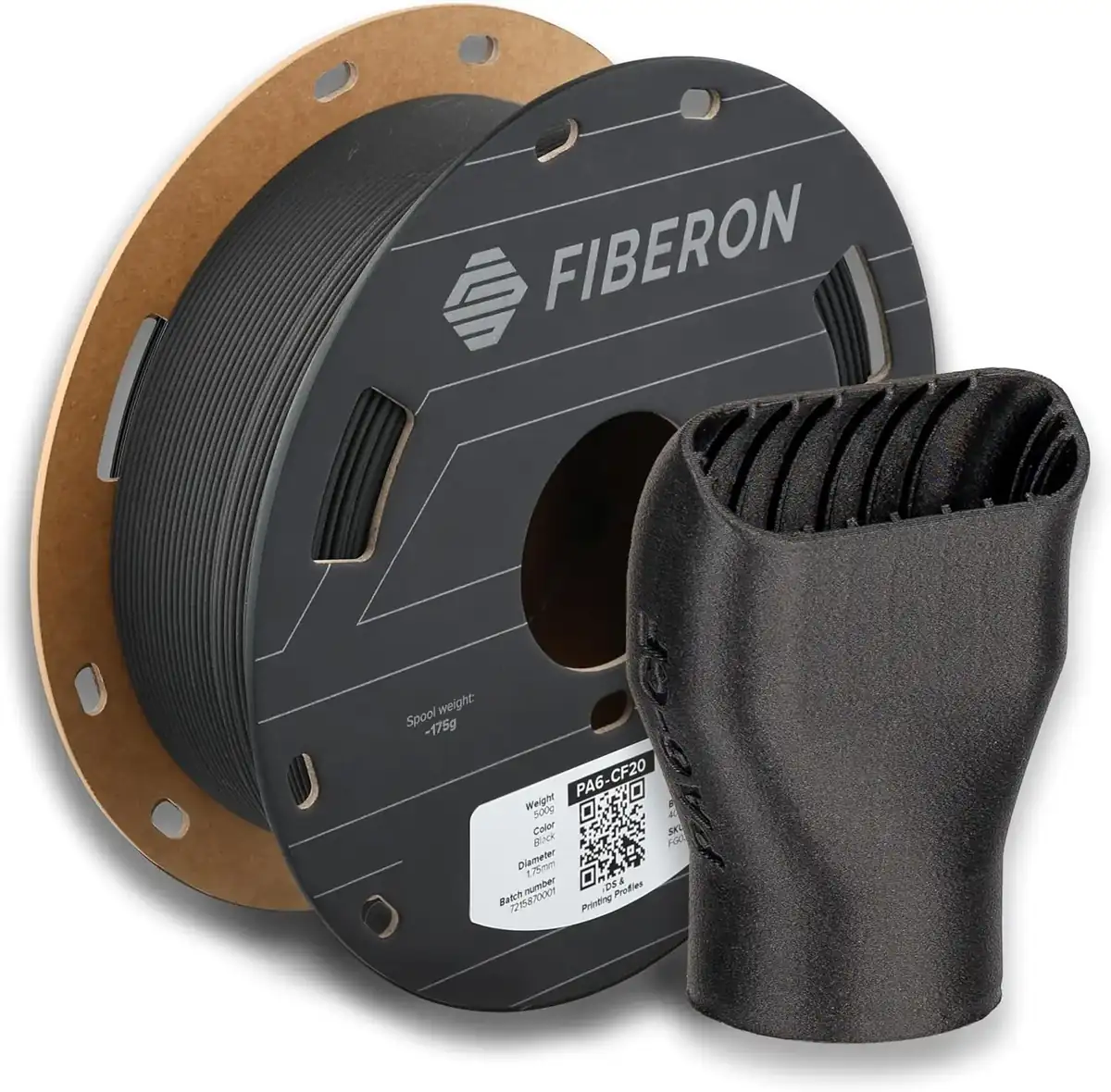
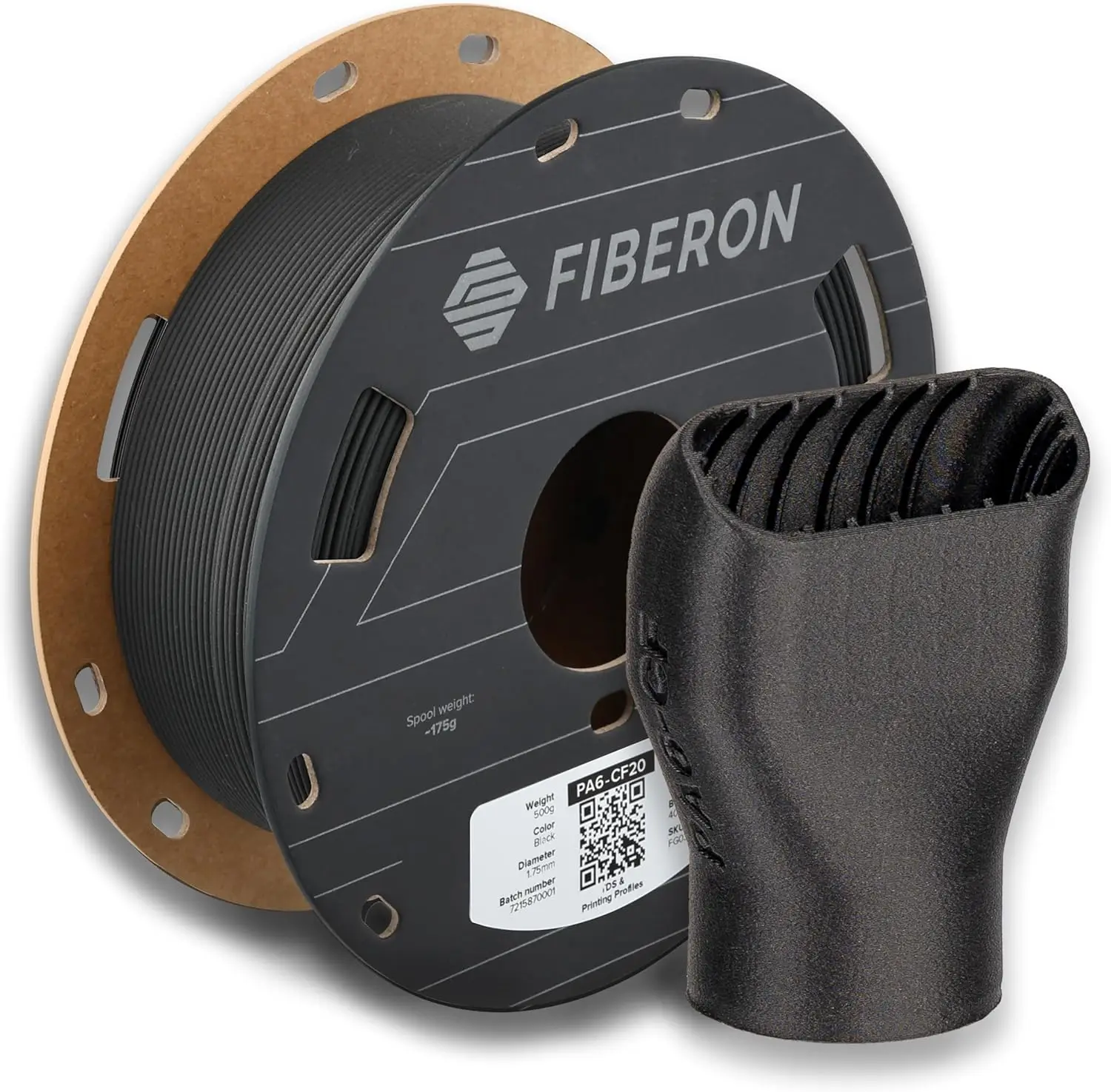
Polymaker PA6-CF20 Filament
By Polymaker · Filament & Resin · 3D Printing · More from Polymaker
Compare all Filament & Resin side by side →
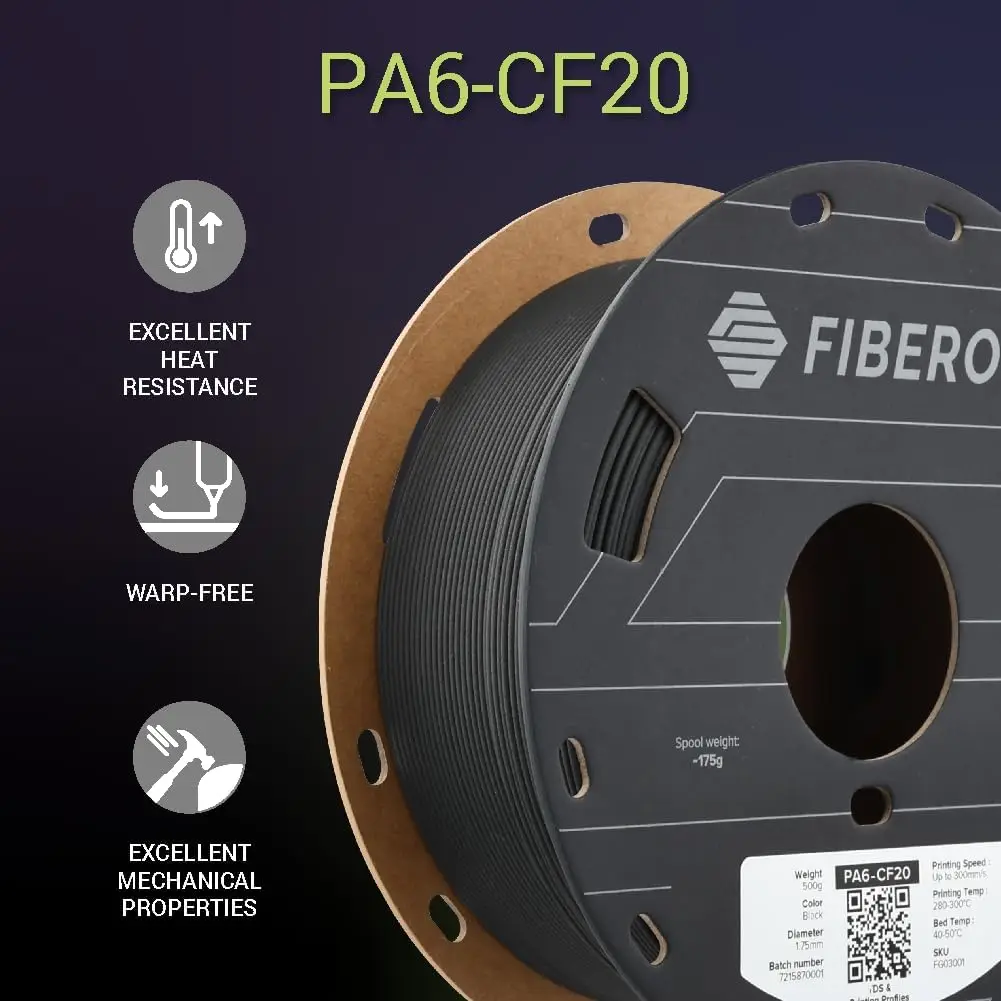
- 20 wt% carbon fiber reinforced Nylon 6
- 1.75 mm diameter
- Printing temperature: 280-300 °C
- Bed temperature: 40-50 °C
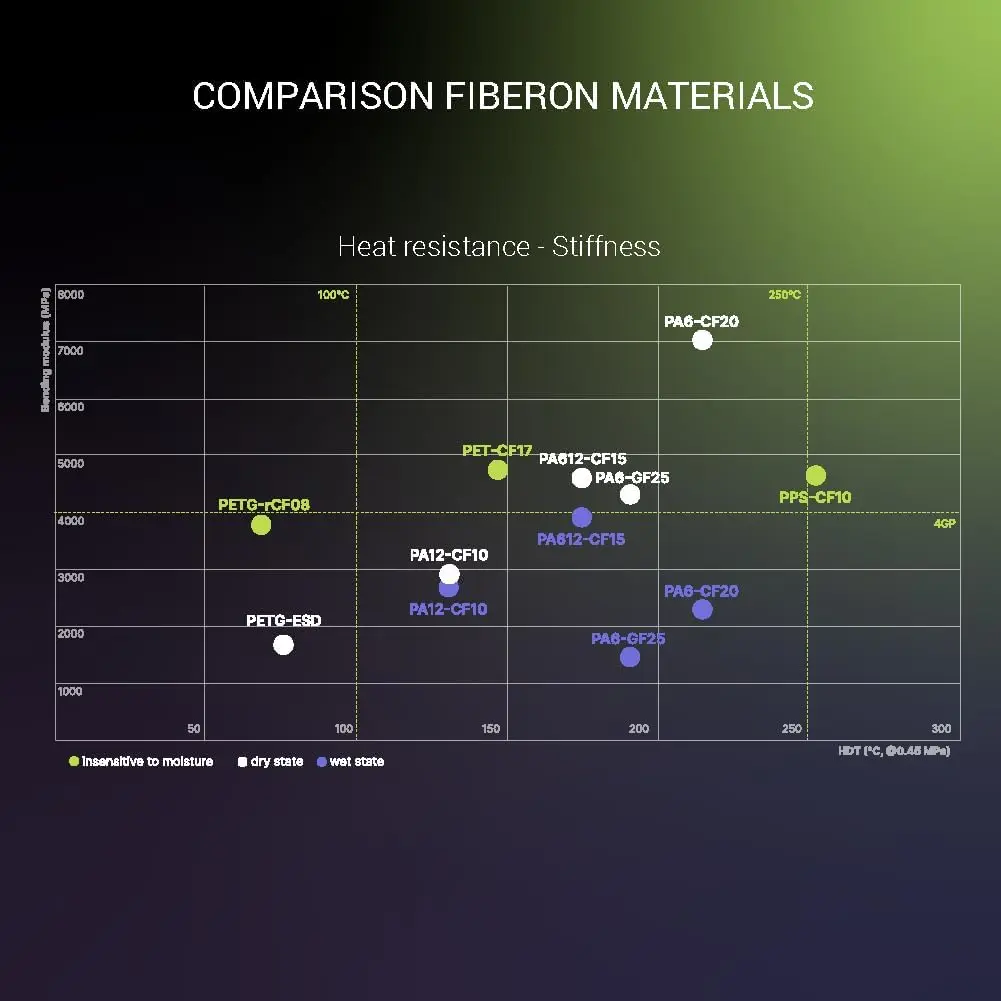
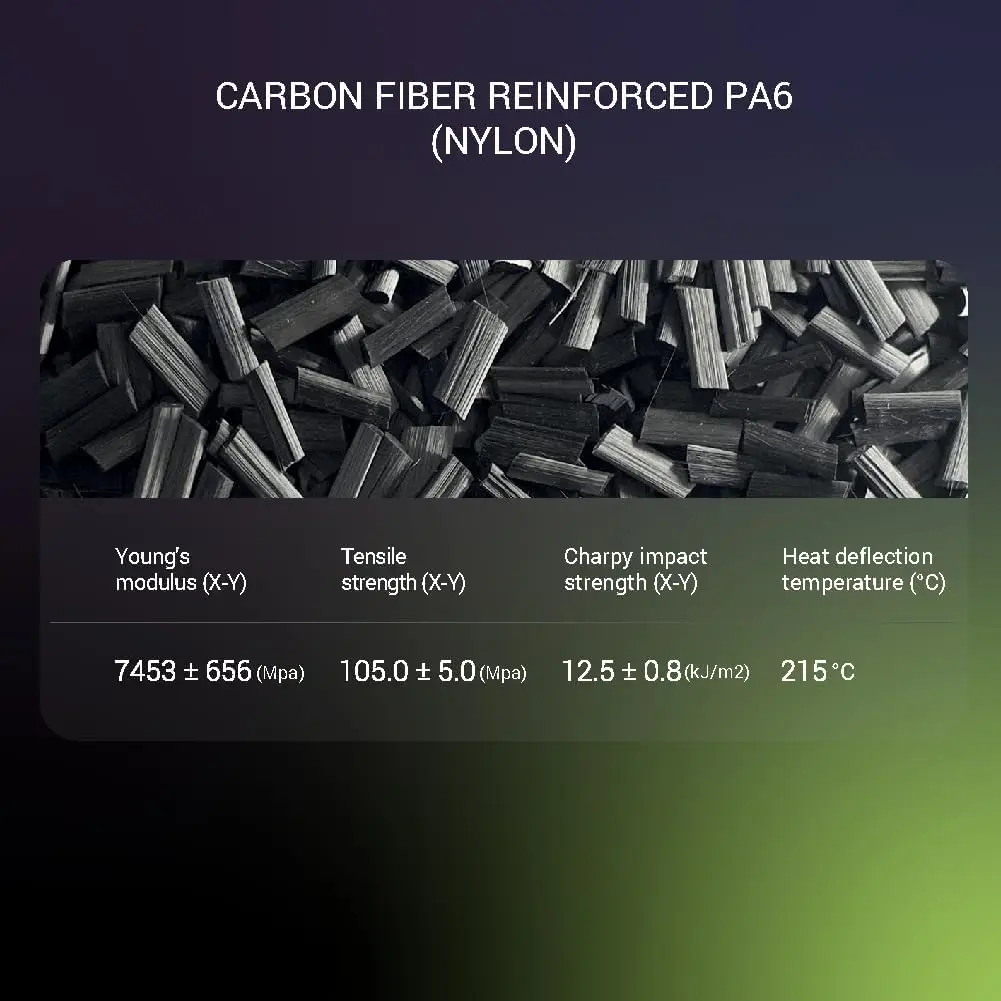
- Heat deflection temperature: 215 °C at 0.45 MPa
Lowest price seen
$35.99
from $35.99 at AliExpress · Checked Nov 26, 2026
- AliExpress Antinsky3d Store $35.99View at AliExpress
- CHEETECH $37.99View at CHEETECH
- B&H Photo30-day returns · store policyView at B&H Photo
- PolymakerView at Polymaker
More on eBay (1)
- eBayView at eBay
- eBay (used) eBay: used, open-box, refurbishedView at eBay (used)
Stores with a price are sorted lowest first; commission never changes the order. Prices are snapshots. Check the current price with the store.
Summary
Polymaker Fiberon PA6-CF20 is a 1.75 mm carbon-fiber-reinforced Nylon 6 filament for stiff, heat-resistant functional parts. It suits experienced 3D-printing users with an all-metal hotend, hardened nozzle and reliable moisture control, rather than beginners or decorative projects.
Strengths
- Stiff, heat-resistant material suited to brackets, fixtures, housings and jigs.
- Heat-deflection temperature of 215°C at 0.45 MPa.
- Dry bending modulus of 8636 MPa on the Fiberon material page.
- Wide manufacturer wiki speed range of 30–300 mm/s.
- Retailer-hosted owners report reliable printing and good print quality.
Weaknesses
- No independent instrumented test of the exact Fiberon PA6-CF20 model was found.
- An all-metal hotend, hardened steel or ruby nozzle, dryer and dry storage are needed.
- Owners report stringing, raised bumps, tight winding and filament entanglement.
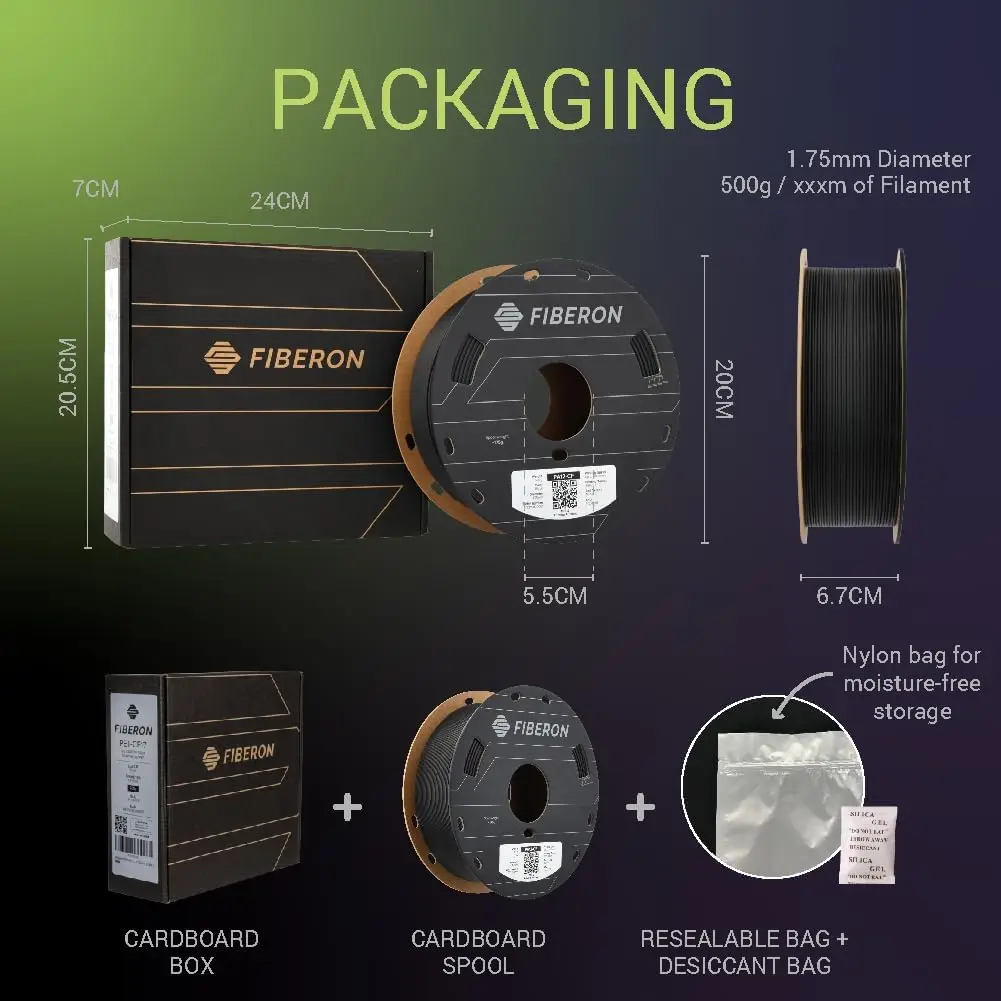
- A cardboard spool deformed under heat and filament weight during drying and interfered with feeding.
- Moisture can undermine strength and print quality unless the filament is dried and protected.
- The material is costly compared with everyday PLA and PETG.
Verified specifications
| Material | Nylon 6 reinforced with 20% carbon fiber. |
|---|---|
| Filament diameter | 1.75 mm. |
| Manufacturer-listed spool sizes | 500 g and 2 kg. |
| Nozzle temperature | 280–300°C. |
| Bed temperature | 40–50°C on the Fiberon page; 25–50°C on the Polymaker product page. |
| Heat-deflection temperature | 215°C at 0.45 MPa; 215.2°C under ISO 75 at 0.45 MPa on the Polymaker page. |
| Bending modulus | 8636 MPa dry and 2508 MPa wet on the Fiberon page; 8339.4 ± 369.4 MPa in XY on the Polymaker page. |
| Recommended nozzle | hardened steel or ruby. |
| Printing speed | 30–300 mm/s in the manufacturer wiki; 30–60 mm/s on the older Polymaker product page. |
| Required setup | all-metal hotend reaching at least 280°C, wear-resistant nozzle, filament dryer, post-print annealing and moisture conditioning after annealing. |
Full research notes and sources
Stiffness and heat resistance
Fiberon PA6-CF20 uses Nylon 6 with 20% carbon fiber. The manufacturer describes Fiberon as the same formulation as PolyMide PA6-CF, with a slightly darker black shade.
The Fiberon page lists bending modulus of 8636 MPa dry and 2508 MPa wet, plus a heat-deflection temperature of 215°C at 0.45 MPa. The Polymaker page gives 8339.4 ± 369.4 MPa in XY and 215.2°C under ISO 75 at 0.45 MPa. These are manufacturer-published figures, not independent laboratory measurements.
GoodPrints3D positions the filament for makers who need more stiffness and heat tolerance than PLA or PETG provide, particularly for brackets, housings, fixtures and jigs.
Printing setup
The material needs a high-temperature setup. Manufacturer and retailer guidance calls for a 280–300°C nozzle, a 40–50°C bed, an all-metal hotend and a hardened-steel or ruby nozzle. The cooling fan should be off.
The manufacturer wiki gives a broad speed range of 30–300 mm/s, while the older Polymaker page lists 30–60 mm/s. Expect to tune the profile rather than load a generic nylon preset.
Fiberon calls for a hardened or ruby nozzle because carbon-fiber reinforcement is abrasive. A brass nozzle is not suitable for this material.
Moisture and maintenance
Nylon readily absorbs moisture, so the filament needs active control before and during printing. Manufacturer guidance calls for drying at 100°C for 8 hours if the material has taken on moisture, while retailer guidance recommends 100°C for 10 hours before printing.
The manufacturer wiki goes further: keep the filament in a heated dryer throughout printing, watch for popping or cracking as moisture signs, and use adhesive if bed adhesion fails. Storage and printing below 20% relative humidity are recommended, ideally in a dry box.
Post-print processing also needs care. The wiki recommends annealing at 100°C for 16 hours, then moisture conditioning for 48 hours in a humid environment or water.
Owner experiences
Available owner feedback is limited to retailer-hosted reviews and forum posts rather than a broad reliability survey. Another reported good print quality but found that the cardboard spool softened and warped in a dryer, causing feeding trouble.
A 3DJake customer reported filament wound too tightly for the printer to pull reliably and experienced self-entanglement that failed prints. In a Prusa forum thread, owners reported stringing and raised bumps around moving features on an MK4. Another user obtained better small-part results with auto cooling set to a 20% minimum and 40% maximum.
These reports do not establish a failure rate.
Is it worth it?
PA6-CF20 earns its place when a part needs stiffness, heat resistance and durability beyond everyday filaments. It is less convincing for decorative objects, simple organizers and low-stress brackets.
Budget for the material and the equipment it may demand. A $159.99 listing was observed for a black 3 kg spool at Shop Abunda, including free shipping. 3DJake listed €44.99 for 500 g, €79.99 for 1 kg and €224.99 for 3 kg, excluding VAT and delivery. A dryer, dry box, wear-resistant nozzle and all-metal hotend can add further cost if your printer lacks them.
Sources
Manufacturer:
- Fiberon PA6-CF20 material page
- Fiberon PA6-CF20 Polymaker product page
- Fiberon PA6-CF20 printer profiles
Independent reviews:
Owner reports: