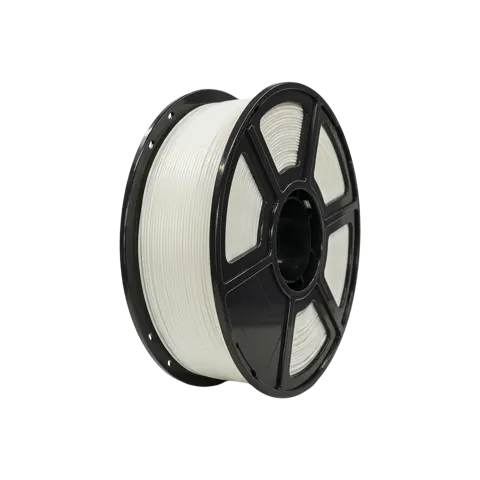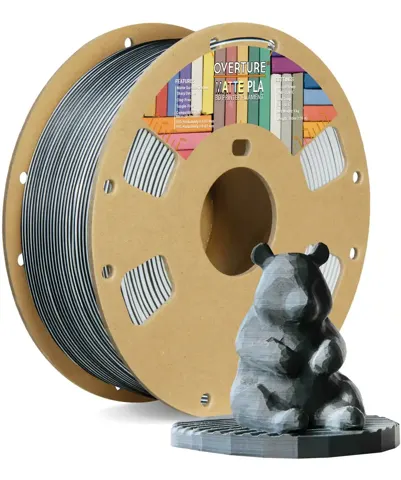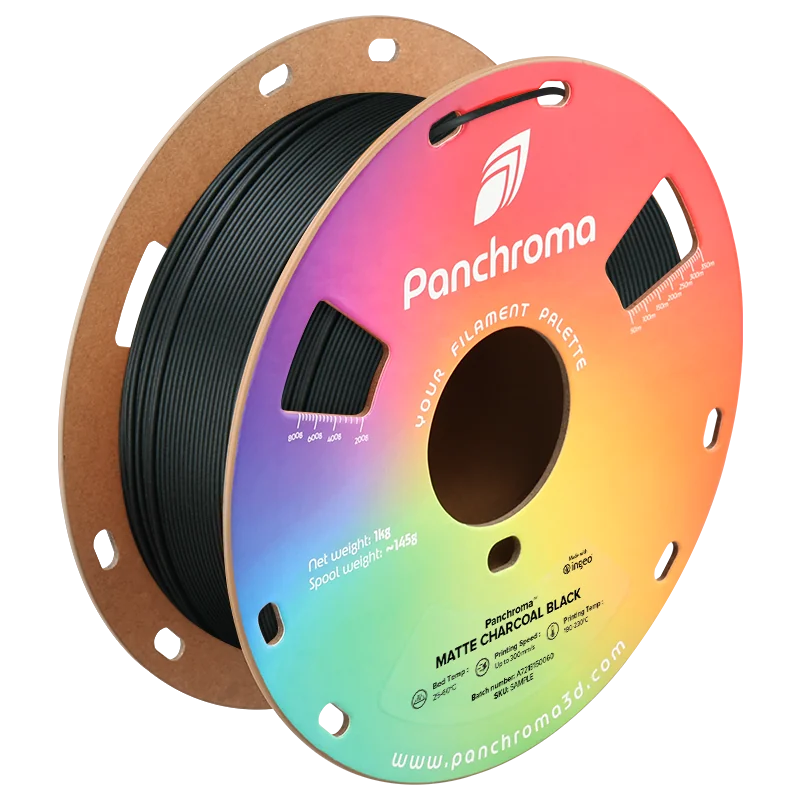
Polymaker Matte PLA
By Polymaker · Filament & Resin · 3D Printing · More from Polymaker
- 1.75mm diameter
- 1kg spool
- nozzle 190-230°C
- bed 25-60°C
- max speed 300mm/s
Price not listed
- PolymakerView at Polymaker
- WalmartView at Walmart
- eBayView at eBay
- AmazonView at Amazon (paid link)
- eBay (used) eBay: used, open-box, refurbishedView at eBay (used)
Stores are listed in a fixed order, never by price or commission. Prices are snapshots. Check the current price with the store.
Summary
A matte-finish PLA for display, cosplay and decorative prints that hides layer lines without sanding. Check your storage before you buy: the recycled cardboard spool absorbs moisture, and wet filament strings and weakens layer adhesion.
Strengths
- Matte finish hides layer lines; prints look finished without sanding.
- Vibrant, accurate colors, especially earth tones.
- Reliable bed adhesion with infrequent clogging and stringing.
- Tangle-free winding; many users prefer the cardboard spool for environmental reasons.
- Sanding and painting are easier than on glossy PLA.
Weaknesses
- Some colors are softer and need print-setting adjustments.
- High-speed results are not consistent; many users slow down for best surface quality.
- Cardboard spools can be noisy in AMS units and occasional winding inconsistencies cause jams.
- Cardboard spools absorb moisture; wet filament strings and shows weak layer adhesion.
- Matte surface scratches more visibly than glossy PLA.
- Lower layer adhesion makes it unsuitable for functional or load-bearing parts.
Verified specifications
| Product line | Panchroma Matte PLA, the same material formerly sold as PolyTerra PLA. |
|---|---|
| Material | PLA-based; compounded with naturally occurring organic minerals; Polymaker says it uses 15-20% less plastic than standard PLA. |
| Nozzle temperature | 190-230°C. |
| Bed temperature | 25-60°C (SimplyPrint lists 25-61°C). |
| Print speed | up to 300 mm/s; maximum volumetric speed up to 24 mm³/s. |
| Retraction | 1-3 mm at 20-40 mm/s. |
| Cooling fan | on. |
| Enclosure | not needed. |
| Drying | 55°C for 6 h if moisture has been absorbed. |
| Density | 1.37 g/cm³. |
| Vicat softening temperature | 62°C (ISO 306). |
| Young's modulus (X-Y) | 1997 MPa ±64 (ISO 527). |
| Tensile strength (X-Y) | 23.2 MPa ±0.5; (Z): 12.2 MPa ±0.7 (ISO 527). |
| Notched Charpy impact strength (X-Y) | 10 kJ/m² ±0.8 (ISO 179). |
| Glass transition | 60.6°C. |
| Diameter | 1.75 mm and 2.85 mm; tolerance ±0.03 mm on older stock or ±0.02 mm on rebranded stock. |
| Abrasiveness | slightly more abrasive than standard PLA; a hardened nozzle is not required unless printing large volumes. |
| Multi-material | AMS compatible; no NFC/RFID tag on the spool, so slicer setup is manual. |
| Anycubic ACE Pro | Polymaker advises against using this filament with the ACE Pro. |
| Food safety | no data; not FDA food-safe certified. |
| Compostability | degrades faster than regular PLA under industrial composting (ISO 14855-1); not home compostable. |
| Spool | recycled cardboard, about 80 g versus about 150 g for a rigid plastic spool. |
| Refills | sold without spool. |
| Tensile strength cited from a retailer spec: 20.9 MPa; Charpy impact 5.7 kJ/m². | |
Full research notes and sources
Matte finish and layer lines
The matte look is a material property, not a coating: mineral fillers scatter light at layer boundaries, and LayerDepth estimates a 60-70% reduction in visible layer lines versus glossy PLA at 0.2 mm. Owners report parts that look finished straight off the bed, and sanding and painting are easier than on glossy PLA. The trade-off is a surface that scratches more visibly, and supports can leave white scarring where they touch.
Print settings and speed
It prints at 190-230°C nozzle and 25-60°C bed with no enclosure, and Polymaker rates it up to 300 mm/s. Treat 300 mm/s as the manufacturer specification: an Amazon listing title claims up to 500 mm/s, and many owners slow down for the best surface. Some colors are reported as softer and need individual calibration. It is AMS compatible, but there is no RFID or NFC tag on the spool, so slicer profiles need manual setup, and Polymaker advises against using it with the Anycubic ACE Pro. The mineral filler makes it slightly more abrasive than standard PLA, though a hardened nozzle is only worth considering at high volumes.
Moisture and storage
The recycled cardboard spool absorbs moisture faster than plastic, so store opened spools sealed with desiccant and dry at 55°C for 6 h if stringing or weak layers appear. Wet filament strings and shows weak layer adhesion. The cardboard spool weighs about 80 g versus about 150 g for a rigid plastic spool, and refills are sold without a spool. In AMS units the cardboard spool can be noisy, and occasional winding inconsistencies cause jams.
Strength, functional use and value
Published figures are modest and conflict between sources: tensile strength is 23.2 MPa in the X-Y direction and 12.2 MPa in Z, with a Young’s modulus of 1997 MPa, while a retailer spec cited by StackSheriff lists 20.9 MPa and a Charpy impact of 5.7 kJ/m² against 10 kJ/m² in the primary data sheet. Glass transition is 60.6°C and Vicat softening is 62°C. Do not size a part around either tensile number, and the lower layer adhesion makes this filament unsuitable for functional or load-bearing parts. It is a consumable with no cartridge or material lock-in; ownership extras are desiccant or a dryer, an optional hardened nozzle at very high volumes, and an optional matte clear lacquer for high-touch parts.
At roughly $19-22/kg it is fairly priced for display, cosplay and decorative work where the matte finish removes post-processing labor. Polymaker lists it at $18.99 (checked 2026-10-13). Bulk pricing runs about $21.99/kg for five spools and about $19.99/kg for ten. StackSheriff cites competitor reference points: Hatchbox PLA about $18-20/kg, Bambu Lab Basic PLA about $20/kg, Prusament PLA $33-36/kg, and eSUN ePLA-Matte $15-20/kg. Above about $25/kg, compare eSUN ePLA-Matte or Bambu PLA Matte before buying, and at or below about $20/kg on sale it is a strong buy for cosmetic prints.
Which model this is
This page covers Polymaker Panchroma Matte PLA, sold under Polymaker’s Panchroma line; Polymaker states it is the same material formerly sold as PolyTerra PLA. The rebrand happened during 2024-2025 and the formulation is unchanged. It is sold in many colors and in 1 kg and 3 kg spools, in 1.75 mm and 2.85 mm diameters. Color counts vary by source and date: 30+, 48, or 52. Diameter tolerance is ±0.03 mm on older PolyTerra stock and ±0.02 mm on rebranded Panchroma stock. Do not merge it with Polymaker’s separate Matte PLA for Production line or matte PLAs from other brands. The Amazon listing for this filament is ASIN B08QMCNWMW.
Sources
Manufacturer:
- Polymaker wiki — Panchroma Matte PLA product page
- Polymaker wiki — Technical data sheet page (Panchroma PLA)
- Polymaker shop — Matte PLA product page
Independent reviews:
- SpoolScout — Polymaker Panchroma Matte PLA data sheet
- SimplyPrint — Panchroma Matte PLA
- AValidReview — Polymaker Panchroma Matte PLA Filament Review
Owner reports: