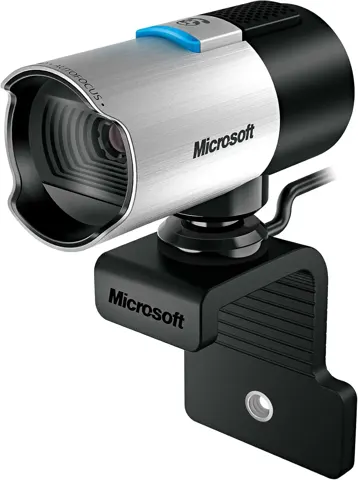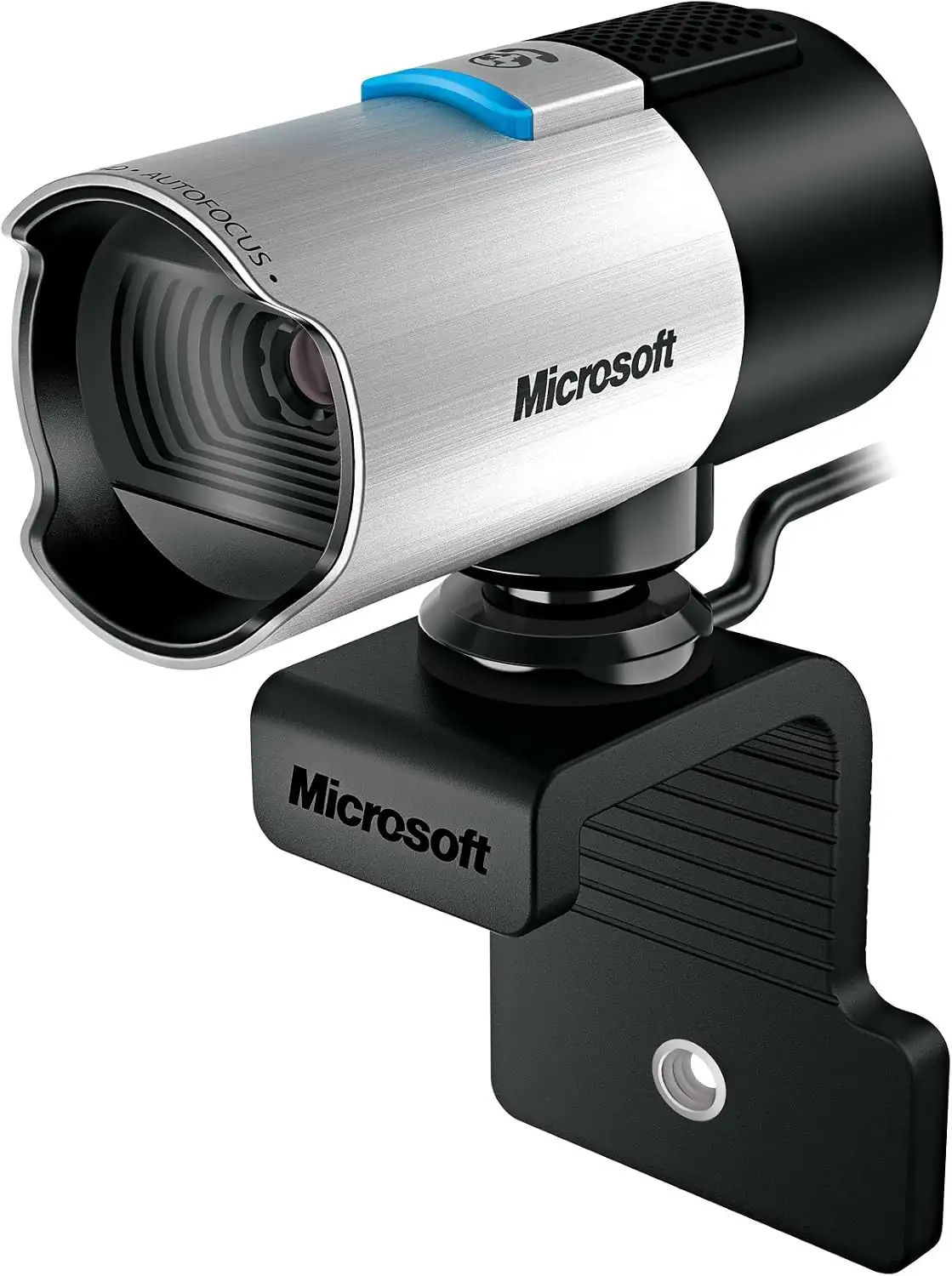
Microsoft LifeCam Studio
By Microsoft · Webcams · Desk & Streaming Setup · More from Microsoft
- Intel Dual Core 1.6 GHz or higher (VGA), 3.0 GHz or higher (720p)
- 1 GB RAM (VGA), 2 GB RAM (720p)
- USB 2.0
- Windows 7/Vista SP1/XP or higher
- CD-ROM
Price not listed
- MicrosoftView at Microsoft
- WalmartView at Walmart
- eBayView at eBay
- AmazonView at Amazon (paid link)
- eBay (used) eBay: used, open-box, refurbishedView at eBay (used)
Stores are listed in a fixed order, never by price or commission. Prices are snapshots. Check the current price with the store.
Summary
A 2010-era HD webcam built around a native 1080p sensor, a glass lens and a 360-degree tripod mount, aimed at people upgrading from a built-in laptop camera. Check what you run it on: the line is discontinued, so on Windows 10 and 11 it depends on the generic USB Video Class driver, and bundled capture stops at 720p.
Strengths
- The larger 1080p sensor handles dim rooms better than the earlier LifeCam Cinema.
- TrueColor face tracking compensates well for poor lighting.
- A glass lens rather than the usual plastic one, with autofocus from 4 inches out.
- USB-powered with no consumables and no running costs.
Weaknesses
- Bundled software caps recording at 720p and 15 frames per second; 1080p is snapshots only unless you buy commercial video software.
- Autofocus is slow and unreliable, sometimes settling on the background instead of your face.
- The mono microphone has no noise suppression and picks up fans and room noise.
- The unit is bulky and heats up after extended use.
- The product line is discontinued, so original LifeCam software and firmware downloads are gone.
- At launch it could not do Skype HD, and 720p chat needed a fast PC and broadband on both ends.
Verified specifications
| Model | Microsoft LifeCam Studio, model number 1425, released September 2010. |
|---|---|
| Sensor resolution | 1920 × 1080. |
| Still image | 5 megapixel (2560 × 2048, interpolated). |
| Field of view | 75 degrees diagonal. |
| Lens | high-precision glass element. |
| Autofocus | 4 inches to infinity (0.1 m to 10 m). |
| Imaging | automatic face tracking, digital pan, digital tilt, 3× digital zoom, TrueColor and ClearFrame processing, up to 30 frames per second. |
| Microphone | integrated omni-directional super-wideband microphone, mono, 100 Hz to 18 kHz response. |
| Interface | Hi-Speed USB compatible with USB 2.0. |
| System requirements | Intel Dual Core 1.6 GHz or higher and 1 GB RAM for VGA video calling; 3.0 GHz or higher and 2 GB RAM for 720p recording; 1.5 GB hard drive space. |
| Compatibility | Windows 10 / 8.1 / 8 / 7 and Mac OS X v10.7 to v10.10; the product page also lists Windows 11 Home/Pro. |
| Dimensions | 4.48 × 2.36 × 1.77 in (114 × 60 × 45 mm); weight 4.52 oz (128 g). |
| Cable length | 72 in (1829 mm). |
| Power | USB bus-powered, no separate adapter. |
| Warranty | 3 years limited hardware, worldwide. |
| Build | mix of metal and plastic with an extended lens shroud; one review describes a brushed aluminum casing. |
Full research notes and sources
Image quality and low light
The sensor is the reason to consider this camera at all. TechCrunch and Engadget both say the Studio is noticeably better than the Logitech HD Pro Webcam C910 in average lighting, and PCMag UK found its recorded video sharper than the C910 at an identical 1280 × 720 setting with fewer compression artifacts.
In dim rooms the sensor and the auto brightness control hold up well. Owners and reviewers alike single out the wide-angle lens and the ability to focus and adjust brightness in low light, and TrueColor face tracking shifts exposure toward your face rather than the whole frame.
Autofocus and the software ceiling
Autofocus is the weak spot. MiniPCReviewer found it slow and also complained about awkward USB placement, minor clamp issues and heating after extended use.
The bigger limit is software. Microsoft’s own tools cap capture at 720p and 15 frames per second, and 1080p recording needs commercial video software that is not included, along with an Intel Quad Core 3.0 GHz or higher processor and 4 GB RAM. Without third-party software, 1080p is available as still snapshots only. 720p video chat needs Windows Live Messenger on both ends, an Intel Quad Core 3.0 GHz or higher processor, a compatible HD webcam, microphone, speakers or headset, and high-speed Internet. TIME called it a good camera held back by the recording software, and PCMag UK found the live effects fall out of sync at HD resolution.
Microphone
The built-in microphone is mono and, according to PCMag UK, Engadget and TIME, has no noise suppression, so it captures ambient and fan noise along with your voice. TIME still rated the vocal reproduction decent, though unspectacular. One outlet disagrees and calls it noise-canceling, but the technical data sheet lists only an omni-directional super-wideband microphone, so plan on an external headset for calls.
Windows 10 and 11 support
The LifeCam line ran from 2006 to 2023 and Microsoft no longer sells this camera or its software. A 2025 report on the related LifeCam Cinema describes Chrome and Edge losing camera access while Firefox kept working, and a stable configuration there used generic UVC driver version 10.0.26100.7309 dated 2006. That has not been verified for the Studio specifically, so test your browser before you commit to a unit.
Repairs, parts and running costs
There is no ongoing cost. The camera draws power over USB, has no consumables, and no replacement parts, firmware or software are sold for it. In practice, a failed unit is replaced rather than repaired. Keep the lens and sensor hood clean and leave the housing ventilated so heat does not build up.
Is it worth it?
At launch it cost about $99.95 at Best Buy in 2010 as the only retail channel, or $99.99 list, and reviewers judged that a strong price for a glass lens, autofocus, a tripod thread and a three-year warranty. The value case was thinner if you needed 1080p recording or 720p chat, since both demanded third-party software and a quad-core PC with 4 GB RAM.
Today a used unit only makes sense if it is cheap and confirmed working on your system. Treat it as a 720p webcam with good optics, not a modern all-in-one.
Which model this is
This page covers the Microsoft LifeCam Studio, model number 1425, released September 2010. It is a separate model from the LifeCam Cinema, LifeCam Show, VX/NX and HD series, and no colour or regional electrical variants are documented. The Amazon listing is ASIN B009IUJMH0.
Sources
Manufacturer:
- Microsoft Store product page — LifeCam Studio
- Wikipedia — LifeCam
- Microsoft News — Microsoft unveils new LifeCam with 1080p HD sensor
- Microsoft Support — Firmware, drivers and software for Microsoft LifeCam cameras
Independent reviews:
- TIME — Quick Look at Microsoft’s LifeCam Studio 1080p Webcam
- Geeky Gadgets — Microsoft LifeCam Studio 1080p Webcam
- MiniPCReviewer — Microsoft LifeCam Studio Review
- Microsoft Q&A — Is the Microsoft LifeCam Cinema still supported in Windows 11?
Owner reports:
- No owner reports or measured test data were available in the research files for this model.