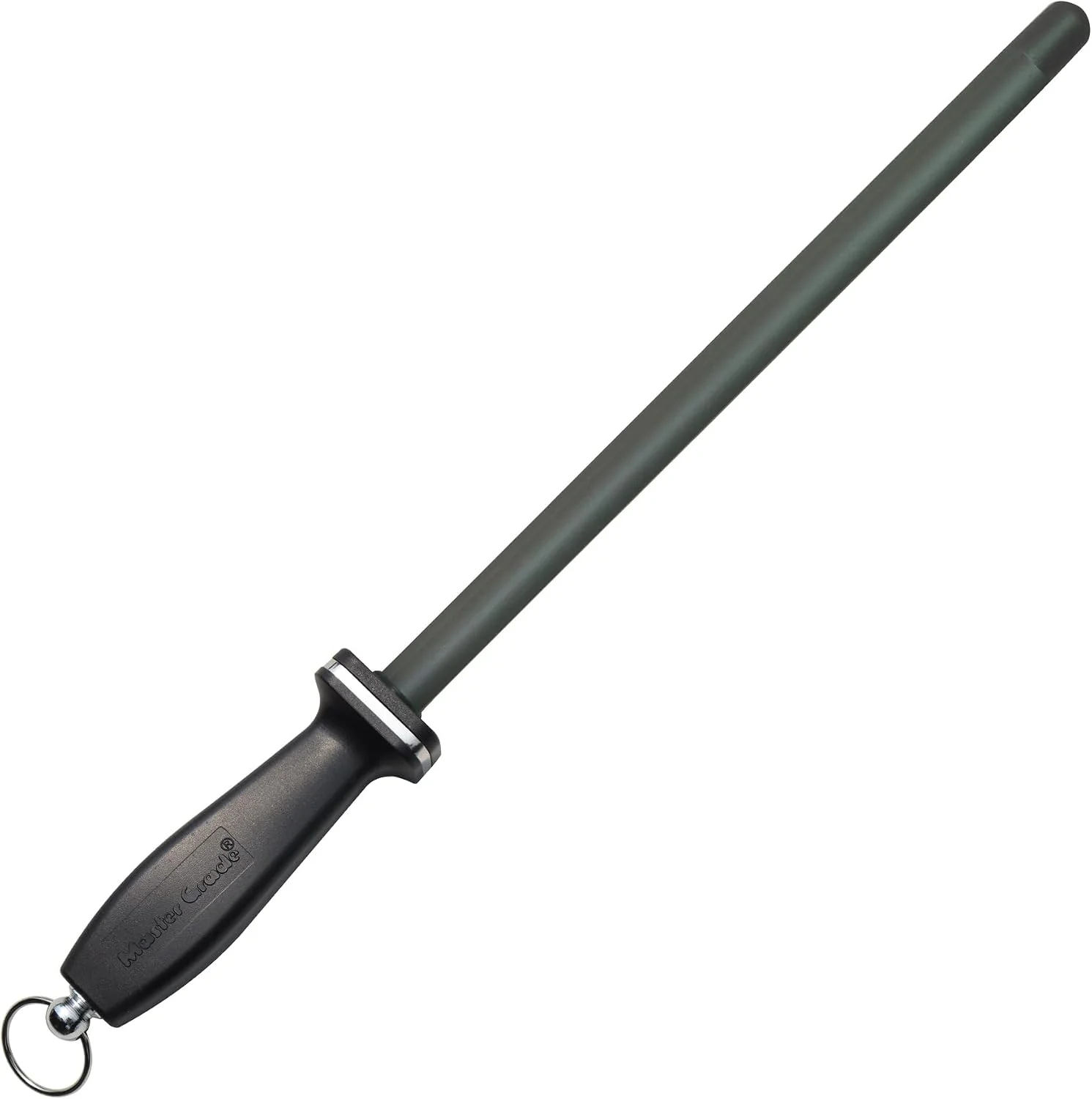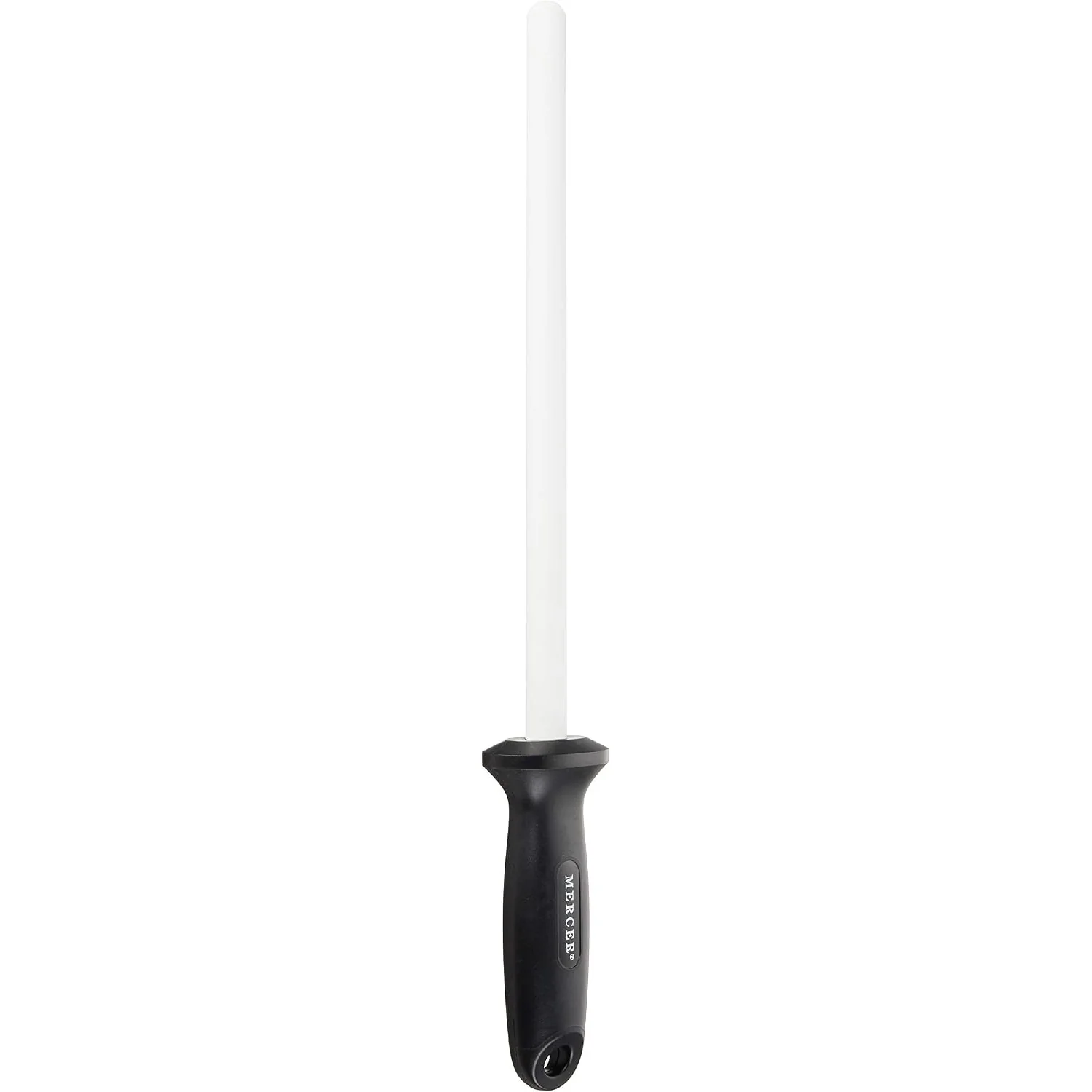
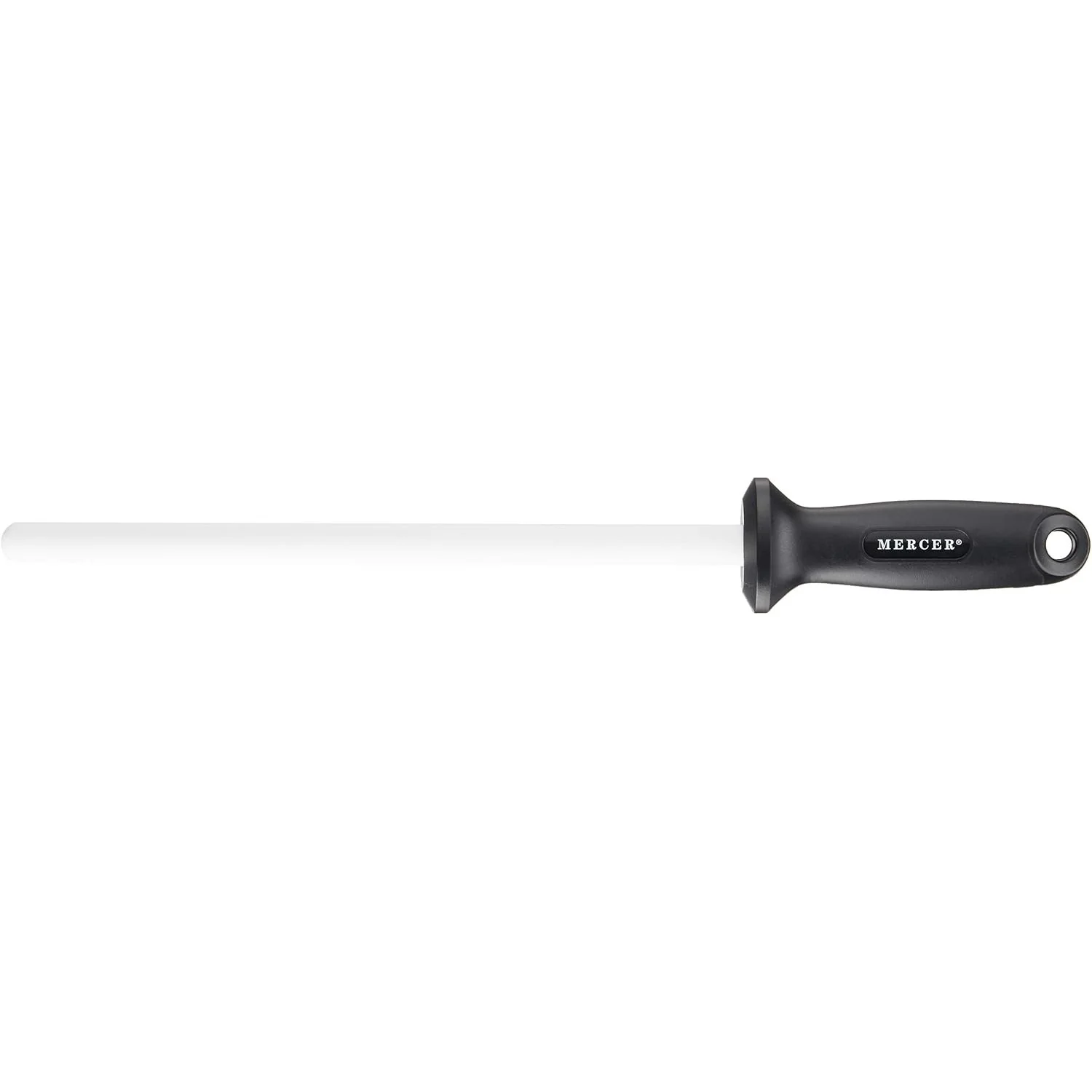
Mercer Culinary Ceramic Rod Knife Honing Steel
By Mercer · Knife Sharpening · Kitchen & Cooking
- 10 in (25.4 cm) ceramic honing steel
- 1200 grit ceramic
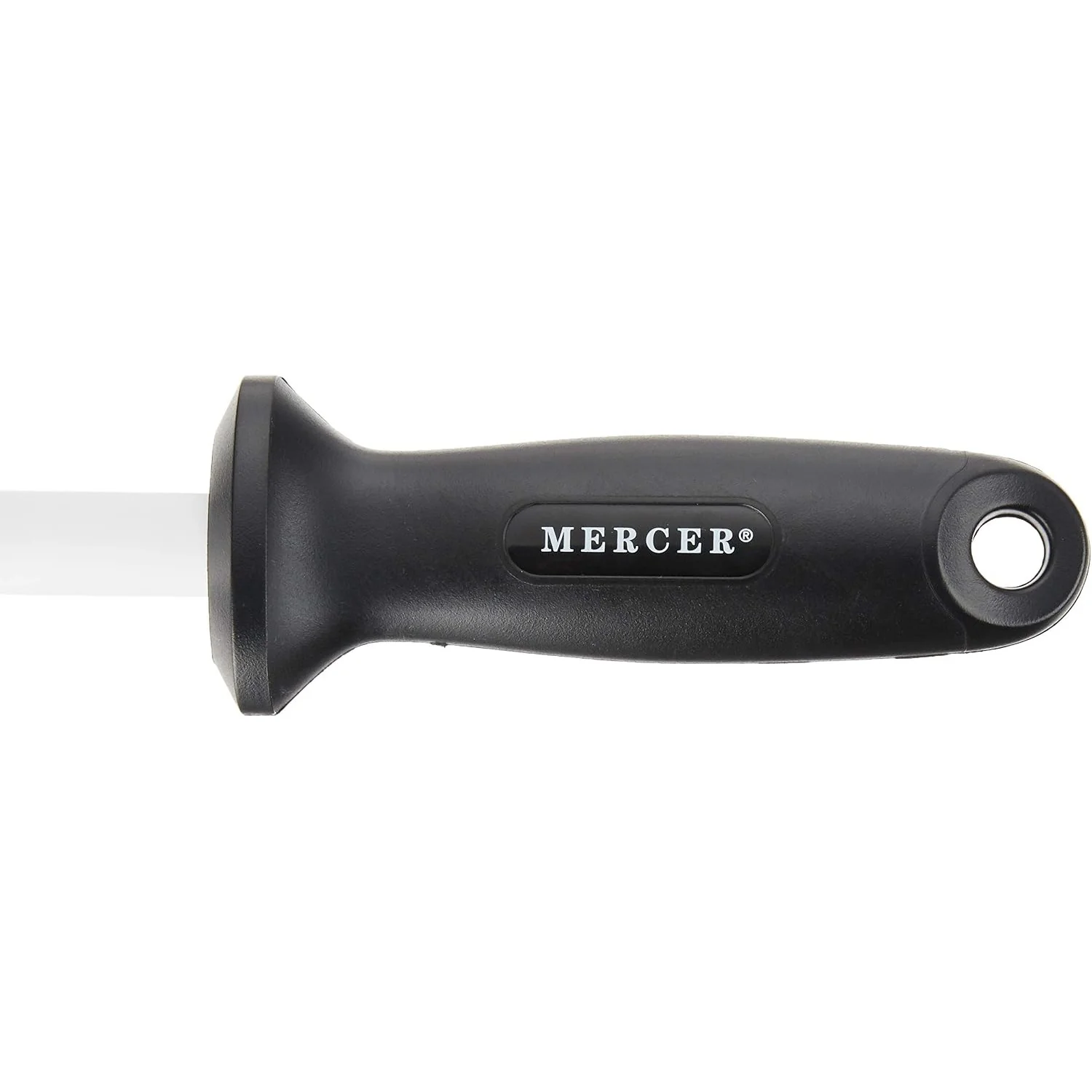
- Ergonomic nylon handle with hand guard
- Ring for easy storage
- Country of origin: China
Price not listed
- MercerView at Mercer
- eBay (used) eBay: used, open-box, refurbishedView at eBay (used)
- eBayView at eBay
- AmazonView at Amazon (paid link)
Stores are listed in a fixed order, never by price or commission. Prices are snapshots. Check the current price with the store.
Summary
A 10-inch ceramic honing rod (Mercer’s M14410) for keeping an already-sharpened kitchen knife edge aligned between full sharpening sessions — it cannot repair chips or establish a new bevel. For a home cook maintaining Western or Japanese double-bevel knives, the one thing to check is the delivered price: US sellers listed the same rod at $25.51 and $49.95 in October 2026.
Strengths
- Ceramic removes some metal even on light passes, so it can refresh an edge that has only lost bite.
- The 1200-grit surface and hand guard keep maintenance quick — no water stone setup every time.
- A January 2016 home-cook buyer liked the length and guard, and a July 2016 professional called it quick during busy service.
- A professional cook on r/KitchenConfidential reported using and liking a Mercer ceramic rod.
Weaknesses
- One verified-purchase owner says the rod worked well at home but wore out quickly in a commercial setting.
- A second 10-inch buyer doubts the longevity, though that rod had not actually failed.
- Ceramic can chip, and r/sharpening discussions flag chipping and damage risk for thin, hard knife edges.
- The one-year warranty excludes normal wear, so a worn abrasive likely qualifies for no coverage.
- A round rod demands a steady hand: holding a stable angle takes practice, and heavy or frequent strokes can damage an edge.
- Ten inches of rod is short for long slicing knives; Mercer’s 12-inch M14412 gives two more inches.
Verified specifications
| Model | Mercer Culinary M14410, a 10-inch round ceramic honing rod — not the 12-inch M14412, a conventional steel rod, or a diamond-coated sharpener. |
|---|---|
| Abrasive | 1200-grit ceramic, Mercer’s designation rather than a verified cross-standard particle measurement. |
| Role | maintains an already-sharpened edge between full sharpening sessions; it does not repair chips or establish a new primary bevel. |
| Handle | black nylon with a hand guard and hanging ring; country of origin China; clamshell packaging. |
| Dimensions | 15 inches overall, made up of a 10-inch working rod and a 5-inch handle (WebstaurantStore). |
| Weight | WebstaurantStore’s 0.52 lb is packaging-inclusive; other sellers list 0.75 lb without saying how they weighed it. |
| Care | hand wash only, per the retailer’s label; dry after washing. |
| Warranty | one year limited against manufacturing and material defects under qualifying normal use. |
| In the box | the rod itself — no angle guide, stone, replacement ceramic insert or cleaning eraser. |
| Power | none; it is manually operated. |
Full research notes and sources
What this rod can and cannot do
A honing rod maintains an edge that still exists; it does not rebuild one. The M14410’s 1200-grit ceramic surface abrades a small amount of metal even with light passes — microscopy of a smooth ceramic rod in a Science of Sharp study shows the resulting microbevel and transferred steel debris — so for an edge with only modest loss of biting power, careful repeated light passes can help. A completely blunt, chipped or misshapen edge still needs a whetstone or another full sharpening system, and no stone comes in the box. Expecting this rod to replace actual sharpening is the most common mismatch between what a honing rod does and what buyers need.
Technique and care
Edge Pro’s ceramic-rod guidance — generic technique advice, not a Mercer requirement — is to work slightly above the knife’s main bevel angle, use low pressure and alternate slow strokes, roughly five to eight per side as a starting point. Excessively hard or frequent honing can damage or wear an edge, and on very thin or hard blades the ceramic’s metal removal can be counterproductive. The rod collects dark metal transfer that may reduce effectiveness until cleaned; an SEM study documents actual steel transfer on ceramic, not just staining. Care is simple: hand wash only, dry after washing, and avoid dropping the rod — a chipped working surface should not be kept in service. No cleaning schedule, consumable or proprietary supply is specified; water, mild dish soap and a non-damaging tool are enough. Idahone’s Superaser cleaning block is a $5.50 optional third-party accessory, not a Mercer part.
Longevity, warranty and parts
The honest picture on durability is thin. Nobody has published a model-specific failure rate, a documented breakage incidence or a normal home-service interval, so treat wear as a known risk rather than a measured defect.
Mercer’s warranty is one year, limited to qualifying manufacturing and material defects; normal wear, accidental damage and damage from inappropriate cleaning are excluded, so a worn or dropped rod should not be assumed to qualify. Claims go through Mercer’s web form with a photo and proof of purchase, and the customer bears outbound shipping and transit risk while Mercer covers return shipment. No owner report of an approved or denied M14410 claim was found.
There are no separately priced Mercer replacement ceramic inserts or handle parts — when the rod wears or breaks, the documented option is a whole new tool at $25.51–$35.15 before shipping and tax at the checked US outlets. That is a contingent replacement cost, not an annual subscription: no verified normal home-service interval exists.
US online listings read in October 2026, item-only and before tax and shipping: $25.51 at KaTom, $26.99 in the WebstaurantStore catalogue (a search-index view showed $25.49; the catalogue figure is the one to re-check at checkout), $35.15 at Culinary Depot and $49.95 at Kitchen a la Mode. A RestaurantSupply listing at $30.20 was excluded because its page said both “4 Each” and “Unavailable”.
At $25–$30 before shipping this is a good price; $30–$36 is defensible if the seller’s delivered cost or returns are better. Above $40, compare the Idahone R-10B 10-inch fine ceramic rod (manufacturer MSRP $40.50) rather than paying more for the Mercer without a proven performance advantage; at $45–$50 also compare the longer Idahone R-12B (MSRP $42.50, listed at $39.95 by EpicEdge) or Mercer’s own 12-inch M14412 if the delivered total is close. These are decision thresholds from the October 2026 spread, not a price forecast.
Which model this is
This page covers the Mercer Culinary M14410, the 10-inch ceramic honing steel. It is not the M14412, the 12-inch ceramic rod with two extra inches of working surface, and not the M14501, Mercer’s 10-inch traditional steel for buyers who want a ribbed metal rod instead of an abrasive ceramic one. All three carry the one-year limited warranty; only the rod length and the abrasive differ.
Sources
Manufacturer:
- Mercer Culinary: M14410 Ceramic Honing Steel 10-inch, official specs
- Mercer Culinary: official limited warranty, term and claim rules
- Mercer Culinary: general use and care guidance
- Mercer Culinary: M14412 Ceramic Honing Steel 12-inch, official specs
- Mercer Culinary: M14501 Traditional Steel 10-inch, official specs
Retailers:
- Kitchen a la Mode: Mercer Ceramic Rod 10-inch retail listing
- RestaurantSupply: M14410 listing excluded as ambiguous (“4 Each” and “Unavailable”)
Technique and science:
- Edge Pro: how to use a ceramic honing rod safely
- Science of Sharp: What Does Steeling Do? Part 1, microscopy of ceramic and metal rods
- Bon Appetit: why ceramic rods are useful for hard knives
Owner reports:
- Reddit KitchenConfidential: ceramic honing rod discussion, Mercer anecdote
- Reddit sharpening: ceramic rod risk and alternative discussion
Alternatives: