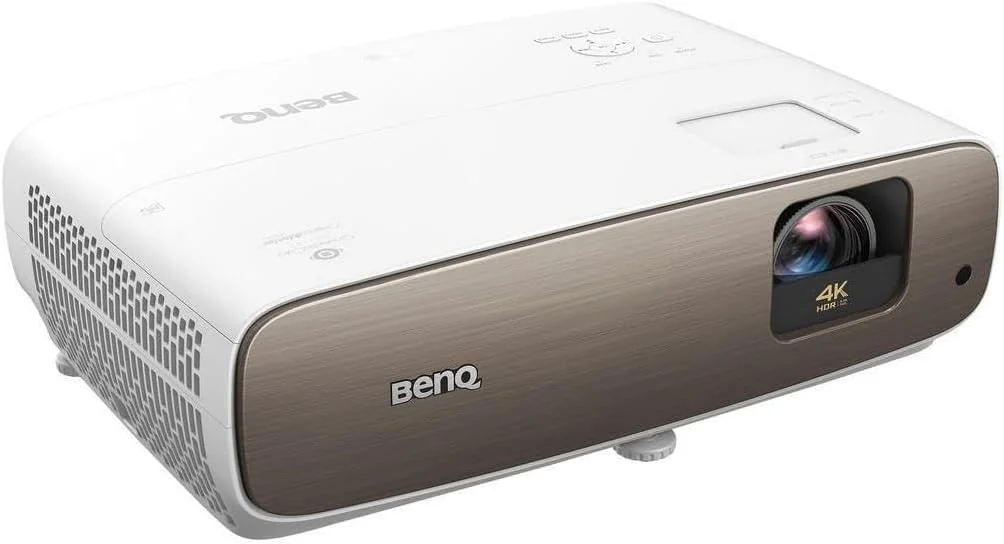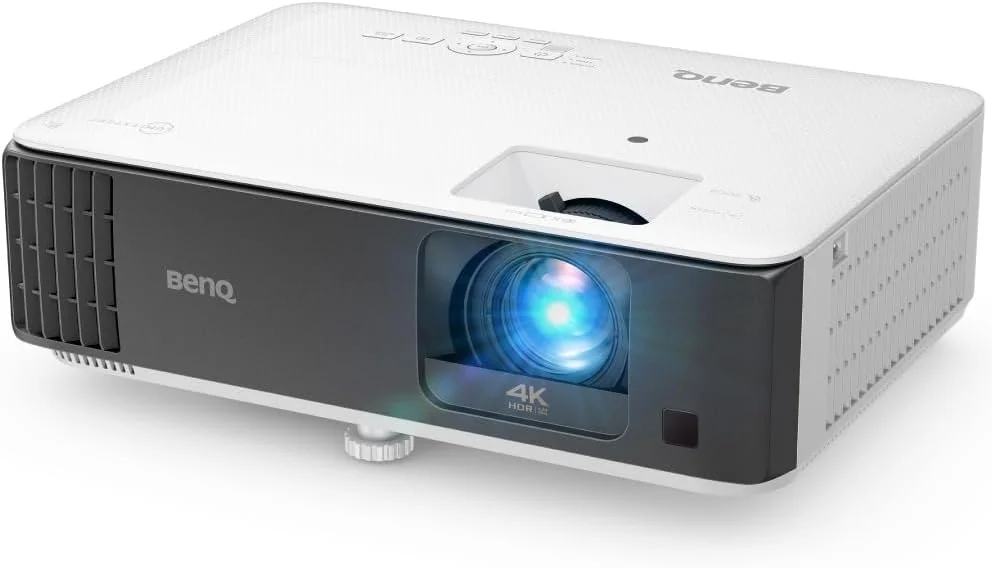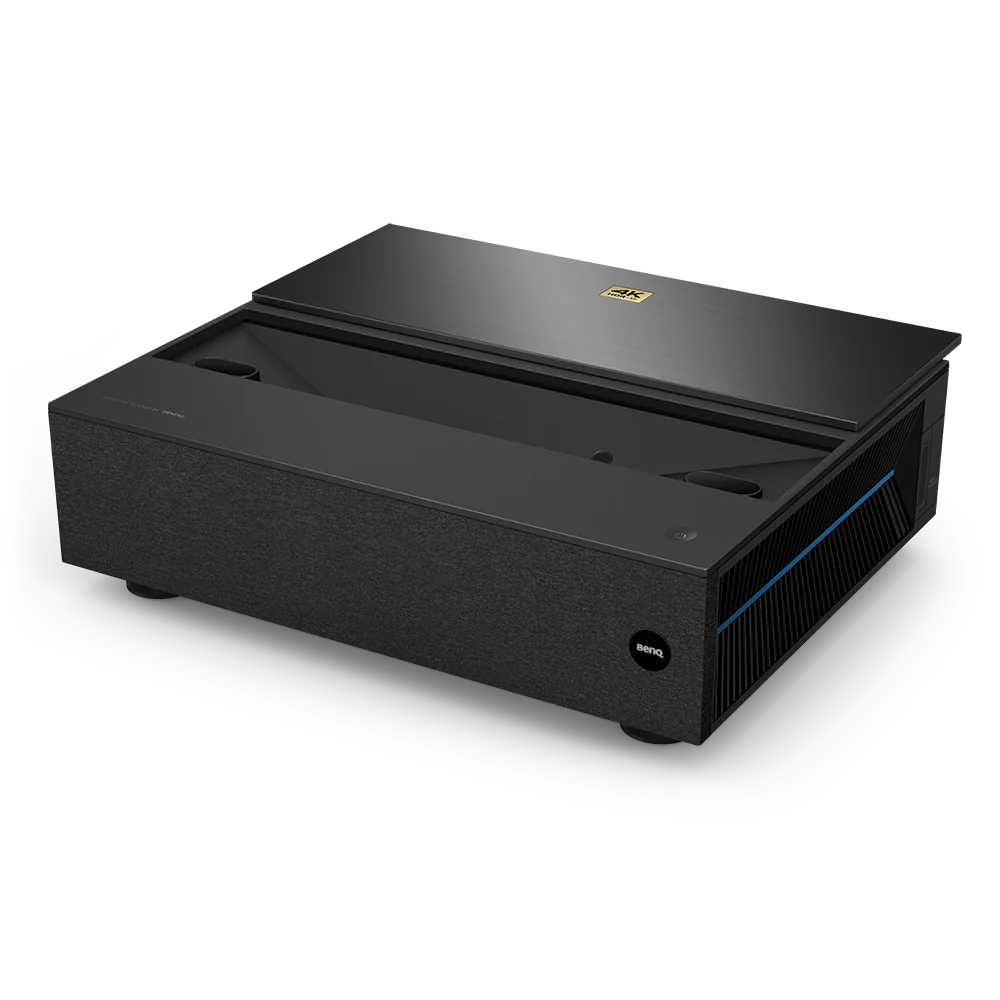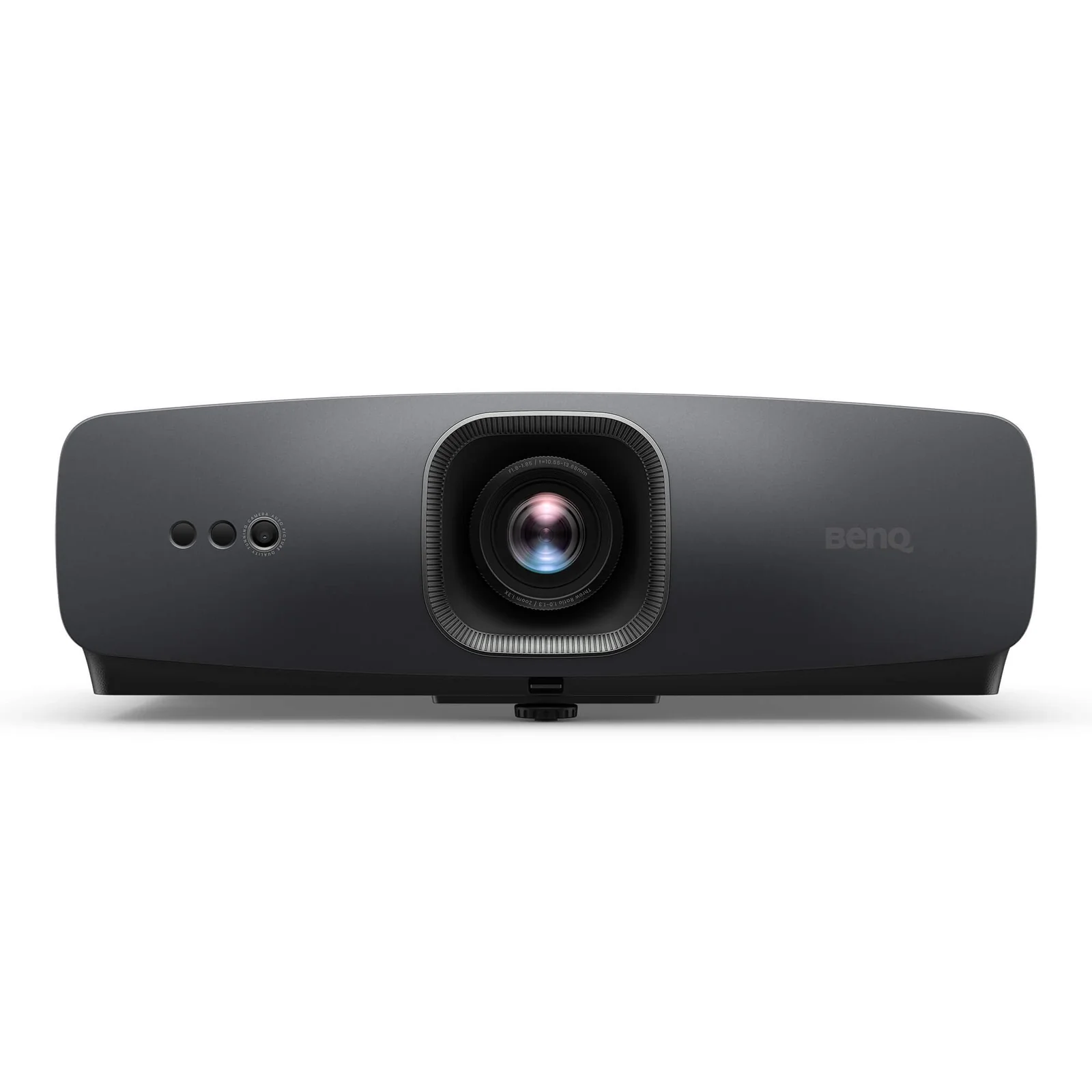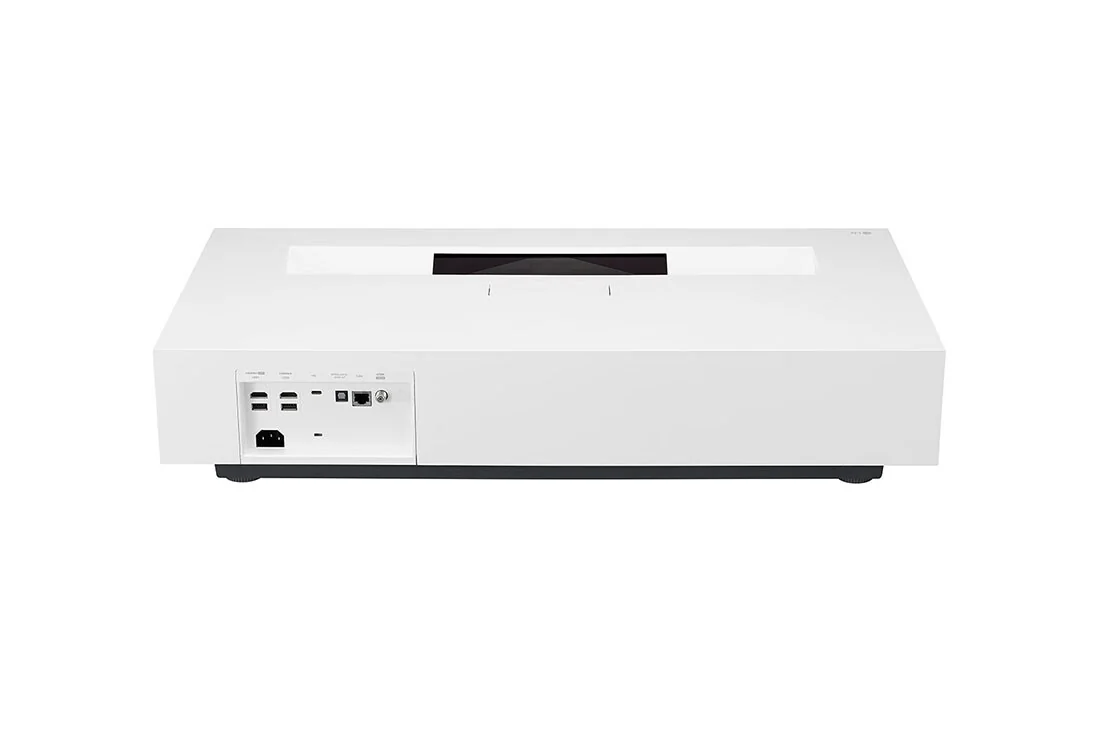
LG HU85LA Smart Projector
By LG · Smart Projectors · Audio & Electronics · More from LG
- Up to 2700 ANSI lumens
- 4K UHD native resolution (3840 x 2160)
- 3Ch laser light source, up to 20,000 hours lamp life
- 2,000,000:1 contrast ratio
- 120 in image from 7.2 in
Lowest price seen
$4,997.00
from $4,997.00 at Value Electronics · Checked Oct 21, 2026
- Value Electronics $4,997.00View at Value Electronics
- LGView at LG
- eBayView at eBay
- AmazonView at Amazon (paid link)
- Focused TechnologyView at Focused Technology
- eBay (used) eBay: used, open-box, refurbishedView at eBay (used)
Stores are listed in a fixed order, never by price or commission. Prices are snapshots. Check the current price with the store.
Summary
A 4K ultra-short-throw laser projector that throws a 120-inch image on the wall from a few inches away, with webOS smart-TV functions built in. Check the screen before you buy: it wants a matching ambient-light-rejecting screen, and the built-in 5 W x 2 speakers are too weak for movies, so budget for both.
Strengths
- A 0.19 throw ratio puts a 120-inch picture on the wall inches away, with no long cable runs.
- Bright enough for a lit room: about 60-63 ft-L measured in the brightest modes.
- Three-laser engine with no color wheel, and no rainbow artifacts seen in many hours of viewing.
- Dynamic HDR10 tone mapping worked well on demanding scenes.
- webOS with a backlit Magic Remote, ThinQ voice control and Google Assistant.
Weaknesses
- Built-in 5 W x 2 speakers are too weak for movies; an external audio system is effectively required.
- Out-of-box color in the bright modes is garish and pushed toward red, so calibration is needed.
- No autofocus, no motorized zoom and no lens shift; focus is a manual thumbwheel.
- Setup is the hard part: height must be right, corners are hard to focus, and a screen frame can cast a shadow strip.
- HLG and 3D are unsupported, and input lag could not be measured at all.
Verified specifications
| Display | DLP laser, native 4K UHD at 3840 x 2160. |
|---|---|
| Contrast | 2,000,000:1 claimed by LG. |
| Light source | 3Ch laser, rated at up to 20,000 hours, with no lamp to replace. |
| HDR | HDR10 with per-mode HDR presets and HDCP 2.2. No HLG and no 3D. |
| Throw | 0.19 ratio, with 120 in at 7.2 in, 100 in at 3.9 in and 90 in at 2.2 in from the front of the body. |
| Projection distance | 403 to 530 mm (15.8 to 20.8 in) lens to screen. |
| Screen size | 2286 to 3048 mm (90 to 120 in). |
| Measured light output | about 60-63 ft-L in the brightest modes and about 45 ft-L in the color-accurate modes, on a 92-inch 1.3-gain matte white screen. |
| Calibrated peak white | 27 ft-L in SDR and 40.4 ft-L (137.1 nits) in HDR. |
| Measured output by mode | about 3,018 lumens for SDR Vivid on Minimum Energy Saver, down to about 1,197 for SDR Expert Dark on Maximum Energy Saver. |
| Energy saver | switching from Minimum to Medium drops output by about 30% in every mode. |
| Noise | 26 dB(A) at the quietest setting and 30 dB(A) at the loudest. |
| Audio | built-in stereo, 5 W + 5 W, with roughly 3-inch drivers behind a woven gray-cloth grille. |
| Smart TV | webOS 4.5 with a backlit Magic Remote, Netflix certification, ThinQ voice control with Google Assistant, and direct Netflix and Amazon Prime buttons. |
| Ports | 2x HDMI 2.0, 2x USB Type-A, 1x USB Type-C for display and charging, optical S/PDIF out, RJ45 Ethernet with IP control. |
| Connectivity | Bluetooth audio playback mode, Miracast screen share, wireless content share with Android and iOS. |
| Power | 350 W, 100-240 V at 50/60 Hz, built-in power supply, standby under 0.5 W. |
| Dimensions | 26.8 x 5.0 x 13.7 in; 26.9 lb. |
| Warranty | 2 years parts and labor in the spec table; the support page lists 2 years labor and 6 months battery. |
| In the box | Simple Book manual and one Magic Remote with battery. |
| UPC | 719192632066. |
Full research notes and sources
Brightness, color and calibration
The 2,700 ANSI lumens figure is LG’s own claim, and nobody has independently confirmed it. Those calculations swing from about 3,018 lumens in SDR Vivid on Minimum Energy Saver down to about 1,197 in SDR Expert Dark on Maximum Energy Saver, and SDR Cinema landed around 2,157 lumens. He also could not test above 100 inches in his studio, so the 120-inch figures come from LG rather than from him.
What you can lean on are the screen-level numbers: about 60-63 ft-L in the brightest modes, about 45 ft-L in the more color-accurate modes, 27 ft-L calibrated SDR peak white and 40.4 ft-L (137.1 nits) calibrated HDR peak white. The energy saver settings move all of it, with Minimum to Medium costing about 30% of output in every mode and Minimum to Maximum taking another 53-55%.
Out of the box the picture is not accurate. The reviewer found the default Standard mode “not even close to accurate” and the other bright modes garish, while Cinema and the two Expert modes were closer but still pushed skin tones rosy and whites cool. He needed 2-point and multi-point white balance plus the color-management system to reach a D65 match, and said the picture moved to another league afterwards. Professional calibration runs a few hundred dollars. The awkward part is that the modes delivering full light output do not expose the full grayscale and color-point controls, so accurate color and full brightness cannot both be had.
On the positive side, Dynamic Tone Mapping, which analyzes content frame by frame, was described as set-and-forget and worked well on demanding scenes, while Dynamic Contrast did nothing for black level. TruMotion Smooth did an excellent job of eliminating judder and blur on motion and camera pans, Clear was a better compromise with only a modest soap-opera effect, and User was effective at its lower settings but too distracting at 5 and above on film content. In a direct A/B against 1080p pixel-shifted content from a JVC DLA-X790 the LG was clearly sharper, though still short of the DLA-NX7’s organic sharpness.
The light engine is the part that is genuinely well engineered. LG uses a true three-laser design: a red laser for red, a blue laser for blue, and a second blue laser exciting a static phosphor for green, so there is no sequential color wheel that can produce rainbows. The reviewer detected no rainbow artifacts in many hours of viewing. The optics are a 0.66-inch Texas Instruments 4K XPR DLP chip that needs only a two-phase pixel shift. LG recommends the High Altitude mode above 1,200 m.
Setup, screen placement and sound
Lens to screen, the manual puts the whole 90 to 120 inch range at 15.8 to 20.8 inches. All four corners have adjustable feet, and 12-point warping is there to clean up what is left. Even so, the reviewer found the height relationship between projector and screen critical, had trouble getting focus in the far upper corners when the projector was not perfectly aligned, and saw a small shadow strip at the lower edge of the image when a screen frame was used.
He also confirmed the built-in Bluetooth transmitter works as a route to wireless headphones. No credible failure-rate dataset was found for this model, so treat the setup difficulty as a known cost of the format rather than a defect.
Running costs and what you still have to buy
The projector is the smaller half of the bill. The reviewer put a matching ALR UST screen at roughly $1,500 to $6,000 depending on size, style and brand, and an external audio system is effectively required, since the internal 5 W x 2 speakers were not considered usable. That puts a working system at about $7,500 to $12,000, the same band as a premium native 4K long-throw projector plus a dark-room screen.
There are no consumables to buy. The light source is a laser rated at up to 20,000 hours, the manual contains no laser lamp replacement procedure, no bulb replacement interval and no user-serviceable lamp module, and no parts catalog, service manual for the optical engine or user-replaceable parts were found for this model, so repairability is a black box. Power draw is 350 W and standby is under 0.5 W. Warranty wording is worth checking carefully: the spec table says 2 Year Parts and Labor, while the support page lists 2 years labor and 6 months battery and leaves the parts duration blank.
Is it worth it?
Three US dealers listed it at $4,997 from ProjectorScreen.com and ValueElectronics and $5,000 from Focused Technology on the ProjectorCentral dealer page in October 2026, roughly $1,000 below the $5,999 launch price. That saving is small next to the screen, and the LG US product page marks the model discontinued and points buyers at current projectors.
It makes sense if you want a 100-120 inch picture on a wall inches from the screen, the room is bright, you will budget for a proper ALR screen and external audio, and you will calibrate the projector or accept garish color. If the goal is pure value, a discontinued 2019 flagship UST at about $5,000 plus a multi-thousand-dollar screen is not the answer.
Which model this is
This page covers the LG HU85LA, sold in the US as the 4K UHD Laser Smart Home Theater CineBeam Projector, model code lg-HU85LA.AUS, UPC 719192632066. The Amazon listing for it is ASIN B07TTTR2G1. Do not mix it with the HU70LA, the HU80LA, or the long-throw HU915QE and HU810PW CineBeam models, because the specifications above belong to the HU85LA alone.
Sources
Manufacturer:
- LG HU85LA US product page and specification table
- LG HU85LA support page, user manual and warranty terms
Independent reviews:
Owner reports:
Stores:
Model list: