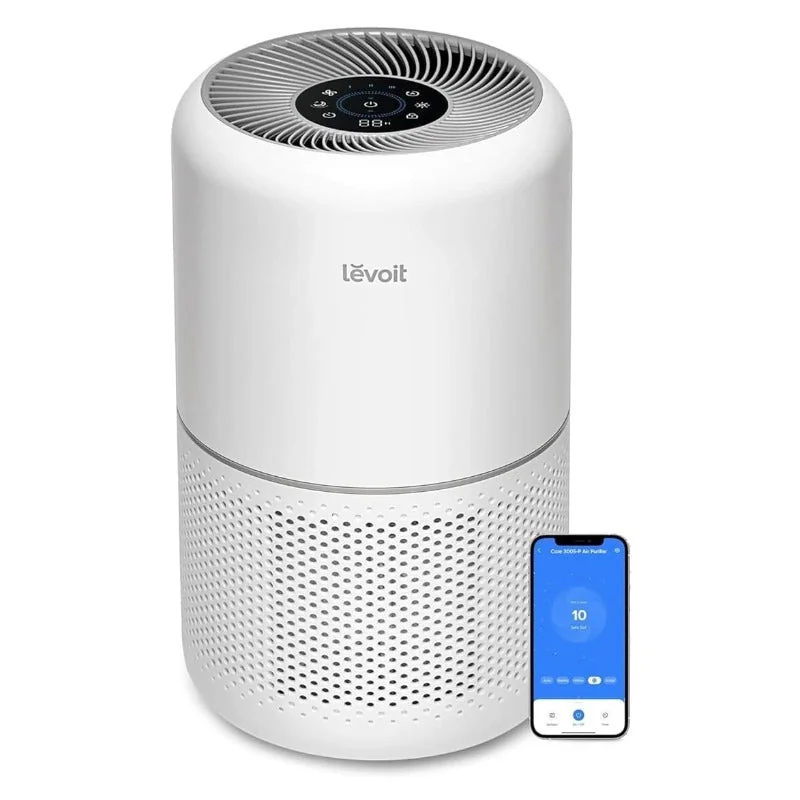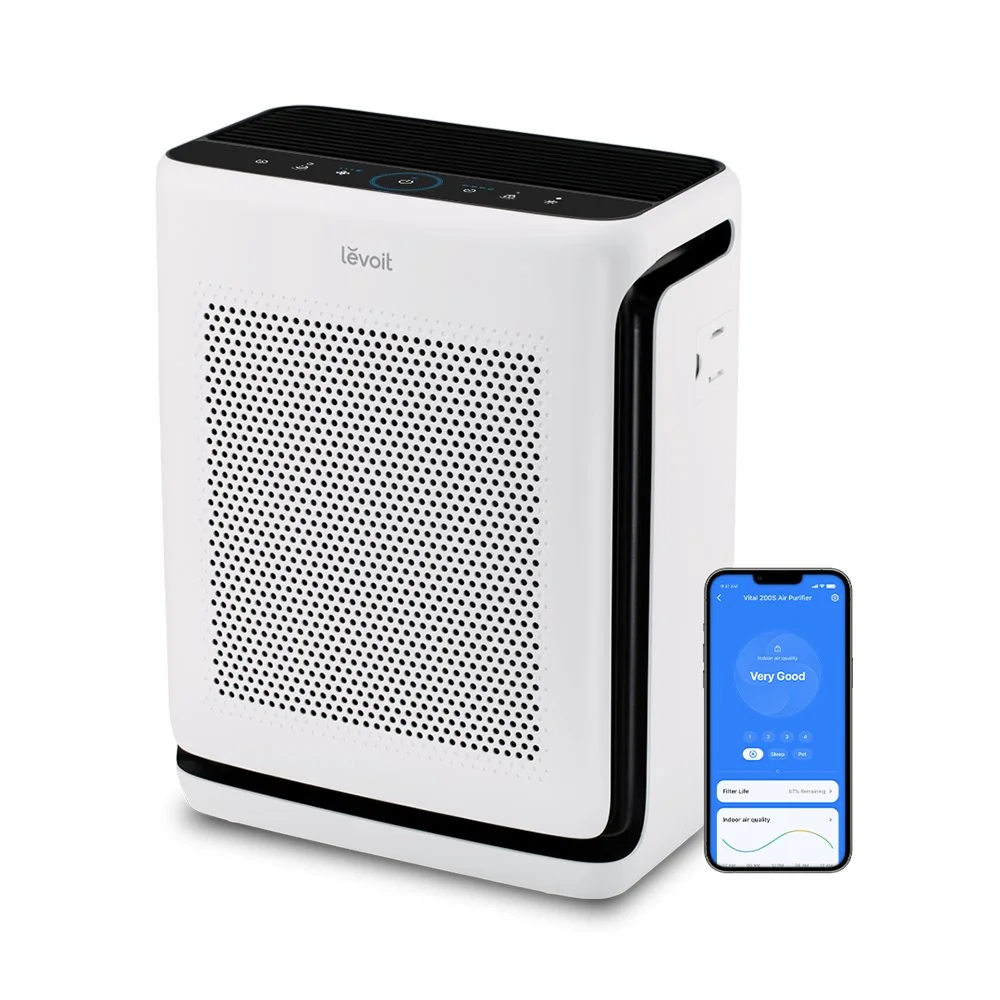
Levoit Vital 200S-P Smart Air Purifier
By Levoit · Air Purifiers · Home & Workspace
- Premium 3-stage filtration with a U-shaped air inlet designed to capture airborne pet fur
- Special Pet Mode activates higher fan speed to boost capture of pet hair and dander
- Smart control via VeSync app with HEPA Sleep Mode
- Covers large rooms up to about 1,875 sq ft
Lowest price seen
~$159.99 (approx.)
from $159.99 at Amazon
- Amazon ~$159.99 (approx.)View at Amazon
- LevoitView at Levoit
- eBayView at eBay
- eBay (used) eBay: used, open-box, refurbishedView at eBay (used)
Prices are snapshots. Check the current price with the store.
Summary
A rectangular purifier with an AHAM-certified 250 CFM smoke CADR, a washable nylon pre-filter and a bonded carbon cartridge, aimed at rooms of roughly 340 to 390 sq ft. Check the room size before you buy: the advertised 1,862 sq ft is one air change per hour, and the infrared sensor that drives Auto Mode reads high and logs spikes that did not happen.
Strengths
- AHAM Verifide certification at 250 CFM smoke, so the headline output comes from a third-party chamber rather than from Levoit.
- Measured output lands close to that claim: 387 m³/h at maximum, about 9% under the claimed 425 m³/h.
- The washable nylon pre-filter catches hair and lint before it reaches the cartridge and rinses under a tap.
- Servicing is tool-free: the front panel pulls off and a filter change takes under a minute.
- The app gets real praise for filter-life countdowns, a pre-filter wash reminder and Alexa control down to individual fan speeds.
- Speed 2 measured 43 dBA against 44 to 47 dBA for three rival units tested in the same room.
Weaknesses
- The main filter is bonded, so when the carbon is spent at around six months the still-serviceable particle layer goes with it.
- No lab reproduced the claimed 23 dB floor: measurements run 32.7 to 38.3 dBA at the lowest speed and 53.8 to 60 dBA at maximum.
- The infrared sensor reads far high, logs pollution spikes that never happened, and Levoit will not say what thresholds drive Auto Mode.
- Control runs through VeSync’s cloud, and one owner reports this unit and a Core 600S-P both dropping out of the app after about a day.
- Levoit withdrew its True HEPA H13 wording in 2023; the current claim is HEPA-grade in Sleep Mode, and RTINGS records HEPA certified as “No”.
- Genuine replacement filters run $49.99 to $64.99, so a two-filter year costs $99.98 to $129.98.
Verified specifications
| Model numbers | LAP-V201S-WUS and LAP-V201S-KUS. |
|---|---|
| Rated power | 51W in the manual specification table, 50W on the product page. |
| Power supply | 24V DC 2.5A adapter, 100-240V 50/60Hz input. |
| CADR | 250 CFM smoke, 254 CFM dust and 289 CFM pollen on the AHAM Verifide certificate, so those figures come from a third-party chamber rather than the manufacturer. |
| Coverage | 1,862 sq ft at one air change per hour; 388 sq ft at 4.8 air changes per hour. |
| Filtration | three stages — a washable nylon pre-filter, a particle filter, and a pelleted activated carbon layer bonded to the particle filter. One reviewer weighed 250 g of carbon in it. |
| Particle claim | at least 99.97% of 0.3-micron particles. |
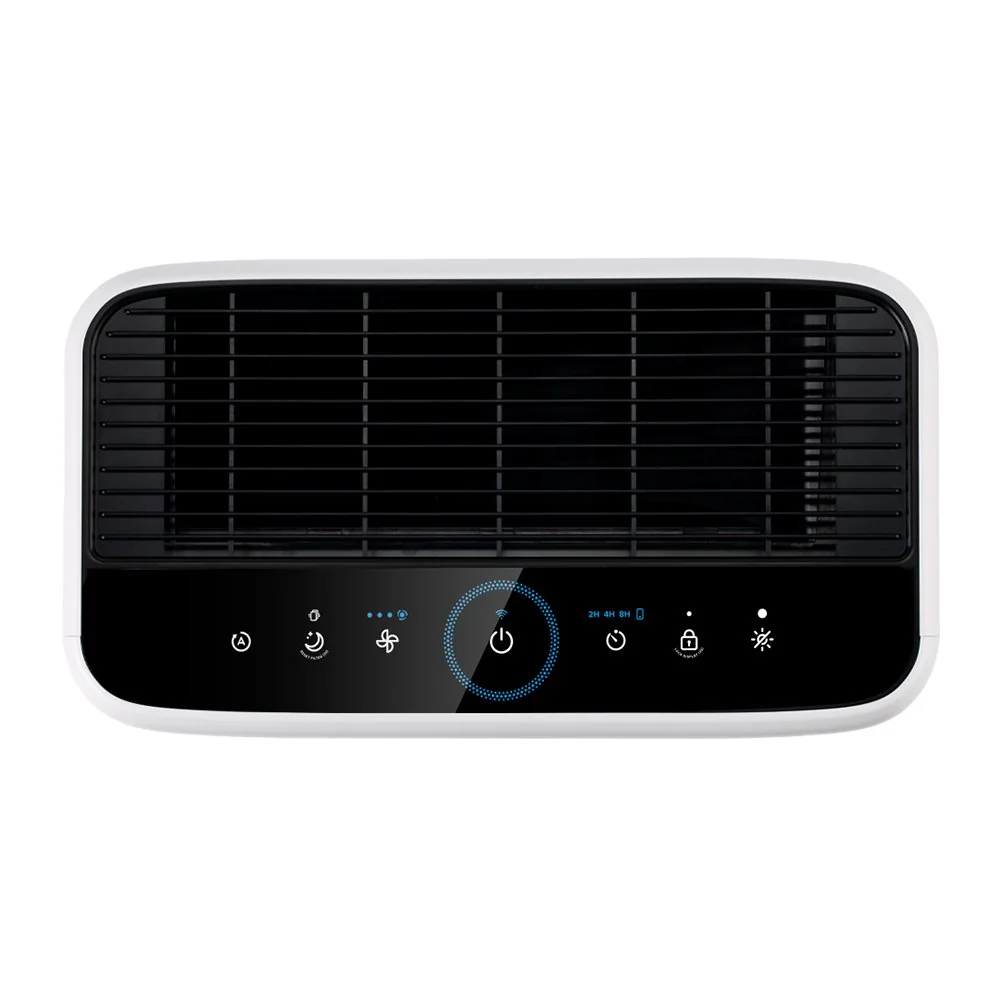
| Sensor | AirSight infrared dust sensor driving a four-ring display, blue through red. No VOC, ozone or CO2 sensor. |
| Fan speeds | four, plus Auto, Sleep and Pet modes. Sleep mode runs below low and switches the display off after 6 seconds. |
| Timer | 2, 4 or 8 hours on the device, 1 to 24 hours in the app. |
| Dimensions | 15.6 × 8.5 × 19.8 in (39.6 × 21.7 × 50.2 cm); 13.2 lb (6 kg). |
| Clearance | keep at least 15 in (38 cm) clear in front of it while it runs. |
| Filter | Vital 200S-RF, also sold as LRF-V201-YUS, LRF-V201-BUS and LRF-V201-GUS carbon versions, 14 × 16 × 2 in. |
| In the box | purifier with the pre-filter and main filter already fitted, user manual, quick start guide, AC adapter. Both filters ship in a plastic bag that has to come off before first use. |
| Energy Star certified. | |
Full research notes and sources
Coverage and measured output
Levoit advertises rooms up to 1,862 sq ft, and that figure is one air change per hour. On the same product page the company rates the unit at 388 sq ft at 4.8 air changes per hour, which is the number that describes cleaning in an occupied room. Three independent labs land in the same place: 373 sq ft at HouseFresh, 337 sq ft at RTINGS, and 36 m², about 388 sq ft, at BreatheSafeAir. Treat roughly 340 to 390 sq ft as the usable size.
Airflow is the strongest part of the case. The AHAM Verifide certificate reads 250 CFM smoke, 254 CFM dust and 289 CFM pollen, so those numbers come from a third-party chamber. BreatheSafeAir measured 387 m³/h at maximum against a claimed 425 m³/h, roughly 9% under, with 172 m³/h at half speed and 83 m³/h in sleep mode, using a factory-calibrated reference monitor rather than the purifier’s own sensor. HouseFresh measured 249 CFM of PM1 at top speed and 128 CFM below 45 dBA, and cleared a test chamber of PM1 to zero in 23 minutes at top speed and 46 minutes at speed 2. RTINGS measured 216 CFM at maximum and 87 CFM at 45 dBA or below. In BreatheSafeAir’s protocol, taking PM2.5 from 500 µg/m³ down under 5 took 19 min 31 s at maximum, 42 min 48 s at half speed and 86 min 33 s in sleep mode.
Filtration is purely mechanical: no UV, ioniser or plasma.
Filters and running costs
Filtration is a washable nylon pre-filter for lint, fibre, hair and fur, then a single cartridge that bonds the particle filter to 250 g of pelleted coconut-shell carbon. The bonding is the running-cost story. The carbon is usually exhausted within about six months, and at that point the still-serviceable particle layer is discarded with it. Levoit states 6 to 12 months of filter life.
Genuine filters cost $49.99 for the base version, $59.99 for the Pet Allergy and Toxin Absorber carbon versions and $64.99 for the Smoke Remover carbon version, so budget $99.98 to $129.98 a year at two filters. HouseFresh puts electricity at $49.48 a year for continuous top-speed use and $99.47 a year all-in. BreatheSafeAir budgets about $40 per filter roughly every six months, about $90 a year all-in. Consumer Reports lists $38 a year for power and $65 for filters. Cheaper third-party filters run at about half the OEM price, with performance that varies.
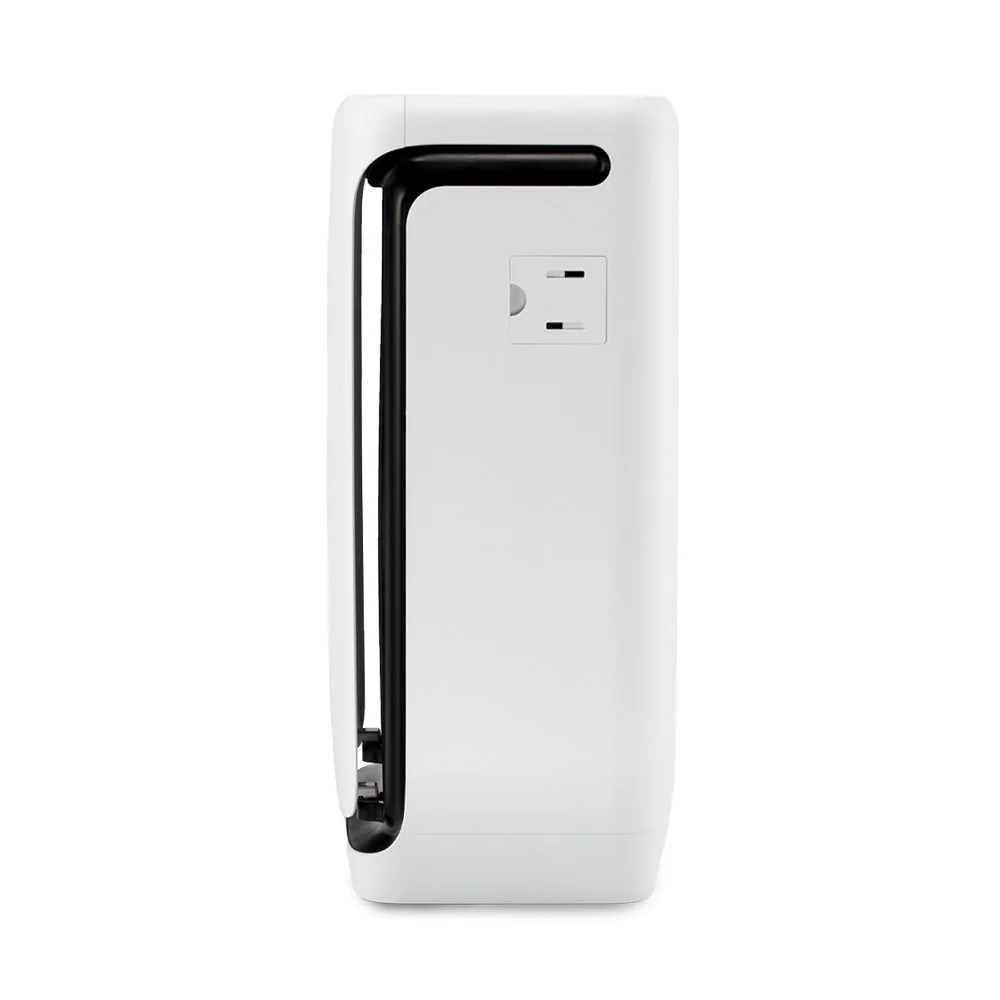
Upkeep is documented and simple. Rinse the pre-filter every 2 to 4 weeks, clean the dust sensor on the documented procedure, and reset the check-filter indicator by holding the sleep button for 3 seconds. The filter-life percentage in the app assumes 12 hours of daily use. The cable detaches at the unit, so a damaged cord is a cheap replacement rather than a dead purifier, and the warranty is 2 years with a 30-day money-back guarantee. Owners do complain about chemical smell off replacement filters: an aggregation of Reddit discussion scores the model 82% positive, and that smell is the top con listed there.
Noise
Levoit claims 23 to 54 dB and no lab reproduced the low end. BreatheSafeAir measured 60 dBA at maximum and 43 dBA at speed 2 at 1 metre. HouseFresh measured 38.3, 41.9, 53.8 and 57.7 dBA across the four speeds from 3 ft. RTINGS measured 32.7 dBA at the lowest speed and 55.6 dBA at the highest, and Live Science measured 54 dB on turbo.
BreatheSafeAir could not measure sleep mode at all, because the room’s own noise floor of 37 to 38 dBA sits above Levoit’s 23 dB claim. Owners in r/AirPurifiers call sleep mode nearly silent and the lowest speed hardly noticeable, while calling medium speed acceptable but not somewhere they want to sit for long. Turbo gets used in short bursts, and PCMag lists a loud turbo as one of its complaints.
The sensor and the app
Sensor accuracy is the sharpest problem. Against reference monitors the infrared sensor read above 600 µg/m³ while the monitors read 100 to 150, and it logged spikes that did not happen: above 400 µg/m³ while a reference monitor a metre away read 20 in the same closed room. Levoit declined to share the PM2.5 thresholds that trigger Auto Mode, and the manual publishes colours with no concentrations. That reviewer, whose unit was supplied by Levoit for the test, says to run a fixed fan speed instead of Auto Mode. HouseFresh separately advises cleaning the optical sensor every two months for accurate Auto Mode readings.
The app itself is good. Pairing took about two minutes on the first try, and one reviewer uses it as a primary control method, with multi-stage routines, filter-life countdowns and Alexa reaching individual fan speeds. The limit is that it depends on VeSync’s cloud: the Home Assistant VeSync integration polls the cloud rather than the local network, and it broke before when VeSync changed its authentication. That matters because of the most-cited exact-model complaint, from a blind owner on r/AirPurifiers who reports a Core 600S-P and this Vital 200S-P both “constantly are just gone from the app” after a day, even though they connect and control fine. The same owner finds the VeSync touch screen inaccessible, which is worth knowing before you buy.
Two smaller notes. The light sensor dims the panel in a dark room and owners like it, and the unit restores its last mode after a power cut. The top-mounted panel can be locked, unlocked or switched off by a cat stepping on it, found in a six-cat household.
Is it worth it?
At $189.99 list on Levoit and $169.99 in the VeSync store, this is a defensible buy for a 340 to 390 sq ft room where allergies or a pet are the driver, provided you budget one to two filters a year and can live with a fixed fan speed instead of Auto Mode. The White/Grey and Black variants cost $199.99 and buy no documented performance difference. Check the store panel above for today’s price.
The running costs decide more than the sticker. Two genuine filters and continuous top-speed power run past $150 a year, and the bonded design means you cannot stretch a particle filter past its carbon. Anyone who needs certified HEPA-grade filtration at every fan speed should skip this unit.
Which model this is
This page covers the white Levoit Vital 200S-P, model LAP-V201S-WUS, sold alongside LAP-V201S-KUS. Levoit confirmed to one reviewer that the Vital 200S-P and the plain Vital 200S are the same machine, sharing the LAP-V201S code and the Vital 200S-RF filter, and the “P” is a retail designation rather than different hardware. A second reviewer reached the same conclusion independently. Reviews published under the Vital 200S name, including RTINGS, HouseFresh, PCMag and Live Science, therefore describe this unit. The Amazon listing for this page is ASIN B0BGPF71Q6. Don’t confuse it with the Core 200S, Core 300S-P, Vital 100S-P or Vital Pet Pro, which are different hardware.
Sources
Manufacturer:
- Levoit Vital 200S-P user manual, models LAP-V201S-WUS / LAP-V201S-KUS
- Levoit Vital 200S user manual (PDF)
- Levoit Vital 200S-P Smart Air Purifier product page
- VeSync store listing for the Vital 200S-P
- Levoit Vital 200S replacement filter
- Levoit Vital 200S-P Pet Allergy Carbon replacement filter
- Levoit Vital 200S-P Smoke Remover Carbon replacement filter
- Levoit Vital 200S-P Toxin Absorber Carbon replacement filter
- AHAM Verifide certified product directory
Independent reviews:
- RTINGS Levoit Vital 200S review
- RTINGS Vital 200S vs Vital Pet Pro comparison
- HouseFresh Levoit Vital 200S review
- BreatheSafeAir Levoit Vital 200S-P review
- Live Science Levoit Vital 200S review
- PCMag Levoit Vital 200S review
- Consumer Reports Levoit Vital 200S review
- AirPurifierFirst Levoit Vital 200S review
- Consumer Analysis video review of the Vital 200S-P
Owner reports: