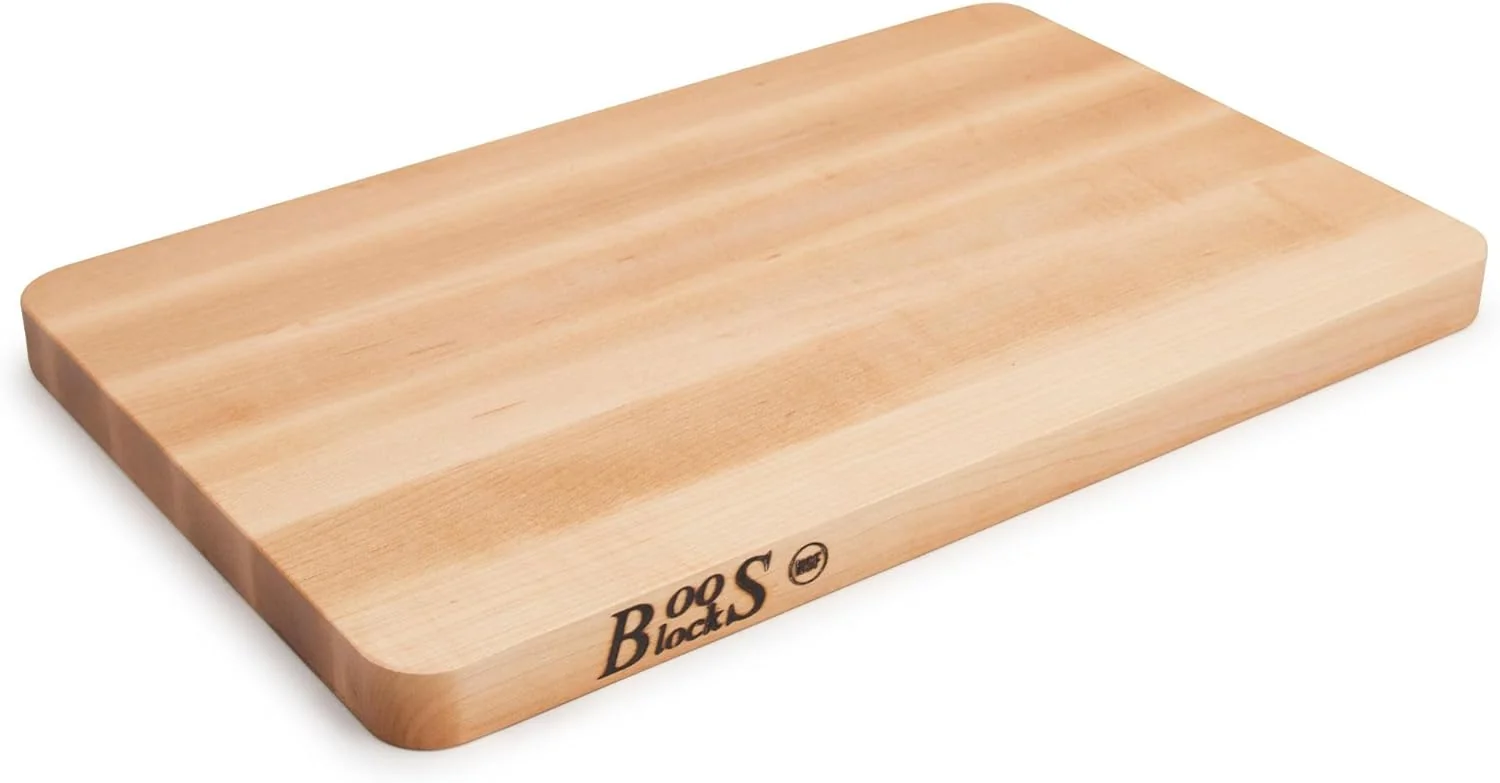
John Boos R-Board Series Rectangular Wooden Maple Cutting Board
By John Boos · Cutting Boards · Kitchen & Cooking · More from John Boos
- 1-1/2" thick
- Northern Hard Rock Maple
- NSF Certified
- Edge Grain Construction
- Reversible with recessed finger grips
Price not listed
- John BoosView at John Boos
- eBay (used) eBay: used, open-box, refurbishedView at eBay (used)
- eBayView at eBay
- AmazonView at Amazon
Prices are snapshots. Check the current price with the store.
Summary
A thick, reversible edge-grain Northern Hard Rock Maple cutting board, NSF Certified and made in the USA, for cooks who want a professional-style board and will keep up with oiling it. Check the weight and your climate before you buy: it is heavy to move and it can crack if it dries out.
Strengths
- Owners report 15–20+ years of use with proper care.
- The weight keeps the board from sliding while you cut.
- Hard rock maple is gentler on knife edges than glass or plastic.
- Two usable faces let you dedicate one side to specific foods.
- NSF Certified and made in the USA with domestic and imported materials.
- Owners often describe the board as beautiful and well made.
Weaknesses
- The board is heavy; owners find it awkward to move and to scrape food from.
- It needs regular oiling to keep from drying out and cracking.
- Edge grain is harder on knife edges than end grain.
- Owners report cracking and splitting, especially in dry climates.
- It stains from beets, turmeric and other colorful foods.
- Not dishwasher safe; hand wash with mild soap and water.
Verified specifications
| Model | R01. |
|---|---|
| Dimensions | 18 × 12, 20 × 15 and 24 × 18 in, all 1-1/2 in thick. |
| Weight | 10 lb for the 18 × 12 in size. |
| Species | Northern Hard Rock Maple. |
| Construction | edge grain, glued strips of solid maple. |
| Certification | NSF Certified. |
| Reversible | yes, with recessed finger grips. |
| Finish | oil finish. |
| Origin | made in USA with domestic and imported materials. |
Full research notes and sources
Care and maintenance
Hand wash with mild soap and water; never soak it and never put it in a dishwasher. John Boos recommends applying Mystery Oil to all surfaces at least once a month, letting it soak in overnight and wiping off the excess, then Board Cream (beeswax and food-grade oil) for extra protection. Keep the bevel on the edge as it was when new, spread your cutting over the whole surface and flip the board now and then for even wear. Minor scratches sand out with fine #200 grit, always with the grain. Owner practice ranges from oiling weekly to every one to two months depending on use and climate. America’s Test Kitchen measured the board taking 47.8 g of oil on average, a relatively high amount.
Cracking, warranty and upkeep
Long-term owners describe 15–20+ years of service, but others on r/Cuttingboards report boards cracking or splitting, including one after four months and one soon after it arrived. A woodworking forum user traced glue-joint splitting to lapsed oiling, and one review notes surface cracks in dry climates. Nobody has published a failure rate, so treat this as a care-sensitivity issue rather than a proven defect. The one-year warranty covers manufacturing defects for boards bought from John Boos or authorized US resellers and does not cover neglect, misuse, normal wear, or temperature and humidity extremes; it explicitly excludes splitting, checking or cracking caused by inadequate oiling. A class action law firm is investigating John Boos over cracking in Boos Block products, reporting splits within weeks of purchase and warranty denials blamed on humidity or maintenance, and Trustpilot reviews mention warped boards on arrival and denied claims.
Edge grain versus end grain
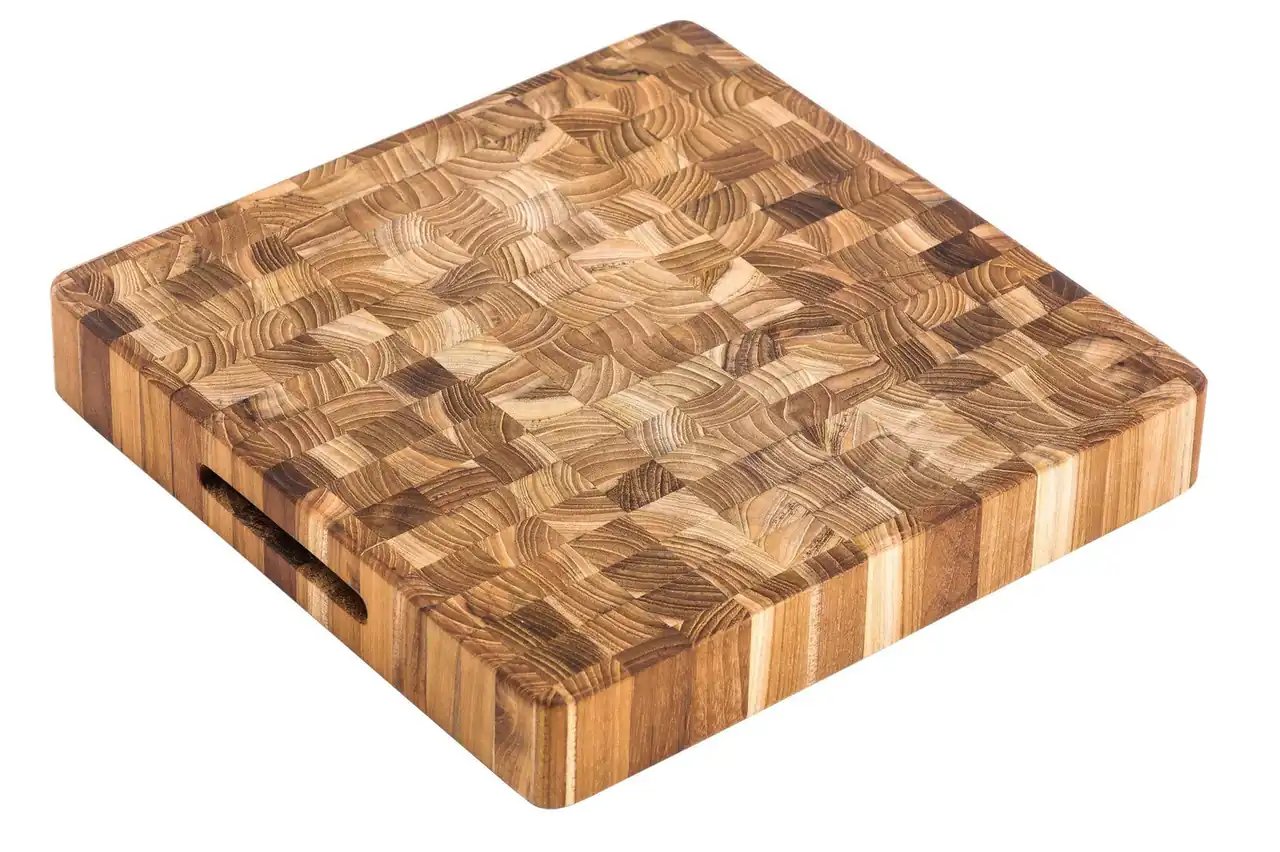
Edge-grain means the board is built from long strips of maple glued together with the edge of the grain facing up. That makes it harder and longer-wearing than end grain, but less gentle on knives: the blade meets the harder edge surface instead of sinking between end-grain fibers. America’s Test Kitchen lists this board as end-grain, while John Boos specifies edge-grain construction, so treat the manufacturer’s spec as the one to trust.
Which model this is
This page covers the R-Board Series model R01, the 1-1/2 in thick edge-grain maple board, sold in 18 × 12, 20 × 15 and 24 × 18 in sizes. The ASIN B0000CFV4K is the 24 × 18 in variant. Don’t confuse it with the thicker RA-Board Series (2-1/4 in), which is a different line.
Is it worth it?
At $94.95 direct from John Boos for the 18 × 12 in size, the R-Board is a fair entry into a thick, NSF-certified, USA-made maple board; $95–130 is reasonable if you want the professional feel and will keep up with oiling. Above $130, compare end-grain boards, which are generally easier on knives. Care products are separate: Mystery Oil and Board Cream, with the applicator at $24.95 (John Boos, 2026). The value is in the brand, the thickness, the weight and the certification, not low maintenance.
Sources
Manufacturer:
- Maple Cutting Boards 1-1/2 in Thick (R-Board Series), John Boos
- John Boos warranty policy
- Boos Block care and maintenance
Independent reviews:
- Boos Block cutting board review, Unbiased Advice & Insights
- The best cutting boards, tested, Food & Wine
- On the cutting edge, Feast Magazine
- The best cutting boards of 2026, tested, Yahoo Shopping
- John Boos warranty for cutting boards, CuttingBoard.com
- John Boos “Boos Block” countertops investigation, Migliaccio & Rathod LLP
- John Boos and Company reviews, Trustpilot
Owner reports:
- John Boos cutting board (r/Cooking)
- Advice on John Boos cutting boards (r/chefknives)
- John Boos cracking/splitting discussion (r/Cuttingboards)
- John Boos board splitting (r/Cuttingboards)
- Is this normal for a brand new John Boos board? (r/Cuttingboards)
- Are John Boos cutting boards still worth it? (r/BuyItForLife)
- Repair John Boos cutting board (BobIsTheOilGuy)