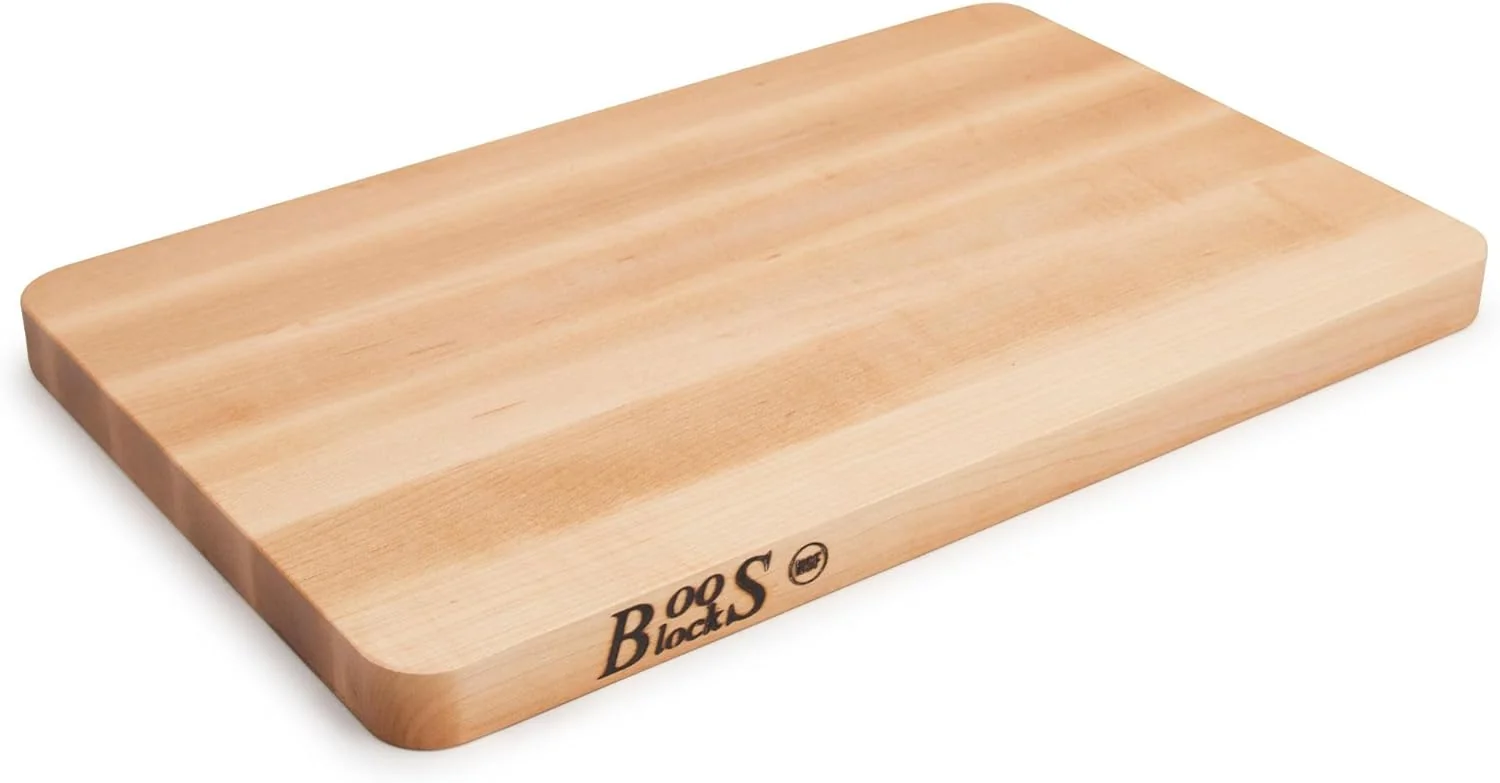
John Boos Block RA03 Maple Wood Edge Grain Cutting Board
By John Boos · Cutting Boards · Kitchen & Cooking · More from John Boos
- 24" x 18" x 2-1/4" thick
- 30 lb
- Northern Hard Rock Maple
- NSF Certified
- Edge grain construction
Price not listed
- John BoosView at John Boos
- eBay (used) eBay: used, open-box, refurbishedView at eBay (used)
- eBayView at eBay
- AmazonView at Amazon
Prices are snapshots. Check the current price with the store.
Summary
A 24 by 18 by 2-1/4 inch edge-grain Northern Hard Rock Maple board weighing 30 lb, built for serious home cooks who want a permanent prep surface and will oil it monthly. Check edge grain versus end grain before you buy: Wirecutter recommends against edge-grain construction for knife care and crack resistance, so if protecting knife edges matters more than a large flat surface, an end-grain board is worth comparing first.
Strengths
- At 30 lb the board does not slide, flex, or need a damp towel under it.
- The 24 by 18 in surface is a genuine working area — break down one thing at one end and pile trim at the other.
- NSF certification is a real third-party foodservice sanitation standard.
- Recessed finger grips are routed into both ends, so both faces are fully usable and the board reverses cleanly.
- Minor scratches sand out with fine grit and oil; the board is repairable in a way almost nothing else in a modern kitchen is.
Weaknesses
- Edge grain is harder on knife blades, does not self-heal as well as end grain, and Wirecutter links it to more cracking issues.
- Warping and glue-joint separation are the headline long-term complaints, reported even by owners who oil diligently.
- Boards arrive with gashes, chips, rough unsanded patches, hairline splits, or overly dry surfaces often enough to warrant inspection before first use.
- Delamination — a layer lifting from the surface sharp enough to cut a hand — is a genuine manufacturing defect.
- Monthly oiling on all six surfaces is non-negotiable, and standing liquid weakens the glued joints.
- At 30 lb the board is too heavy to return easily, so a flawed board often stays in the kitchen.
Verified specifications
| Model | RA03, part of John Boos’s RA-Board Series. |
|---|---|
| Dimensions | 24 × 18 × 2-1/4 in. |
| Weight | 30 lb. |
| Wood | Northern Hard Rock Maple. |
| Construction | Edge grain — long maple strips glued side by side, not end grain. |
| Certification | NSF Certified, a foodservice sanitation standard. |
| Reversible | Yes, with recessed finger grips routed into both ends. |
| Finish | Oil (Boos Block Mystery Oil, sold separately). |
| Made in | Effingham, Illinois, with domestic and imported materials. |
| Direct price | $200.95 (John Boos). |
| Series range | RA01 18 × 12 in at $133.95, RA02 20 × 15 in at $170.95, RA03 24 × 18 in at $200.95, RA06 30 × 23-1/4 in at $326.95. |
Full research notes and sources
Edge grain and what it means for your knives
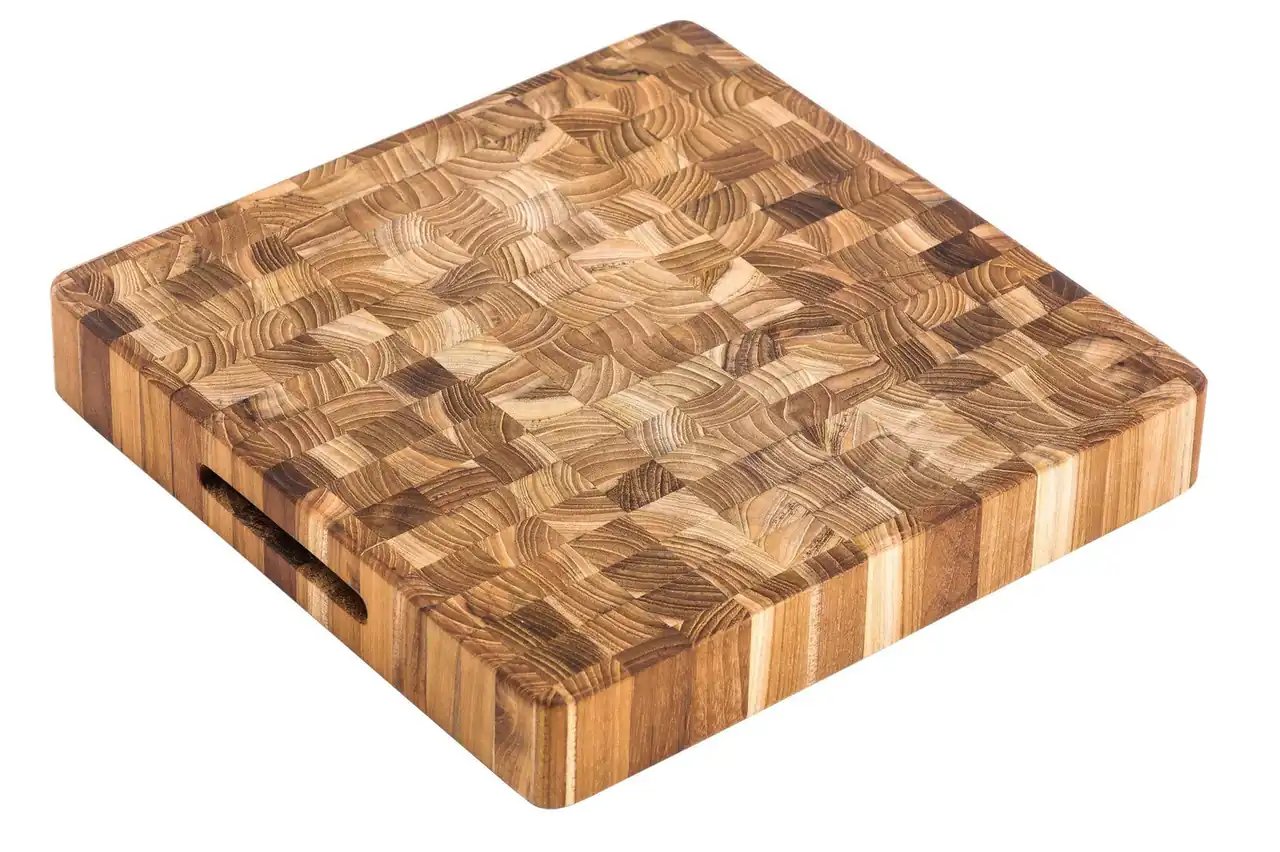
Wirecutter, after testing over 40 cutting boards since 2015, explicitly does not recommend edge-grain boards: they are harder on knife blades, do not self-heal as well, and in their experience have more issues with cracking. Their top wood recommendations are all end-grain maple boards.
John Boos makes both constructions and their own blog explains the tradeoff: edge grain is more dimensionally stable and easier to keep flat, while end grain is kinder to knife edges and hides scars better. Their end-grain boards are the separate CCB series.
Warping and glue joints
One owner on his third board oils every other week and still reports warping after three years. A hobby woodworker reports glued seams opening too easily for a professional-grade product.
Reddit r/BuyItForLife echoes this: “Be aware Boos boards WILL and DO crack!” A woodworker who repaired one found the glue lines were terrible, almost embarrassing.
Arrival condition and delamination
Owners report boards arriving with gashes, chips on edges, rough unsanded patches, hairline splits, and overly dry surfaces. John Boos’s own website reviews include similar reports. Reddit r/Cuttingboards: “Most said their boards were split and cracked at delivery or after a very short time.”
Delamination — a layer lifting, wood slivers standing proud of the surface sharp enough to cut a hand — is a genuine manufacturing defect, not a cosmetic nick. It should be returned, not sanded or oiled over.
One ChefTalk forum owner reported a new board becoming really rough or fuzzy after washing despite oiling.
Maintenance and care
Apply Mystery Oil to all six surfaces at minimum once a month, let it soak overnight, then wipe the excess. Hand-wash with mild soap only. Never dishwasher. Never leave standing liquid — brine, water, blood — on the board; John Boos’s own care page states that liquid soaking into the wood affects the strength of the glued joints. No serrated or razor-edge blades. Sand minor scratches with fine grit working with the grain, then oil.
The board is fully repairable in this way — almost nothing else in a modern kitchen can be brought back from years of knife work with sandpaper and oil. Care products are sold separately: Mystery Oil is $14.95 for 16 oz and Board Cream is $13.95 for 5 oz.
John Boos warrants products free from manufacturing defects for one year from date of purchase or delivery. Boards ordered unfinished carry no warranty. At 30 lb returns are logistically difficult; owners report keeping flawed boards rather than pursuing warranty.
Is it worth it?
John Boos sells the RA03 direct for $200.95, which puts it in premium-priced territory for an edge-grain board. Wirecutter’s assessment that edge grain is inferior to end grain for knife care, self-healing, and crack resistance is a real consideration at that price. End-grain boards from Wirecutter-recommended makers cost $185 (Jones Cutting Boards) to $255 (The Boardsmith), and John Boos’s own CCB end-grain series costs more than the RA03 and is considerably heavier.
The RA03’s case: a large working surface, enough mass to stay put without a towel, NSF certification, a reversible design with well-designed finger grips, and full repairability. Its costs: edge grain that is harder on knives and shows scars, warping and glue-joint separation that show up even with diligent oiling, non-negotiable monthly maintenance, and the practical difficulty of returning a flawed 30 lb board.
For a cook whose first priority is protecting knife edges, an end-grain board in the same price range deserves comparison first.
Which model this is
This page covers the RA03 from John Boos’s RA-Board Series — the 2-1/4 inch thick, 30 lb board in 24 by 18 inches.
The RA-Board Series spans four sizes: the RA01 at 18 by 12 inches, the RA02 at 20 by 15 inches, the RA03 at 24 by 18 inches, and the RA06 at 30 by 23-1/4 inches. John Boos lists the RA03 at $200.95 in their 2025 price list.
This board’s product listing identifier is ASIN B00063QBDQ.
Sources
Manufacturer:
- John Boos RA-Board Series product page
- John Boos Cutting Boards Collection
- John Boos warranty information
- John Boos care and maintenance
- John Boos blog: end grain vs edge grain
Independent reviews:
Owner reports: