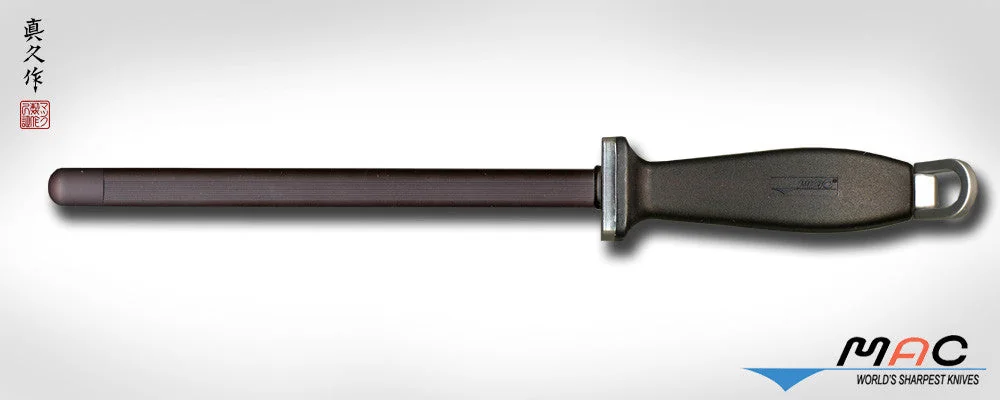
Green Elephant Ceramic Honing Rod
By Green Elephant · Knife Sharpening · Kitchen & Cooking
- 11 inch overall length, 10.75 inch ceramic rod
- 1500 grit ceramic
- 9 Mohs hardness
- Polypropylene handle
- Shock-absorbing silicone seal
Price not listed
- Amazon Green ElephantView at Amazon (paid link)
- eBay (used) eBay: used, open-box, refurbishedView at eBay (used)
- eBayView at eBay
Stores are listed in a fixed order, never by price or commission. Prices are snapshots. Check the current price with the store.
Summary
An 11-inch, 1500-grit ceramic honing rod for realigning a sharp edge between sharpenings, not for repairing a dull blade. Check your technique before you buy: 1500 grit is a finishing grit, so it refines an edge rather than reshaping it.
Strengths
- A fine 1500-grit ceramic realigns a sharp edge with very little metal removal.
- The shock-absorbing silicone seal sets it apart from plain ceramic rods.
- Roundups say it suits both German (about 20-22.5 degrees) and Japanese (15 degrees) edges.
- It has appeared in several honing-rod roundups since 2021.
- One kitchen professional calls it a daily maintenance tool.
Weaknesses
- Ceramic is fragile, and the rod can shatter if dropped on a hard floor.
- It realigns rather than sharpens, so a truly dull knife still needs a sharpener.
- The 9 Mohs hardness is a manufacturer claim with no independent test found.
- Hand wash only, and it is not dishwasher safe.
- No warranty or repair program was published for the rod.
Verified specifications
| Material | white ceramic rod, 1500 grit. |
|---|---|
| Hardness | 9 Mohs, a manufacturer claim cited as SGS tested in retailer copy. |
| Length | 11 in overall, 10.75 in rod. |
| Handle | polypropylene. |
| Seal | shock-absorbing silicone between the rod and the handle. |
| Weight | BLADE Magazine lists 7.2 (the source does not give the unit). |
| Country of origin | BLADE Magazine lists Taiwan, while some retailer listings claim USA-made. |
Full research notes and sources
What 1500 grit does
Ceramic rods remove minimal metal and realign an edge rather than reshape it. At 1500 grit this rod is finer than many steel rods, so it polishes and refines an edge instead of repairing a dull or damaged one. Roundups position it for daily upkeep between sharpenings, and it is the kind of tool you reach for when a knife is still sharp but no longer biting. Use a steady angle, about 15-20 degrees for Western knives.
Care and fragility
Hand wash only, and do not put it in the dishwasher. White ceramic picks up swarf over time and can be cleaned with an abrasive cleaner such as Bar Keepers Friend. The silicone seal absorbs some shock, but a ceramic rod is still breakable, so store it where it will not fall.
Is it worth it?
BLADE Magazine lists it at about $30 in its 2024 buyer’s guide, which puts it in the budget ceramic-rod tier alongside the Messermeister 1200 grit and Kyocera dual-sided rods. At that price, for a home cook who wants a simple maintenance tool and is willing to learn the angle, it is a fair buy. There is no independent test of the rod, so you are trusting manufacturer claims and roundup write-ups rather than measured performance.
Which model this is
This page covers the Green Elephant Ceramic Honing Rod, ASIN B019MQCDZW: an 11-inch white ceramic rod with a polypropylene handle and a silicone seal between the rod and the handle. No other model variants were identified.
Sources
Independent reviews:
- BLADE Magazine honing-rod buyer’s guide
- Luxe Device Lab honing-rod roundup
- Knife Aid home sharpening tools
- BestProductsAustralia ceramic rod roundup
- Knifewear: steel vs ceramic honing rod
- New West KnifeWorks sharpening 101
- Consumer Reports: using a honing steel
- XINZUO honing steel guide
- Birchwood Knife care guide
Owner reports: