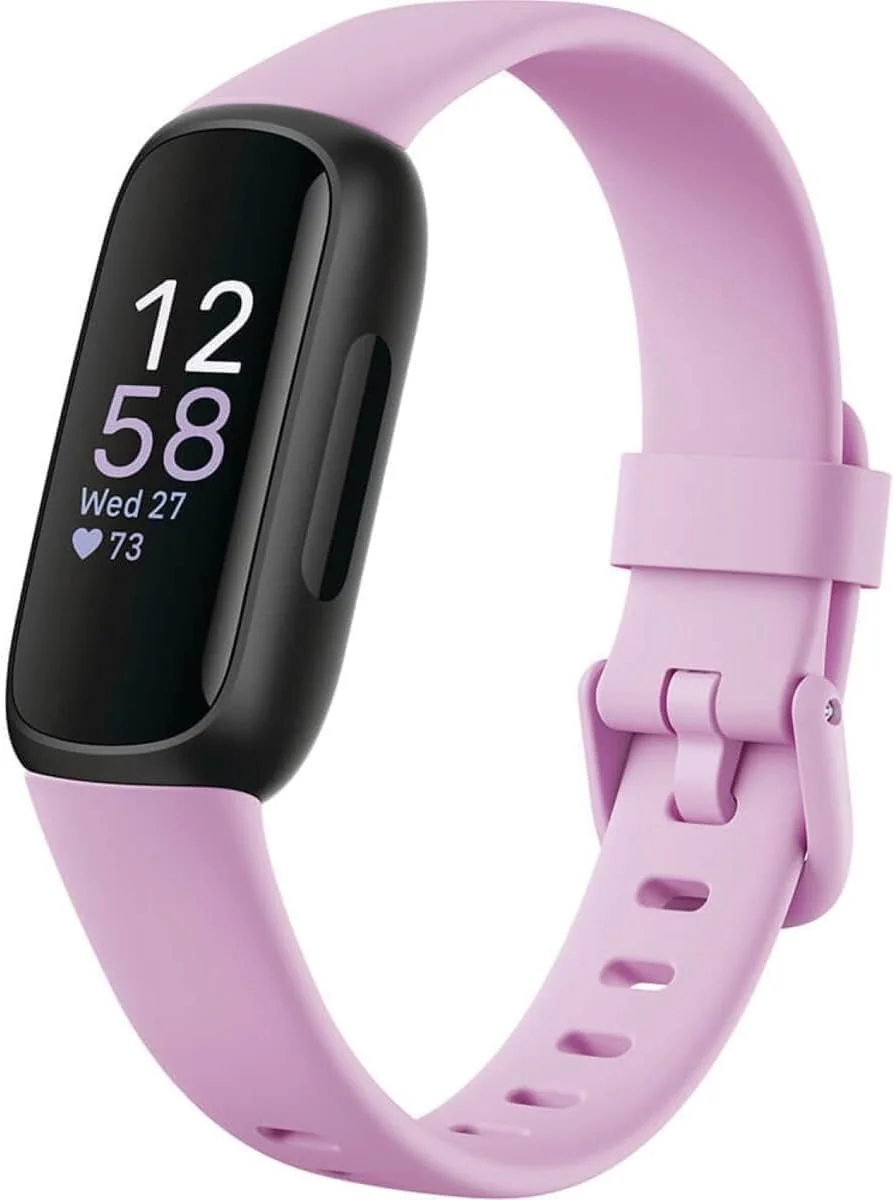
Fitbit Inspire 3
By Fitbit · Fitness Trackers · Phones & Computers · More from Fitbit
- Battery life: up to 10 days
- Water resistance: 5 ATM (50 m)
- Exercise modes: 20+
Lowest price seen
$99.95
from $99.95 at Heart Rate Monitors USA · Checked Oct 11, 2026
- Heart Rate Monitors USA $99.95View at Heart Rate Monitors USA
- FitbitView at Fitbit
- eBay (used) eBay: used, open-box, refurbishedView at eBay (used)
- eBayView at eBay
- WalmartView at Walmart
- TargetView at Target
- Best BuyView at Best Buy
- Kohl'sView at Kohl's
- VerizonView at Verizon
- DellView at Dell
- AmazonView at Amazon
Prices are snapshots. Check the current price with the store.
Summary
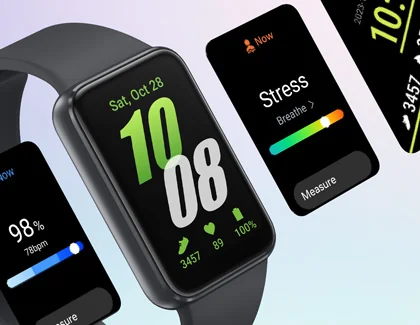
An entry-level fitness tracker with a color AMOLED touchscreen, 10-day claimed battery life, and core activity, heart-rate and sleep tracking. Check whether you need built-in GPS before you buy: the Inspire 3 relies on your phone’s GPS for outdoor distance and pace.
Strengths
- Bright color AMOLED display readable in daylight at this price.
- Lightweight and comfortable for extended wear.
- Long battery life — best in the Fitbit lineup.
- Core tracking (steps, heart rate, sleep, Active Zone Minutes) works well for the price.
- Six months of Fitbit Premium included.
- Sleep tracking is comprehensive and easy to interpret in the app.
Weaknesses
- No built-in GPS — outdoor workouts require carrying a phone.
- Small screen with tiny text; no font size adjustment.
- Heart rate readings can be significantly low during workouts compared to Apple Watch or chest strap.
- Touchscreen responsiveness issues with sweaty hands.
- Band changes are fiddly; no quick-release buttons.
- Most useful features (sleep score, readiness, trends) behind Premium paywall.
Verified specifications
| Display | 0.5-inch AMOLED color touchscreen. |
|---|---|
| Dimensions | 1.55 x 0.73 x 0.46 in (39.4 x 18.5 x 11.7 mm). |
| Weight | 0.62 oz (~17.6 g). |
| Water resistance | 5 ATM (50 m / 164 ft). |
| Battery life | up to 10 days claimed; PCMag measured 8 days with normal use, ~3 days with always-on display. |
| GPS | No built-in GPS; connected GPS via phone only. |
| Heart rate monitor | Yes, optical, 24/7. |
| SpO2 | Overnight only; no on-demand readings. |
| Sleep tracking | Yes, with sleep score (Premium). |
| Workout modes | 20+ exercise types; 6 on-device shortcuts. |
| Compatibility | Android OS 9+ and iOS 14+. |
| Bluetooth range | ~30 feet. |
| Warranty | 1 year limited. |
| Included | Tracker, small and large bands, charging cable, 6-month Fitbit Premium trial. |
| Charging time | ~2 hours. |
| Clock faces | 21 available. |
| Haptic buttons | Two side buttons. |
| Apps on device | Alarms, Exercise, Find Phone, Notifications, Relax, Settings, SpO2, Timers. No third-party app store. |
| Sensors | Accelerometer, optical heart rate, red/infrared for SpO2. |
Full research notes and sources
Battery life and display
Fitbit claims up to 10 days, but that figure requires disabling always-on display. PCMag measured 8 days with normal use and about 3 days with always-on enabled. Tom’s Guide finished a week at 10% battery with always-on and daily workouts. CNET confirmed the 10-day figure with 24/7 wear. The 0.5-inch AMOLED screen is bright and readable in daylight, but the text is tiny and cannot be resized. Three brightness levels and four display timeout options are available. The touchscreen can be unresponsive with sweaty hands.
Heart rate and workout tracking
The Inspire 3 tracks heart rate 24/7 with an optical sensor. Tom’s Guide found consistency with an Apple Watch Series 7 during a Peloton ride (both averaged 142 bpm). PCMag found significant underestimation during outdoor runs: the Inspire 3 averaged 137 and 134 bpm on two runs versus 176 and 174 bpm on an Apple Watch Series 8, and 134 bpm versus 159 bpm on a chest strap. The discrepancy may be activity-type-dependent or unit-to-unit variance. Without connected phone GPS, distance estimates can be significantly off — PCMag measured 1.25 mi estimated versus 1.0 mi actual on a run.
Premium subscription and running costs
Many of the most useful features — sleep score, Daily Readiness Score, 90-day health trends, Sleep Profile — require Fitbit Premium at $9.99/month or $79.99/year after the included 6-month trial. CNET notes Premium is “fast becoming an essential part” of the Fitbit experience. The device itself has no recurring cost beyond the subscription. Accessory bands cost $19.95 (clip), $34.95 (translucent silicone), or $69.95 (stainless steel mesh). The clip disables heart rate and sleep score measurements. An extended warranty adds a second year with accidental-damage coverage for $19.99.
Is it worth it?
At $75–90 on sale, the Inspire 3 is a strong value: color AMOLED, 8–10 day battery, comprehensive sleep and activity tracking, and the included Premium trial make it a compelling entry tracker. Missing GPS and the small screen are acceptable tradeoffs at that price. At $91–100 it is fair value — still the cheapest color-display Fitbit, but alternatives like the Xiaomi Mi Band 7 (~$60) offer larger screens with similar features. Above $120 it is not recommended at MSRP; the Fitbit Luxe ($129.95) offers a more premium design, or the Charge 5/6 ($131–159.95) adds GPS and more sensors. The Google Store lists the Inspire 3 at $99.95. Tom’s Guide noted it often on sale around $75 at various retailers in August 2024, and PCMag listed it at $79 at Best Buy and $94 at Walmart in March 2023.
Which model this is
This page covers the Fitbit Inspire 3, launched September 2022. It replaces the Inspire 2 and sits below the Fitbit Luxe, Charge 5/6, Versa 4, and Sense 2 in the lineup. Color options include Midnight Zen (black), Lilac Bliss, and Morning Glow. The Amazon listing is ASIN B0B5FCYMFD. After 2025, a Google account is required to use Fitbit devices. Do not confuse it with the Inspire 2, Luxe, Charge, Versa, Sense, or the newer Fitbit Air.
Sources
Manufacturer:
Independent reviews: