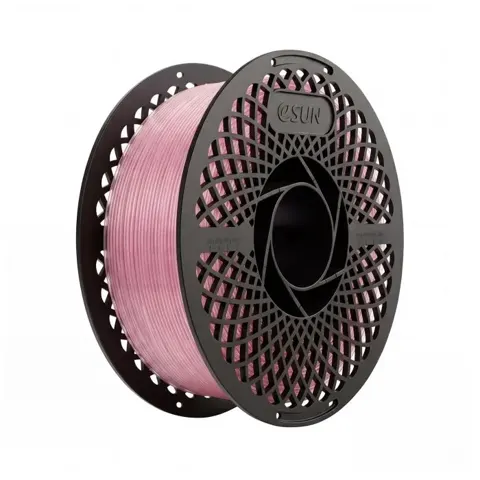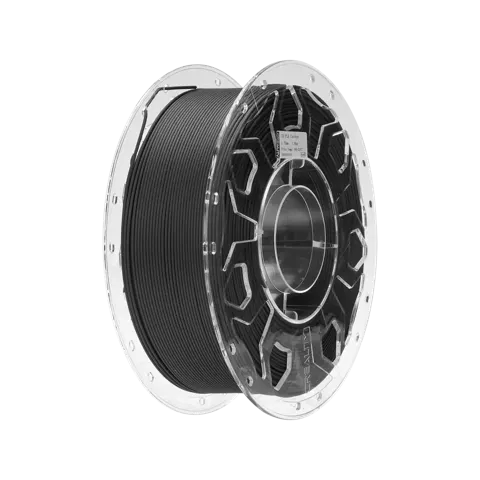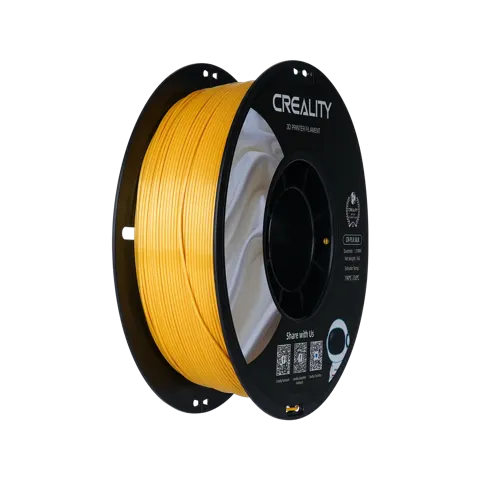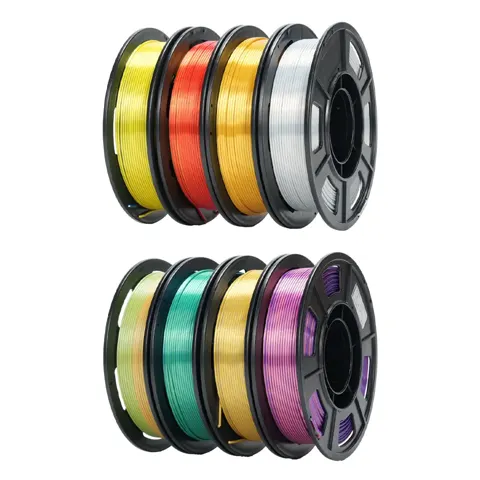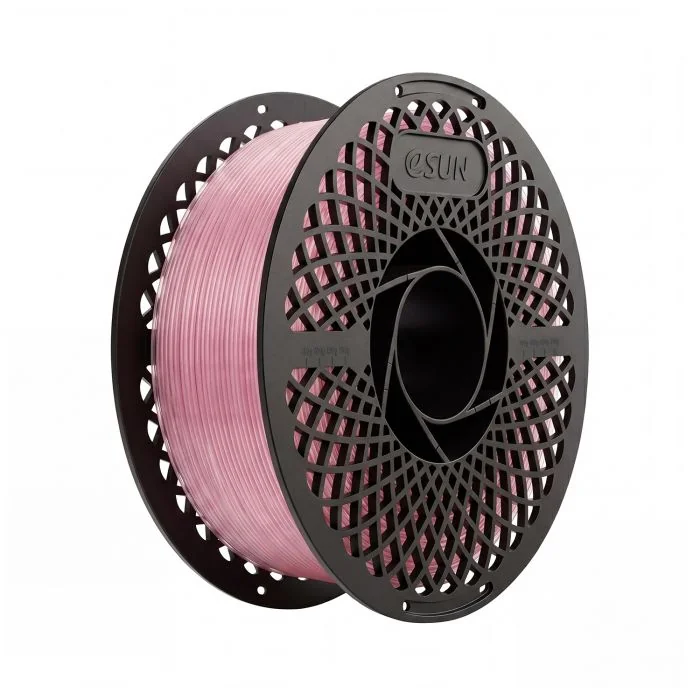
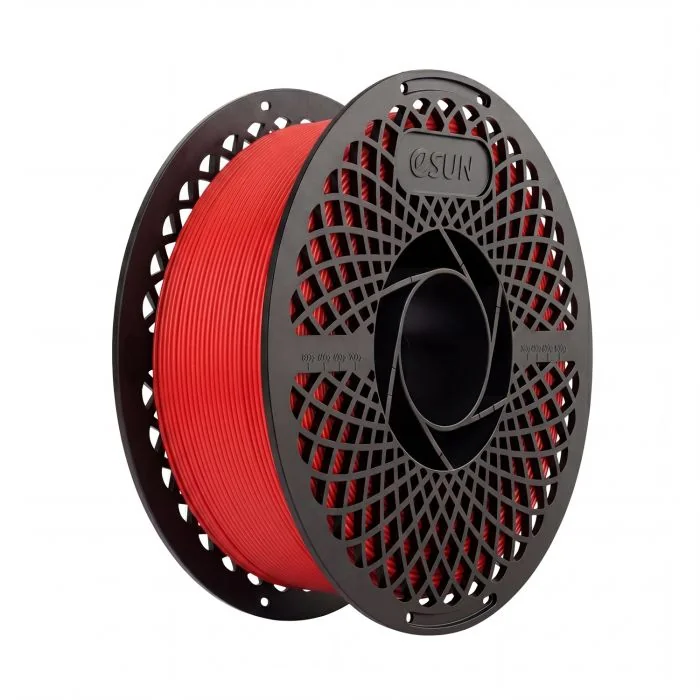
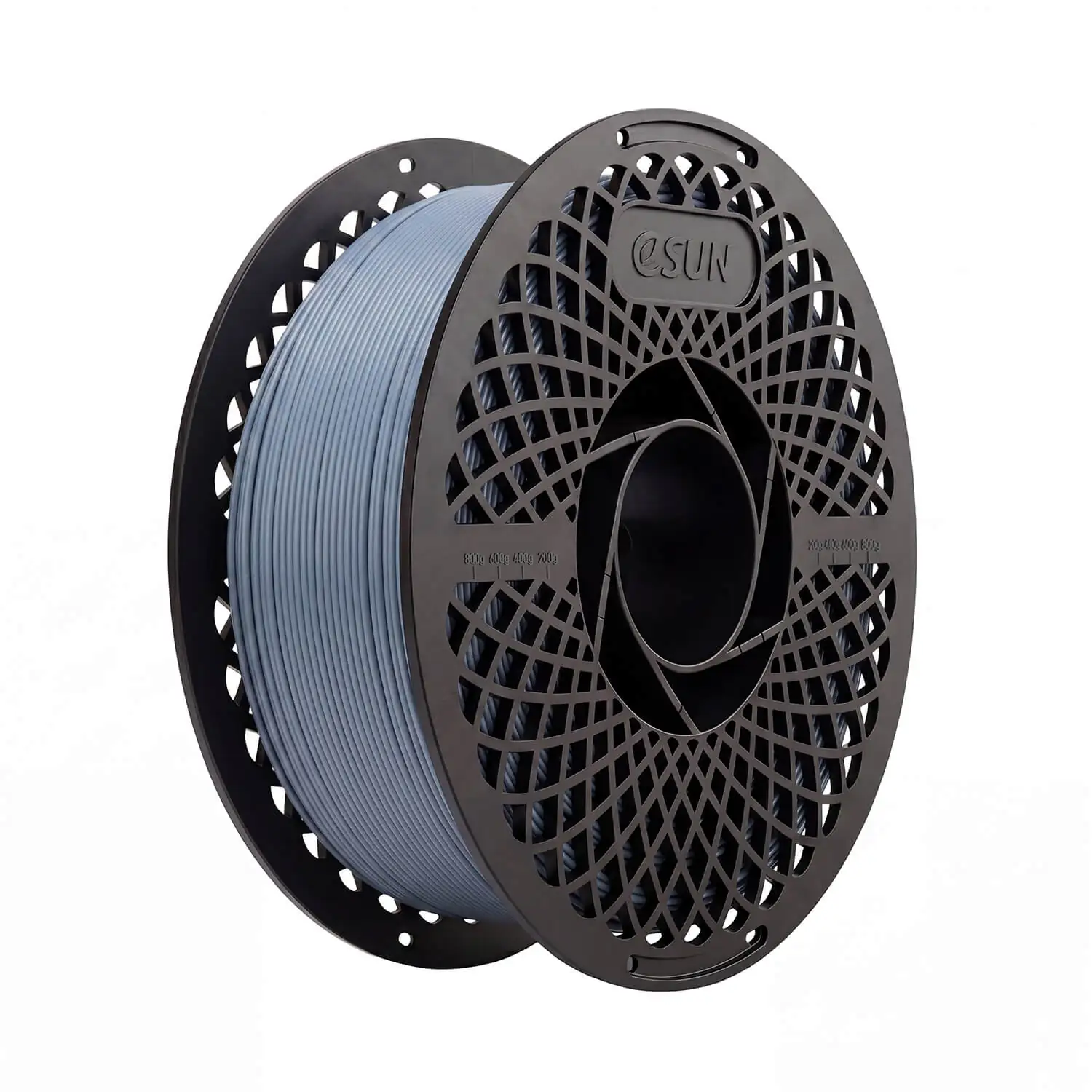
eSUN PETG Filament 1.75mm
By eSUN · Filament & Resin · 3D Printing · More from eSUN
- Density: 1.27 g/cm3
- Melt Flow Index: 20 g/10min
- Heat Distortion Temperature: 64 C
- Extruder Temperature: 240-260 C
- Bed Temperature: 75-90 C
Price not listed
- eSUNView at eSUN
- eBayView at eBay
- AmazonView at Amazon (paid link)
- eBay (used) eBay: used, open-box, refurbishedView at eBay (used)
Stores are listed in a fixed order, never by price or commission. Prices are snapshots. Check the current price with the store.
Summary
Standard eSUN PETG in 1.75 mm, 1 kg per spool, for heated-bed FDM printers that can dry filament. Check drying and flow calibration before you buy: the manufacturer calls for 60°C for more than 8 hours, and owner reports of stringing and diameter problems recur.
Strengths
- The July 2025 TDS publishes density, mechanical anisotropy, thermal limits and test conditions instead of generic marketing claims.
- PETG’s impact and chemical-resistance traits suit functional household prints, with a wide color range.
- At $14.99/kg the material is cheap: a 250 g print uses about $3.75 of filament before supports and waste.
- Owners report clean, low-stringing prints with eSUN black PETG in one long-form guide.
- A June 2024 side-by-side post showed eSUN PETG beating an older Bambu PETG Basic spool at matching 245°C settings.
Weaknesses
- Stringing, blobs and clumps recur in first-hand owner posts; drying does not always fix them.
- One owner measured a partially used spool at 1.49 mm, far outside the ±0.05 mm claim.
- Transparent PETG still strung after 12 hours at 65°C in a July 2026 report.
- Published Z-direction impact (1.78 kJ/m²) is well below XY (4.86 kJ/m²), so part orientation matters.
- PETG can bond too strongly to some build surfaces; follow plate-specific release guidance.
- The US store showed $14.99 alongside “0 in stock” for US shipping, so availability is unverified.
Verified specifications
| Material | standard eSUN PETG, 1.75 mm nominal diameter, 1 kg (1000 g) net per spool. |
|---|---|
| Diameter tolerance | ±0.05 mm as advertised by the US store; a seller claim, not a third-party batch measurement. |
| Density | 1.27 g/cm³ (manufacturer TDS, July 2025, v2.0). |
| Melt flow index | 20 g/10 min at 250°C/2.16 kg. |
| Tensile strength | 34.77 MPa (XY), 28.65 MPa (Z). |
| Elongation at break | 5.15% (XY), 3.91% (Z). |
| Flexural strength | 41.9 MPa (XY), 39.9 MPa (Z). |
| Izod impact strength | 4.86 kJ/m² (XY), 1.78 kJ/m² (Z). |
| Drying | 60°C for more than 8 hours (manufacturer TDS). |
| Nozzle temperature | 230–260°C per the July 2025 TDS; 240–260°C per the current product page; overlapping starting range 240–260°C. |
| Bed temperature | 75–90°C, heated platform required. |
| Cooling | 100% fan in the TDS reference print. |
| Speed | less than 150 mm/s; reference specimens printed on a Bambu P1S with a 0.4 mm nozzle, OrcaSlicer 2.1.0 Beta, 260°C nozzle, 80°C bed, 100% fan and 100% infill. |
| Claimed spool length | 350–355 m per 1 kg; geometry at 1.27 g/cm³ and 1.75 mm gives about 327 m. |
| UV resistance and water repellency | marked “YES” in the 2025 TDS; no quantitative weathering lifetime or liquid-compatibility data. |
| Packaging | vacuum-sealed with desiccant. |
| Returns | 14 days after delivery for unused goods in original packaging; estore@esun3d.com. |
Full research notes and sources
Printing and calibration
The TDS recommends drying at 60°C for more than 8 hours before printing, and warns that an uncalibrated oven or an overheated plastic spool is not acceptable. Nozzle guidance conflicts between documents: the July 2025 TDS starts at 230°C while the current product page starts at 240°C, with 240–260°C as the overlapping range. Tune with a temperature tower rather than assume one ideal nozzle temperature. Bed temperature is 75–90°C on a PEI surface, with 100% cooling fan in the reference print and speeds below 150 mm/s.
Owner experience varies by color and lot. A January 2025 Bambu A1 user reported strings and “PETG boogers” under generic settings; a July 2026 user of transparent PETG reported significant stringing after 12 hours at 65°C. A 2020 guide found eSUN black more forgiving than gray or translucent orange, while a 2017 Prusa forum thread found the opposite in some black spools. Individual flow and pressure-advance values (0.947 flow, 0.015–0.017 pressure advance) are machine-specific examples, not universal settings. The TDS itself recommends seam alignment, limited idle travel and turning off Z-hop.
Diameter complaints exist but are isolated. On August 31, 2025 a Reddit user said a partially used spool measured 1.49 mm and caused a feed error, then contacted support. That is a single owner-measured report without an independent calibrated audit of the whole spool. Check suspicious filament with a calibrated caliper at multiple positions before changing extrusion multiplier.
PETG’s strong bed adhesion can make removal difficult and damage surfaces if cold or hot-plate instructions are ignored. The manufacturer recommends PEI but publishes no universal plate-release test. Finished parts also show meaningful anisotropy: Z tensile strength (28.65 MPa) and Z Izod impact (1.78 kJ/m²) trail the XY values, so thin snap-fits and poor orientation can fail even when the material is described as tough.
Running costs
At the posted $14.99/kg, raw filament is $0.01499/g. A 250 g print uses $3.75 of nominal material before supports, purge, prototypes and failed-print waste. A hobbyist printing 3 kg/year pays 3 × $14.99 = $44.97 in posted raw price before shipping and tax; a heavy user at 12 kg/year pays $179.88 on the same unit-price assumption. Color, stock and bulk discounts may differ, so neither scenario is a market forecast.
Drying electricity cannot be quantified: no dryer model, wall wattage, duty cycle or utility tariff is specified, even though drying runs more than 8 hours at 60°C. Printer electricity and wear depend on the machine, settings, print duration, failed jobs and regional rates. Nozzle and build-surface upkeep are ordinary; no PETG-specific eSUN replacement nozzle, glue brand or annual maintenance part cost is published.
The filament itself is the only consumable: one new 1 kg spool for each 1000 g of nominal usable filament consumed, adjusted for supports, purge, failed prints and leftovers. No mandatory refill cartridge is used. The brand does not publish a separately orderable desiccant part number, price or replacement interval; a reusable dry box and replenished desiccant are optional user supplies. The spool reel is packaging, and its exact outer diameter, hub fit and material by color or batch are not reliably documented, so verify AMS or carousel clearance independently.
The US store allows return applications within 14 days after delivery for unused goods in original packaging, with receipt; consumers pay change-of-mind return shipping, and the seller says it covers shipping when it sent damaged or wrong goods. No restocking fee is stated. Opened spools may not meet the unused-condition rule, so obtain written treatment for a genuine manufacturing defect. Reseller policies can be stricter: an observed eBay resale listing at $34.79 stated no returns. Customer service contact is estore@esun3d.com; no independently established average response time or replacement success rate is documented.
Is it worth it?
The direct store lists $14.99 for 1 kg, with a struck-through $22.99 in the category listing; that $22.99 is a marketing comparison, not a verified usual street price. Shipping and taxes are calculated at checkout, and US/Canada delivery is normally about 4–10 business days, subject to destination, actual availability and delays. The product page also displayed “0 in stock” for the US shipping selector while still showing an Add to Cart control and the asking price, so verify color and delivered checkout stock rather than assume availability.
Editorial thresholds, not historical market data: good buy at $12 or less per 1 kg sealed spool before tax, including reasonable shipping on a combined order. At $12–$16, roughly the advertised $14.99 range, check delivery charge and actual stock; at $14.99 the cost is about $0.015/g of net filament before shipping. Above $16–$18, compare alternatives: Overture PETG 1.75 mm 1 kg black at $12.99 (Best Buy, SKU 6671926, vendor specs 230–260°C nozzle, 65–70°C bed, 60°C/5h drying, claimed ±0.02 mm), or the separate eSUN PETG-Basic at $12.49 (also showing 0 in stock). At about $20, Polymaker PETG new formula at $19.99 advertises a faster-print profile. Where throughput matters, eSUN PETG+HS at $16.72 is a separate high-speed formulation requiring its own profile. An eBay resale listing at $34.79 with no returns is an unusually uncompetitive asking price and should not be treated as a normal market upper bound.
Which model this is
This page covers standard eSUN PETG in 1.75 mm, 1 kg per spool: the formula documented at esun3d.com/petg-product and the US store’s /products/petg page. It is not PETG-Basic, PETG+HS (high-speed), PETG-CF, PETG-ESD or PETG-Matte, which are separate formulas under the same brand even though they share the eSUN name. The catalog has no color-specific identity, so store price, finish, availability and owner experience can differ by color.
The manufacturer is eSUN (Shenzhen eSUN Industrial Co., Ltd.).
The direct store lists $14.99 as an observed posted price on October 23, 2026, not verified immediate purchasability.
Sources
Manufacturer:
- eSUN standard PETG product page
- eSUN PETG Technical Data Sheet, July 2025 v2.0 (PDF)
- eSUN US store: standard PETG 1.75mm 1kg
- eSUN US store: refund and return policy
- eSUN US store: shipping policy
Independent reviews and guides:
Owner reports:
- Bambu Lab Community: eSUN PETG blobs and white-PETG settings
- Reddit r/BambuLab: eSUN PETG strings, January 2025
- Reddit r/BambuLab: eSUN transparent PETG stringing, July 2026
- Reddit r/BambuLab: eSUN vs older Bambu PETG Basic, June 2024
- Reddit r/BambuLab: claimed 1.49 mm eSUN PETG measurement, August 2025
- Prusa3D Forum: black eSUN PETG adhesion variation, 2017
Parts and stores: