EPOMAKER Galaxy100 Mechanical Keyboard
By EPOMAKER · Mechanical Keyboards · Home & Workspace · More from EPOMAKER
Compare all Mechanical Keyboards side by side →
- 1800 ANSI US Layout, 100 keys and 1 knob
- 8000mAh rechargeable battery
- 1000Hz polling rate
- South-facing per-key RGB
- Aluminum alloy case
Lowest price seen
$76.99
from $76.99 at AliExpress · Checked Nov 16, 2026
- AliExpress EPOMAKER Store $76.99View at AliExpress
- EPOMAKER $87.99View at EPOMAKER
- Thockking $109.99View at Thockking
- Micro Centerprice match · store policyView at Micro Center
- MeckeysView at Meckeys
- NeweggView at Newegg
More on eBay (1)
- eBayView at eBay
- eBay (used) eBay: used, open-box, refurbishedView at eBay (used)
Stores with a price are sorted lowest first; commission never changes the order. Prices are snapshots. Check the current price with the store.
Summary
A 100-key 1800-layout mechanical keyboard with an aluminum case, gasket mount, hot-swap sockets and an 8000mAh battery for wired, 2.4GHz and Bluetooth use. Check the switch option before you buy: it ships with either Feker Marble White or Epomaker Wisteria linears, and the only hands-on review is a retailer piece, so long-term reliability is still unproven.
Size in context

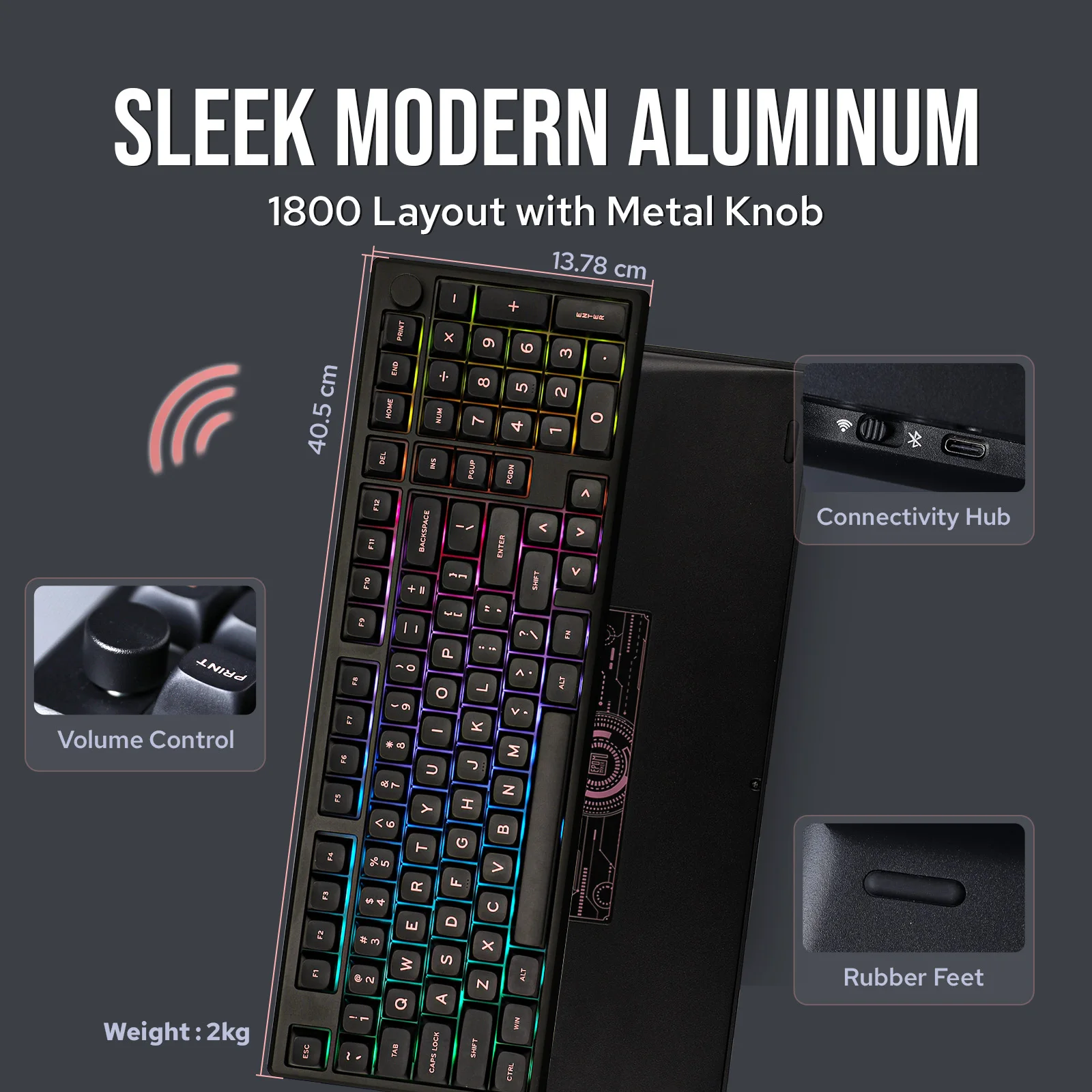
40.5 cm · 15.9 in (W) × 13.8 cm · 5.4 in (D) × 3.2 cm · 1.3 in (H) · Drawn to scale from the maker's stated dimensions, next to everyday objects.
Strengths
- The 8000mAh battery and 1000Hz 2.4GHz polling make it a real wireless board, not an add-on.
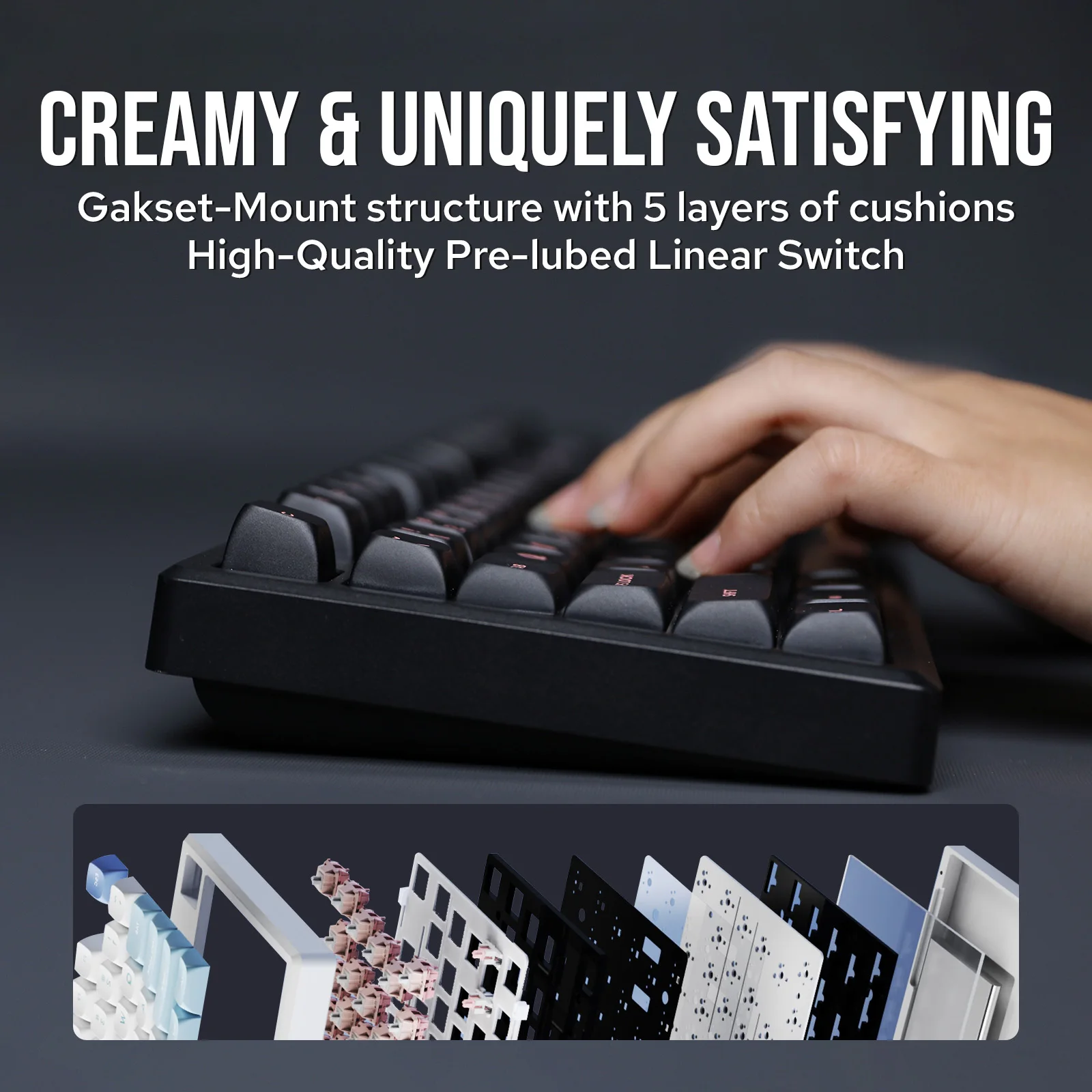
- Gasket mount, a flex-cut PP plate and 5 layers of dampening target a deeper, quieter typing sound.
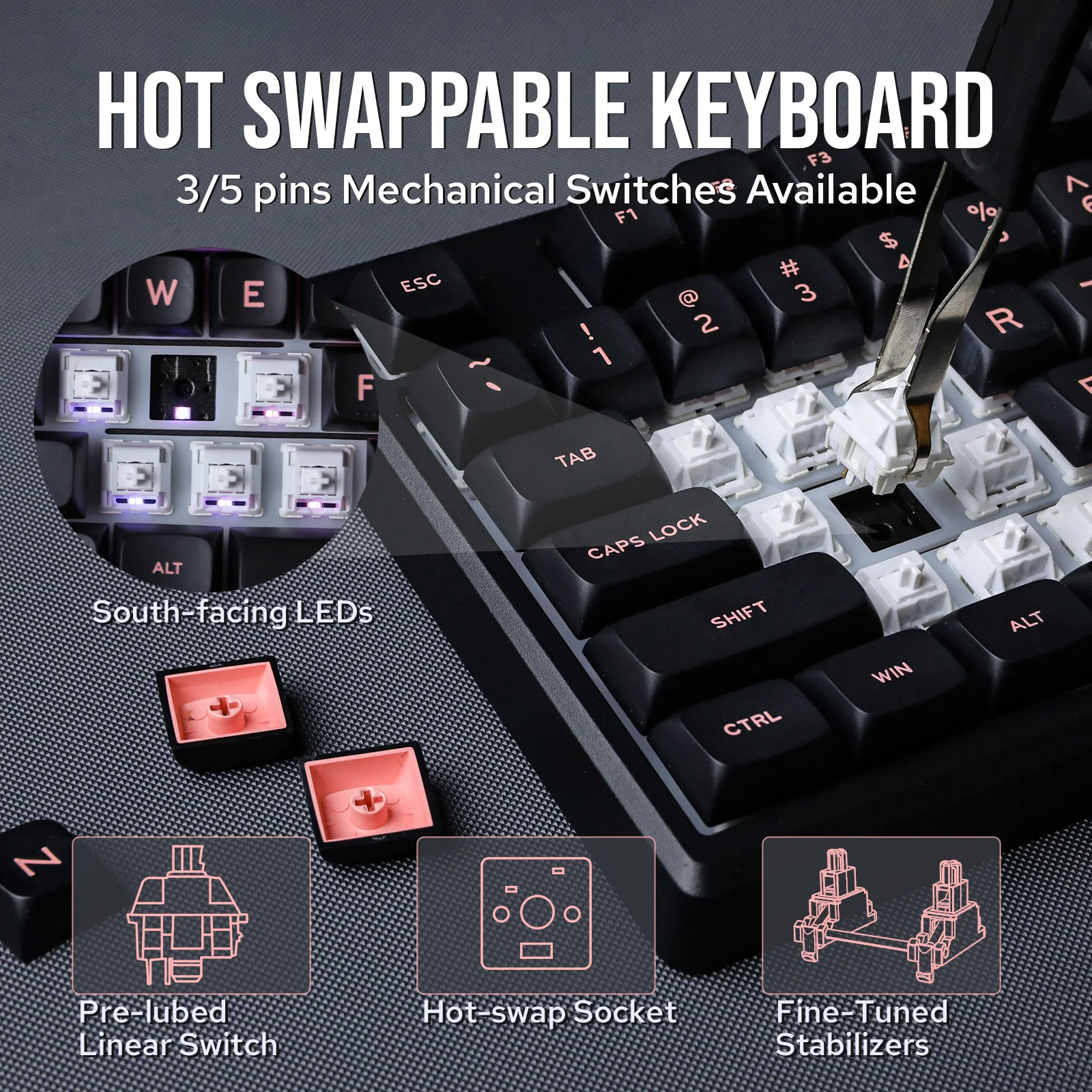
- Hot-swap sockets let you change switches without soldering.
- PBT keycaps resist shine and give the board a heavier sound than ABS caps.
- The 1800 layout puts the function row in one line and keeps the arrow cluster close.
- Hot-swap and VIA/QMK support open up remapping that most boards in this class skip.
Weaknesses
- No instrumented independent test of this exact board has been published, so latency, polling consistency and battery drain rest on manufacturer claims.
- Battery runtime in hours is not documented anywhere, so you cannot plan charging around a stated figure.
- Wireless range and stability in congested 2.4GHz environments are untested.
- Whether the knob does anything beyond volume is not documented.
- The USB-C port specification, including USB 2.0 or 3.x and any pass-through, is not stated.
- The internal battery is not documented as user-replaceable, and no spare parts catalog exists.
Verified specifications
| Layout | 1800 ANSI US layout, 100 keys and 1 knob. |
|---|---|
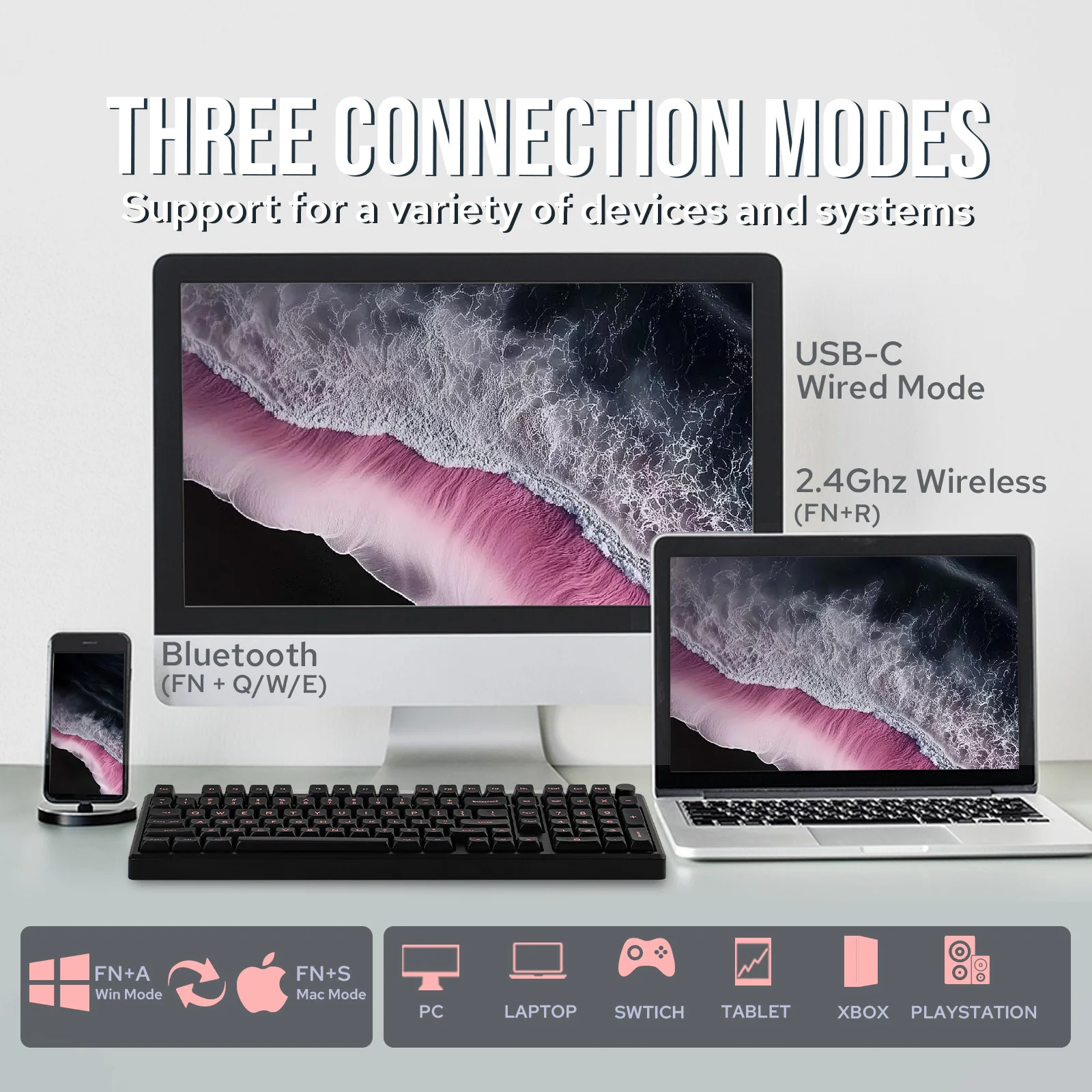
| Connectivity | tri-mode USB-C wired, 2.4GHz wireless and Bluetooth 5.0. |
| Polling rate | 1000Hz over USB and 2.4GHz, 125Hz over Bluetooth. |
| Claimed latency | 2.81ms USB, 4.72ms 2.4GHz, 15ms Bluetooth. |
| Battery | 8000mAh rechargeable. |
| Case | powder-sprayed aluminum alloy. |
| Mounting | gasket mount with a PP plate and partial horizontal flex-cuts. |
| PCB thickness | 1.2mm. |
| Sound dampening | 5 layers — Poron sandwich pad, IXPE switch pad, PET sound enhancement pad, EMDP switch socket pad and PET bottom pad. |
| Stabilizers | plate-mount, not screw-in compatible. |
| Switches | hot-swappable mechanical sockets accepting 3-pin and 5-pin MX-style switches; Feker Marble White is a 5-pin linear, factory lubed, 30gf±5gf trigger and 42±3gf bottom-out, with 2.0±0.3mm pre-travel and 3.5±0.3mm total travel; Epomaker Wisteria Linear is the other factory option. |
| Keycaps | PBT plastic, double-shot and dye-sub, MDA profile on the Black variant and Cherry profile on the White Purple variant. |
| RGB | south-facing per-key lighting. |
| Anti-ghosting | N-key rollover. |
| Typing angle | about 7°, with a 1.95 cm front height. |
| Dimensions | 40.5 × 13.78 × 3.23 cm (approx. 15.94 × 5.43 × 1.27 in). |
| Weight | 2 kg (≈ 4.4 lb); Micro Center’s hands-on cites nearly 4.5 lbs. |
| Compatibility | Mac, Windows and Android; not compatible with PS4, PS5 or Switch. |
| In the box | keyboard, USB-C cable, keycap puller, user manual, 2.4GHz dongle and extra switches, depending on variant. |
| Warranty | 1-year limited warranty. |
Full research notes and sources
Layout and build
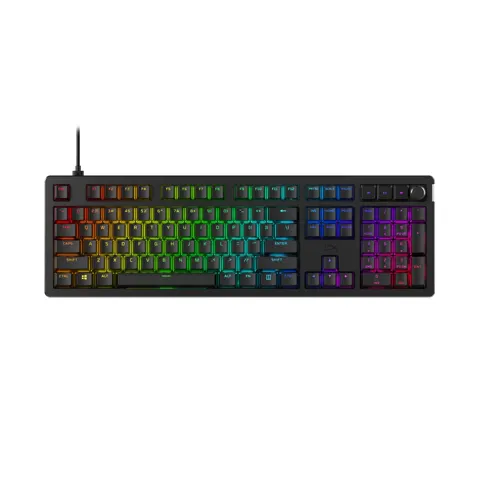
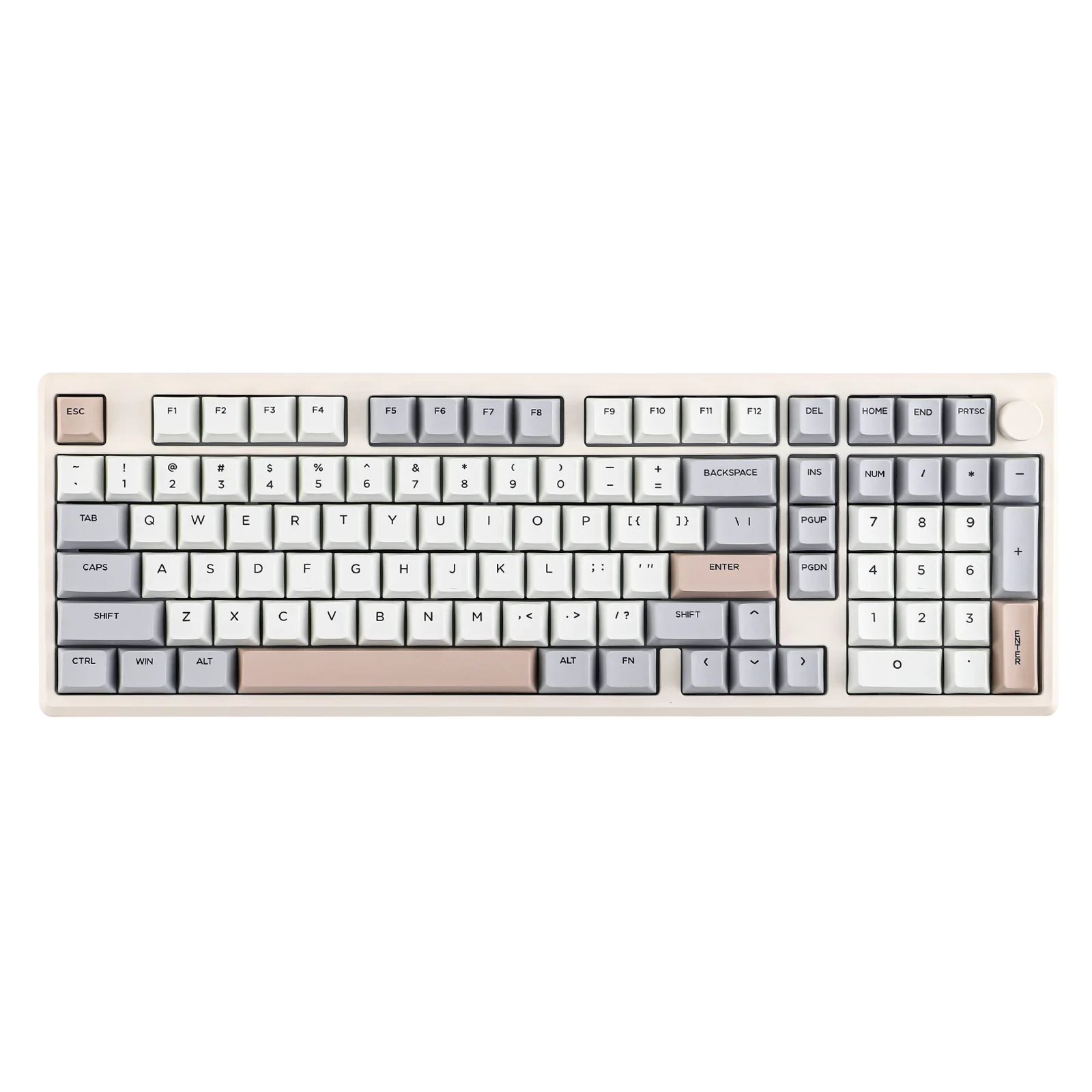
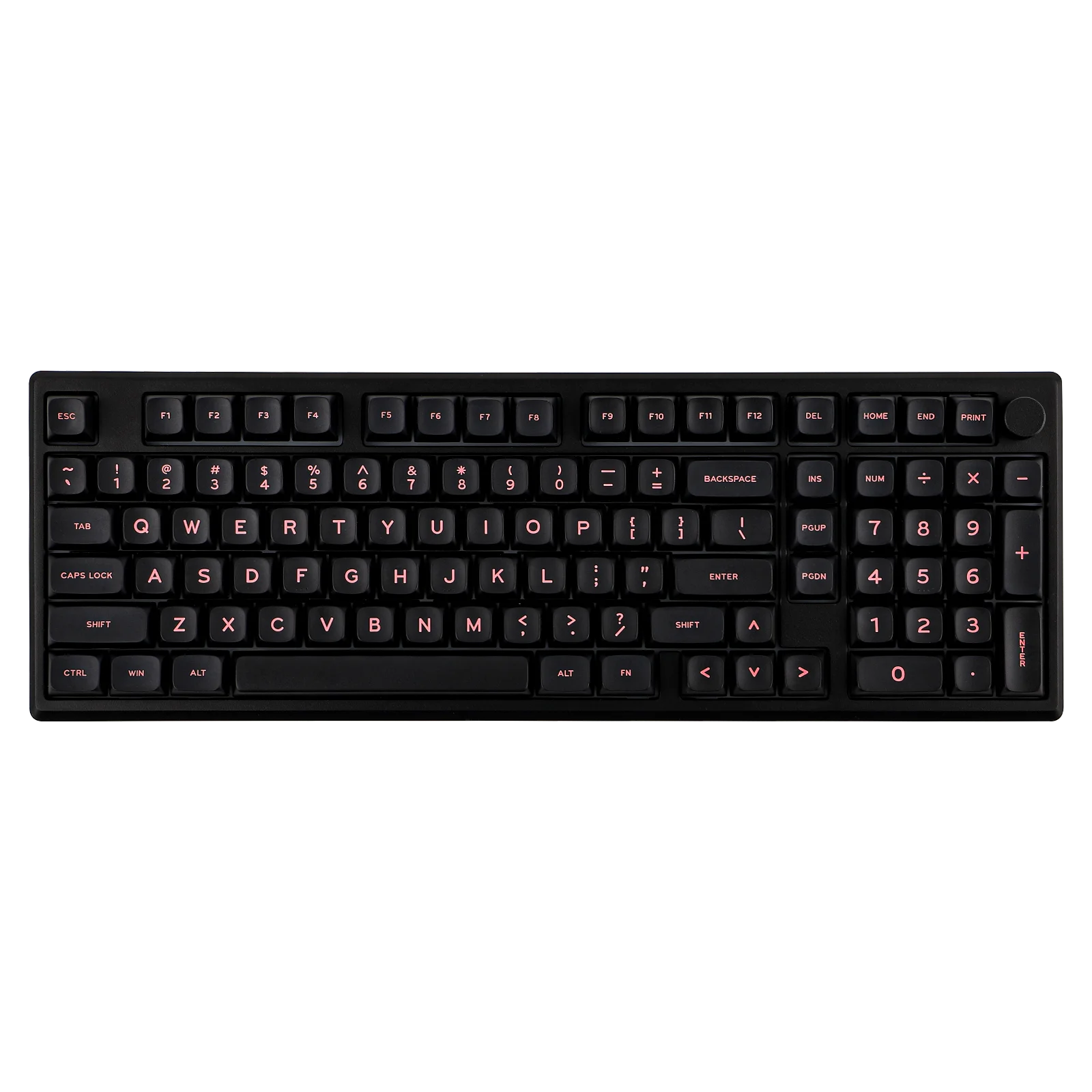
The 1800 ANSI layout is the reason this board exists. Instead of a separate function row and navigation block, everything sits in a single line, so you save desk width and keep your hands in one position. The knob sits in the upper right corner.
Build is the strong part of the package. The case is powder-sprayed aluminum alloy, and the board weighs about 4.4 lb, which Micro Center’s hands-on put at nearly 4.5 lbs. The plate is polypropylene with partial horizontal flex-cuts, and the switch sits on a gasket mount over 1.2mm of PCB. Color variants include Black, Grey and White Purple, and the keycap profile changes with the color: MDA on Black, Cherry on White Purple.
Wireless performance and battery
The manufacturer claims 1000Hz polling over both USB and 2.4GHz, dropping to 125Hz over Bluetooth 5.0, with latency of 2.81ms, 4.72ms and 15ms respectively. Nobody has measured those numbers under load.
The 8000mAh battery is the largest single spec on the sheet and the reason the board works untethered for long stretches, but the number of hours it lasts with RGB on or off is not published. Wireless range and connection stability in a busy office with other 2.4GHz gear are equally undocumented, and Bluetooth runs at a much lower polling rate, so expect the snappiest feel over the dongle rather than over Bluetooth.
Sound and typing feel
Micro Center’s hands-on calls the board solid and responsive, describes the Feker Marble White linears as buttery-smooth and praises the typing sound, crediting the PBT keycaps in part. That is a retailer’s impression rather than a lab test, but it fits the design: gasket mount, a flex-cut plate and five dampening layers, including Poron, IXPE, PET and EMDP pads, all aimed at reducing case resonance.
The Marble White switches are factory lubed linears with a 30gf±5gf trigger and 42±3gf bottom-out, and the sockets accept 3-pin and 5-pin MX-style switches, so you can tune the feel later.
Repairs, upkeep and warranty
Maintenance is the familiar mechanical keyboard routine: switch lubrication, stabilizer tuning and keycap cleaning. There is no official maintenance guide and no spare parts catalog for the PCB, daughterboards, battery, case or knob, which means a failed board is likely a replacement rather than a repair.
Hot-swap sockets and user-serviceable plate-mount stabilizers are the repairable parts. The battery sits inside the case and its replaceability is not documented, so treat a board that will not hold a charge for several years as a real risk. The manufacturer warranty is 1 year, with a 30-day free return window on unused items in original packaging.
Is it worth it?
EPOMAKER’s own page listed a regular price of $109.99 and a sale price from $98.99 (EPOMAKER, September 2026). MechLands listed the Marble White variants at $109.99 and the Wisteria Linear variants at $119.99 (MechLands, October 2025).
At roughly $100 to $120 you get an aluminum case, gasket mount, five-layer dampening, an 8000mAh battery, 1000Hz wireless polling and PBT keycaps, which is a competitive list on paper. What you are paying for is mostly the design and the battery, since no independent lab data or broad owner feedback backs the wireless claims yet. If you want measured performance or known long-term durability, wait for reviews to accumulate.
Which model this is
This is the EPOMAKER Galaxy100 with a 1800 ANSI US layout, 100 keys and one knob. It is not the Galaxy100 Lite, which the manufacturer sells separately as a lower-cost variant, and it is not one of the other 100-key, 75% or TKL EPOMAKER boards. The manufacturer is Shenzhen Changyun Technology Co., Ltd. Color variants differ in keycap profile, and the switch choice is either Feker Marble White or Epomaker Wisteria linear.
Sources
Manufacturer:
Independent reviews:
Owner reports:
- EPOMAKER forum, no Galaxy100 owner threads found
- No Reddit threads with substantive Galaxy100 owner feedback were found.