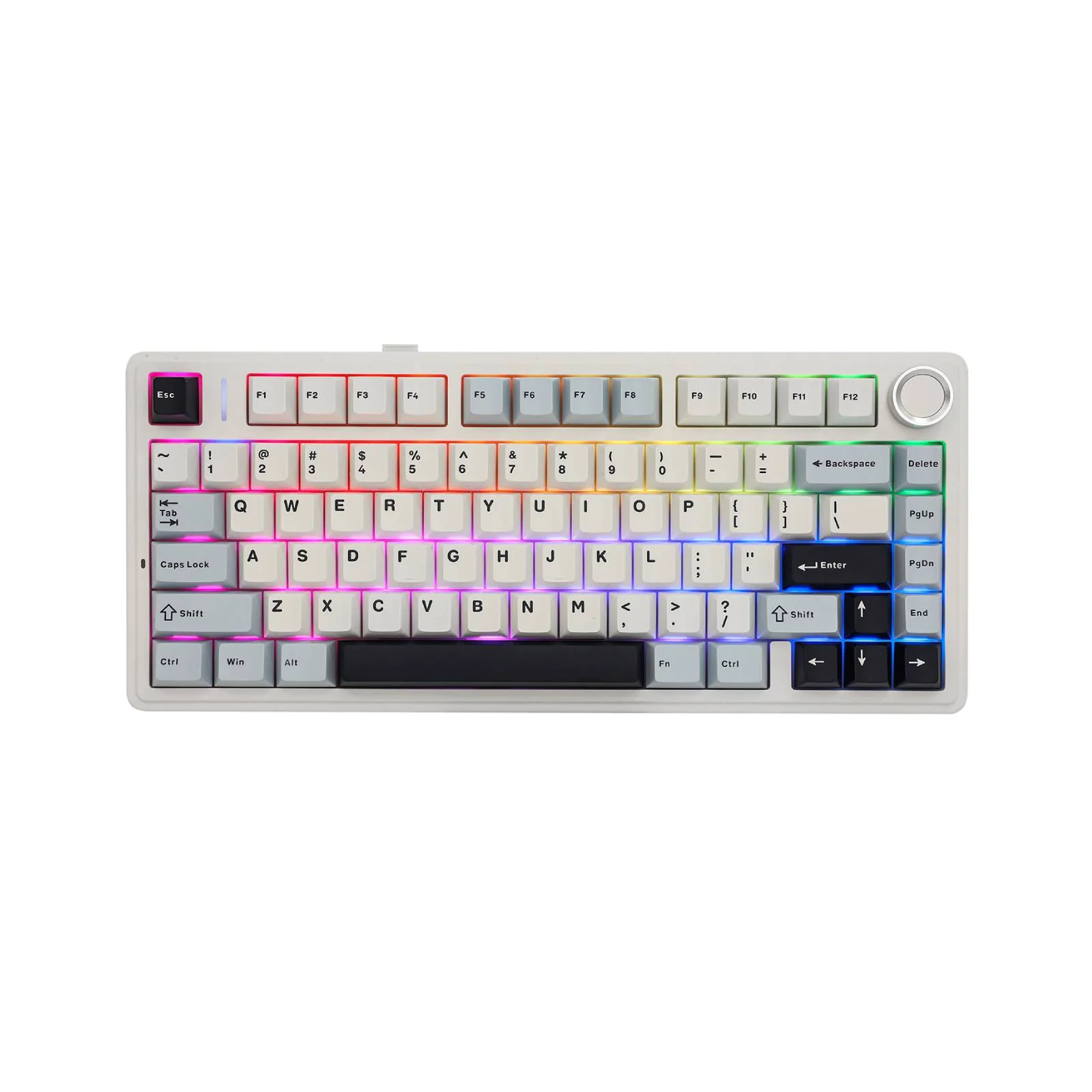
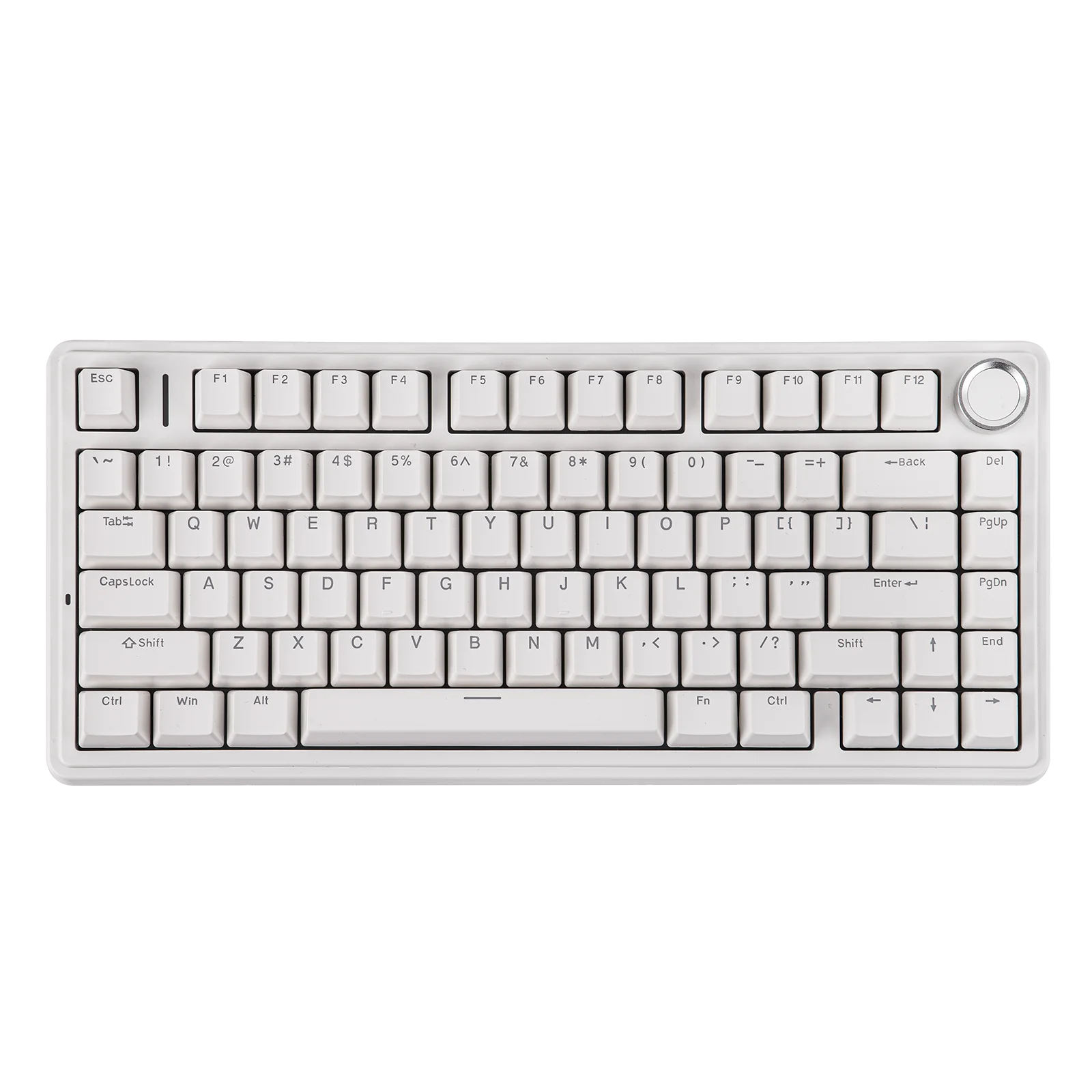
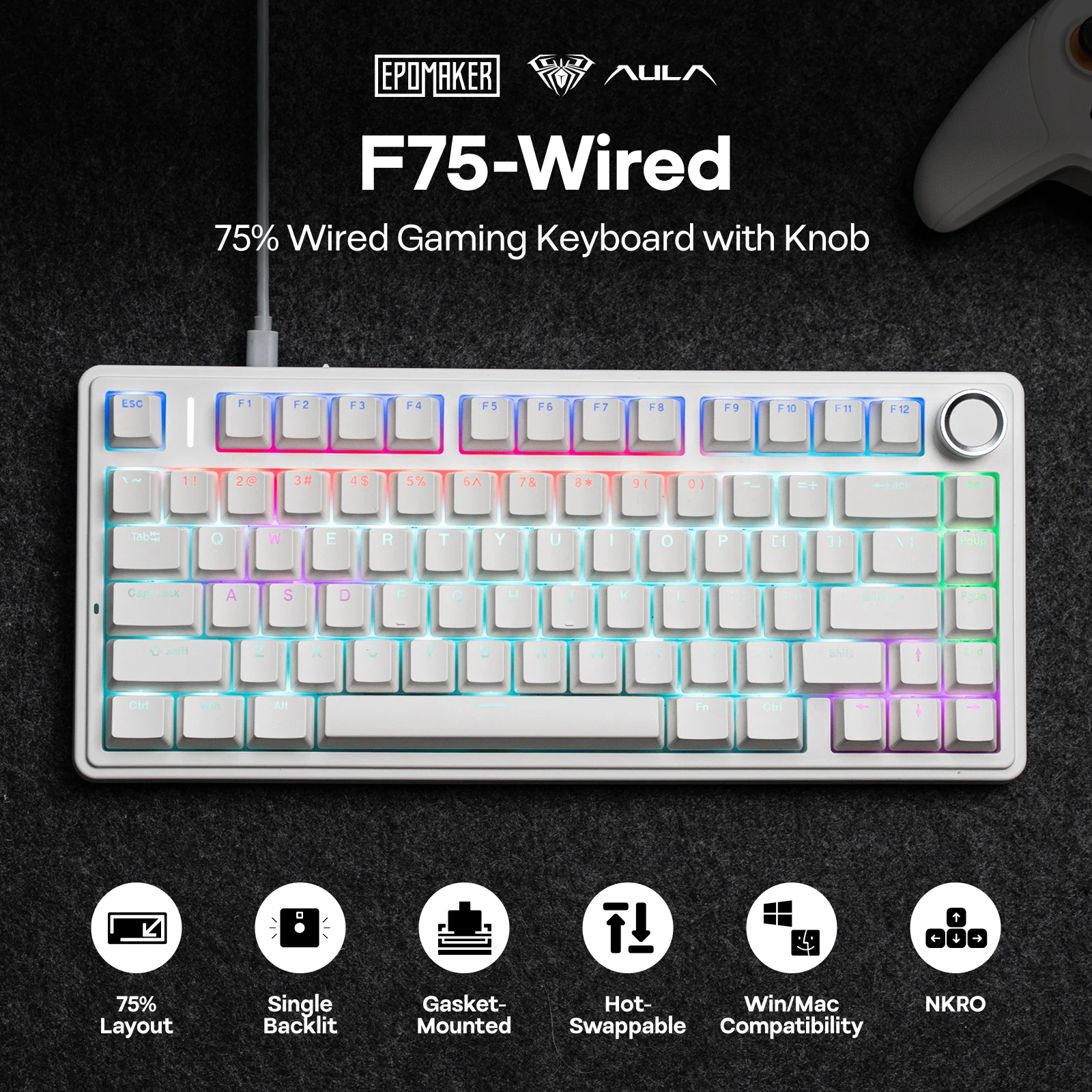
EPOMAKER F75
By EPOMAKER · Mechanical Keyboards · Home & Workspace
- 75% layout with 80 keys
- Tri-mode connectivity: Bluetooth 5.0, 2.4 GHz wireless and wired USB-C
- 4000 mAh rechargeable battery
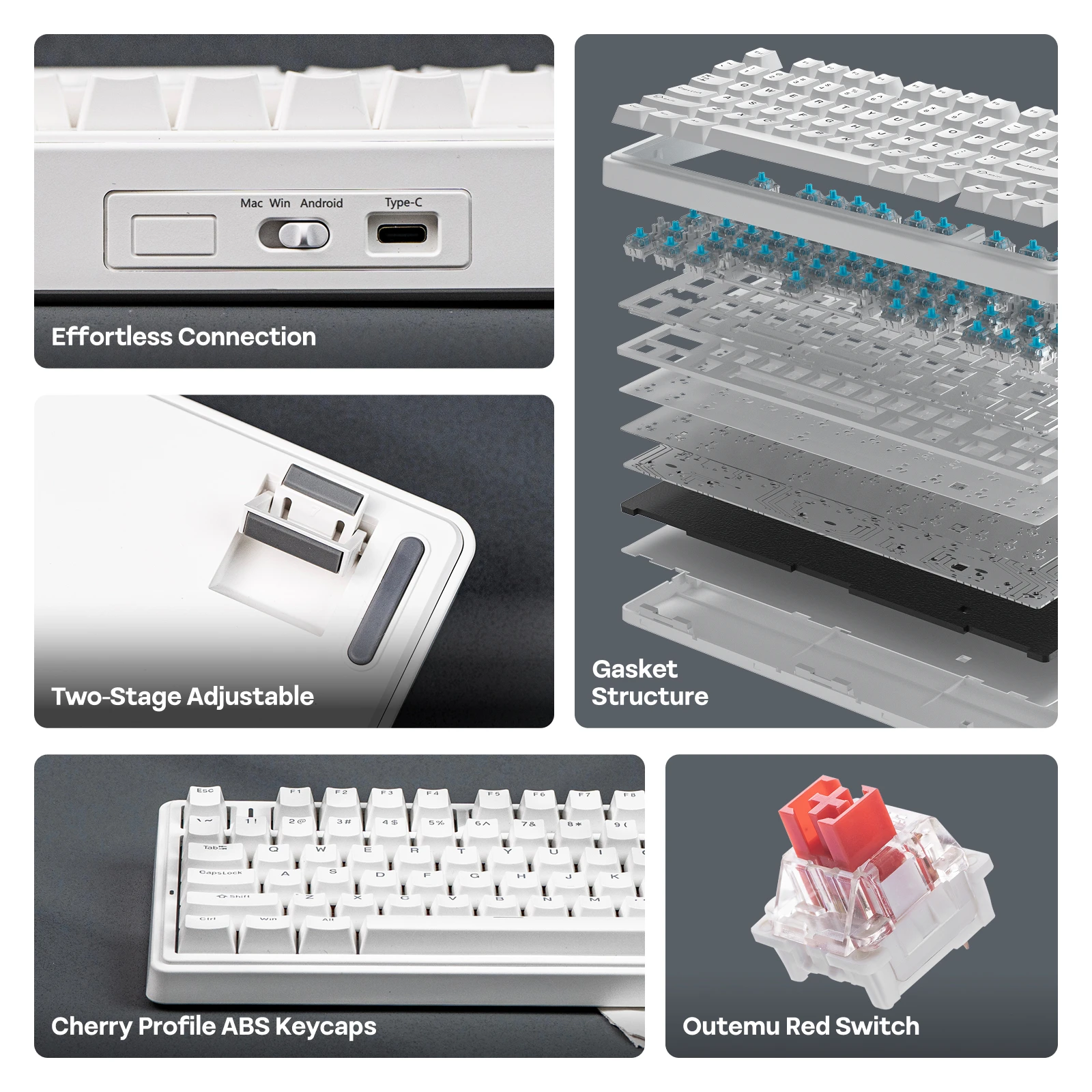
- Five-layer gasket-mounted damping (two PORON, IXPE, PET and silicone)
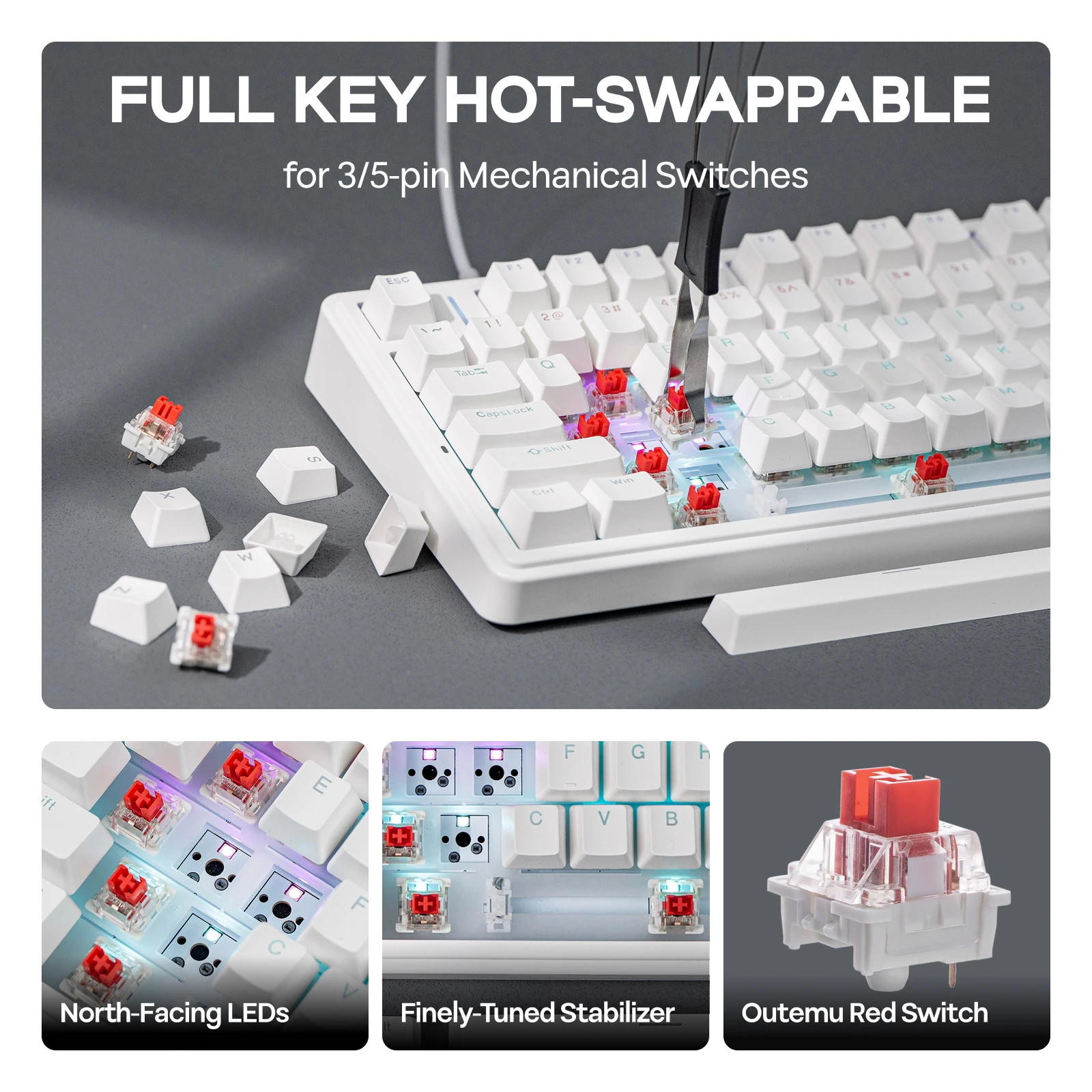
- Hot-swappable sockets compatible with 3-pin and 5-pin switches
Lowest price seen
$28.00
from $28.00 at epomakerhq.shop · Checked Oct 8, 2026
- epomakerhq.shop $28.00View at epomakerhq.shop
- epomakerofficial.shop $28.00View at epomakerofficial.shop
- AliExpress EPOMAKER Store $44.84View at AliExpress
- EPOMAKERView at EPOMAKER
- Best BuyView at Best Buy
- eBay (used) eBay: used, open-box, refurbishedView at eBay (used)
- eBayView at eBay
- WalmartView at Walmart
- Micro CenterView at Micro Center
- AmazonView at Amazon
Prices are snapshots. Check the current price with the store.
Summary
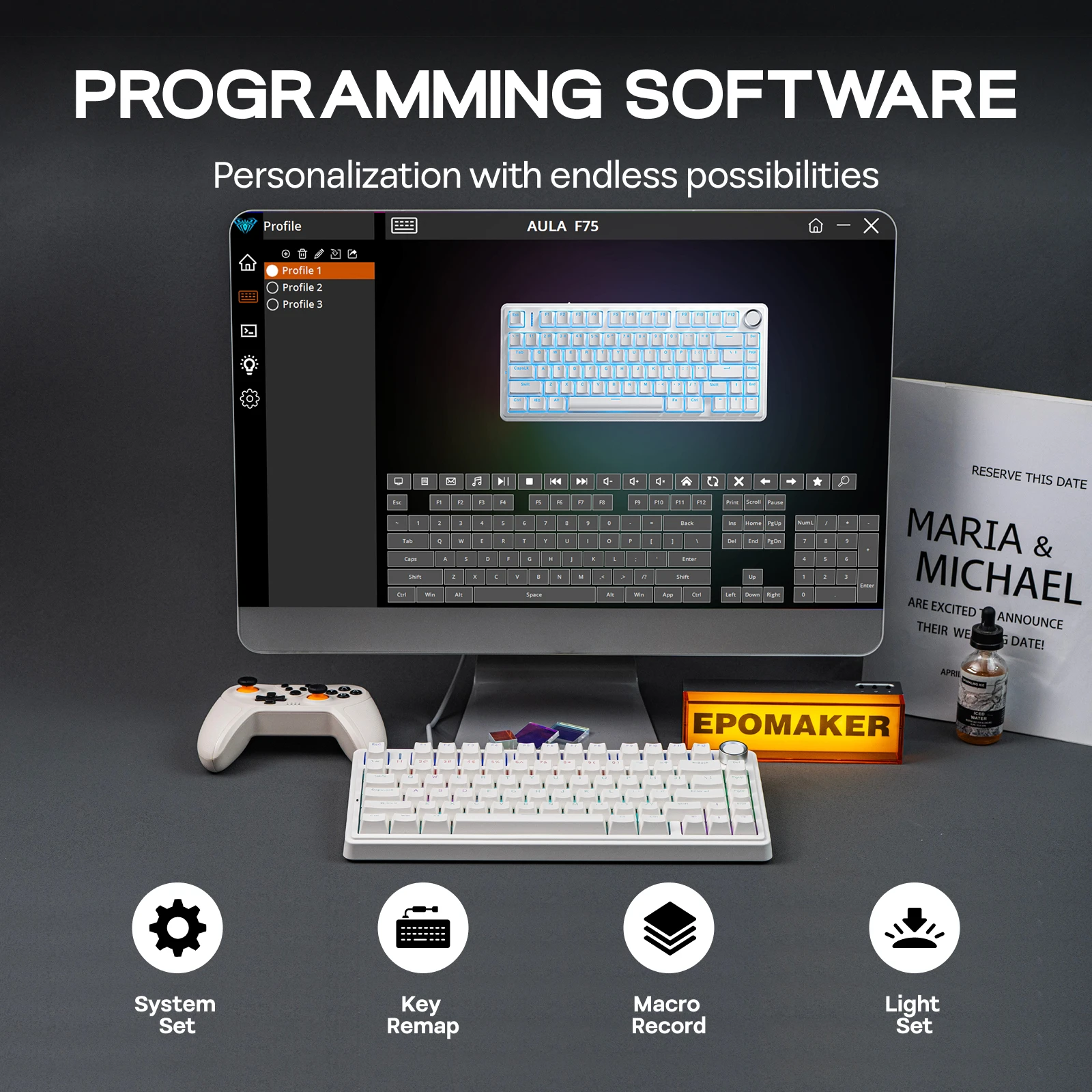
A 75% wireless mechanical keyboard that pairs a gasket mount and a five-layer foam stack with factory-lubed switches and hot-swap sockets. Check the software before you buy: it is Windows-only, needs a wired connection to run, and has no QMK or VIA support.
Strengths
- A gasket mount and five layers of foam give a soft, slightly bouncy feel and a deep, “thocky” sound.
- Factory-lubed switches (Leobog Reaper, TTC Crescent or Leobog Ice Vein) are smooth out of the box.
- Double-shot Cherry-profile PBT keycaps resist shine and wear better than ABS.
- Tri-mode connectivity works reliably across Bluetooth, 2.4 GHz and wired.
- Hot-swap sockets take 3-pin and 5-pin switches with no soldering.
- A 4000 mAh battery and a practical multimedia knob round it out.
Weaknesses
- The software is Windows-only, has no QMK or VIA support, and needs a wired connection to detect the keyboard.
- F1-F12 keys are hardware-locked and cannot be remapped even in the vendor software.
- Quality control is uneven: some units ship with rattly stabilizers, key chatter or double-registration.
- The 2.4 GHz dongle is factory-locked, so a lost dongle means falling back to Bluetooth or wired.
- The plastic case is solid but does not feel as premium as aluminum alternatives.
- A small number of owners report the keyboard failing completely within one to six months.
Verified specifications
| Model | EPOMAKER x AULA F75. |
|---|---|
| Layout | 75%, 80 keys, ANSI. |
| Connectivity | Bluetooth 5.0, 2.4 GHz wireless over a USB dongle, and wired USB-C. |
| Battery | 4000 mAh rechargeable lithium. |
| Battery life | about 17.5 hours with the default lighting effect, up to 266.5 hours with the lights off. |
| Polling rate | 1000 Hz over wired and 2.4 GHz, 125 Hz over Bluetooth. |
| Switches | hot-swappable 3-pin and 5-pin sockets. |
| Keycaps | Cherry profile, double-shot PBT. |
| Mount | gasket mount. |
| PCB | 1.2 mm single-key slotted. |
| Dampening | five layers (two PORON sheets, an IXPE switch pad, a PET pad, a bottom silicone pad). |
| Total travel | 4.0 mm. |
| RGB | per-key, 16.8 million colors. |
| Multimedia knob | volume and brightness control. |
| Stabilizers | plate-mounted, factory-lubed. |
| Anti-ghosting | N-key rollover. |
| Charging | DC 5 V / 700 mA over Type-C. |
| Dimensions | 322.7 × 143.2 × 43.1 mm. |
| Weight | about 1023 g with the cable and receiver, about 975 g without; LTT Labs measured 966 g. |
| Case | plastic (ABS) with a polycarbonate, flex-cut plate. |
| Incline angles | 5.5°, 7.5° and 11° on a two-stage kickstand. |
| In the box | keyboard, 2.4G dongle, USB-C cable, 2-in-1 keycap and switch puller, user manual and two extra switches. |
| Warranty | one year. |
Full research notes and sources
Typing feel and sound
Independent reviewers and owners agree on the core appeal: the gasket-mounted plate and five layers of damping give a soft, slightly bouncy keystroke, and the board sounds deep rather than hollow. IGN called it “absolutely fantastic for the price”, Tech4Gamers scored it 8.7/10, and LTT Labs summed it up as a “Budget Banger”. The factory-lubed Leobog Reaper switches drew particular praise from Tom’s Hardware, which measured 107 wpm at 99% accuracy on MonkeyType. The double-shot PBT keycaps stay smooth and resist shine.
Software and customization
This is where the F75 gives ground. The driver is Windows-only, and it will not detect the keyboard over Bluetooth or 2.4 GHz, so any remapping means plugging in. There is no QMK or VIA support, which rules out the layers, tap-dance and complex macros enthusiast boards offer, and the F1-F12 row is locked in hardware. Settings sometimes fail to persist and the interface is less polished than mainstream gaming software. On macOS the keyboard types, but per-key RGB and the vendor software are unavailable.
The “leaf-spring gasket” label on the marketing page does not survive a teardown: IGN found a standard gasket mount with silicone tabs and no leaf-spring mechanism. The mount still works well; the name is just marketing. Disassembly is also harder than on many rivals, which matters if you plan to mod.
Battery and wireless
The manual claims about 17.5 hours with the default lighting effect and up to 266.5 hours with the lights off, but RGB load changes that a lot: one owner reported only about 8 hours of continuous use with the backlight on. The battery indicator has been known to show odd values on some units. Wireless generally holds up across 2.4 GHz and Bluetooth, though some owners report occasional lag or dropped inputs on 2.4 GHz, sometimes blamed on USB 3.0 interference near the dongle.
Build, quality control and upkeep
The case is plastic, and while it feels solid, it does not match an aluminum board at a higher price. Quality control is inconsistent: the most common reports are rattly stabilizers, key chatter and the odd double-registration, and a small number of owners describe a keyboard that failed within one to six months. One source estimates a 3-4% critical failure rate, but that is not from a controlled study, so treat it as a rough signal rather than a number.
Upkeep is light. Hot-swap sockets mean a dead switch is a solder-free swap, and the standard Cherry-profile caps take aftermarket sets. The internal battery is not advertised as user-serviceable and there is no US spare-parts catalog. The 2.4 GHz dongle is paired at the factory and cannot be replaced with a generic one.
Is it worth it?
At $70 or less the F75 is an easy call: the gasket mount, five-layer foam, factory-lubed switches, PBT caps, tri-mode wireless and hot-swap sockets undercut tray-mount boards with none of them. From $71 to $85 it is still strong, competing on feel with boards that cost $100 to $150. From $86 to $100 value turns fair, and above $100 it fades, because Keychron’s V1 Max and NuPhy’s Halo75 V2 bring QMK or VIA and aluminum cases for a modest premium.
EPOMAKER’s official store lists the F75 at $79.99, and street pricing generally sits between $65 and $80. Tom’s Hardware bought the F75 Pro variant for $65, and the F75 MAX with its TFT screen runs higher, around $93 to $150.
Which model this is
This review covers the EPOMAKER x AULA F75, an 80-key ANSI 75% board. Do not confuse it with the standard AULA F75, which uses ABS keycaps and fewer foam layers, or with the F75 Pro, F75 MAX and F75 Ultra. The US listing carries ASIN B0CNT61VMZ.
Sources
Manufacturer:
- EPOMAKER x AULA F75 product page
- EPOMAKER F75 gasket mechanical keyboard user guide
- EPOMAKER F75 wireless mechanical keyboard user manual
- EPOMAKER x AULA F75 Newegg listing
Independent reviews:
- Laptop Mag review
- IGN review
- Tech4Gamers review
- Prime Audio review
- LTT Labs test results
- RTINGS AULA F99/F75 review
- Crafting Worlds review
- Churape’s Dungeon review
- MechanicalKeyboard.net review
- Vivid Repairs review
- YourTechReviews
- Tom’s Hardware
- LevelUpBlogs review
- AULA F75 software troubleshooting
- Techxreviews
- Keeb-finder comparison
Owner reports:
- No standalone owner threads were collected for this pass; owner experiences above come from the review sources cited here.