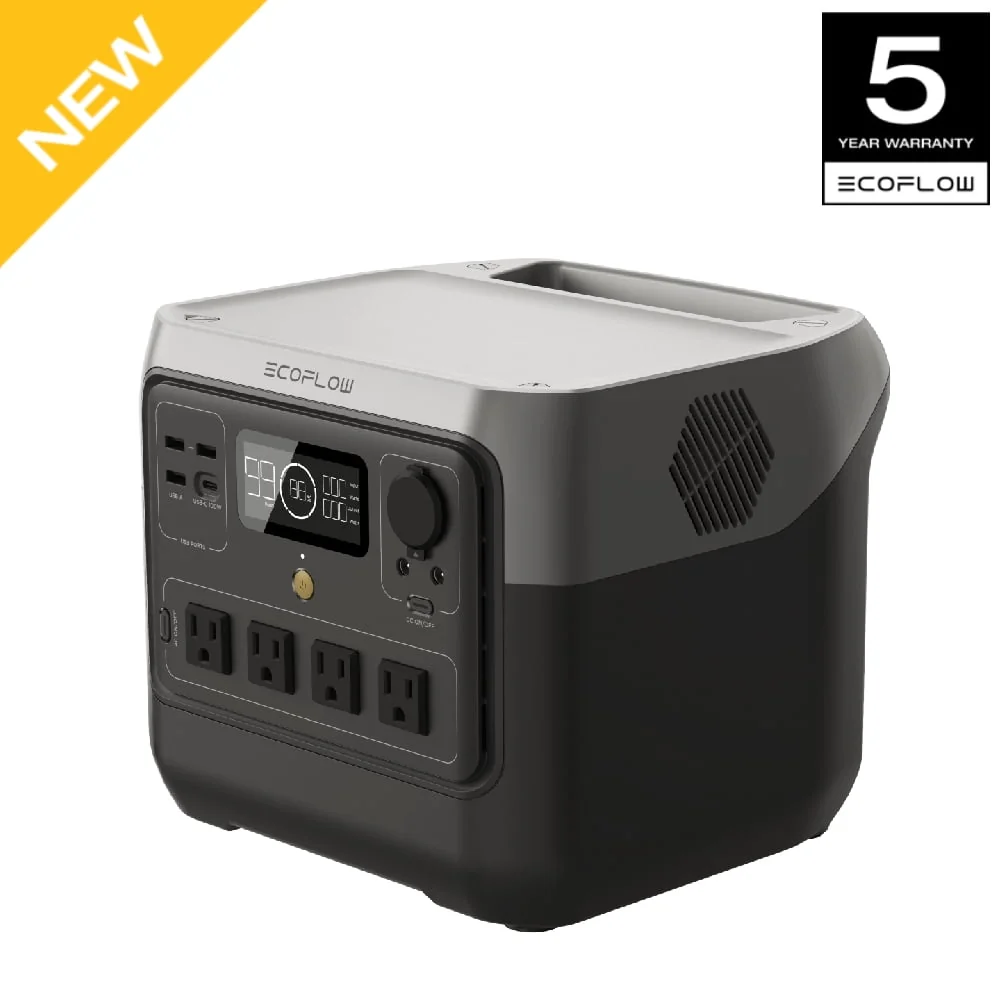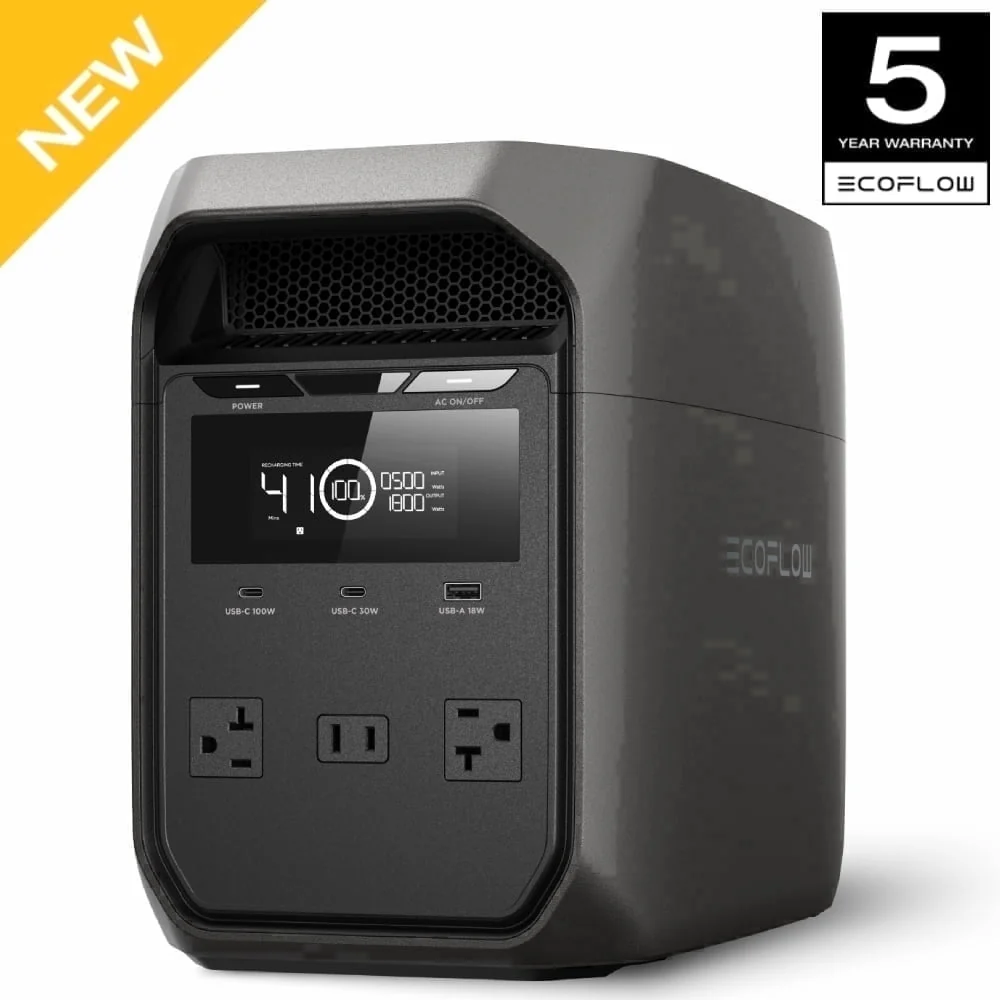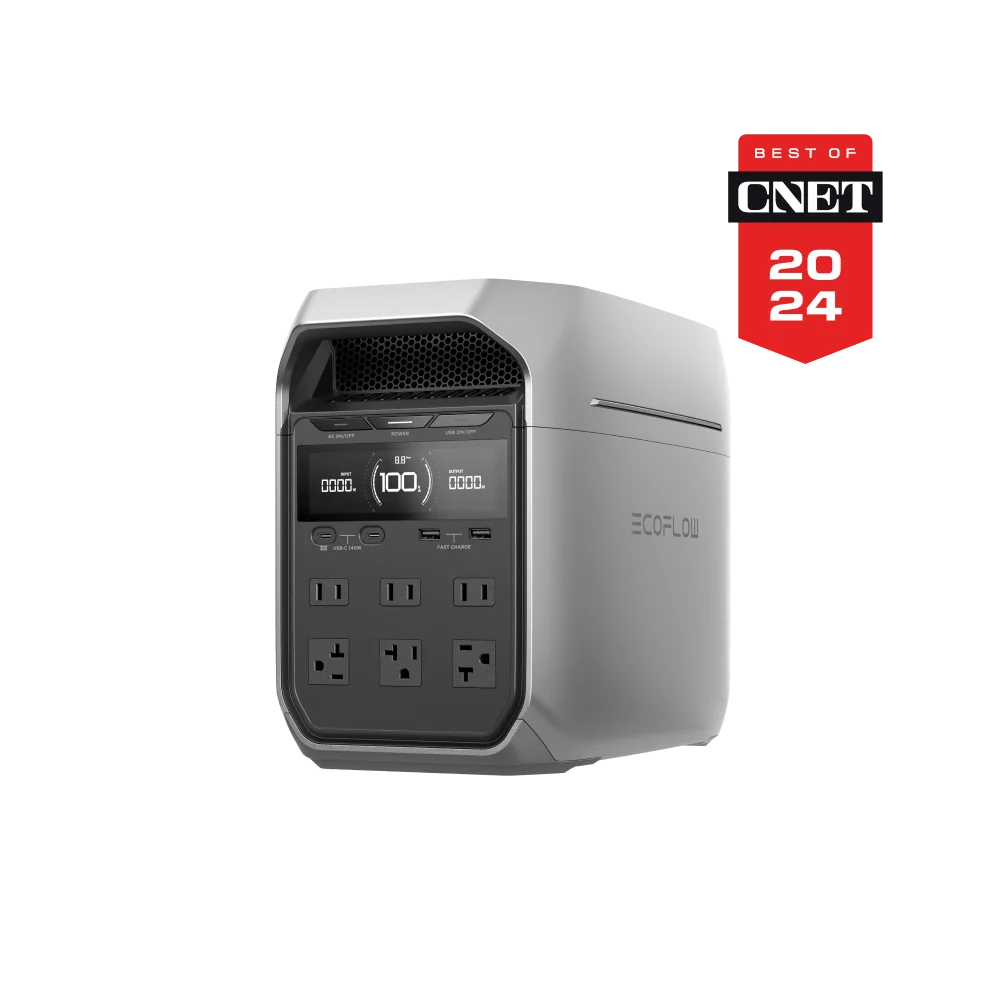
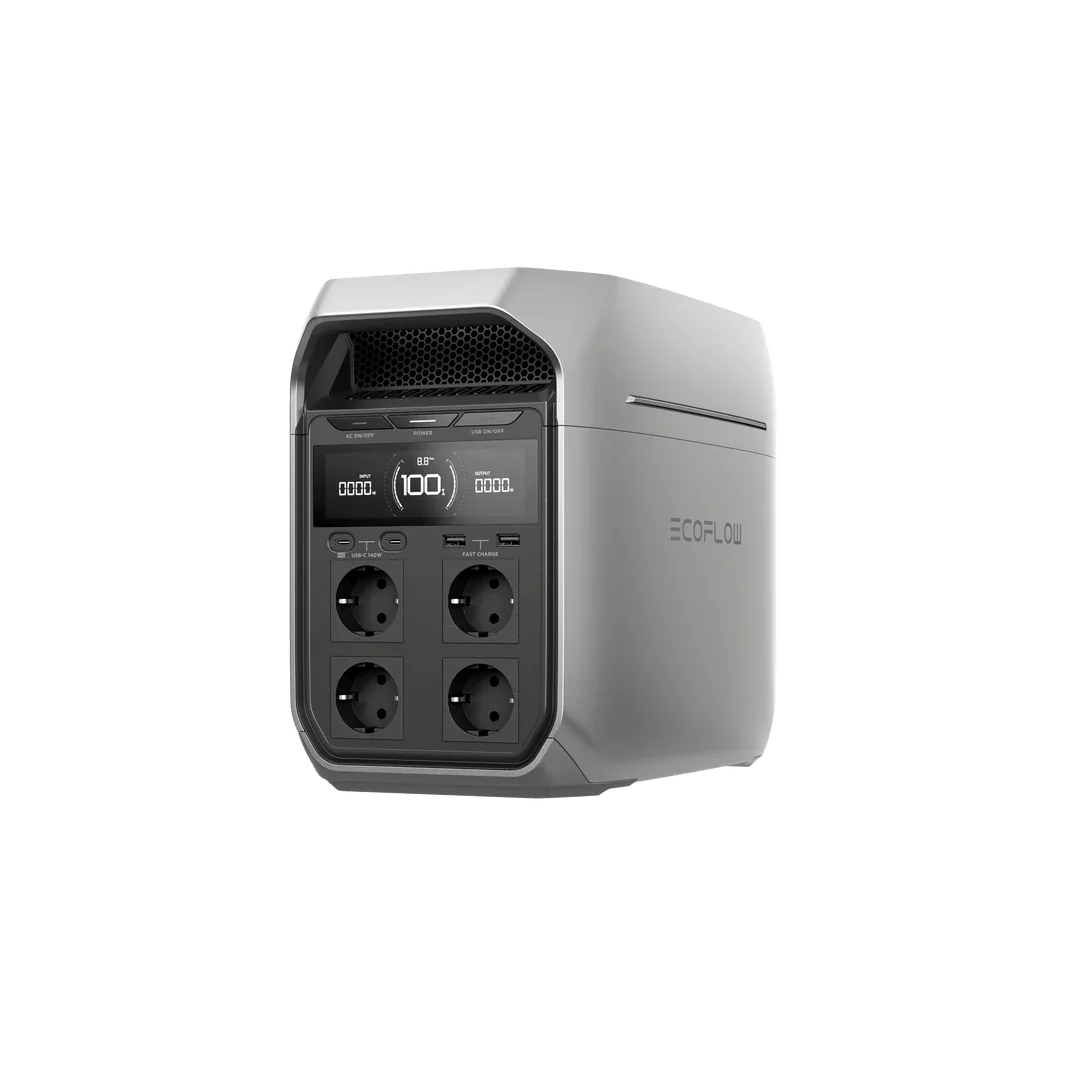
EcoFlow DELTA 3 Plus
By EcoFlow · Portable Power Stations · Audio & Electronics
- 1,024Wh capacity, expandable to 2/3/5kWh with add-on batteries
- 1,800W continuous output (3,600W surge)
- Dual 500W MPPT solar inputs
- X-Stream fast-charging technology
Lowest price seen
$669.00
from $669.00 at EcoFlow (D2C) · Checked Sep 28, 2026
- EcoFlow (D2C) $669.00View at EcoFlow (D2C)
- eBay $799.00View at eBay
- Costco (1P)View at Costco (1P)
- Best BuyView at Best Buy
- eBay (used) eBay: used, open-box, refurbishedView at eBay (used)
- AmazonView at Amazon
Prices are snapshots. Check the current price with the store.
Summary
A 1,024 Wh LFP portable power station with 1,800 W continuous AC output, fast wall charging, dual 500 W solar inputs and a five-year warranty. Check the UPS behaviour before you buy: owners report the battery draining during pass-through operation and firmware updates that cut AC output.
Strengths
- Charging is the clearest advantage: 1,500 W AC charging plus dual 500 W solar MPPT inputs.
- The 1,000 W solar ceiling is high for a 1 kWh station, and the platform accepts a 1,024 Wh extra battery.
- Two 140 W USB-C ports cover modern laptops, cameras and power banks without using the AC inverter.
- The DIY Life ran two 3D printers through a grid loss without either stopping.
- LFP chemistry with a 4,000-cycle rating backed by a five-year warranty.
- The app exposes charge limits, schedules and grid-bypass behaviour.
Weaknesses
- UPS and pass-through behaviour is inconsistent: owners report battery drift in bypass, unconditioned generator voltage and firmware updates that shut off AC output.
- The sub-10 ms figure is a switchover rating; one owner oscilloscope test measured up to about 14 ms when the unit was fully charged in bypass.
- At 27.6 lb it is portable but not light.
- Full-load testing measured about 48 dB very close to the unit, and fast charging audibly raises fan activity.
- Only 1,024 Wh is built in, so a fridge, heater or power tools drain it quickly.
- X-Boost reduces voltage to run higher-rated resistive loads; it does not raise the inverter’s real output.
Verified specifications
| Exact model | US hardware model EF-DL-H10-4, retail model EFDELTA3P-US. |
|---|---|
| Battery | 1,024 Wh, 51.2 V 20 Ah LiFePO4/LFP, rated for 4,000 cycles to 80% capacity. |
| AC output | pure sine wave, 1,800 W continuous and 3,600 W surge, across six AC outlets. |
| X-Boost | device support up to 2,200 W, separate from the 1,800 W continuous rating. |
| USB-C | two ports up to 140 W each, 280 W total. |
| USB-A | two fast-charge ports, 36 W each, 72 W total. |
| 12 V output | one car socket at 12.6 V/10 A and two DC5521 ports at 12.6 V/3 A, 126 W total. |
| Total output ports | |
| AC charging input | up to 1,500 W; the manufacturer claims 0-100% in 56 minutes under its test conditions. |
| Solar input | two XT60 MPPT channels, each 11-60 V/15 A/500 W, 1,000 W total. |
| UPS | advertised transfer time under 10 ms. |
| Connectivity | Wi-Fi and Bluetooth through the EcoFlow app. |
| Operating temperature | optimal 68-86°F; charging 32-113°F; discharging 14-113°F. |
| Dimensions | about 398 × 202 × 283.6 mm (15.7 × 8.0 × 11.2 in); about 12.5 kg (27.6 lb). |
| Warranty | five years. |
Full research notes and sources
Charging and solar
EcoFlow claims a 0-100% AC charge in 56 minutes under its test conditions, and The DIY Life finished a full charge in 68 minutes in a roughly 29°C / 84°F workshop. Two XT60 solar inputs each accept 11-60 V at up to 500 W for 1,000 W total, and EcoFlow claims a full solar charge in about 70 minutes at that input. The 12 V car socket accepts 8 A; higher-power vehicle charging needs the optional 800 W alternator charger.
UPS and pass-through backup
The station advertises a transfer time under 10 ms, and independent testing kept computers and 3D printers running through a normal grid loss. Owner experience is more mixed. A March 2025 owner reported that a generator’s voltage sag passed straight through to connected loads before the output shut off, and an April 2025 owner using the unit as refrigerator backup found the state of charge falling during AC pass-through. In February 2026 owners reported that a firmware update cuts AC output, and in August 2026 an owner with two units described AC input turning off and the batteries draining until a manual reset. If the station backs up sensitive gear, put a conventional line-interactive UPS between it and the load, and test the exact setup by pulling grid power before trusting it unattended.
Heat, noise and upkeep
The manual quotes below 30 dB under 600 W and below 40 dB under 1,200 W, without a measurement distance; The DIY Life measured about 48 dB within 10 cm at a full 1,800 W load. The Solar Lab recorded one sample reaching roughly 138°F internally during a sustained 1,573 W load, with about 82% efficiency at that load, and the same unit still reached about 126°F after cooling and retesting. That is one review sample, not a model-wide defect rate. Keep ventilation clearance, avoid sustained high-power use in hot enclosed spaces and clean the vents as the manual instructs. There are no scheduled consumables, and the internal battery, inverter, fans and MPPT controllers are not published as user-replaceable modules.
Running costs and parts
There are no filters, fuel or subscriptions. One nominal full charge a week stores about 53.25 kWh a year, about $9.75 at the July 2026 US residential average of 18.31 cents/kWh; a full charge every day stores about 373.8 kWh a year, about $68.44. Wall consumption is higher because charging and inversion are not lossless. Optional capacity is the main cost: the 1,024 Wh DELTA 3 Series Smart Extra Battery is $409 direct, and the 800 W Alternator Charger is $269 direct. The XT150 output cable for the alternator charger runs $89 for 1 m or $99 for 2 m.
Is it worth it?
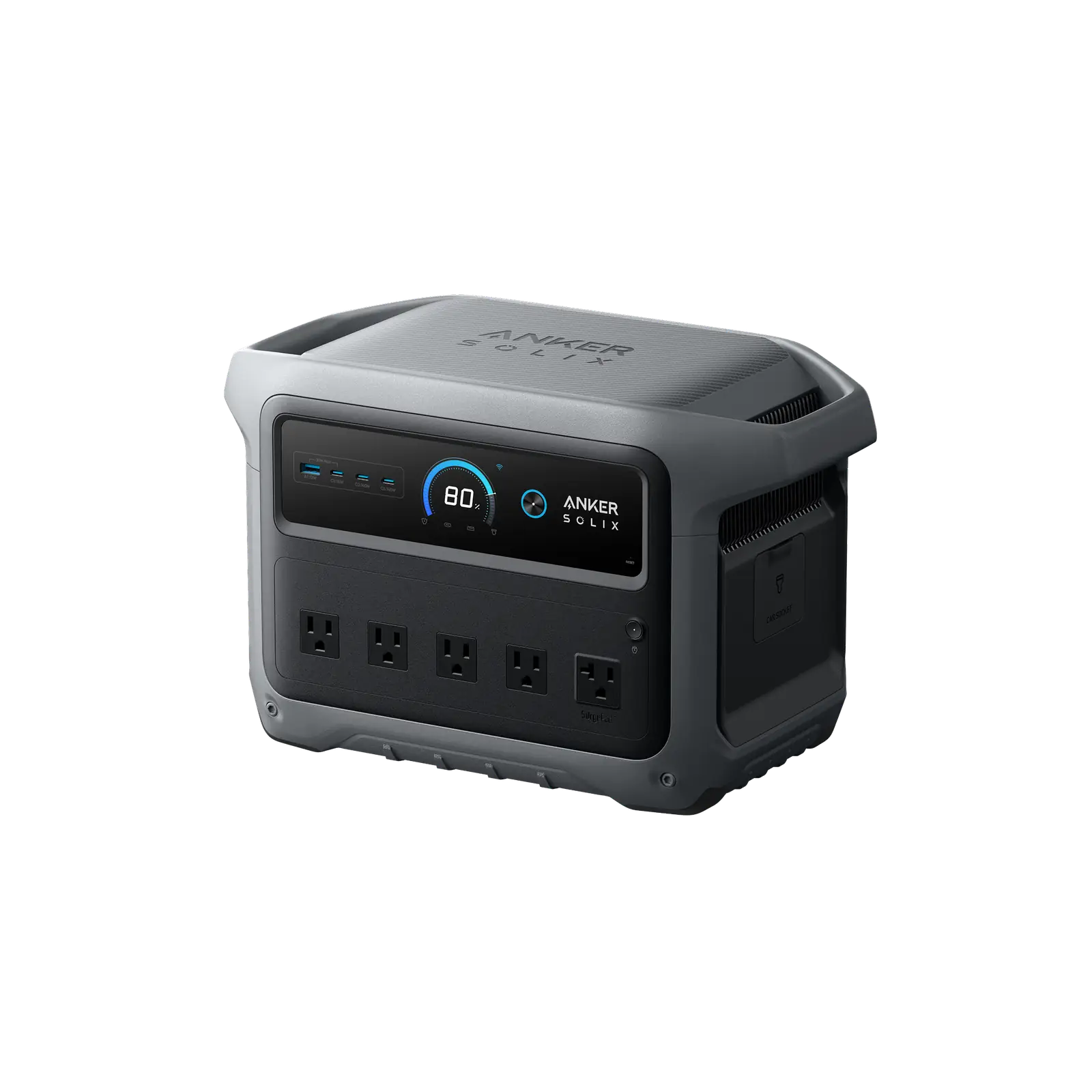
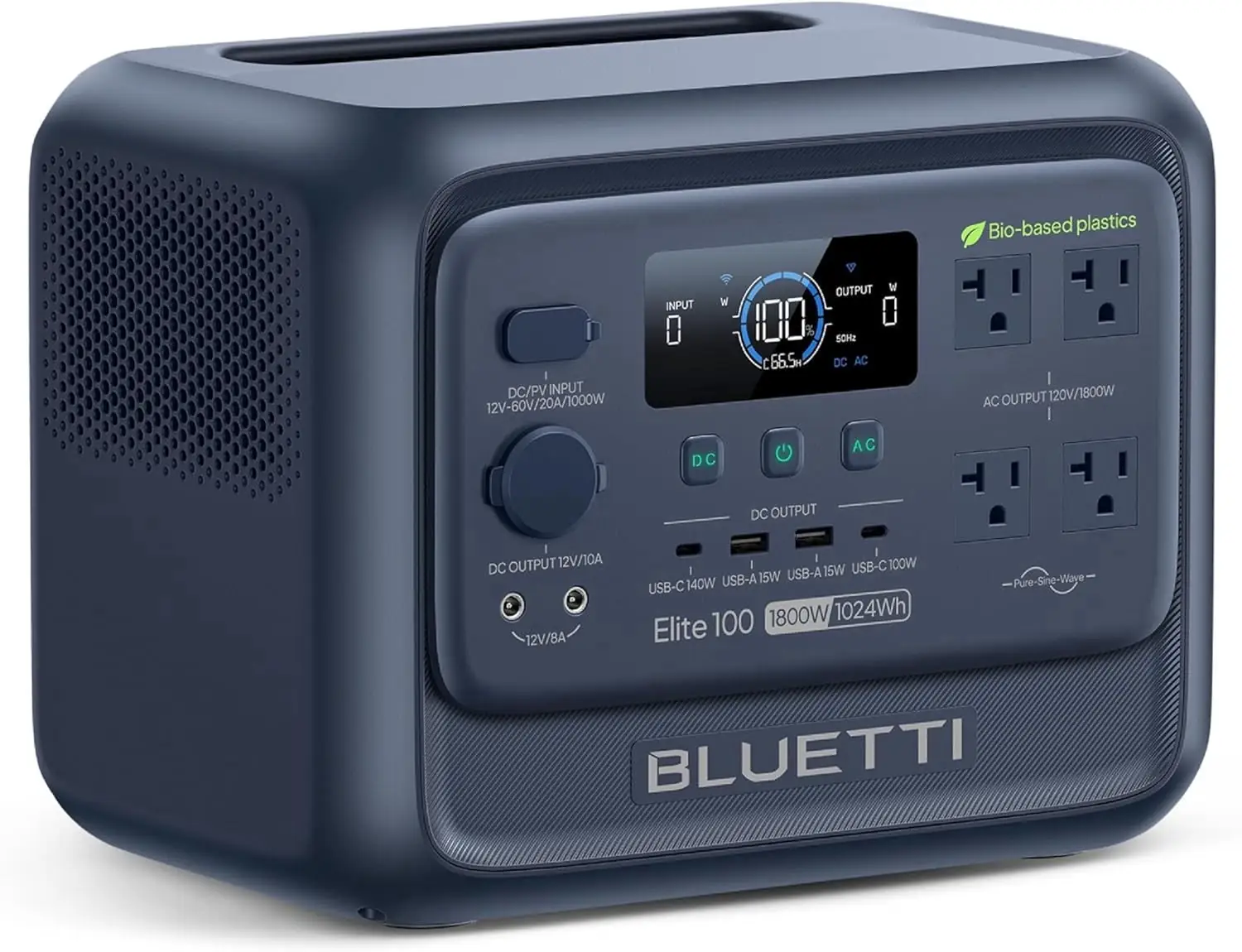
At $450 or less it is an excellent buy. It stays a very good buy at $451-$500 and a good buy up to about $550. Above $650, skip it unless you specifically want EcoFlow’s dual-MPPT and extra-battery ecosystem. EcoFlow direct lists it at $719, down from $799, and Home Depot shows about $719; Costco has shown it around $549.99, with warehouse prices reported near $499.99. The 1,024 Wh Anker SOLIX C1000 Gen 2 is $529.99 direct and the BLUETTI Elite 100 V2 is about $489, so the EcoFlow makes sense when its solar input and expansion path matter more than price.
Which model this is
This page covers the DELTA 3 Plus, US hardware model EF-DL-H10-4 and retail model EFDELTA3P-US, in the DELTA 3 family. Do not confuse it with the DELTA 3 Classic, DELTA 3 Max or older DELTA 2 units, which are different stations with their own specifications. EcoFlow sells it directly in multiple bundles and changes promotional pricing, so check the configuration of a bundle rather than assuming which accessories are included.
Sources
Manufacturer:
- EcoFlow DELTA 3 Plus user manual (PDF)
- EcoFlow US: DELTA 3 Plus product specifications
- EcoFlow US: DELTA 3 Series overview
- EcoFlow US: DELTA 3 Series Smart Extra Battery
- EcoFlow US: 800 W Alternator Charger
- EcoFlow US: warranty policy
Independent reviews:
- TechRadar review
- TechRadar: Best portable power stations of 2026
- The DIY Life hands-on test
- The Solar Lab review and high-load thermal test
- Tips Liam three-week hands-on test
Owner reports:
- Pass-through battery drain report (r/Ecoflow_community)
- Generator and UPS failure report (r/Ecoflow_community)
- Oscilloscope measurement of UPS transfer time (r/Ecoflow_community)
- Firmware update interrupts AC pass-through (r/Ecoflow_community)
- August 2026 product issues megathread (r/Ecoflow_community)
Parts and stores: