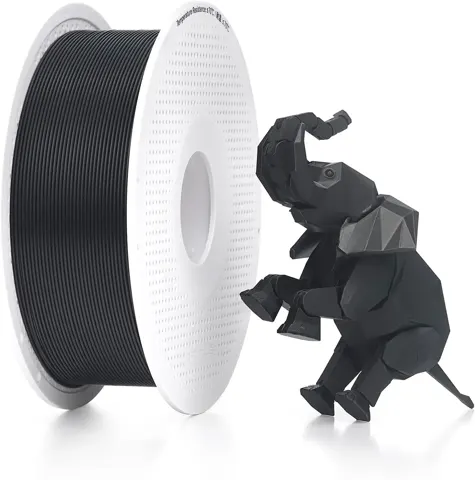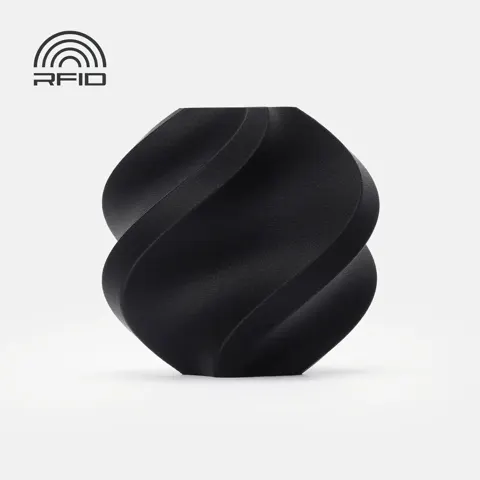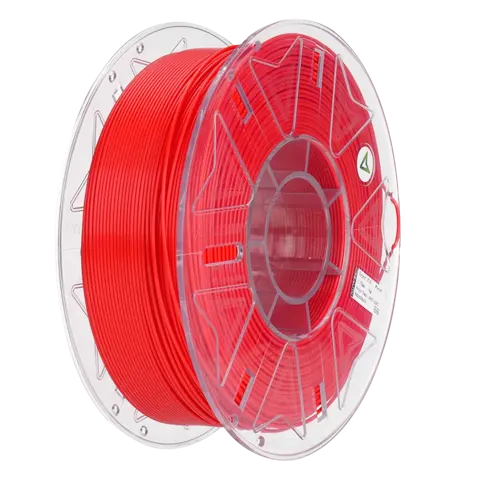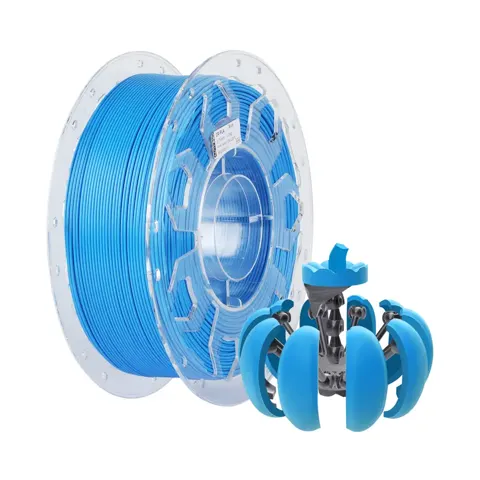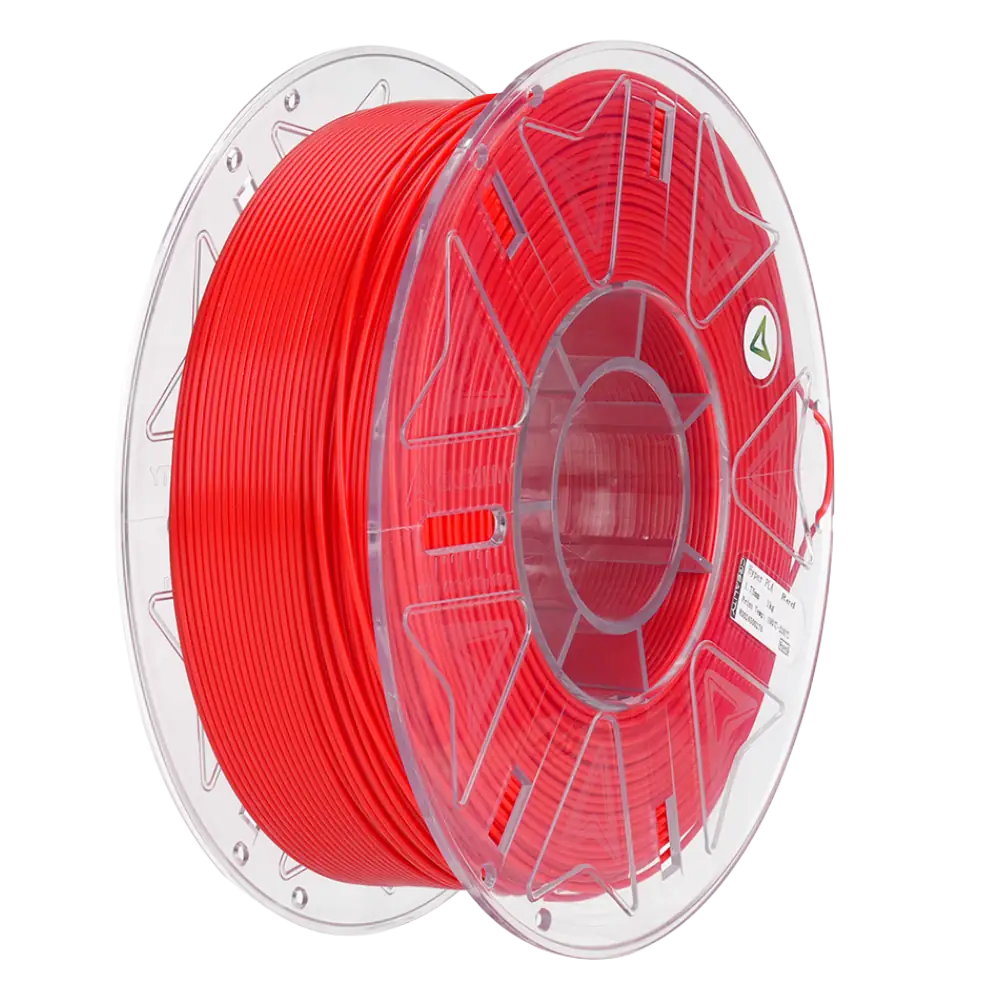
Creality Hyper RFID PLA
By Creality · Filament & Resin · 3D Printing · More from Creality
- 1.75mm filament diameter
- 1 kg spool
- 30-600mm/s print speed
- RFID auto-recognition via CFS
Price not listed
- CrealityView at Creality
- eBayView at eBay
- AmazonView at Amazon (paid link)
- eBay (used) eBay: used, open-box, refurbishedView at eBay (used)
Stores are listed in a fixed order, never by price or commission. Prices are snapshots. Check the current price with the store.
Summary
A 1.75 mm PLA filament sold in 1 kg spools with an RFID tag that a compatible Creality Filament System reads to load material settings automatically. Suited to owners of a compatible CFS and a fast printer running recurring PLA jobs; without a CFS the RFID premium buys nothing, and the spool still needs drying like any PLA.
Strengths
- RFID recognition removes slot-management mistakes in multi-spool CFS setups.
- High-flow formulation gives headroom above ordinary PLA on fast printers.
- Some owners report good results on generic high-speed profiles, including 10 kg purchases.
- Clean winding and fast-print capability cited in review coverage.
- 15 color choices including Viva Magenta, Peach Fuzz and Very Peri.
- Works as standard 1.75 mm PLA on non-CFS printers.
Weaknesses
- No independent instrumented test of this exact spool was found.
- Clogging reported on an Ender 5-Max after about an hour at 220 °C / 55 °C bed.
- Grey batches printed poorly on a K1 Max while white stayed fine.
- Filament can arrive wet in cardboard spools, with humidity spikes to about 62 % in a dryer.
- 30–600 mm/s is a capability claim, not a guarantee; real speed is set by flow and cooling.
- RFID requires compatible CFS hardware and firmware; otherwise it buys nothing.
Verified specifications
| Product | Hyper PLA RFID 3D Printing Filament, 1.75 mm diameter, 1 kg spool. |
|---|---|
| Diameter tolerance | ±0.03 mm (manufacturer claim, two-way laser process). |
| Claimed print speed | 30–600 mm/s. |
| Nozzle temperature | 190–230 °C (one aggregator lists 190–220 °C). |
| Bed temperature | 25–60 °C. |
| Retraction distance | 1–5 mm. |
| RFID | parameters embedded in the tag, readable through a compatible CFS. |
| Glass transition temperature | 62 °C (DSC). |
| Vicat softening temperature | 61.8–62.8 °C ±0.5. |
| Density | 1.14–1.34 g/cm³ (SpoolScout data sheet); 1.25 g/cm³ in other sources. |
| Melt flow rate | 3–5 g/10 min. |
| Tensile strength (X-Y) | 43.357 MPa (other sources cite ~52–53 MPa). |
| Tensile modulus (X-Y) | 1885.947 MPa; (Z): 1678.2 MPa. |
| Elongation at break (X-Y) | 12.358 %. |
| Tensile strength (Z) | 27.949 MPa. |
| Bending strength (X-Y) | 75.858 MPa (other sources cite ~92 MPa). |
| Bending modulus | 2881.747 MPa. |
| Charpy impact strength (X-Y) | 17.586 kJ/m². |
| Spool | 1 kg net, 1.29 kg gross; packing 210 × 210 × 70 mm; 12 spools per carton. |
| Colors | 15 (Black, Blue, White, Red, Gold, Purple, Viva Magenta, Peach Fuzz, Very Peri, Skin, Brown, Grey, Orange, Green, Yellow). |
| Warranty | “Up to 12-Month Warranty” store badge; no filament-specific terms found. |
Full research notes and sources
Print speed and what it really means
The 30–600 mm/s range is a material capability claim, not a promise. Actual speed is set by volumetric flow (speed × line width × layer height), hotend capacity, acceleration, cooling and geometry, and many features run far below 600 mm/s. A slow or flow-limited printer gains little from the high-speed formulation.
RFID and the CFS
The tag stores material parameters that a compatible Creality Filament System reads to identify the spool and load settings. That removes label checking and material-assignment mistakes in multi-spool setups. On any printer without a CFS, the spool behaves as ordinary 1.75 mm PLA and the RFID premium buys nothing. The tag identifies material and parameters; it does not measure filament condition such as moisture.
Moisture, batches and print quality
Owner reports are mixed. Some users run it well on generic high-speed profiles, including one owner’s 10 kg purchase, and a blue boat printed at 500 mm/s with minor stringing. Others report clogging on the Ender 5-Max, batch-to-batch grey-quality variation on the K1 Max, and wet filament arriving in cardboard spools. Moisture is the most recurring practical issue: dry the spool and store it sealed before blaming the profile. Store the spool sealed with effective desiccant; a dry box maintains condition but may not remove absorbed moisture quickly, and cardboard spools can carry extra water.
Is it worth it?
Value depends on the setup. With a compatible CFS and a fast printer running recurring black or colored PLA jobs, RFID removes setup friction and the high-flow formulation gives headroom. Without a CFS, or on a flow-limited printer, a lower-cost mainstream PLA may match results at moderate speeds. Batch consistency and moisture variability argue against stocking up heavily before qualifying a batch. PLA is still PLA: choose PETG, ASA or nylon when heat, UV, chemicals or sustained load drive the requirement. Creality’s US store listed it at $21.00 with a $31.90 compare-at price, with tiered discounts ($17.85 each for five, $16.80 for ten, $15.75 for twenty) at the time of the check (2026-10-25); the VIP Mall page listed $31.90 at the same check. Prices are dynamic and vary by color, seller, pack size and promotions.
Which model this is
This page covers Creality Hyper PLA RFID, a 1.75 mm PLA filament in 1 kg spools with an embedded RFID tag for the Creality Filament System. Listings combine color, pack size, RFID and non-RFID variants under one page; verify the selected variation (color, pack, RFID) before purchase. Do not confuse it with non-RFID Creality Hyper PLA, Creality Ender Fast PLA, CR-PLA or other Creality PLA lines, which may share speed claims but lack the RFID tag. The RFID tag is intended for compatible CFS hardware and firmware; other printers treat the spool as standard 1.75 mm PLA.
Sources
Manufacturer:
- Creality Hyper PLA RFID 3D Printing Filament 1kg (Creality Official Store)
- Hyper PLA RFID Filament 1.75mm 1KG (Creality VIP Mall)
- Creality Hyper PLA RFID Data Sheet (SpoolScout)
Independent reviews:
Owner reports:
- Hyper PLA questions (Creality Community Forum)
- Creality Hyper PLA (Bambu Lab Community Forum)
- Fresh Creality hyper PLA wet out of the box (Bambu Lab Community Forum)
- Ender 5-Max and Hyper PLA RFID printing issues (Creality Community Forum)
- Print quality of grey Hyper PLA (Creality Community Forum)
- Hyper PLA poor quality control? (r/Creality)
- Bad quality with Hyper PLA? (r/3Dprinting)
- Creality Hyper PLA Filament (White) Clogging Up (r/Creality)
- Is Creality Hyper PLA any good? (r/BambuLab)
- Is creality PLA any good? (r/3Dprinting)