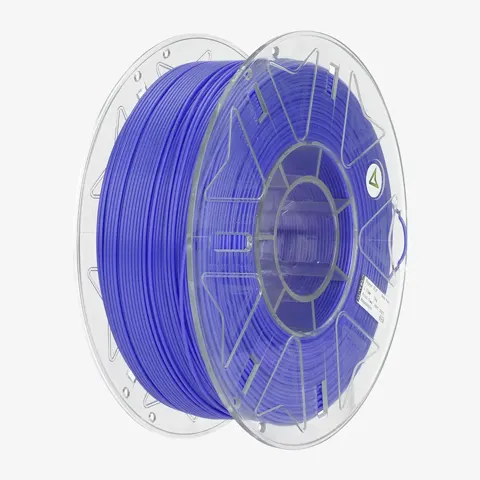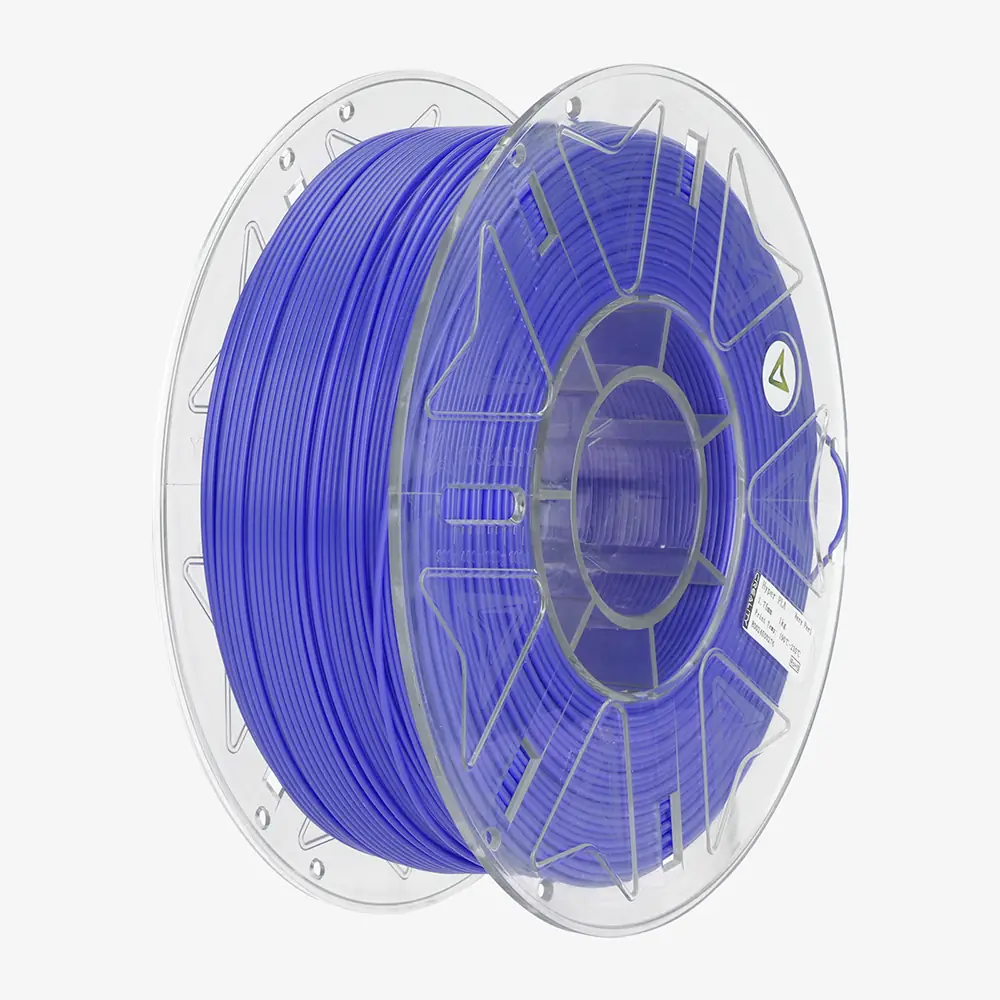
Creality Hyper PLA RFID 3D Printing Filament 1kg - Very Peri
By Creality · Filament & Resin · 3D Printing · More from Creality
- 1 kg spool
- 30-600 mm/s print speed
- 10x faster printing
- RFID auto-recognition for Creality CFS
- Neatly spooled, tangle-free feed
Price not listed
- CrealityView at Creality
- eBayView at eBay
- eBay (used) eBay: used, open-box, refurbishedView at eBay (used)
Stores are listed in a fixed order, never by price or commission. Prices are snapshots. Check the current price with the store.
Summary
A 1 kg high-speed PLA spool for Creality’s CFS ecosystem, sold here in Very Peri, with RFID auto-recognition that sets parameters and tracks usage. Check whether you actually use a CFS: without one, the RFID feature does nothing and the value rests on color availability and reported high-flow performance.
Strengths
- RFID auto-detection removes manual parameter entry and reduces setup errors (owner reports).
- Owners report successful high-flow printing, including 23 mm^3/s and 300 mm/s on a K1 Max.
- “Many many spools of RFID Hyper PLA with no issues at all” (owner report).
- Reported perfect performance over about a year of steady work (owner report).
- RFID Hyper PLA reported to come on plastic spools, avoiding cardboard-spool CFS problems.
- Used in five printers daily, including older Ender machines (owner report).
Weaknesses
- No independent instrumented test of this exact filament was found; speed and strength claims are unverified.
- Extruder clicking and slipping with failed high-flow prints on a K2 SE (owner report).
- Nozzle and extruder clogging on an Ender 5 Max at 220 C, while Ender Fast PLA ran eight hours without clogging in the same machine (owner report).
- CFS retraction problems with cardboard spools and spools with smaller rims (owner report).
- CFS sync glitches, unwanted pre-print filament changes, wrong-reel selection, and RFID recognition glitches (owner reports).
- Print-quality degradation after K2 firmware 1.1.7.0 (owner report).
Verified specifications
| Product line | Hyper PLA RFID. |
|---|---|
| Net weight | 1 kg spool. |
| Color of this variant | Very Peri. |
| Claimed print speed | 30-600 mm/s. |
| Claimed speed improvement | 10x faster (manufacturer claim, not measured). |
| Filament diameter | 1.75 mm per retailer listing titles; not stated on the manufacturer page. |
| RFID | CFS auto-recognizes RFID consumables, optimizes settings, tracks filament and usage. |
| RFID-stored data (owner reports) | material, size, color, date, manufacturer, recommended extrusion temperature. |
| Manufacturer strength claim | “stronger than ABS, tougher than traditional PLA variants” (no test data in sources). |
| Spooling claim | neatly spooled, feeds smoothly without tangling, reducing snags and clogs. |
| Applicability claim | compatible with varied temperatures and speeds, fitting most high-speed 3D printers. |
| Auto-detected nozzle temperature claimed by a third-party wiki: 215 C (vs 200-210 C manual); not published by the manufacturer. | |
| Owner-reported nozzle temperature | 220 C. |
| Warranty | store page shows “Up to 12-Month Warranty” as a general store policy; no filament-specific term found. |
| Diameter tolerance, density, moisture and drying guidance, mechanical test values: not stated on the manufacturer page. | |
| Spool physical dimensions, gross weight, spool material, packaging contents: not stated on the manufacturer page. | |
Full research notes and sources
High-speed claims and the missing data
The 10x faster and 30-600 mm/s figures are manufacturer marketing claims, not independently measured values. No independent instrumented test of this exact filament was found on RTINGS, Wirecutter, Tom’s Guide, CNET, PCMag, or specialist 3D-printing test sites in the sources checked. Owners report successful printing at 23 mm^3/s and 300 mm/s on a K1 Max, plus daily use across five printers including older Ender machines, and about a year of steady work with no issues. The same forum contains the opposite reports, so treat the speed claims as unverified until you confirm your own flow-rate limits.
CFS, RFID and spool handling
The RFID tag lets a CFS unit auto-recognize the spool, apply settings, and track usage. Owners report the tag stores material, size, color, date, manufacturer, and recommended extrusion temperature. Remaining filament length is not stored; the CFS estimates it by counting rewind turns, so reported spool levels can be wrong. Tags are rewritable, and moved or rewritten tags can cause mismatches, including the CFS auto-selecting the wrong reel despite a correct read (green showing as yellow). RFID-tagged Hyper PLA is reported to come on plastic spools, avoiding the cardboard-spool retraction and grip problems seen with some non-RFID Hyper PLA. Buyers not using a CFS gain little from the RFID feature.
Owner-reported problems
Reports cluster around printer, firmware, and spool handling rather than the filament alone. Clogging and extruder slipping show up on some machines, especially at high flow: an Ender 5 Max clogged at 220 C where Ender Fast PLA ran eight hours without clogging in the same machine, and a K2 SE showed extruder clicking and failed high-flow prints traced to extruder and gear behavior. CFS-specific issues include slot-recognition glitches in Creality Print, unwanted pre-print filament changes on older K1 Max units (fixed by firmware update), wrong-reel selection, and print-quality degradation after K2 firmware 1.1.7.0. These reports do not establish a defect rate for the filament.
Creality’s US store showed $21.00 on sale against a $31.90 list price, with tiered pricing of $17.85 at 5 spools, $16.80 at 10 spools, and $15.75 at 20 spools (Creality, 2026-10-28). At single-spool pricing this sits in the mid-range consumer PLA band. The main justifications over generic PLA are CFS auto-recognition, color availability including Very Peri, reported high-flow capability on Creality printers, and plastic spools on the RFID line. Buyers prioritizing verified mechanical properties, diameter tolerance, or color-critical work have no supporting data in the sources checked. There is no subscription or capsule lock-in; cost scales with spool count and color changes.
Which model this is
This page covers the Very Peri color of Creality’s Hyper PLA RFID line, a 1 kg spool sold on the Creality US store. The line ships in at least 16 colors; Very Peri is one of them. Do not confuse it with Hyper Series PLA (non-RFID), Hyper PLA CF, Hyper Rainbow PLA, Hyper PLA RFID Stardust, Luminous, or Lightweight, or spool-free Hyper PLA RFID variants, which are separate store products. RFID auto-recognition requires a CFS unit; the filament can still be printed on non-CFS printers, but auto settings and tracking are not available. The manufacturer page does not document revisions or batch changes, and whether all colors use the same base formulation is not stated.
Sources
Manufacturer:
Independent reviews:
- No independent instrumented test of this exact filament was found in the sources checked.
Owner reports:
- Creality Community Forum - Ender 5-Max and Hyper PLA RFID printing issues
- Creality Community Forum - Hyper PLA is rubbish
- Creality Community Forum - CFS retract problems with cardboard spools
- Creality Community Forum - CFS and Creality Print not syncing spool slot
- Creality Community Forum - CFS pre print unwanted filament change
- Creality Community Forum - K2 bad quality after firmware update 1.1.7.0
- Creality Community Forum - Creality RFID tags are rewritable
- Creality Community Forum - RFID with Creality Print and K2
- Creality Community Forum - System chooses wrong reel
- AliExpress Wiki - Hyper PLA RFID Filament (third-party, AI-generated)
- AliExpress Wiki - Is Creality Hyper PLA RFID Filament any good (third-party, AI-generated)
- Reddit r/BambuLab - Is Creality Hyper PLA any good (search result title only)
- Reddit r/Creality - Hyper PLA poor quality control (search result title only)
Parts and stores:
- No parts or replacement spools listed in the sources.