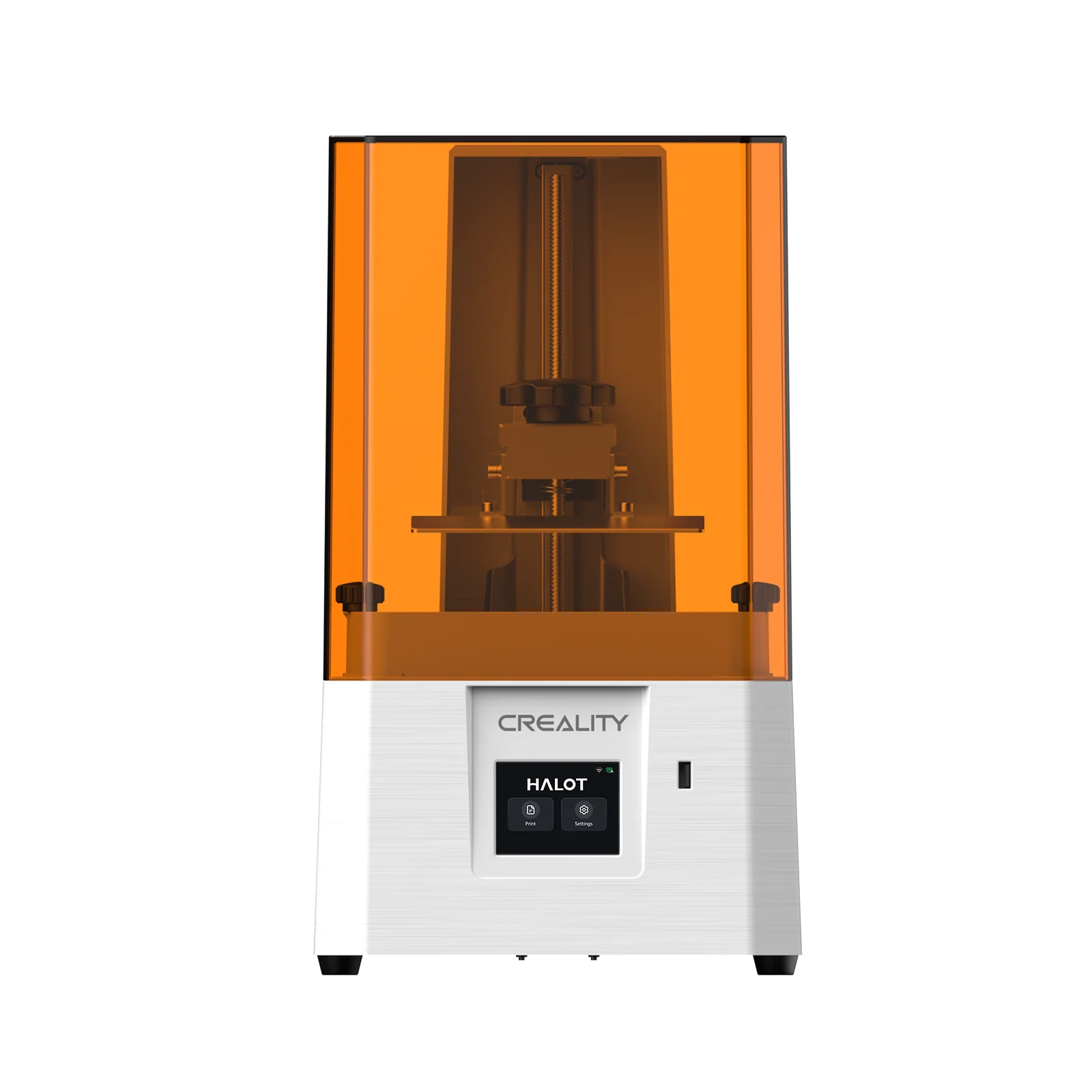
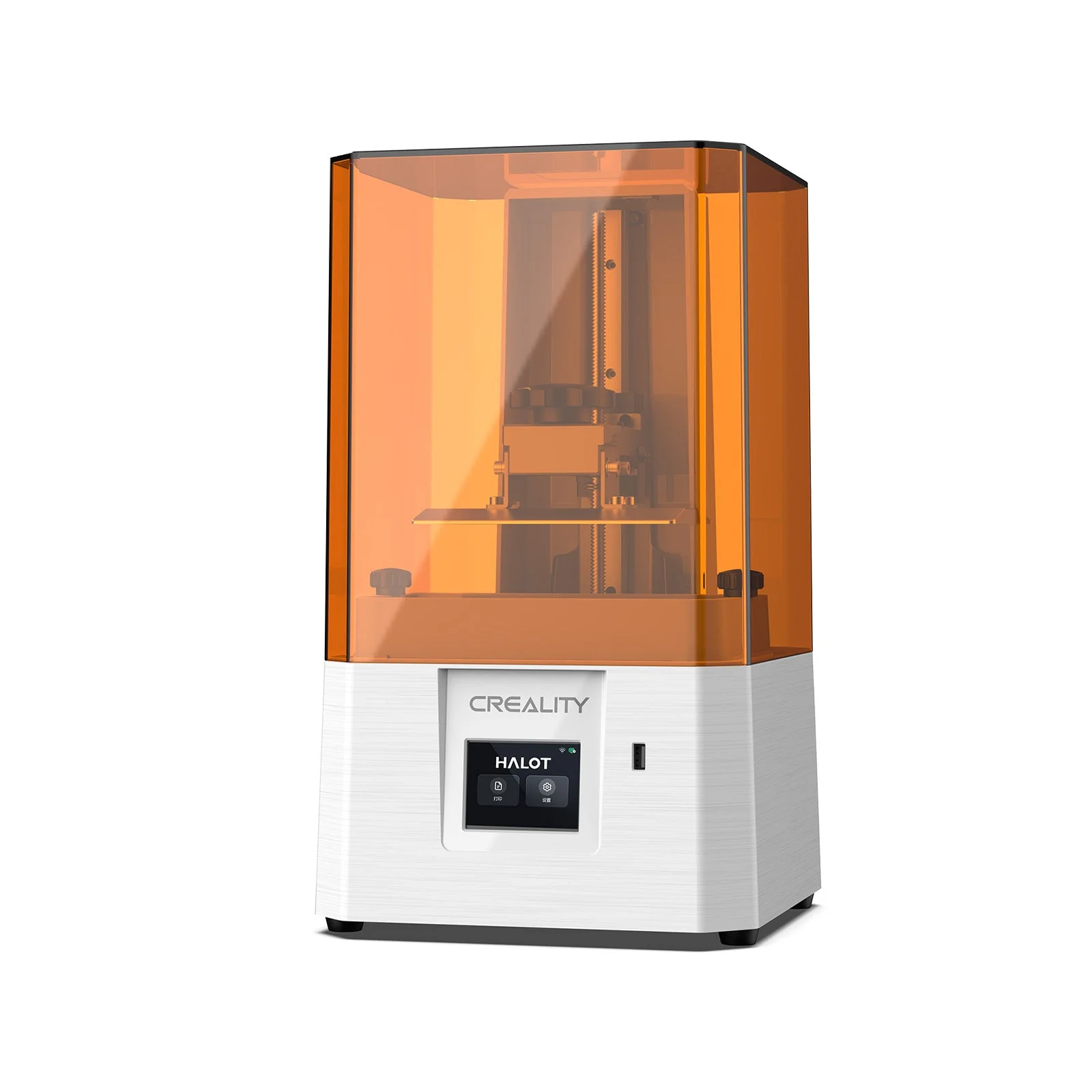
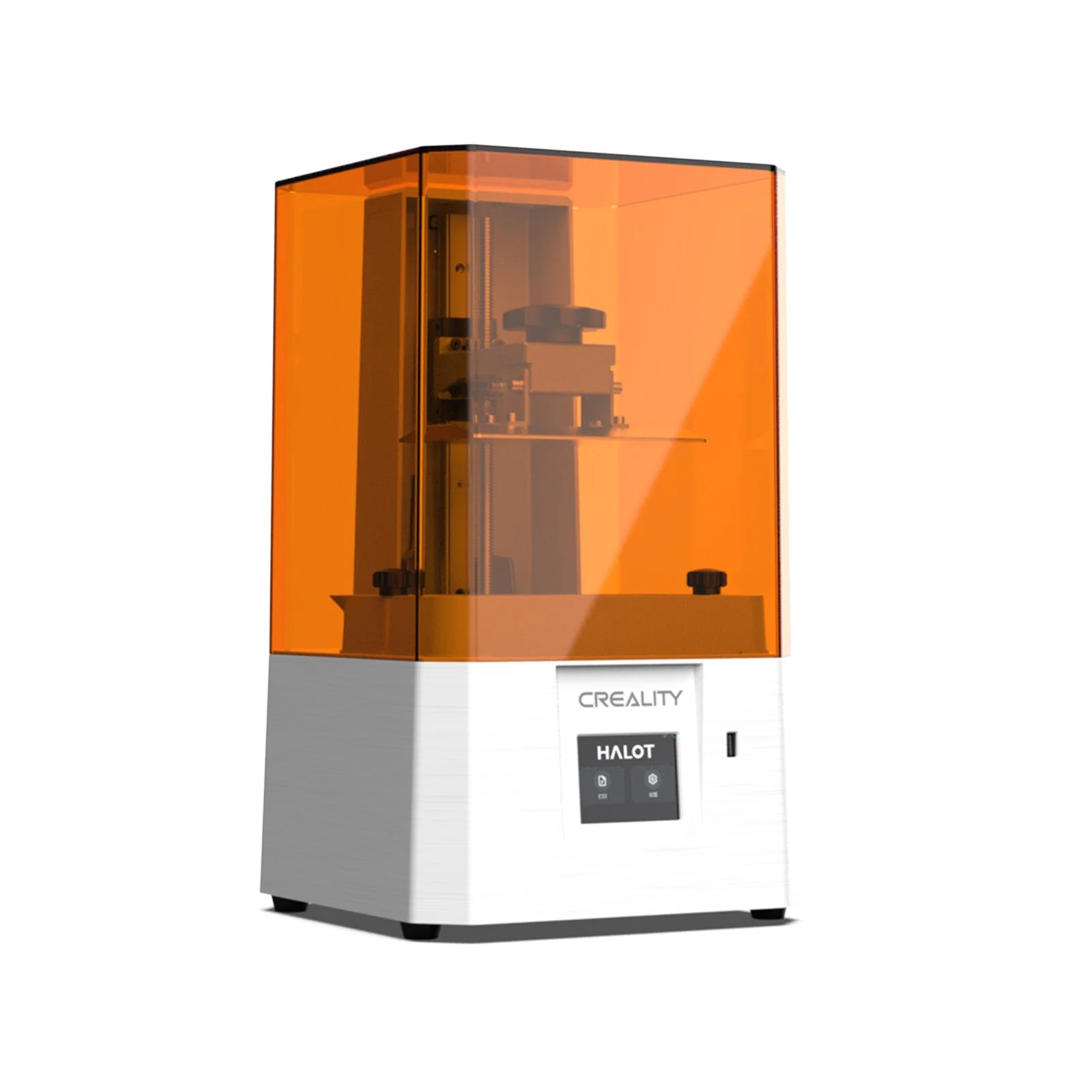
Creality HALOT-X1 Neo Resin 3D Printer
By Creality · 3D Printers · 3D Printing · More from Creality
- 9K LCD 8520 x 4320px
- 18 x 18 um XY resolution
- 0.01-0.2 mm layer thickness
- Max 60 mm/h print speed
- Build volume 153.36 x 77.76 x 160 mm
Price not listed
- CrealityView at Creality
- eBay (used) eBay: used, open-box, refurbishedView at eBay (used)
- eBayView at eBay
- AmazonView at Amazon (paid link)
Stores are listed in a fixed order, never by price or commission. Prices are snapshots. Check the current price with the store.
Summary
Creality’s entry-level 9K mono-LCD resin printer, aimed at beginners and FDM-to-resin switchers, with a narrow 153.36 × 77.76 × 160 mm build volume and factory pre-leveling.
Strengths
- Factory pre-leveling removes the fiddliest part of setup.
- Wi-Fi, USB and CrealityCloud cover printing and file transfer.
- A 65 W draw and 4.38 kg weight make it desk-friendly.
- Creality publishes a full parts list and video repair guides.
- Component lifespan figures are published for planning.
Weaknesses
- Narrow 153.36 × 77.76 mm build area limits part size.
- No quick-release plate, zoned exposure, chamber heating or air purification.
- The 60 mm/h figure is at 0.2 mm layers; finer layers are slower.
- Small 2.8-inch 240 × 320 touchscreen.
- Single lead screw and linear rail instead of the larger X1’s dual Z.
- No independent test of this exact model, and owner evidence is thin.
Verified specifications
| Model | HALOT-X1 Neo. |
|---|---|
| Technology | LCD-based MSLA (monochrome LCD). |
| LCD | 6.8-inch 9K mono panel, 8520 × 4320 px, 18 × 18 µm pixels. |
| Layer thickness | 0.01–0.2 mm. |
| Max print speed | 60 mm/h at 0.2 mm layers (manufacturer claim). |
| Build volume | 153.36 × 77.76 × 160 mm. |
| Light source | 3rd Gen Integral Light Source. |
| Z-axis | one lead screw and one linear rail. |
| Leveling | factory pre-leveled build plate; no user leveling. |
| Touchscreen | 2.8-inch, 240 × 320. |
| Connectivity | USB drive, 2.4 GHz Wi-Fi, CrealityCloud. |
| Slicers | HALOT BOX and CHITUBOX; Lychee support listed as coming soon. |
| Rated power | 65 W (24 V, 2.7 A adapter); input 100–240 V, 50/60 Hz. |
| Bundled software | CHITUBOX Pro membership for 3 months. |
| AI features | FanForge 2D-to-3D generation with 20 free credits; optional Nebula AI camera. |
| Machine size | 235.5 × 230 × 395.5 mm; net weight 4.38 kg. |
| Build platform | aluminum (AL6061), 157 × 58 × 70 mm; resin vat polypropylene, 198.56 × 132.73 × 30.4 mm. |
| Component lifespans | LCD about 3,000 hours, UV lamps about 20,000 hours, release film about 30,000 layers. |
| Warranty | up to 12 months, with a 14-day return window. |
Full research notes and sources
Which model this is
This page covers the Creality HALOT-X1 Neo, the entry model of the HALOT-X1 series, below the HALOT-X1 16K and the HALOT-X1 Max. The US listing is ASIN B0H8NKJZR6.
Do not merge it with the larger HALOT-X1 16K: that machine has a 211.68 × 118.37 × 200 mm build volume, weighs 12.93 kg and draws 350 W, and it is now sold under the PioCreat spin-off brand while the Neo stays under Creality. The larger machine’s reviews and warranty terms do not apply to the Neo.
What it is and what it skips
The Neo packages a 6.8-inch 9K mono LCD at 18 µm pixels, a 153.36 × 77.76 × 160 mm build volume, factory pre-leveling, a 2.8-inch touchscreen, 65 W draw and a 4.38 kg body. It covers Wi-Fi, USB and CrealityCloud, bundles a CHITUBOX Pro membership for 3 months, and adds FanForge 2D-to-3D generation with 20 free credits.
It skips several features of its larger siblings: there is no quick-release build plate, no zoned exposure, no chamber heating and no air purification, and its touchscreen is smaller than the larger X1’s 3.98-inch panel. Lychee Slicer support is “coming soon,” not current. Without chamber heating, Creality’s FAQ recommends printing at 30 °C ambient and warns that low temperatures cause adhesion failure. The Z-axis is a single lead screw with one linear rail, versus dual on the larger X1.
Support, parts and upkeep
Creality publishes a parts list with SKUs and video repair guides for most of the Neo, including the LED screen, resin vat cleaning, leveling, firmware reflashing, the release film, motor, mainboard and touchscreen. It also lists component lifespans: the LCD is rated around 3,000 hours, UV lamps around 20,000 hours and the release film around 30,000 layers. Creality’s FAQ recommends a well-ventilated spot, low-odor resins and cleaning with 95% or higher alcohol. The warranty is up to 12 months with lifetime support, plus a 14-day return window.
Family caution signals
The exact Neo has no complaint clusters yet because it launched in September 2026 and owner discussion is limited to a launch thread. The wider HALOT family gives context, not exact-model rates. r/Creality users complain about the HALOT BOX slicer, particularly the repair tool hanging and poor support generation. r/resinprinting users report a different model, the Halot Mage S, losing bed-leveling accuracy after each print. Users of the larger HALOT-X1 Combo report AFU vibration, noise and resin-handling problems. Tom’s Hardware separately noted the lack of a manual slice option in HALOT BOX.
Is it worth it?
Creality’s US store lists the HALOT-X1 Neo at $239, or $398 with the UW-03 wash and cure machine (Creality direct, 2026-10-16), and the larger HALOT-X1 16K is $599 direct. At $239 the Neo competes with other entry-level 9K and 8K resin printers: it brings factory pre-leveling, 18 µm pixels, Wi-Fi and published parts support, but a narrow build area, no quick-release plate, no zoned exposure, no chamber heating and a small touchscreen. Without third-party testing, the value case rests on the spec sheet and the repair documentation.
Sources
Manufacturer:
- HALOT-X1 Neo product page (Creality)
- HALOT-X1 16K product page (Creality)
- HALOT-X1 Neo store listing (Creality US store)
- HALOT-X1 Neo user guide (Creality Wiki)
- HALOT-X1 Neo parts list (Creality Wiki)
- HALOT-X1 Neo FAQ (Creality Wiki)
- HALOT-X1 Neo user manual (Creality Wiki)
Independent reviews:
Owner reports: