CITYSPORTS Under Desk Treadmill, Walking Pad
By CITYSPORTS · Walking Pads · Health & Lifestyle
- 440W motor
- 1-6 KM/H speed range
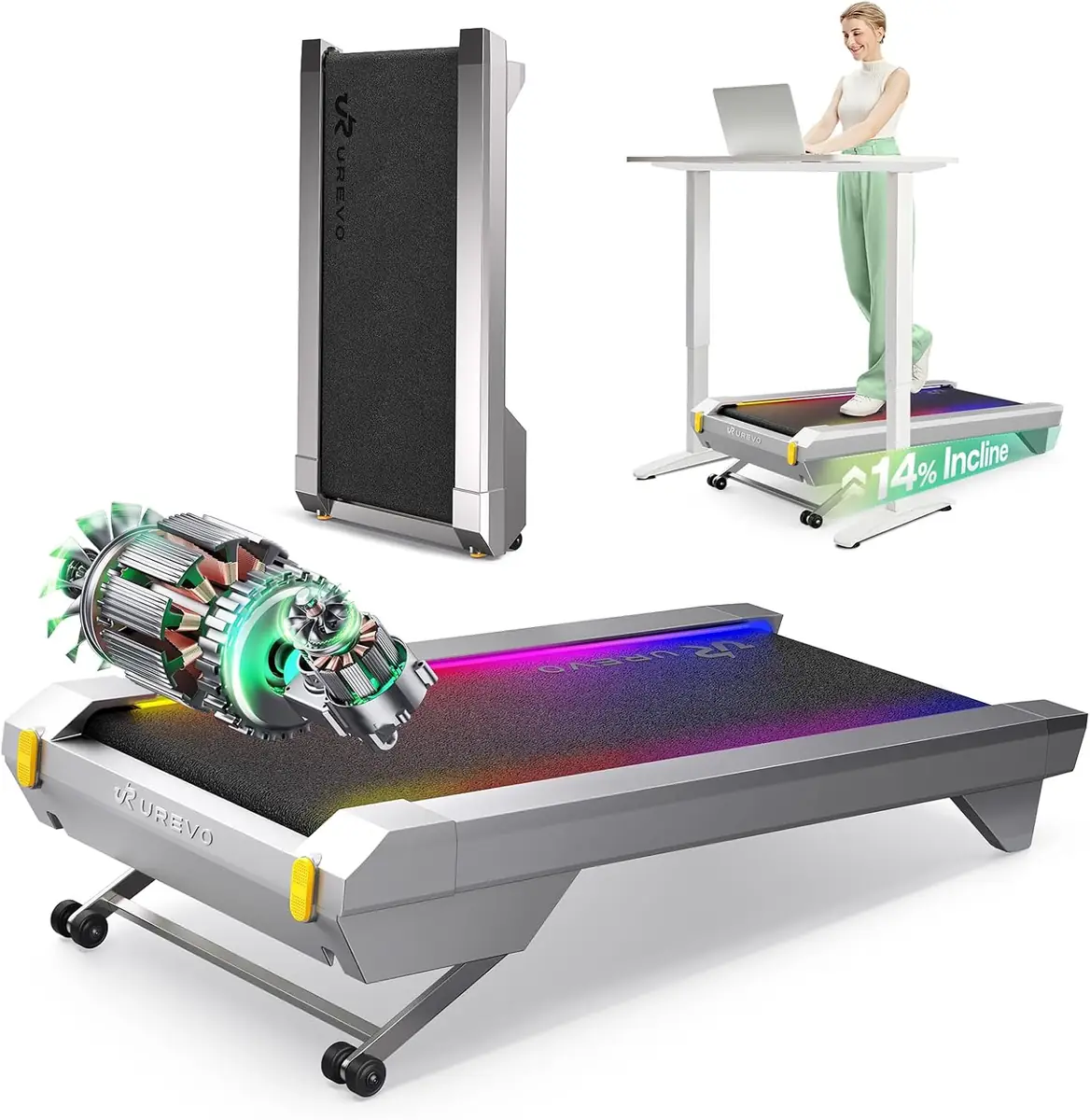
- 3-level manual incline (0%, 11%, 13%, 14%)
- 15.7 kg lightweight design
- LED display and Bluetooth speaker
Price not listed
- CITYSPORTSView at CITYSPORTS
- eBay (used) eBay: used, open-box, refurbishedView at eBay (used)
- eBayView at eBay
- AmazonView at Amazon (paid link)
Stores are listed in a fixed order, never by price or commission. Prices are snapshots. Check the current price with the store.
Summary
Before you buy, confirm the listing matches the WP6 — three pin-set incline positions and 15.7 kg — because several near-identical CITYSPORTS pads share the name.
Strengths
- Quiet enough for calls at walking speed; owners report meetings and phone calls undisturbed.
- Arrives assembled, plugs in and runs from the remote; folds flat under a bed or sofa.
- Documented controls: the belt starts at 1.0 km/h and the remote steps 0.5 km/h at a time.
- Light enough for one person to move at 15.7 kg, with transport wheels.
- No app dependency or subscription; the Bluetooth link is audio only.
Weaknesses
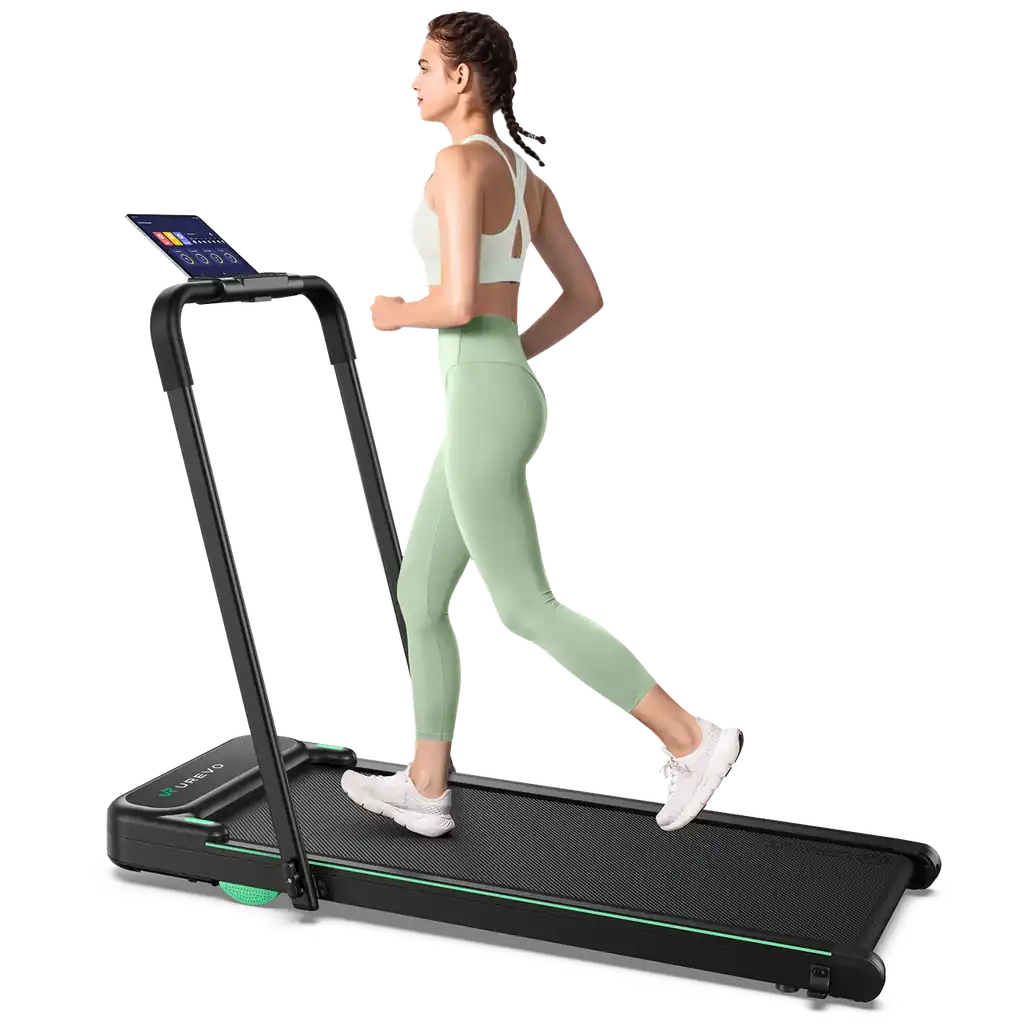
- No handrail and a 1–6 km/h band: this is a walking machine, not for jogging or running.
- No independent test exists — Wirecutter, Tom’s Guide, WIRED and Verywell Fit do not test CITYSPORTS.
- Every performance number, including the sub-45 dB noise claim, is a vendor figure.
- Two owners report electric shocks from CITYSPORTS pads; neither report names this exact model.
- Noise and belt faults develop after weeks: knocking after stopping, belt drift, one burning smell.
- Parts and service run slow — one replacement remote took over six weeks, a repair part arrived mismatched.
Verified specifications
| Model | CITYSPORTS WP6 (also written CS-WP6), identified through the manufacturer’s own model table: 440 W, 1–6 km/h, 3-level incline at 0/11/13/14%, 15.7 kg. |
|---|---|
| Motor | 440 W, peak power. |
| Speed | 1.0–6.0 km/h, about 0.6–3.7 mph. |
| Incline | 3 manual levels (0%, 11%, 13%, 14%) set by pins; both sides must sit in the same hole, position three is steepest. |
| Running area | 910 × 380 mm belt. |
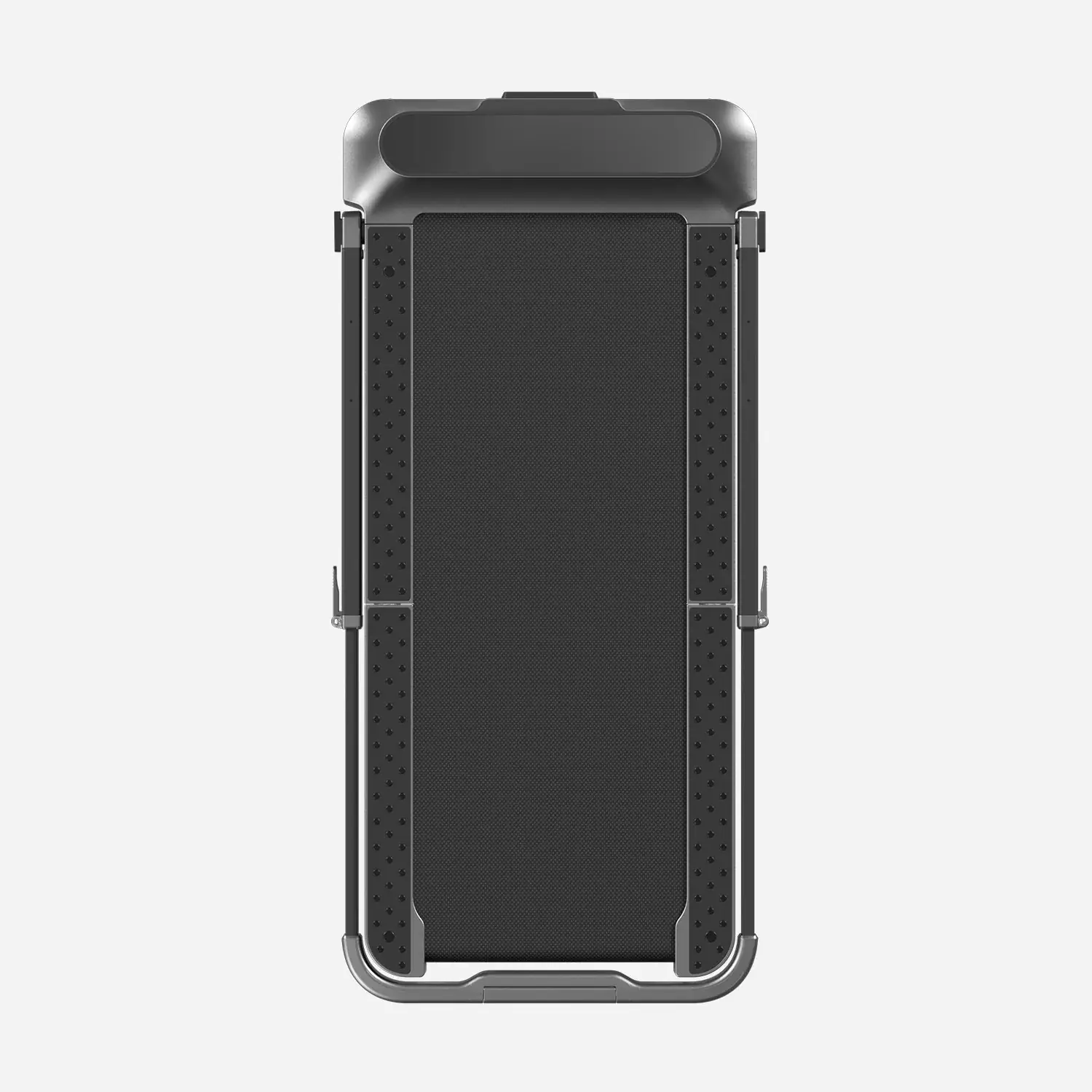
| Dimensions | 1100 × 509 × 108 mm unpacked; 1175 × 575 × 126 mm folded (CS-WP6 manual). |
| Weight | 15.7 kg net, 18.5 kg gross per the manual; some listings under the same CS-WP6 name state 17 kg and a 1228 × 490 × 121 mm footprint. |
| Display | LED cycling speed, calories, time and distance every 5 seconds. |
| Remote | wireless, steps speed in 0.5 km/h increments; backup buttons sit beside the screen. |
| Audio | Bluetooth speaker, pairing name “CITYSPORTS-Audio”. |
| Power-off | display sleeps after 5 minutes of standby; the machine stops itself at 99:59 accumulated minutes. |
| Assembly | none — ships ready to run. Built-in transport wheels. |
| Noise claim | below 45 dB — a vendor figure, not an independent measurement. |
Full research notes and sources
The manual incline
The WP6 offers three hand-set positions — 0%, 11%, 13% or 14% — set by pulling pins out of one of three holes on each side; both sides must sit in the same hole, position three is steepest, and the foot pads must rest on the ground.
That is crude machinery: you get off the belt and re-seat the pins by hand, there is no motorized or remote incline, and listings that say “3-level incline” without saying “manual” obscure this. It is still genuine incline rather than a simulated grade, and a UK review’s central point is that a real incline, even a manual one, is rare on any walking pad in the sub-£100 range.
Noise and daily use
The “below 45 dB” figure in listings is a vendor claim; no independent measurement of this model exists. Owners nonetheless report call-acceptable noise at walking speed: a German owner who paid about €136 including shipping says the noise is “totally fine” even at 90 kg body weight and bothered nobody during meetings or phone calls (r/FitnessDE, 2026). A UK owner who paid £150 for an earlier 400 W CitySports pad reports it suits meetings with the camera off and light paperwork, while detailed concentration work is not doable while walking.
Placement matters. The manual requires a 3–6 ft clear, flat area behind the machine, warns against thick carpet and water, and the manufacturer separately recommends a mat on wooden floors. Expect the standard upkeep for this class: belt cleaning, vacuuming debris from underneath, periodic lubrication and staying under the rated load.
Shocks, wear and service
Two reports are not a defect rate, but shocks on a belt machine you touch for an hour a day are worth taking seriously, and a channel with an easy return path matters.
Wear reports cluster around noise and belt behaviour. One r/treadmills owner’s CitySports folding treadmill developed a knocking sound every 5–10 minutes after the session stopped — never while running — which he attributes to weight transfer rather than the motor, and says it lessens with use; another reply describes a unit whose belt drifted far to the right after being centred.
Service is the third caution. The same Trustpilot pool reports a replacement remote ordered in September still not received by mid-October, with unanswered emails, an ignored cancellation request 30 minutes after ordering, and a WP3 owner sent a repair video and a replacement part that did not match. The positives in that pool: a WP9 owner reports a 10-minute setup and quiet running, and a Decathlon buyer is happy after 6 months. The manufacturer states a 1-year warranty with 30-day returns; one owner reports buying through a marketplace for its 2-year warranty.
Is it worth it?
At the low end of the band this is a defensible purchase for one narrow job: walking at a desk with a real incline, no handrail, a 120 kg rating and fold-flat storage. Above roughly $200 the case weakens, because tested machines with 265–300 lb capacities, longer belts and published test records sit in the same money. It is not a jogging machine, not a heavy-user machine and not a machine with a test record.
Running costs stay small: electricity for a 440 W peak motor that realistically draws tens of watts at walking speed, belt oil and cleaning, and a replacement remote if you lose the original. There is no subscription and no app lock-in.
Verified price anchors: the manufacturer’s EU store lists the WP6 at €199, with the UK storefront showing a €129 flash sale against a €249 reference; Decathlon UK lists the WP6 440 W at £89, reduced from £299, and another 3-position model at £95; a UK review reports the CITYSPORTS incline pad at £89.99; Walmart listed a CITYSPORTS walking pad at $89.99, out of stock at check, though that listing describes a 550 W sibling rather than this incline model.
Which model this is
This page covers the CITYSPORTS WP6, also written CS-WP6 — the 440 W, 1–6 km/h pad whose 0/11/13/14% three-pin incline and 15.7 kg weight match the manufacturer’s own model table. CITYSPORTS sells several look-alike pads in the same band — the WP6FK and WP6SK (up to 13.41%), the 17 kg WP6 CS2, the ZX1, and the 550 W WP8 and ZX3 — and at least two hardware generations carry the CS-WP6 name, one documented with a fixed 6% incline and 110 kg capacity. Confirm the incline positions and the 15.7 kg weight on the exact listing, not the model name. The manuals found for it are EU/UK documents; a US configuration was not verified from a first-party US source.
Sources
Manufacturer:
Independent reviews:
- Tom’s Guide: the best under desk treadmills
- WIRED: 4 Best Walking Pads for Small Spaces and Standing Desks
- Verywell Fit: the 10 Best Walking Pads of 2026
- CITYSPORTS Walking Pad review — hometreadmill.co.uk
- CITYSPORTS Treadmill review — jayshomegym.com
Owner reports:
- “CITYSPORTS Folding Treadmill making random knocking sound?” (r/treadmills)
- “Foldable walking pad? My Citysports keeps shocking me” (r/treadmills)
- City Sports EU store customer reviews (Trustpilot)
- Walking pad recommendation — German owner report (r/FitnessDE)
- Walking pad / under desk treadmill thread (r/AskUK)
- CS-WP6 product instruction page and user Q&A (ManualsLib)
Stores and prices: