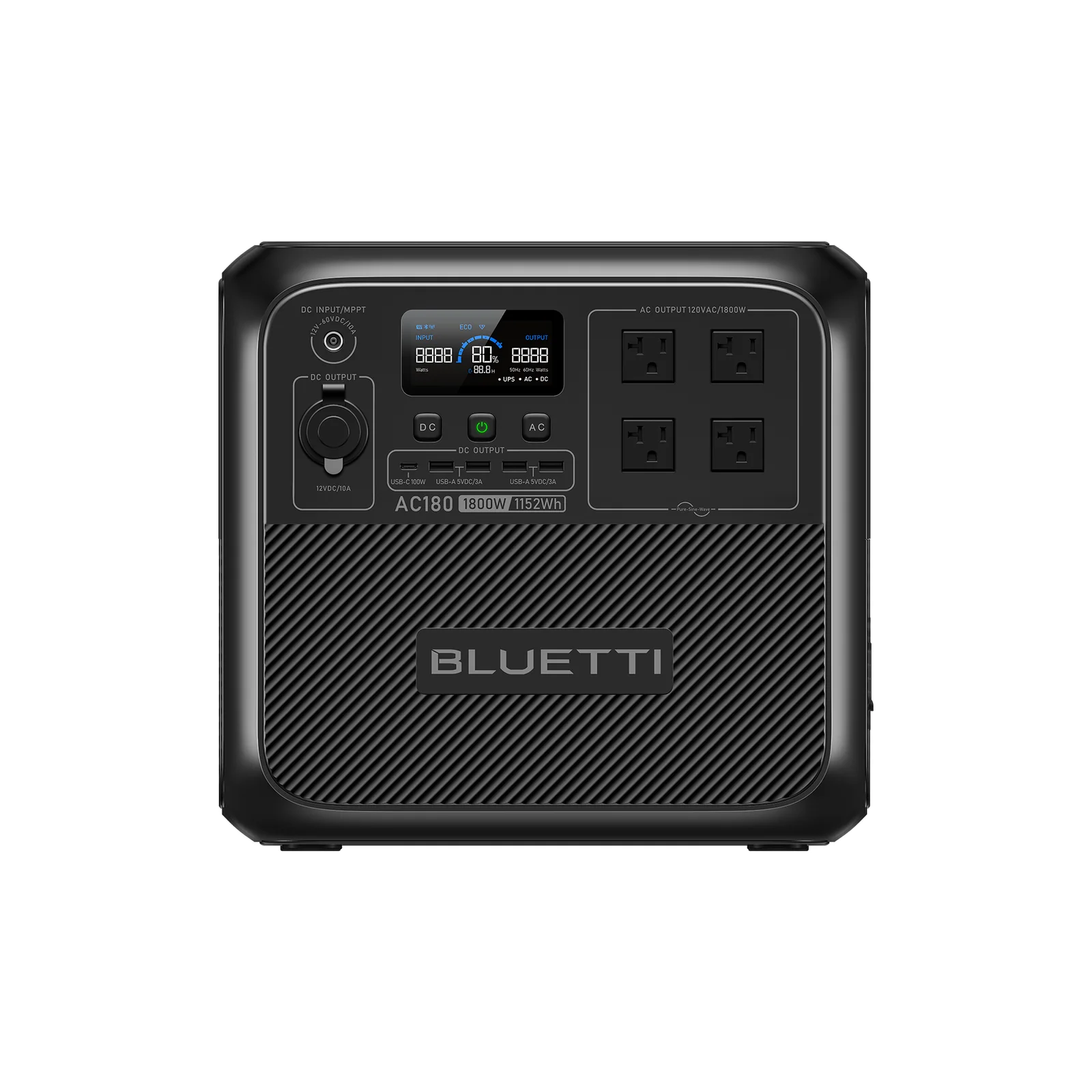
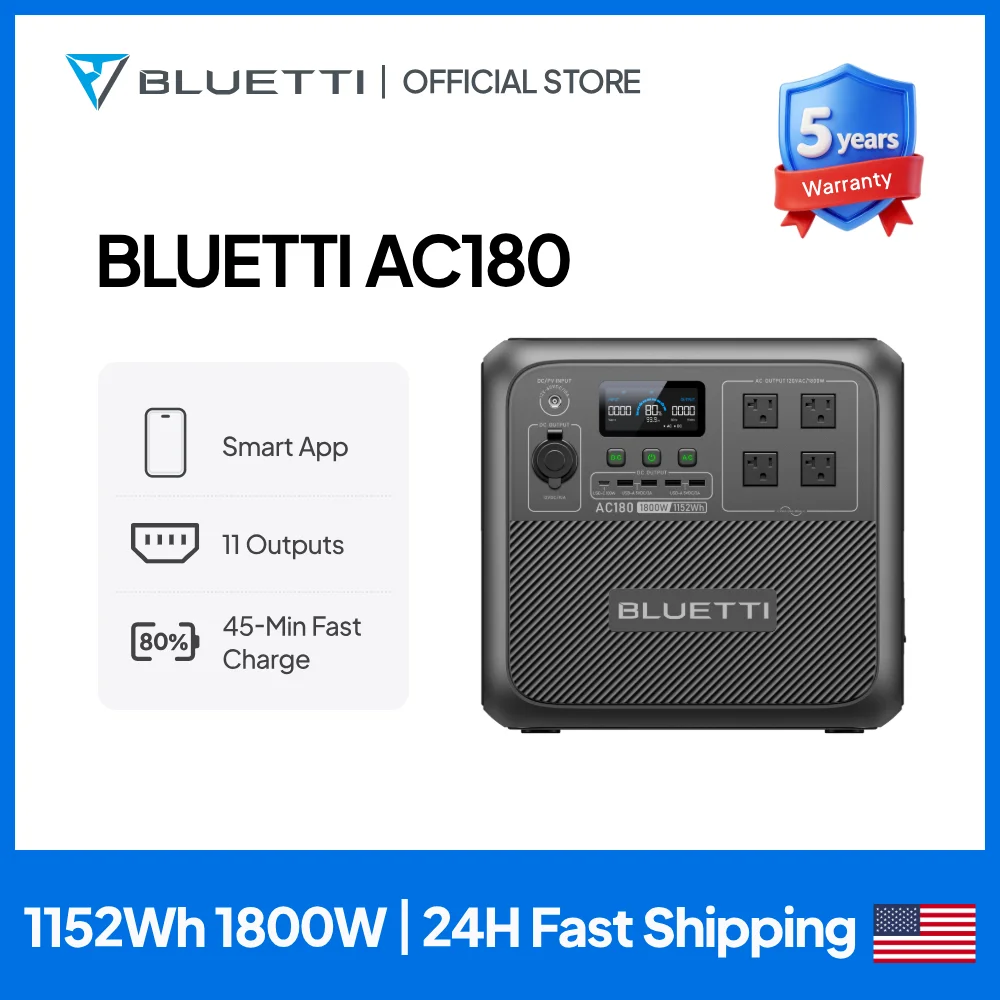
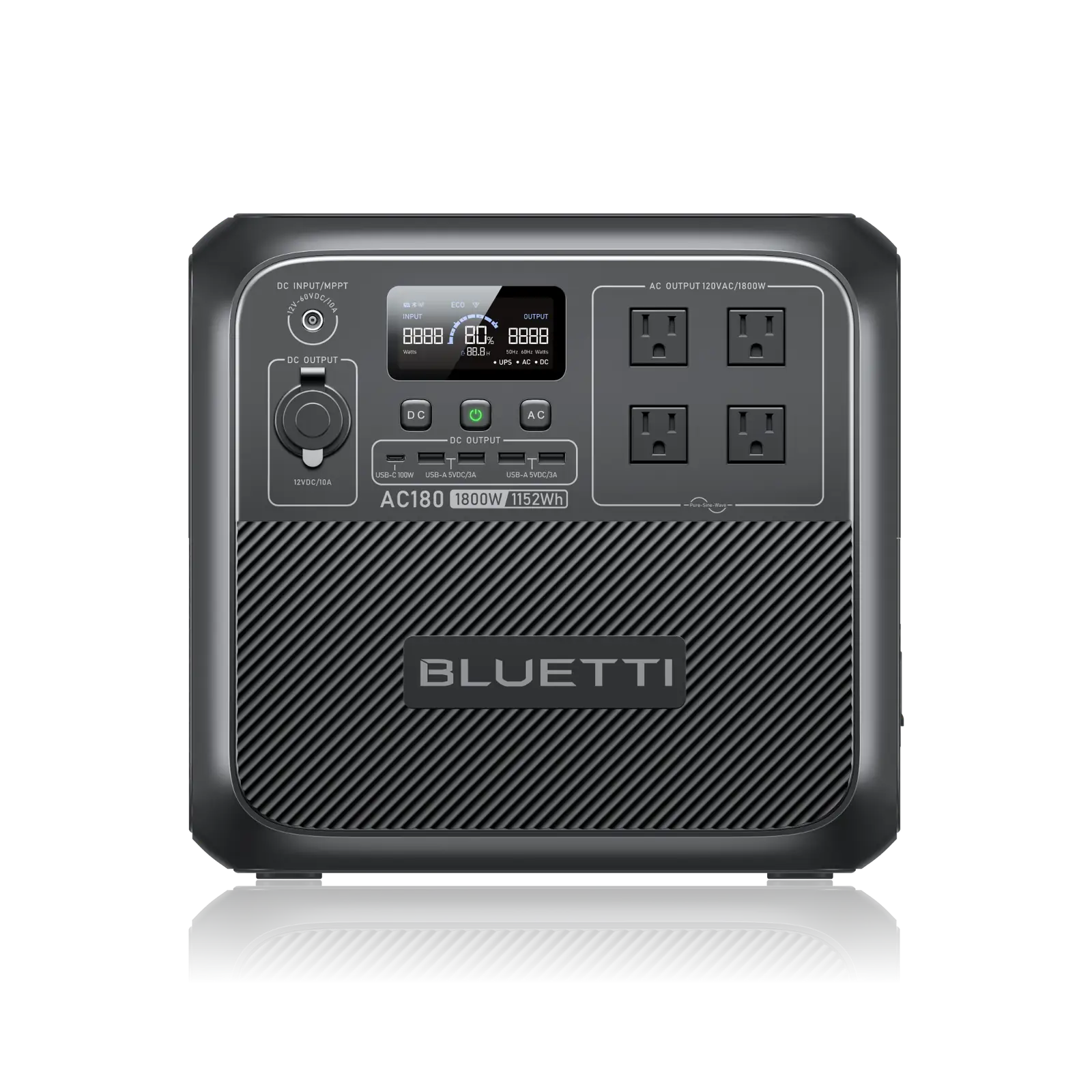
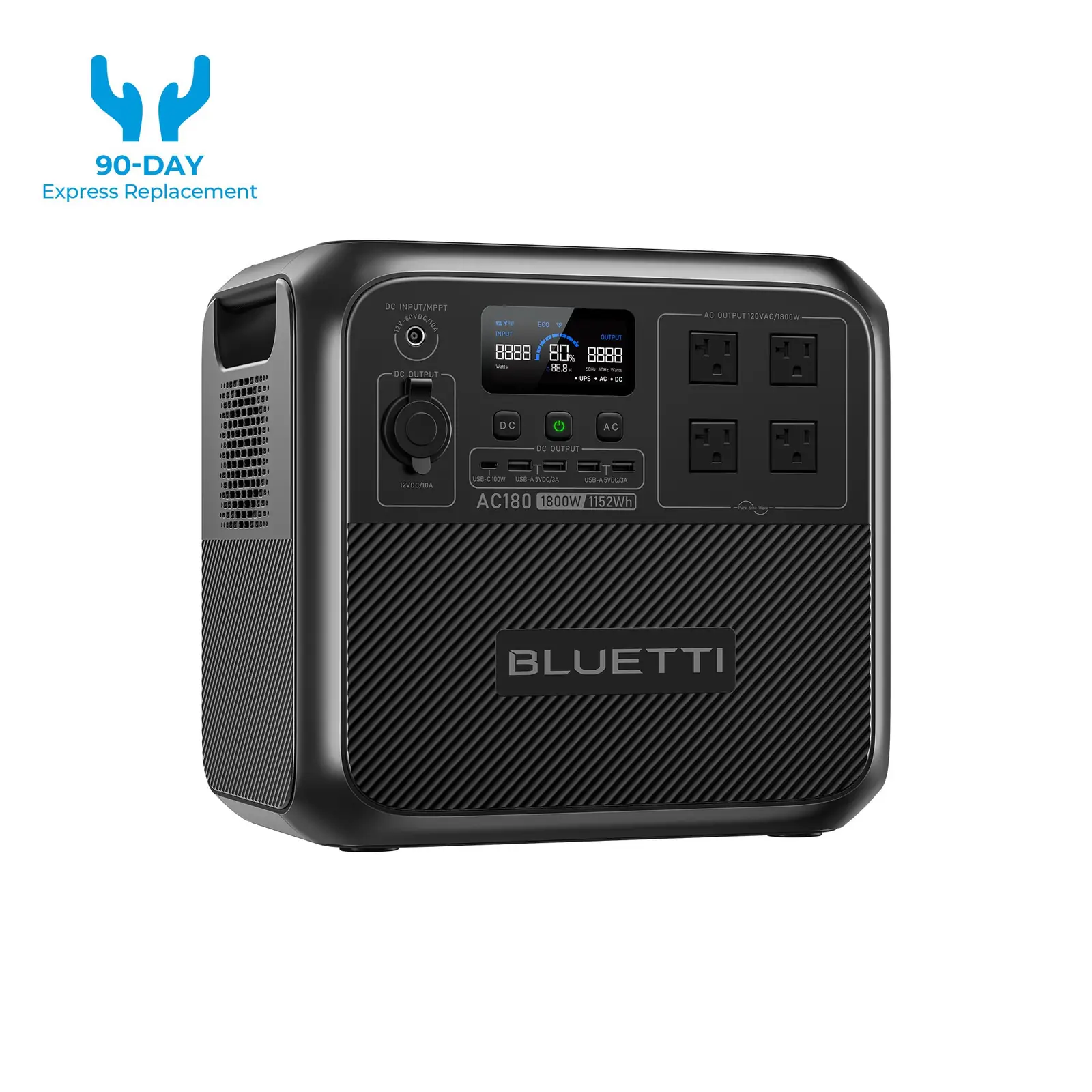
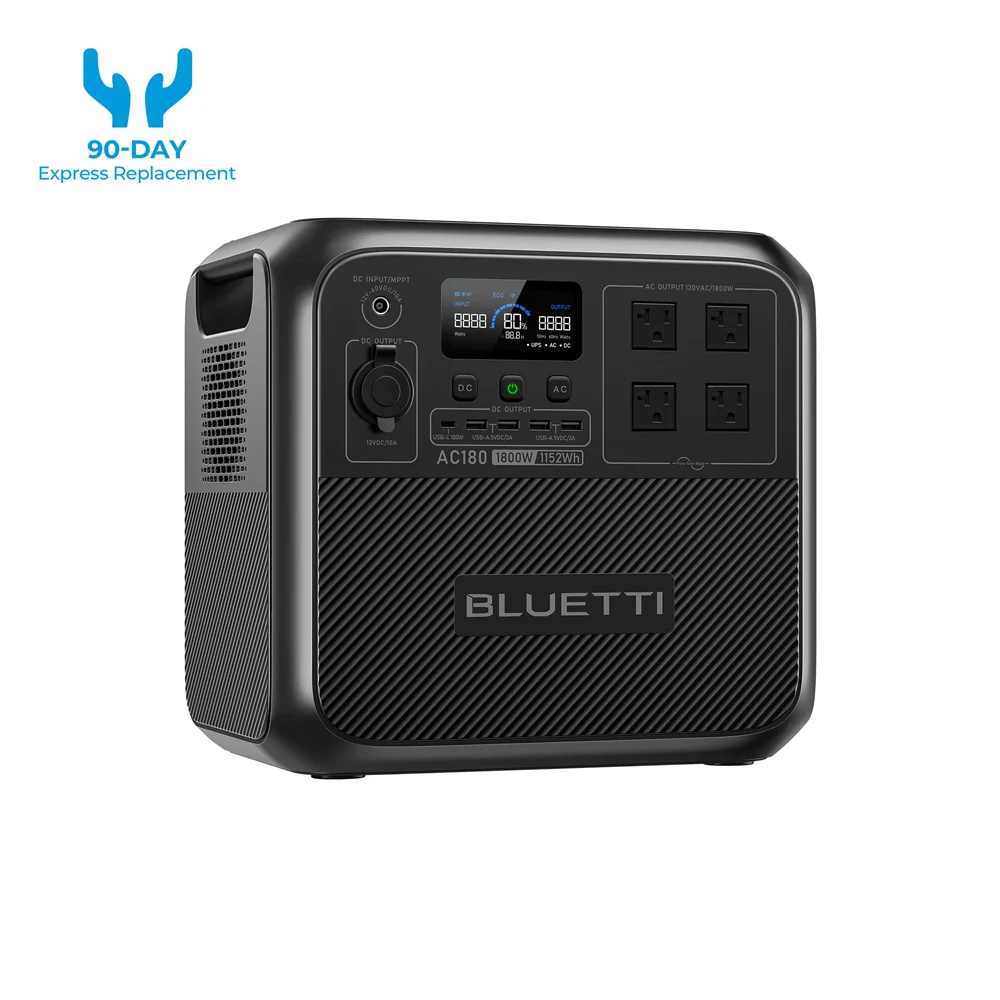
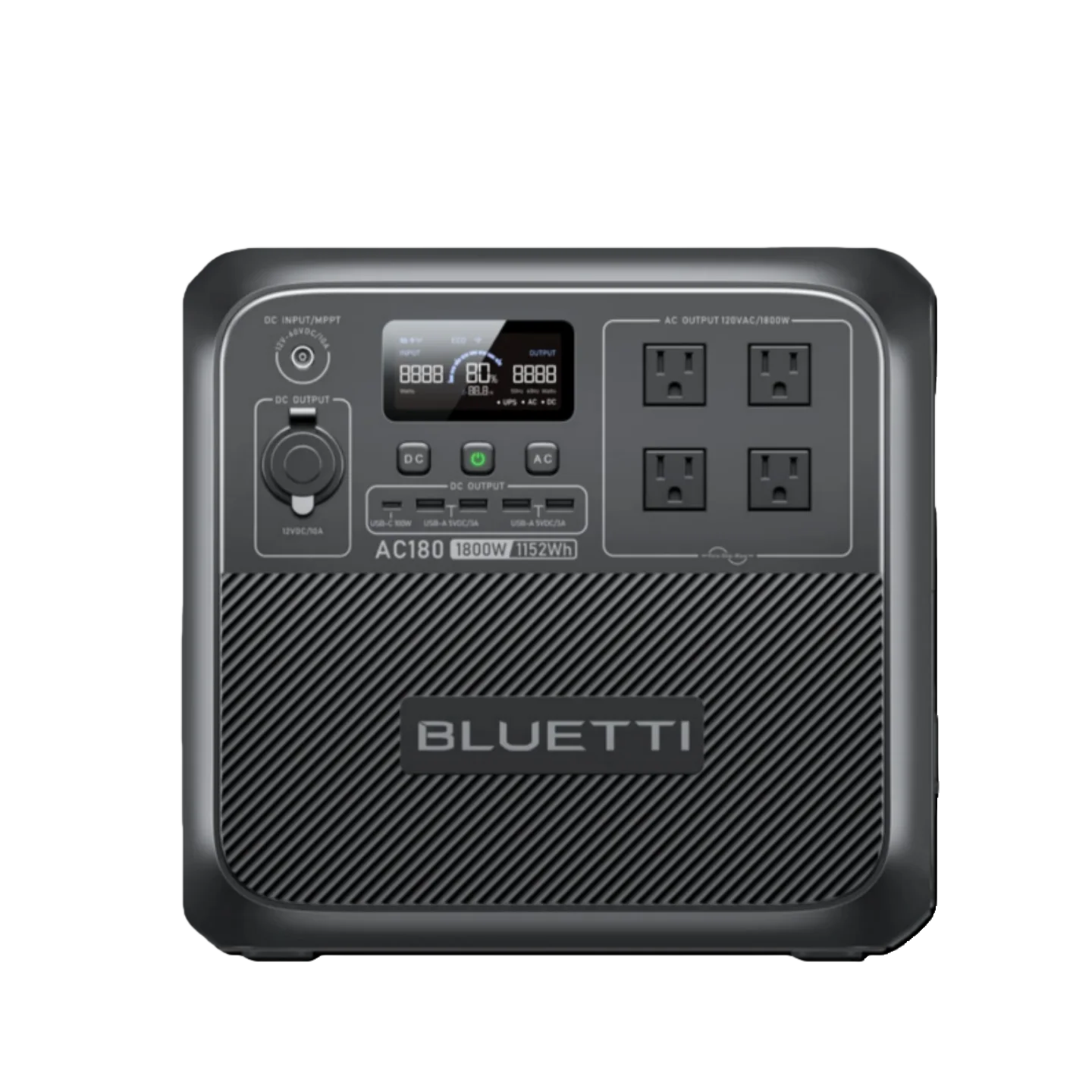
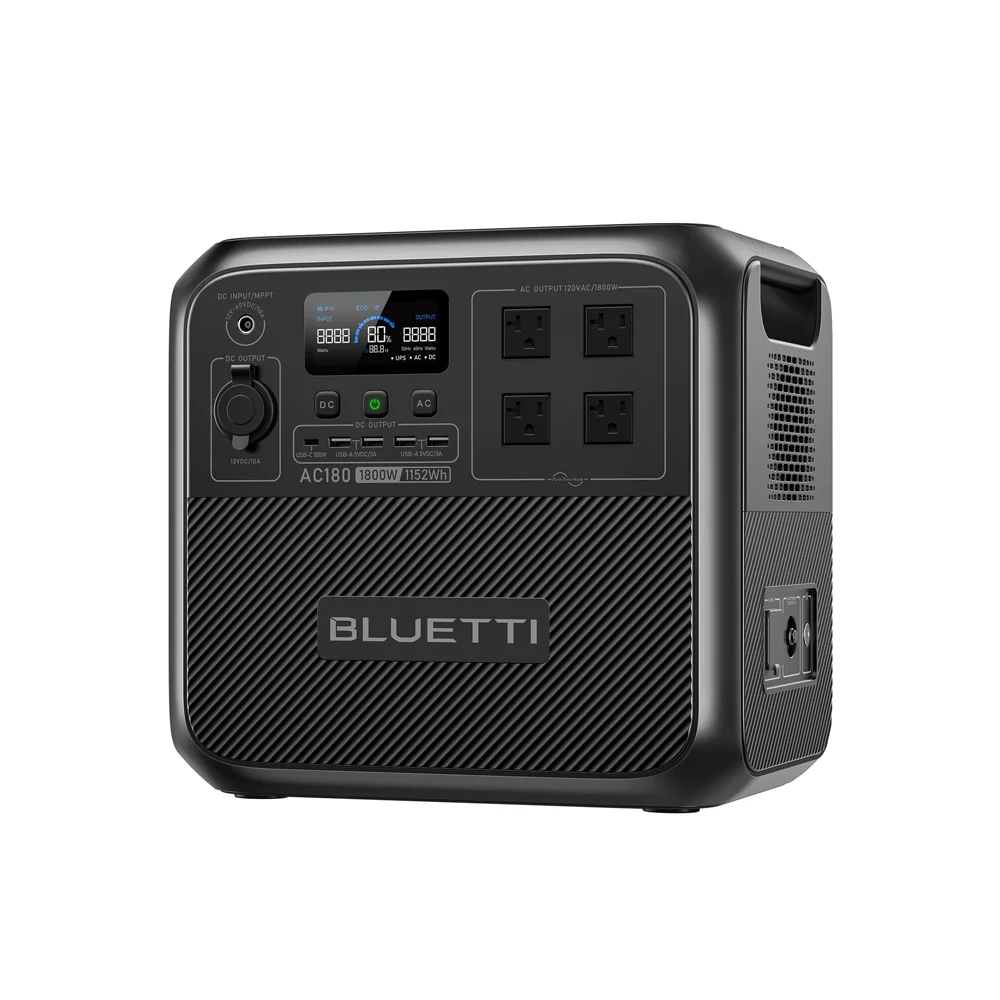
Bluetti AC180 Portable Power Station
By Bluetti · Portable Power Stations · Audio & Electronics
- 1,152Wh LiFePO4, 3,500+ cycles to 80%
- 4x120V AC outlets, 1,800W total, 2,700W surge
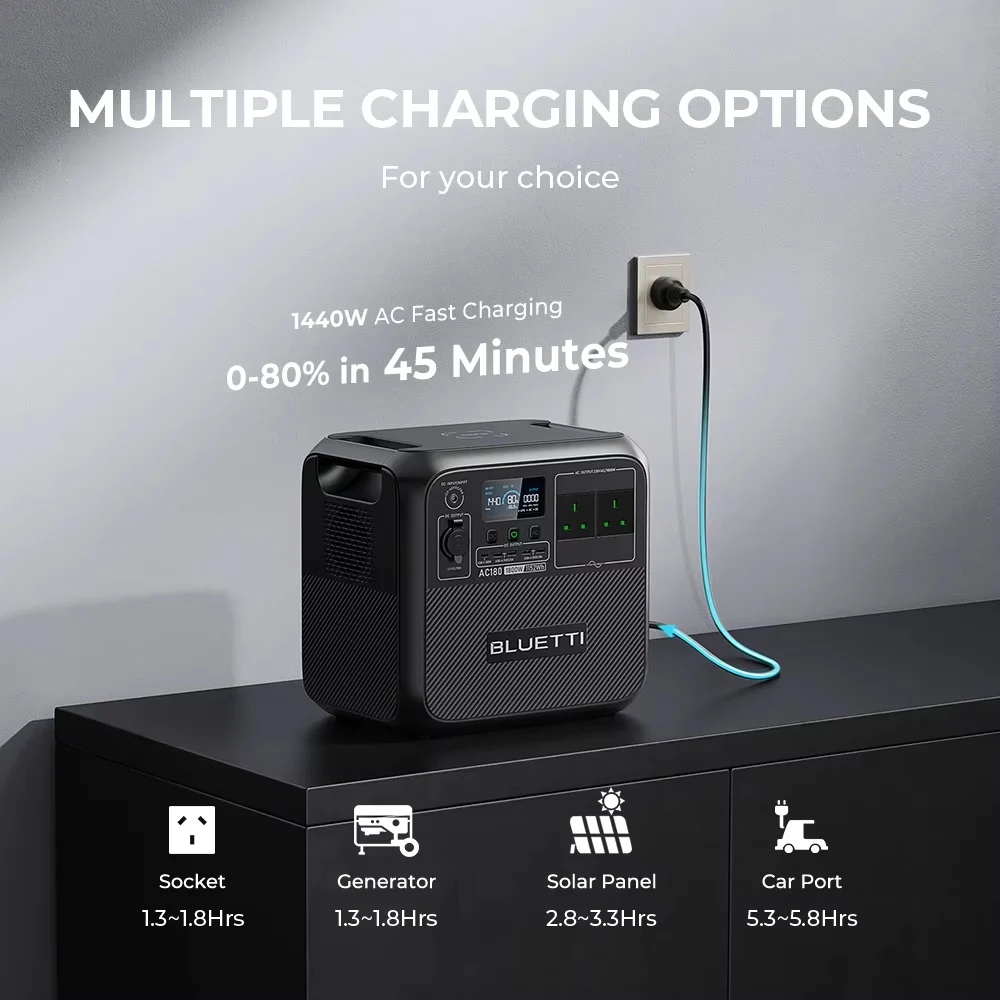
- ~1.3-1.8 h recharge via 1,440W AC turbo input
- ~35.3 lbs (16 kg)
Lowest price seen
$450.85
from $450.85 at AliExpress · Checked Oct 13, 2026
- AliExpress BLUETTI US Store $450.85View at AliExpress
- BluettiView at Bluetti
- Best BuyView at Best Buy
- WalmartView at Walmart
- The Home DepotView at The Home Depot
- eBayView at eBay
- eBay (used) eBay: used, open-box, refurbishedView at eBay (used)
- AmazonView at Amazon
Prices are snapshots. Check the current price with the store.
Summary
A 1,152 Wh LiFePO4 power station with four 120 V outlets, a 1,800 W inverter and 500 W solar input, sized for camping, outages and off-grid weekends. Two labs measured less than the nameplate, so plan around 950–1,007 Wh and mind the fan noise and the weak DC output.
Strengths
- Fast wall charging: the lab averaged 1.3 hours from 0 to 100%.
- 1,800 W continuous AC output with 2,700 W Power Lifting for resistive heating loads.
- LiFePO4 battery rated for 3,500+ cycles to 80% of original capacity.
- 500 W solar input and pass-through charging, so outlets can run while it charges.
- Bluetooth app control with OTA updates and three AC charging modes, including a 260 W silent mode.
- 5-year warranty stated on both official AC180 pages.
Weaknesses
- Both labs measured less than the 1,152 Wh nameplate: 950 Wh at an 80% load and 970–1,007 Wh on AC loads.
- USB-C and 12 V DC output measured 71% efficient, the worst PCWorld had tested.
- The cooling fan is audible, about 45 dBA under a 1,500 W load.
- Power-to-weight is poor against similarly sized stations, and the unit weighs about 36 lb.
- The internal battery is not user-replaceable and the unit must stay upright.
- Advertised expansion to 4,224 Wh is contradicted by BLUETTI’s own FAQ and by owners.
Verified specifications
| Model | AC180; capacity 1,152 Wh (36 Ah). |
|---|---|
| Battery | LiFePO4 (lithium iron phosphate), rated 3,500+ cycles to 80% of original capacity. |
| Management | MPPT controller and BMS. |
| AC outlets | 4 × 120 V / 15 A, 1,800 W total, pure sine wave. |
| Surge / Power Lifting | 2,700 W, restricted to resistive heating loads. |
| AC input | 1,440 W max in Turbo mode, 1,000 W max in Standard mode, 260 W in Silent mode. |
| Charge times | Silent 260 W (4.9–5.4 h), Standard about 1,000 W (1.7–2.2 h), Turbo about 1,440 W (1.3–1.8 h). |
| Solar input | 500 W max, Voc 12–60 VDC, 10 A, MC4 connectors. |
| Car input | 12/24 V from a cigarette lighter port. |
| USB-C | 1 × 100 W max. USB-A: 4 ports in two groups of two at 15 W each. |
| 12 V DC | 1 × 12 V/10 A regulated car outlet. Wireless charging pad: 1 × 15 W max. |
| Pass-through charging | yes. UPS switchover: 20 ms claimed. |
| App | BLUETTI App over Bluetooth, with OTA updates. |
| Operating temperature | charging 0–40 °C (32–104 °F); discharging -20 to 40 °C (-4–104 °F), capped at 1,500 W output above 30 °C. |
| Water and orientation | not waterproof; must be kept upright. |
| Battery replacement | internal pack, not user-replaceable. |
| Dimensions | 340 × 247 × 317 mm (13.39 × 9.72 × 12.48 in); weight about 16 kg (35.27 lb). |
| Warranty | 5 years, stated on both official AC180 pages. |
Full research notes and sources
Usable capacity, not the nameplate
OutdoorGearLab ran the unit at 80% load to full drain and measured 950 Wh, which it calls 18% below the advertised 1,152 Wh and 82% efficiency. PCWorld measured 970 Wh at an 800 W AC load (84% efficiency) and 1,007 Wh at a 200 W AC load (87%). Both labs put usable AC-path energy in the 950–1,007 Wh range, not 1,152 Wh. BLUETTI’s own runtime math assumes 90% depth of discharge, 85% inverter efficiency and about 15 W of self-consumption, and BLUETTI states plainly that its formula does not apply to compressor loads such as refrigerators and air conditioners. A separate owner thread notes the conversion loss also hits the 12 V socket path, not only the inverter. Plan around 950–1,000 Wh.
Noise and DC output
OutdoorGearLab called the fan noisy and the power-to-weight poor, and scored the unit 66 with Power Output 5.9, Portability 7.4, Charging Speed 7.8 and Features 8.0. PCWorld measured two fans at about 45 dBA under a 1,500 W load and 43–44 dBA under an 800 W load, three feet away, and described the sound as reasonably quiet but not silent. PCWorld also measured 71% efficiency on a 60 W USB-PD DC load, the worst of any unit it had tested, against 89% for the Jackery Explorer 1500 Pro and 85% for the Yeti 1500X. The AC path is competitive at 84–87%; the USB-C and 12 V path is the weak one. BLUETTI’s own 45 dB figure is a silent-charging-mode number, not operating noise under load.
Charging, expansion and support
The lab averaged 1.3 hours from 0 to 100% on wall power, against BLUETTI’s stated 1.3–1.8 hours in Turbo mode; Standard mode is about 1,000 W and Silent mode 260 W. Solar is respectable rather than exceptional: about 3 hours from 500 W in perfect sun and 6–8 hours from a single 200 W panel, against BLUETTI’s 2.8–3.3 hours from 500 W.
Two advertised claims need correcting. The “up to 4,224 Wh” expansion figure is contradicted by BLUETTI’s own FAQ, which says the AC180 does not support capacity expansion with the B80, B230 or B300 and can only be charged by them in Power Bank Mode; owners describe exactly that asymmetry, with the AC180 draining the pack and the pack needing a separate recharge. And 2,700 W Power Lifting is scoped to resistive heating loads, with BLUETTI explicitly saying not to use it for an air conditioner or washing machine. The 20 ms UPS switchover is too slow for sensitive electronics in the lab’s judgment. Support is 5 years on both official pages, with a 90-day express replacement service and a 30-day money-back guarantee, restricted to the country of purchase and excluding unauthorized resellers and unauthorized disassembly.
Owner reports and running costs
Solar input and state-of-charge reporting come up repeatedly, each from individual threads and none a failure rate. Owners report the unit randomly clicking and stopping solar charge with two 100 W panels on a splitter, the solar relay cycling with the unit awake but unable to charge and slowly draining when panels were shaded, a battery reading jumping from 60% to 100% within a minute of AC charging, and a unit refusing to charge from any 110 V source with a “Grid Voltage Too High E113” fault while solar still worked. Longer-term owners describe a state of charge jumping from about 70% to 100% during solar charging after a year of use, and a new unit shutting down around 50% indicated charge; in those cases BLUETTI support ran recalibration steps and eventually discussed a return. A separate thread has a BLUETTI representative saying a unit discussed as an AC180 carried series number AC300, which leaves open whether AC180 and AC300 reports should be pooled. One trailer owner found the single 12 V outlet and the lack of Anderson connections disqualifying.
Running costs are low if the supplied cables hold up: there are no scheduled consumables and the internal pack is not user-replaceable. If you use about 100 full cycles a year, that is 115.2 kWh stored, roughly $21.09 of electricity at the July 2026 US residential average of 18.31 cents/kWh (EIA), before charging losses. Replacement cables are extra: a solar MC4-to-DC7909 cable is $19.90 and the P090D-to-DC7909 cable for B230/B300 packs is $89 (BLUETTI). Over the rated 3,500 cycles, the pack works out to about $0.14 per cycle at the $499 purchase price, though calendar aging and heat mean that is not a guaranteed figure.
Is it worth it?
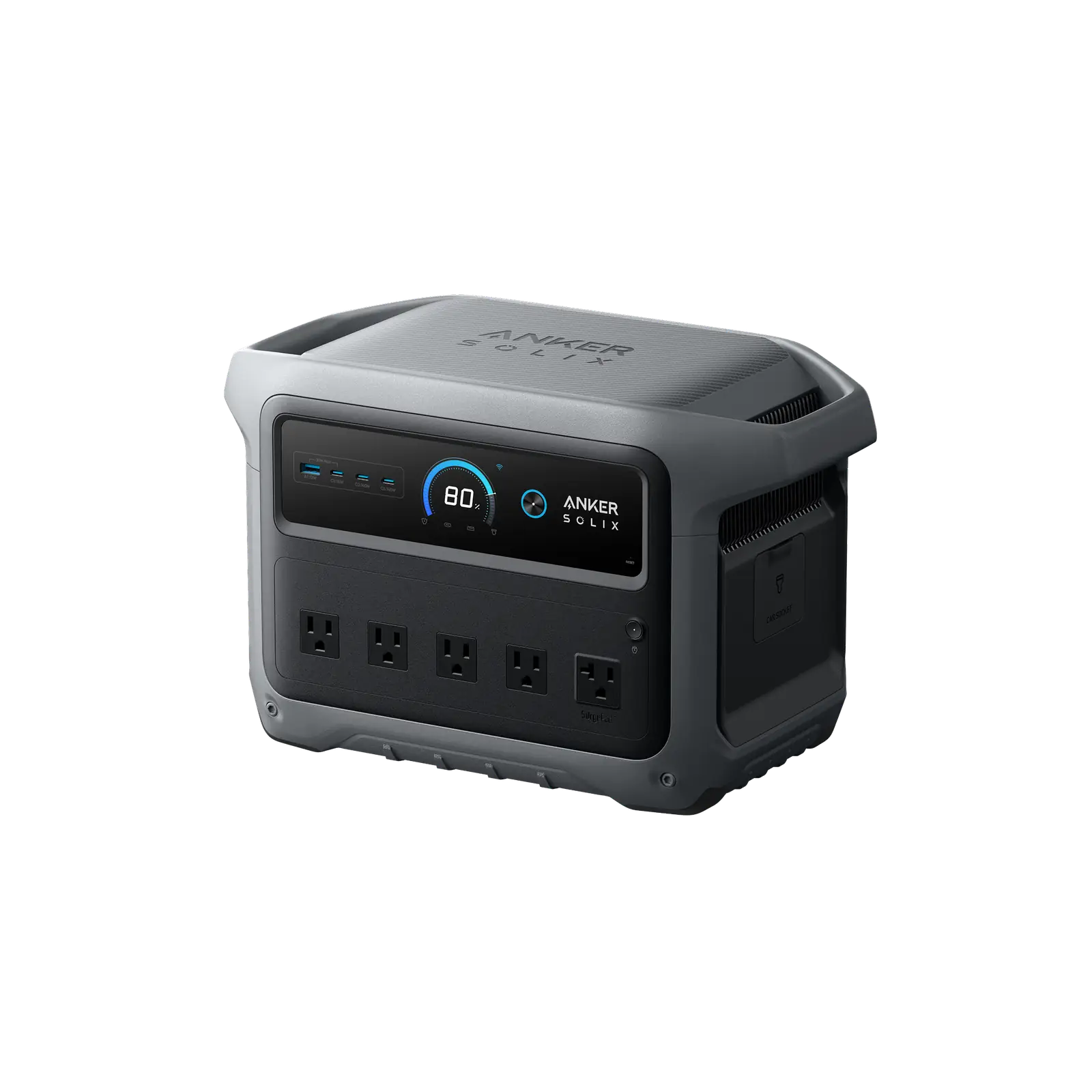
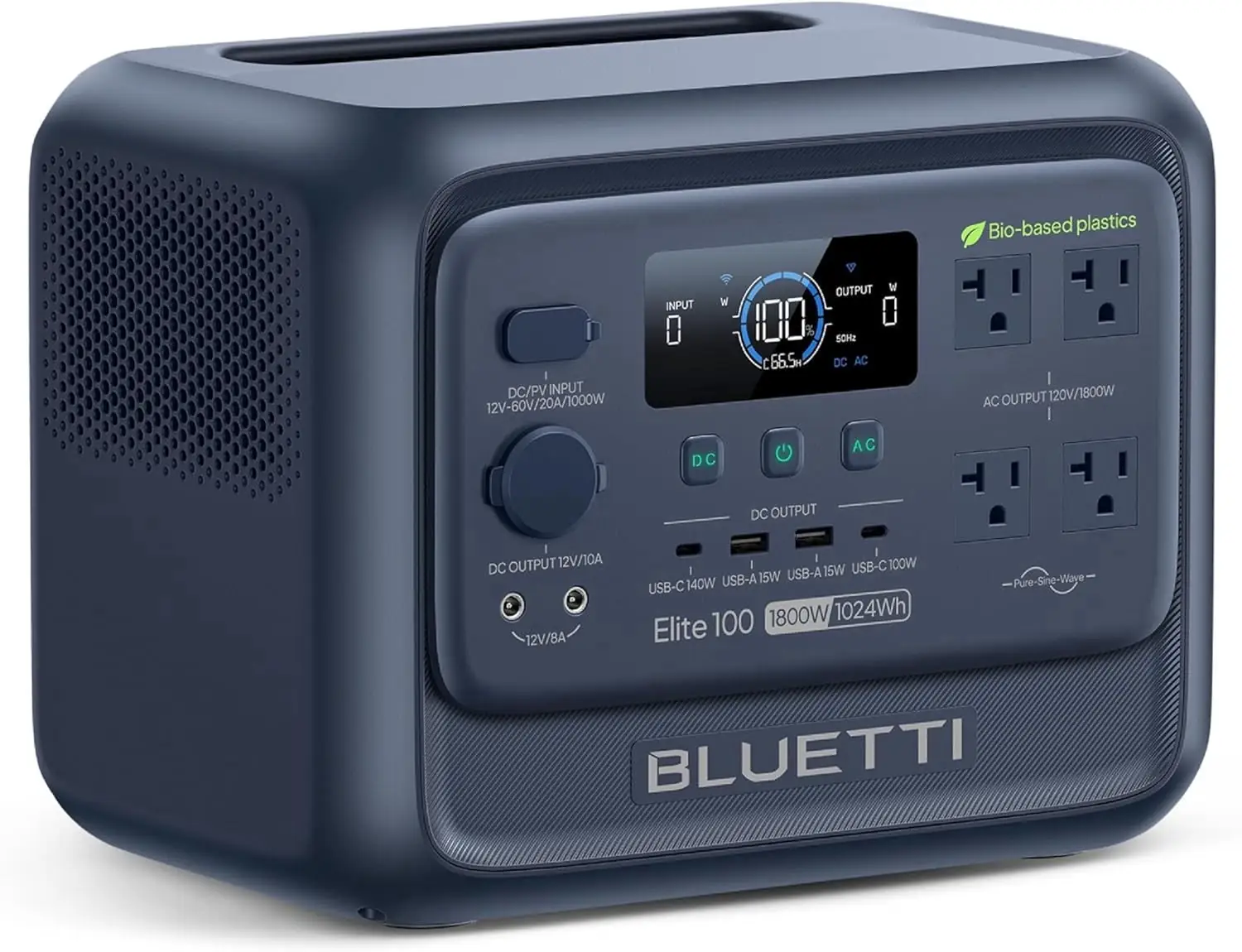
At the $449.00 direct price BLUETTI’s store listed the standalone AC180 at on 2026-10-04, with $499.00 as the compare-at, it is defensible for a buyer who has decided on this specific unit, but it is a weaker buy than it was at launch, because the only instrumented test now steers readers to BLUETTI’s own Elite 100 v2 successor, which it describes as smaller, 25 lb, 1,024 Wh, quieter, faster-charging and cheaper at street price. That successor was $489 direct on 2026-10-06, while the Anker SOLIX C1000 Gen 2 was $529.99 direct with 2,000 W output and a 10 ms UPS claim. Buyers who have not locked onto the AC180 should compare those two before spending.
Which model this is
This page covers the standalone BLUETTI AC180, US 120 V version, 1,152 Wh. Don’t confuse it with the AC180P (same chassis and 35.3 lb, but 1,440 Wh and listed at $649.00), the AC180T removable-battery line, the smaller Elite 100 v2 successor or the AC60, which are separate SKUs. BLUETTI’s product page shows the AC180 out of stock with a restock expected in late November and a “Discontinued” state in the variant selector while the price and cart controls stay live; BLUETTI still markets the model, and OutdoorGearLab independently describes the Elite 100 v2 as its successor.
Sources
Manufacturer:
Independent reviews:
- Bluetti AC180 review, Tested & Rated — OutdoorGearLab
- Bluetti AC180 power station review — PCWorld
- Bluetti AC180 Solar Portable Power Station review — AppleInsider
Owner reports:
- AC180 not fast charging (r/bluetti)
- AC180 randomly clicks and stops charging from solar (r/bluetti)
- AC180 solar relay cycling repeatedly (r/bluetti)
- Power jumped to 100% on AC charging (r/bluetti)
- AC180 Grid Voltage Too High E113 (r/bluetti)
- AC180 w/ B80 (r/bluetti)
- AC180 power efficiency losses through conversion (r/bluetti)
- AC180 lack of 12V outlets (r/bluetti)
- Help with AC180 state of charge (r/bluetti)
- AC180 issues (r/bluetti)
- Solar input issue on a new AC180 (r/bluetti)