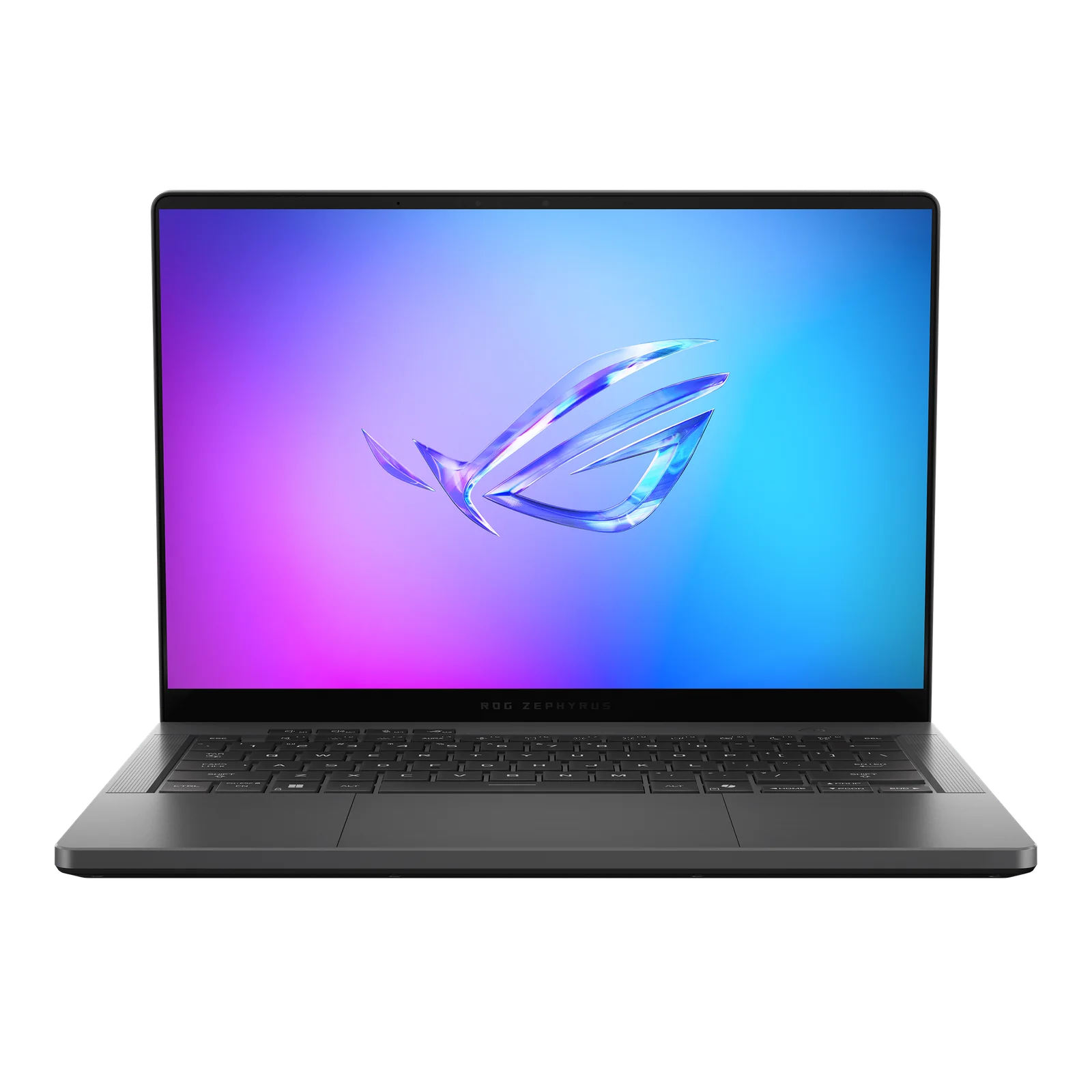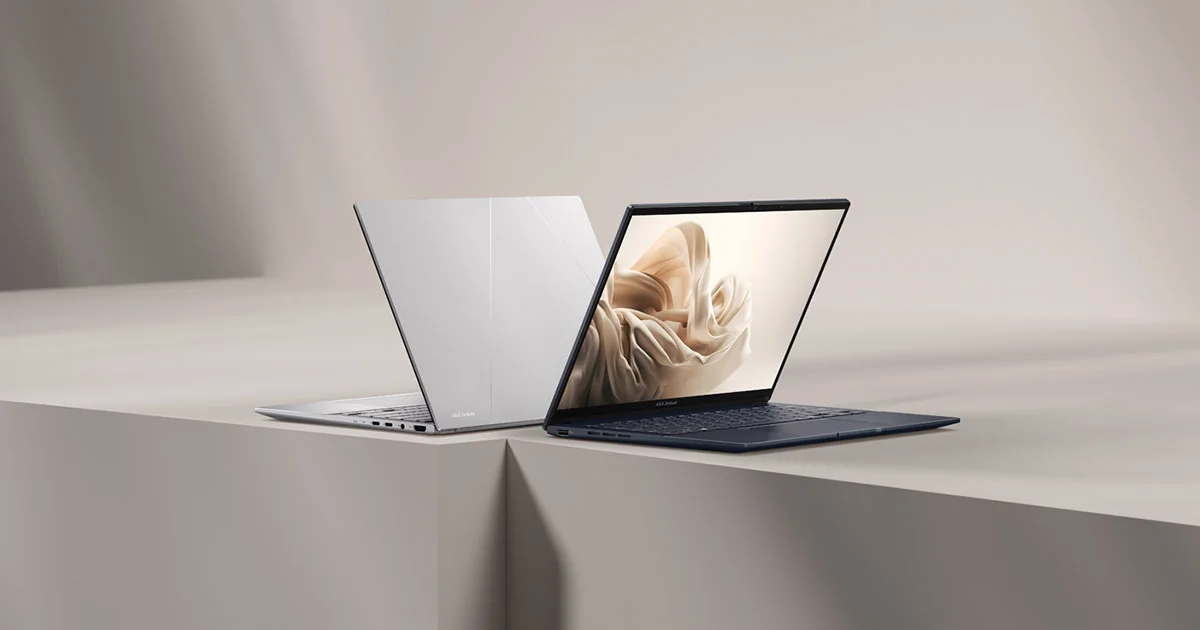
ASUS Zenbook 14 OLED (UX3405MA)
By ASUS · Laptops · Phones & Computers
- Intel Core Ultra 7 155H processor
- 14-inch 3K Lumina OLED display, 120Hz
- 16GB LPDDR5x memory, 512GB SSD
- 75 Wh battery
Lowest price seen
~$1,449.99 (approx.)
from $1,449.99 at Amazon
- Amazon ~$1,449.99 (approx.)View at Amazon
- ASUSView at ASUS
- eBay (used) eBay: used, open-box, refurbishedView at eBay (used)
- eBayView at eBay
- WalmartView at Walmart
Prices are snapshots. Check the current price with the store.
Summary
A 1.28 kg 14-inch ultraportable with a 2.8K 120 Hz OLED touchscreen, a Core Ultra 7 155H and a 75 Wh battery. Check the ports and the finish before you buy: both Thunderbolt 4 ports sit on the right edge, so you cannot charge from the left, and the blue model shows fingerprints.
Strengths
- Compact, premium aluminum chassis with strong inputs and a full port set including two Thunderbolt 4 USB-C ports.
- The 2.8K 120 Hz OLED touchscreen covers 100% DCI-P3 and is well calibrated out of the box.
- Efficient Meteor Lake platform with a Core Ultra 7 155H capped at roughly 28 W sustained.
- Quiet fans relative to the previous generation, at about 40 dB on Performance and sub-30 dB on Whisper.
- Battery life measured around 10 hours of text editing and 12-15 hours of video playback at 120 nits.
Weaknesses
- The Ponder Blue finish shows smudges and finger oil easily; the silver finish is more care-free.
- The touch layer muddies whites somewhat, and measured sustained brightness of about 373 cd/m² is below the marketed 550-nit peak.
- The chassis runs quite warm under demanding loads.
- Both USB-C ports are on the right edge, so the laptop cannot be charged from the left side.
- No card reader and no Kensington lock; memory is soldered, so only the SSD is upgradeable.
- The speakers fire from the sides and bottom rather than upward.
Verified specifications
| Model | ASUS Zenbook 14 OLED UX3405MA, the 2024 Intel Meteor Lake generation. |
|---|---|
| Processor | Intel Core Ultra 7 155H, 6P+8E+2LPE cores / 22 threads, up to 4.9 GHz; Intel Evo certified. |
| Graphics | Intel Arc integrated, up to 2.4 GHz. |
| Memory | 32 GB LPDDR5-7467 soldered in the reviewed unit; 8 GB and 16 GB configurations also offered. |
| Storage | 1 TB M.2 NVMe SSD (Micron 2400), single M.2 2280 slot; the SSD is the only user-upgradeable component. |
| Display | 14-inch OLED, 16:10, 2880x1800 (2.8K), 120 Hz, touch, glossy; 400-nit SDR / 600-nit HDR peak rating, 100% DCI-P3. |
| Measured display | Samsung SDC419D panel, 100% sRGB / 93.7% Adobe RGB / 100% DCI-P3, 10-bit, gamma 2.22, max brightness 372.62 cd/m², white point 6600 K. |
| Dimming | PWM dimming present, with a flicker-free option in the MyASUS app. |
| Wireless | Intel Wi-Fi 6E (AX211) 2x2, Bluetooth 5.3. |
| Ports | 1x USB-A 3.2 Gen 1 on the left; 2x USB-C with Thunderbolt 4, 1x HDMI 2.1 TMDS and mic/headphone on the right. |
| Battery | 75 Wh; 65 W USB-C charger included; full charge about 2 hours. |
| Webcam | 2 MP FHD with IR, ambient light sensor and privacy shutter; no fingerprint sensor. |
| Keyboard | white backlit, 1.4 mm travel; glass touchpad with optional virtual NumberPad. |
| Cooling | single-fan dual-radiator module; sustained CPU power about 28 W on Performance, 20 W Standard, 15 W Whisper. |
| Colors | Ponder Blue and Foggy Silver. |
| Durability | meets a handful of MIL-SPEC criteria; anti-microbial coating on metal surfaces. |
| Dimensions | 312 x 220 x 14.9 mm (12.28 x 8.66 x 0.58 in); thickness excludes rubber feet. |
| Weight | 1.28 kg (2.82 lb) for the touch OLED model; the non-touch FHD OLED version weighs 1.2 kg. |
| In the box | 65 W USB-C charger; touch configurations include an ASUS Pen stylus. |
Full research notes and sources
Battery life and performance
Ultrabookreview’s instrumented tests ran about 10 hours of text editing (Balanced), 12-15 hours of YouTube and Netflix video (Whisper), 6-8 hours of browsing (Standard) and about 2 hours of gaming (Standard) at 120 nits and 120 Hz. The Core Ultra 7 155H is held to roughly 28 W sustained on Performance mode with brief peaks near 50 W, 20 W on Standard and 15 W on Whisper; battery performance on Performance mode was on par with plugged-in. Fan noise measured about 40 dB, 35 dB and sub-30 dB across those modes.
Benchmarks on BIOS 307 and Intel driver 31.0.101.5522: Cinebench R23 12,278 best and 11,262 in a 10-minute loop, Geekbench 6 multi 12,367, PCMark 10 7,035 and 3DMark Time Spy 3,673. The Arc integrated graphics handle light gaming at low settings, for example Dota 2 at about 76 fps and The Witcher 3 at about 45 fps on low.
Display and OLED caveats
The 2.8K panel is the headline: measured 100% DCI-P3 coverage with good factory calibration and a 6600 K white point. Two caveats matter. The touch glass layer muddies whites somewhat, and sustained brightness measured about 373 cd/m², below the marketed 550-nit peak, so bright rooms and outdoor use are a limitation. The panel also uses PWM dimming; if that bothers you, the MyASUS app has a flicker-free dimming mode.
Ports, upgrades and upkeep
The port layout is generous for the size, but both Thunderbolt 4 USB-C ports are on the right edge, so you cannot charge from the left. There is no card reader and no Kensington lock. Memory is soldered and the Wi-Fi card is no longer M.2, so the M.2 2280 SSD is the only component you can upgrade; the bottom panel comes off with Torx screws in two sizes, none hidden under rubber feet.
Warranty terms depend on the sticker on the back of the laptop, which sets the period (for example 24M means 24 months from purchase or activation). The battery is covered for 12 months from purchase, and repaired or replaced components carry 3 months or the remainder of the warranty, whichever is longer. Display panel service requires at least 3 bright pixels, 5 dark pixels, 8 total, 2 adjacent bright or dark pixels, or 3 pixels within a 15 mm diameter. ASUS’s US eShop advertises 1 year international manufacturer warranty plus 1 year accidental protection when you register within 60 days of purchase.
Is it worth it?
The reviewed 32 GB / 1 TB configuration sold for $1299 at Best Buy in late 2024, which the specialist reviewer called a fair MSRP price. That is the configuration the measurements above describe. The listing’s 16 GB / 512 GB configuration was not directly reviewed, and its US pricing was not verified, so treat those numbers as applying to the reviewed unit. There is no subscription lock-in and no recurring cost beyond standard use.
Which model this is
This page covers the ASUS Zenbook 14 OLED UX3405MA, the 2024 Intel Meteor Lake generation of the 14-inch Zenbook line. Do not merge it with the AMD-based Zenbook 14 OLED UM3406 series, the 2025 Arrow Lake refresh UX3405CA with a Core Ultra 9 285H, the earlier UX3402 and UX3404 generations, or the newer Qualcomm-based Zenbook 14 UX3480. The configuration reviewed here used 32 GB of memory and a 1 TB SSD; the 16 GB / 512 GB version is the same chassis and platform.
The listing for this model carries ASIN B0HHS1353F.
Sources
Manufacturer:
- ASUS Zenbook 14 OLED UX3405MA user manual
- ASUS Zenbook laptops (US official site)
- ASUS eShop USA — Zenbook 14 UX3405 (UX3405CA-ES99T)
- ASUS US Notebook warranty policy (PDF)
Independent reviews:
Owner reports:
- No owner discussions were retrieved in this run.