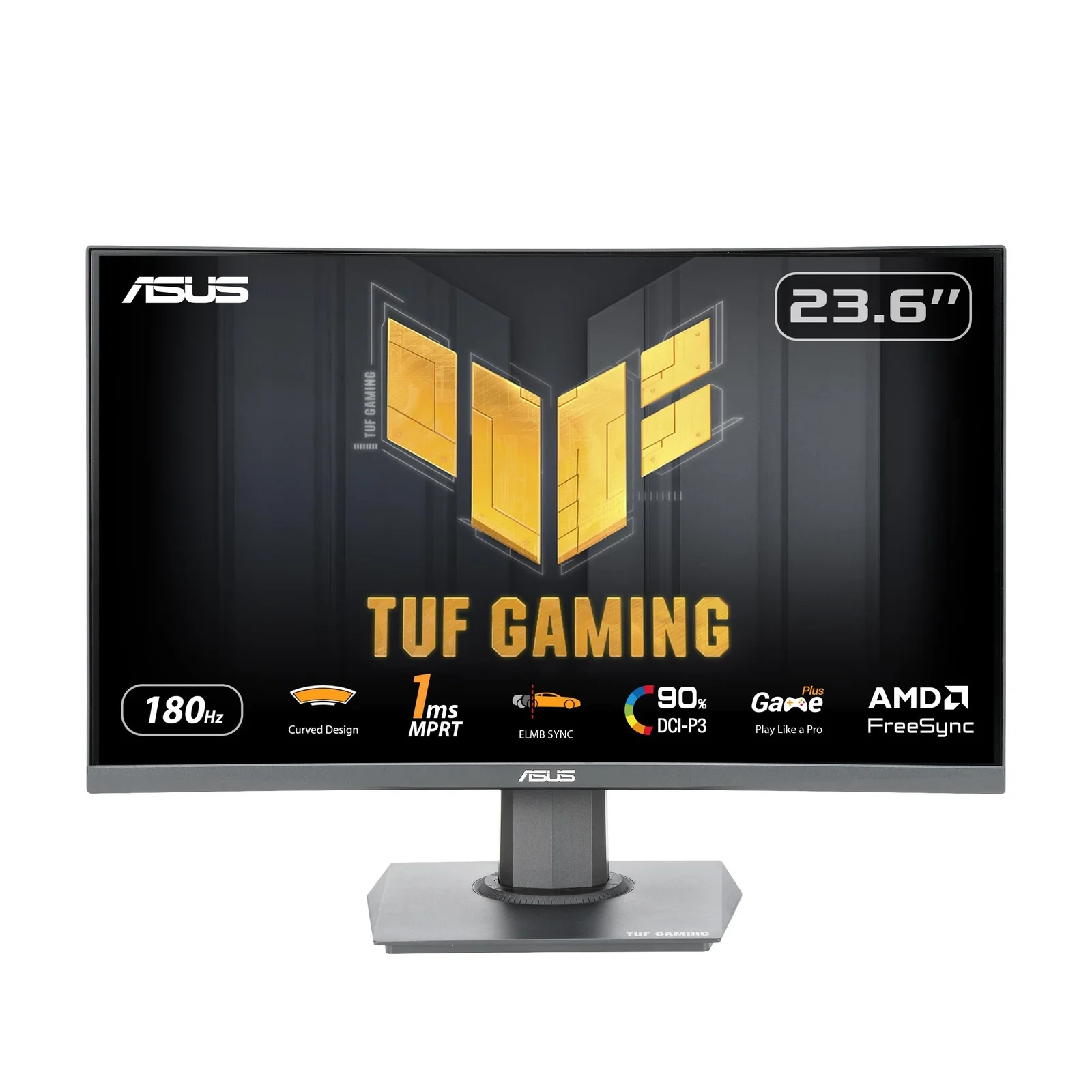
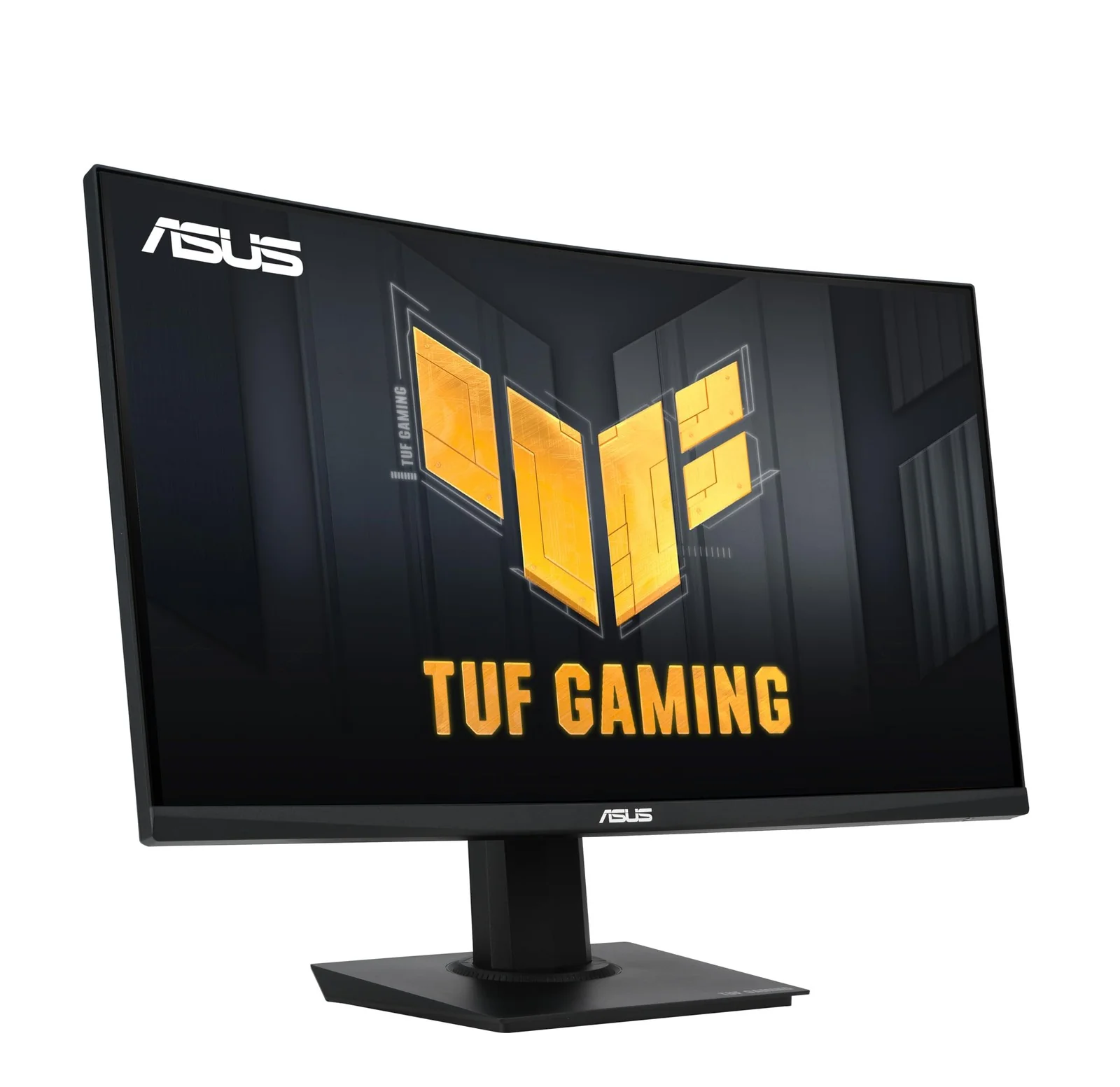
ASUS TUF Gaming 24” 1080P Monitor
By ASUS · Computer Monitors · Desk & Streaming Setup · More from ASUS
- 23.8-inch 1920x1080 Fast IPS panel
- 180 Hz refresh rate
- 1 ms GTG response time
- 99% sRGB color gamut
- 400 cd/m2 brightness
Price not listed
- eBay (used) eBay: used, open-box, refurbishedView at eBay (used)
Stores are listed in a fixed order, never by price or commission. Prices are snapshots. Check the current price with the store.
Summary
A 23.8-inch 1080p Fast IPS gaming monitor with a native 180 Hz refresh rate, built for competitive play on mid-range GPUs. Check the listing’s brightness figure before you buy: the real number is 250 cd/m², not the 400 cd/m² some sellers repeat.
Strengths
- Native 180 Hz without overclocking, a tangible step up from 144 Hz in fast shooters.
- FreeSync Premium with Low Framerate Compensation keeps VRR working across a wide frame-rate range.
- Fast IPS motion clarity with Variable Overdrive that adapts to frame-rate swings.
- 99% sRGB with accurate, punchy out-of-box color and no OSD tuning needed.
- Shadow Boost and GamePlus extras that owners actually use.
- Low power draw (under 18 W) and standard VESA mounting for an arm upgrade.
Weaknesses
- 250 cd/m² brightness is modest; ELMB darkens the image further.
- No certified HDR tier, so HDR mode is effectively decorative.
- 1000:1 IPS contrast makes blacks look grey in a dark room; IPS glow in corners.
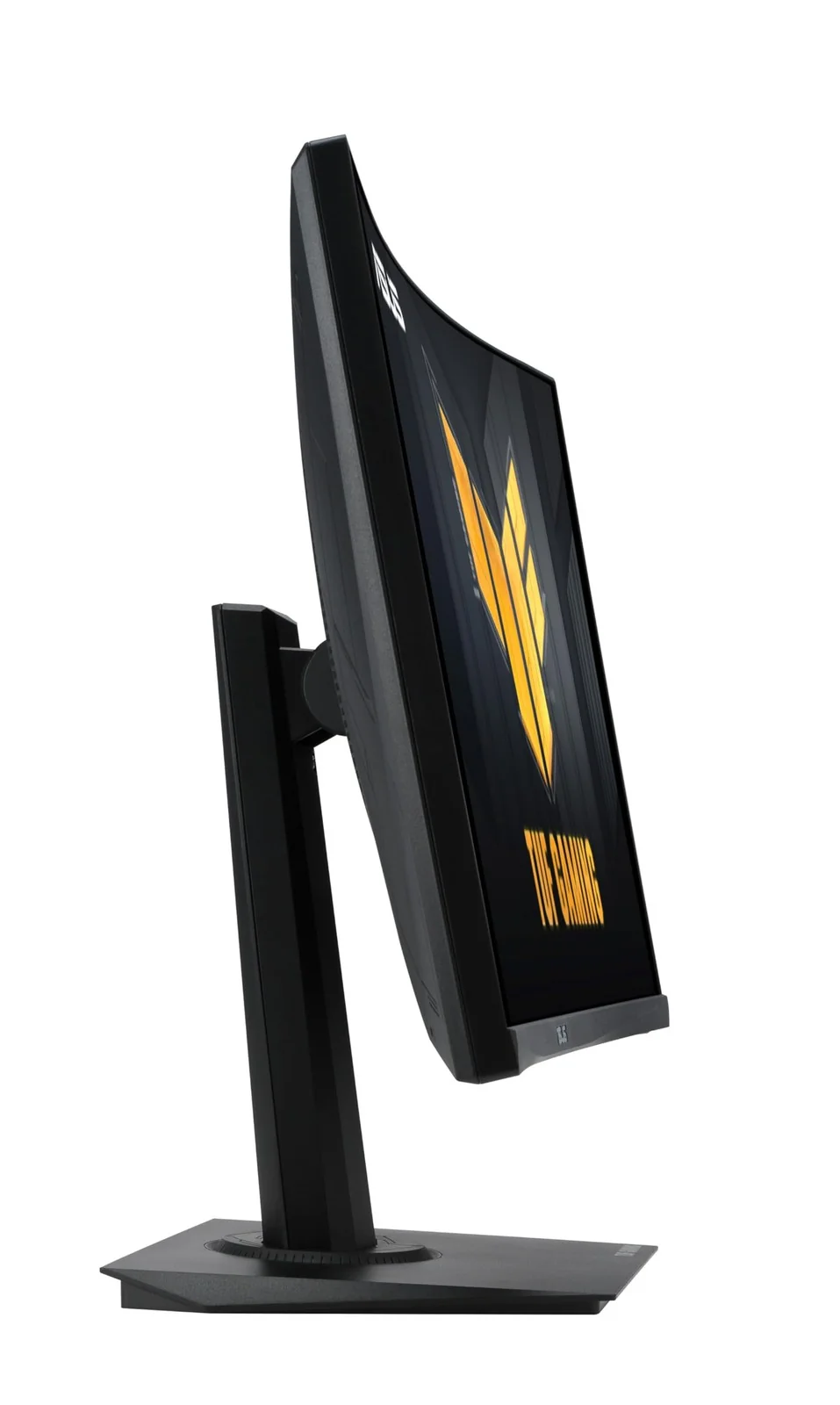
- Tilt-only stand with no height, pivot or swivel; a monitor arm is worth adding.
- HDMI 2.0 is capped at 144 Hz at 1080p; full 180 Hz needs DisplayPort.
- No instrumented professional test of this exact model exists, so response and color claims are manufacturer figures.
Verified specifications
| Model | ASUS TUF Gaming VG249Q3A, 23.8-inch viewable (60.5 cm), 16:9. |
|---|---|
| Panel | Fast IPS, 1920 × 1080, anti-glare, LED backlight. |
| Viewing area | 527.04 × 296.46 mm; pixel pitch 0.2745 mm. |
| Refresh rate | 180 Hz maximum, native (no overclock). |
| Response time | 1 ms (GTG) and 1 ms MPRT, manufacturer claim. |
| Viewing angle | 178°/178° (CR≥10). |
| Color | 99% sRGB, 72% NTSC, 16.7 million colors (8-bit). |
| Brightness | 250 cd/m² typical. |
| Contrast | 1000:1 typical. |
| Adaptive sync | AMD FreeSync Premium with Low Framerate Compensation; VRR on by default. |
| Motion features | ELMB backlight strobing and Variable Overdrive. |
| Flicker-free | yes; Low Blue Light with 4 filter levels. |
| Game features | GameVisual with 7 preset modes, GamePlus, Shadow Boost, DisplayWidget Center, Trace Free. |
| HDR | no certified HDR tier listed. |
| Speakers | 2 W × 2 stereo. |
| Ports | 1× DisplayPort 1.2, 2× HDMI 2.0, 1× earphone jack. |
| Power | under 18 W on, under 0.5 W in saving, under 0.3 W off; 100–240 V, 50/60 Hz, 1.5 A. |
| VESA | 100 × 100 mm. |
| Ergonomics | tilt +23° to -5°; no height adjustment, pivot or swivel. |
| Security update support | 3 years (until 31/12/2026). |
| Dimensions | 54.10 × 39.40 × 17.40 cm (21.30 × 15.51 × 6.85 in) with stand; 54.10 × 32.30 × 5.80 cm (21.30 × 12.72 × 2.28 in) without stand. |
| Weight | 3.5 kg (7.72 lb) with stand; 2.9 kg (6.39 lb) without stand. |
| Operational temperature | 0–40 °C. |
| In the box | warranty card, quick start guide, power cord, L-shaped screwdriver, HDMI cable; some regions also include a DisplayPort cable. |
Full research notes and sources
Which model this is
This page covers the ASUS TUF Gaming VG249Q3A, a 23.8-inch 1080p Fast IPS monitor with a native 180 Hz refresh rate. Do not confuse it with the VG249Q3R (different stand and feature set), the VG249QL3A (adds height adjustment and G-Sync Compatible processing), the 144 Hz-class VG249Q1A, or the 27-inch VG279Q3A. The VG249Q3A specifically lacks height adjustment and pivot, and its stand is tilt-only.
ASIN B0C7BFJHR7
Motion and refresh rate
Native 180 Hz without overclocking is the monitor’s headline. Variable Overdrive adapts to frame-rate swings and there are no widespread ghosting complaints, which suggests reasonable tuning. The 1 ms GTG figure is a fastest-case transition claim, not an average; typical Fast IPS panels land closer to 3–5 ms. ELMB backlight strobing works but cannot run simultaneously with adaptive sync, and it darkens the image because of the 250-nit ceiling.
Color and HDR
Color performance is solid for the class: 99% sRGB is an honest figure, and owner feedback describes accurate, punchy out-of-box color without OSD tuning. There is no DCI-P3 wide-gamut claim, so it is not a content-creation monitor. No certified HDR tier is listed, so HDR mode is effectively decorative; the 250 cd/m² ceiling rules out genuine HDR anyway. IPS contrast at 1000:1 means blacks look grey in a dark room, and IPS glow in the corners is a panel-type characteristic.
Build, ports and ergonomics
Full 180 Hz requires DisplayPort 1.2. HDMI 2.0 is limited to 144 Hz at 1080p, which causes confusion for owners expecting 180 Hz over HDMI. The monitor has two HDMI 2.0 ports, one DisplayPort 1.2, a headphone jack and 2 W stereo speakers, with no USB hub. It carries HDCP 2.2 and supports VESA 100 × 100 mm mounting. The stand tilts +23° to -5° with no height, pivot or swivel, so a monitor arm is a worthwhile add-on. The stand footprint is relatively large for the class, so desk space should be checked. The chassis is black plastic with an anti-glare matte coating, not all-metal.
Is it worth it?
A strong, focused choice for competitive 1080p gaming on mid-range hardware, provided the buyer accepts IPS contrast limits, no real HDR and tilt-only ergonomics. Less suitable for dark-room cinematic play, color-critical work or buyers whose GPUs can drive 1440p at high frame rates. Value drops if the buyer pays a premium over 165 Hz alternatives for 15 Hz they may not perceive. No US street price was collected, so value thresholds cannot be set from the evidence gathered.
Sources
Manufacturer:
- ASUS TUF Gaming VG249Q3A (US product page)
- ASUS TUF Gaming VG249Q3A — Tech Specs (US)
- ASUS TUF Gaming VG249Q3A — Support / service page
- ASUS VG249Q3A Series user manual (ManualsLib)
Independent reviews:
Owner reports: