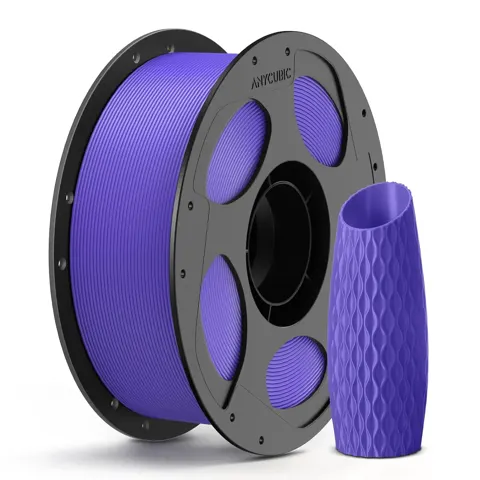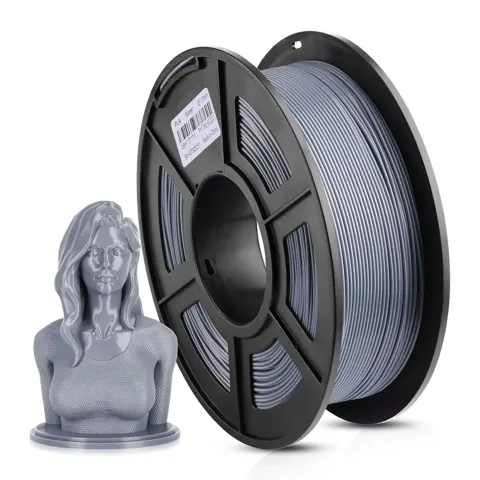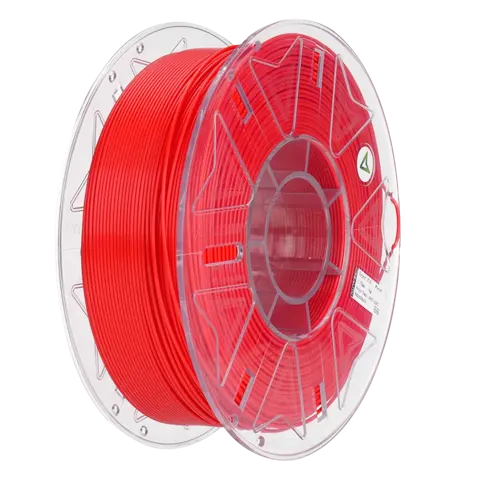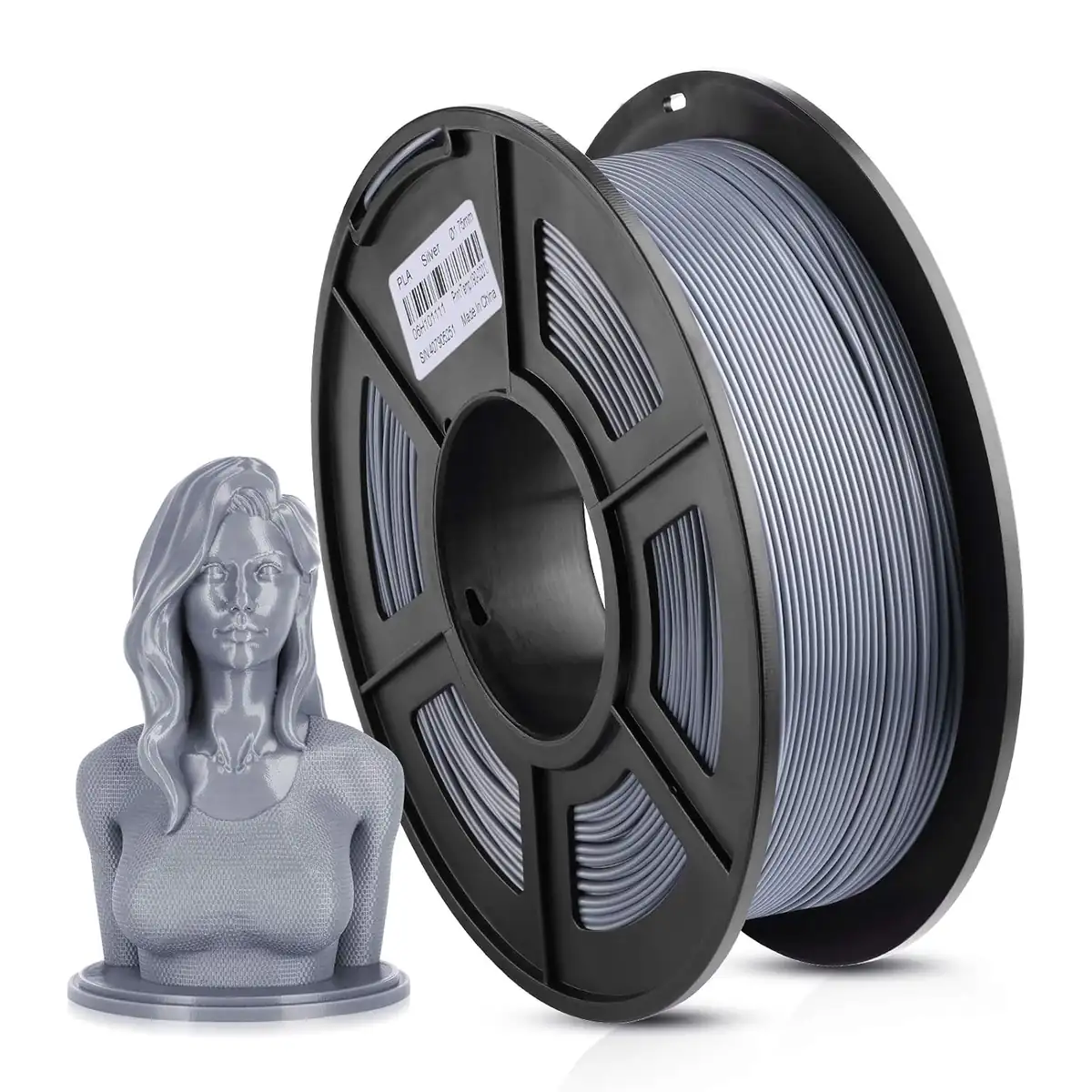
ANYCUBIC PLA Texture 3D Printer Filament 1.75mm
By ANYCUBIC · Filament & Resin · 3D Printing · More from ANYCUBIC
- 1.75mm diameter, +/-0.02mm tolerance
- 1KG (2.2 lb) spool
- Nozzle 190-230 C
- Bed 55-56 C
- Print speed 50-200 mm/s
Price not listed
- ANYCUBICView at ANYCUBIC
- eBayView at eBay
- AmazonView at Amazon (paid link)
- eBay (used) eBay: used, open-box, refurbishedView at eBay (used)
Stores are listed in a fixed order, never by price or commission. Prices are snapshots. Check the current price with the store.
Summary
Anycubic’s PLA Basic supplies the Texture Grey, Red and Silver color variants: a budget 1.75 mm PLA with a published tolerance of +/-0.02 mm and a nozzle range of 190-230 C. Check the bed temperature before you print: the manufacturer specifies 55-56 C, narrower than the 50-80 C range in older third-party material.
Strengths
- Tight diameter consistency: a hands-on test measured a maximum deviation of 0.01 mm.
- Smooth extrusion and bright colors, with clean prints reported by owners.
- Reusable spools that twist apart, plus RFID auto color detection.
- Good value for beginners at or below about $18 per kg.
- No enclosed printer needed and no subscription or capsule lock-in.
Weaknesses
- Loose winding and tangles reported by owners, with end-of-spool brittleness.
- Non-black colors can look dull and partially transparent in thin walls.
- White filament shows adhesion trouble for some owners, even after drying.
- Packaging tape on the spool end does not release easily.
- Batch-to-batch variability noted in the Tier B rating.
Verified specifications
| Material | PLA (polylactic acid). |
|---|---|
| Diameter | 1.75 mm, +/-0.02 mm tolerance. |
| Nozzle temperature | 190-230 C. |
| Heated bed temperature | 55-56 C. |
| Print speed | 50-200 mm/s. |
| Cooling time | 8 s. |
| Maximum volume speed | 12 mm3/s. |
| Density | 1.24 g/cm3. |
| Melt index | 4-10 g/10 min at 190 C/2.16 kg. |
| Melting point | 168 C. |
| Vicat softening temperature | 55 C. |
| Heat deflection temperature (0.45 MPa) | 54 C. |
| Young's modulus | 2534 +/-85 MPa. |
| Tensile strength | 48 +/-5 MPa. |
| Elongation at break | 8 +/-1%. |
| Bending modulus | 3360 +/-100 MPa. |
| Bending strength | 90 +/-3 MPa. |
| Izod impact strength (X-Y) | 22 +/-1 kJ/m2. |
| Tensile strength (Z) | 26 +/-1 MPa. |
| Drying | 45-50 C for 6-8 hours; dry before use. |
| Enclosed printing | not required. |
| ACE Pro multicolor filament box | compatible. |
| Color variants | Texture Red (#EF3340), Texture Silver (#8A8D8F), Texture Grey (#75787B). |
| Dimensions | spool 60 × 75 × 200 mm (height, inner diameter, outer diameter); 1 kg filament on a 0.35 kg spool (third-party test, not manufacturer). |
| Packaging | spools twist apart for refill and reuse. |
Full research notes and sources
Print settings
Use the manufacturer’s narrower ranges rather than older third-party ones. Nozzle 190-230 C, heated bed 55-56 C, speed 50-200 mm/s, with an 8 second cooling time and a 12 mm3/s maximum volume speed. The bed temperature is the number that trips people up: an older hands-on test used 50-80 C, but the manufacturer specifies 55-56 C and that is the value to follow. Dry the filament at 45-50 C for 6-8 hours before printing and store it in an airtight box.
Print quality and consistency
A hands-on test measured a maximum diameter deviation of 0.01 mm against the stated +/-0.02 mm tolerance, with excellent adhesion on PEI. On glass or blue tape, Magigoo helps with filigree first layers. The same test printed “Little Ghost”, “Articulated Onix” and “Flexi Turtle” almost flawlessly with minor stringing, and saw no impurities over several hundred meters. Filament Cheat Sheet rates Anycubic Tier B: tight consistency, but recurring complaints about loose winding, tangles and end-of-spool brittleness.
Spool and handling
Spools hold 1 kg of filament on a 0.35 kg spool and twist apart for refill and reuse. A third-party test measured 60 mm height, 75 mm inner diameter and 200 mm outer diameter; those dimensions are not on the manufacturer page. Packaging is vacuum-packed and neatly wound in the tested sample, though the tape securing the spool end does not release easily. Reusable spools and RFID auto color detection are practical extras.
Cost and value
Filament Cheat Sheet reports Anycubic filament typically costs $16-$25 per kg. At or below about $18 per kg it is strong value for beginners, given the measured consistency. From $19 to $25 per kg it is fair, and Sunlu and Overture rate similarly in owner reports. Above $25 per kg it is weak unless the Texture color, RFID spool or reusable spool is specifically needed. Recurring costs are drying energy and desiccant or storage; reusable spools reduce cost. The manufacturer storefront prices per spool by color and quantity, and no single stable price was captured for the Texture variants.
Is it worth it?
For everyday printing and beginners, yes at or below about $18 per kg, where the measured tolerance and clean prints justify the price. Between $19 and $25 per kg it is a fair but unremarkable choice; compare Sunlu and Overture, which owners rate similarly. Above $25 per kg, buy it only for the Texture colors, RFID spool or reusable spool.
Which model this is
This page covers Anycubic’s PLA Basic color variants sold as Texture Grey, Texture Red and Texture Silver; there is no separate “PLA Texture” grade. It is not PLA+, High-Speed PLA or Matte PLA, which carry different bed temperatures and densities. The Amazon listing for the seed is ASIN B085NFTZN9.
Sources
Manufacturer:
- Anycubic 1.75mm PLA 3D Printer Filament (manufacturer product page)
- Anycubic 1.75mm Matte PLA 3D Printer Filament (manufacturer product page)
- Anycubic filaments collection (current lineup)
Independent reviews:
Owner reports: