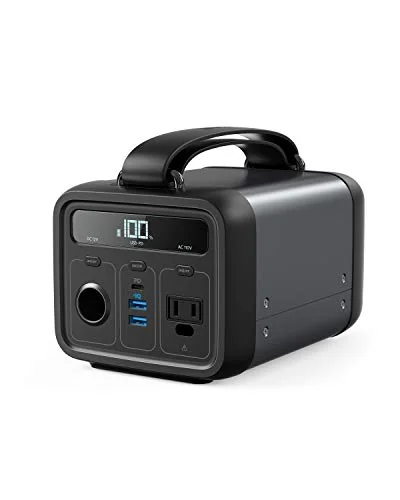
Anker PowerHouse 200
By Anker · Portable Power Stations · Audio & Electronics · More from Anker
- 213Wh / 57600mAh capacity
- 100W AC output
- 130W max total output
- 6.0 lbs (2.7 kg) weight
- 7.48 x 5.47 x 4.69 inches
Lowest price seen
~$199.99 (approx.)
from $199.99 at Amazon
- Amazon ~$199.99 (approx.)View at Amazon
- AnkerView at Anker
- WalmartView at Walmart
- eBay (used) eBay: used, open-box, refurbishedView at eBay (used)
- eBayView at eBay
- retailmarket.netView at retailmarket.net
Prices are snapshots. Check the current price with the store.
Summary
A 2019-era 213 Wh portable power station, the Anker PowerHouse 200 (model A1702) runs phones, USB-C laptops and small 110 V devices from a 100 W AC outlet. The name is a battery-energy class, not a wattage rating, and a used unit’s remaining battery capacity is the one thing to check before you buy.
Strengths
- Delivered 166 Wh in PCWorld’s lamp test, about 78.14% of the 213 Wh nameplate.
- The USB-C PD port works in both directions, charging the station or a compatible tablet.
- Four output types cover phones, lights and low-power laptops.
- A full-width display and separate port buttons make the active outputs clear.
- Anker’s support catalog still names the A1702 and its 18-month warranty.
- Kept lights and electronics running through a roughly 12-hour outage in a 2019 field test.
Weaknesses
- The 100 W AC ceiling rules out heaters, kettles, microwaves and laptops that draw more.
- A 2019 pack can be seven years old, and “charges fine” does not prove capacity under load.
- The internal battery is not a user-swappable part, and Anker sells no genuine replacement pack.
- Connect a device before pressing the USB-C PD output button and the station may drain it instead.
- Recharging takes nearly seven hours with the supplied adapter.
- Pass-through charging is not a UPS; no transfer time is specified, so it is unfit for critical gear.
Verified specifications
| Model | Anker PowerHouse 200, A1702; launched March 2019. |
|---|---|
| Capacity | 213 Wh (57,600 mAh at the maker’s internal cell voltage). |
| AC output | one 110 V outlet, 100 W continuous. |
| USB-C | one bidirectional PD port, up to 30 W, with 5/9/15/20 V profiles. |
| USB-A | two ports, 15 W each, on a shared 30 W budget with USB-C. |
| 12 V output | 60 W (12 V × 5 A) from an automobile-style socket. |
| Recharge | 6 h 52 min from empty with the supplied AC adapter (PCWorld, 2019). |
| Solar input | 5–22 V through a 5.5 × 2.1 mm DC jack. |
| AC adapter | 17.6 V × 2.2 A (about 38.7 W). |
| Battery | older lithium-ion, not LiFePO4. |
| Dimensions | 7.48 × 5.47 × 4.69 in; 6 lb. |
| Warranty | 18 months for the A1702, for the original purchaser only. |
Full research notes and sources
Which model this is
The A1702 is the original PowerHouse 200, not the 521 PowerHouse (A1720), which stores 256 Wh and outputs 200 W AC, and not the older 434 Wh PowerHouse (A1701). “200” names the battery-energy class; the AC outlet tops out at 100 W. Regional SKUs and suffixes vary, so match the A1702 code and check the serial before buying used.
The 100 W AC ceiling
The single AC outlet is rated 100 W continuous at 110 V. That is enough for a phone charger, a fan or a low-power laptop, but not a hairdryer, hotplate, kettle, microwave or space heater, and not a device whose average draw looks small while its startup surge runs higher. The 12 V car socket adds 60 W and the USB ports share 30 W, so plan loads around those three separate budgets.
Buying used and battery health
Units shipped in 2019 and resold in 2026 can be seven years old even when lightly used. A seller saying “powers on” or “charges fine” does not verify watt-hours delivered under load, cell balance or long-term safety, so ask for a controlled discharge test with a matched AC adapter and a return window. PCWorld’s 166 Wh result came from a then-new sample; do not expect a used pack to repeat it. The display shows a battery percentage, not true remaining energy. eBay sellers asked $99.99 for a used unit, sometimes $89.99 with a coupon, and another lot at $119.99, sometimes $107.99 with a coupon (eBay, October 2026); one used lot with a 2019 build date was $165.96 plus $20 shipping, about $185.96 before tax (eBay, 2026).
Charging, parts and running costs
Recharging from empty with the supplied adapter measured 6 h 52 min, and the 30 W USB-C path is unlikely to beat that. A weekly full charge is about 11.08 kWh a year stored, roughly 13.84 kWh and $3.46 a year from the wall at an assumed 80% efficiency and $0.25 per kWh; a daily full charge works out to about $24.29 a year. Those are illustrative figures, not metered results, and an old pack may store less.
There is no genuine A1702 battery pack to buy, and the warranty excludes unauthorized disassembly, so a failed internal pack is a service or recycling problem. Third-party AC adapters that claim to fit list around $15 to $40 (eBay, 2026), but they must match the 17.6 V × 2.2 A rating and the plug polarity. Nothing else needs routine replacement; a dead pack is lithium waste.
Is it worth it?
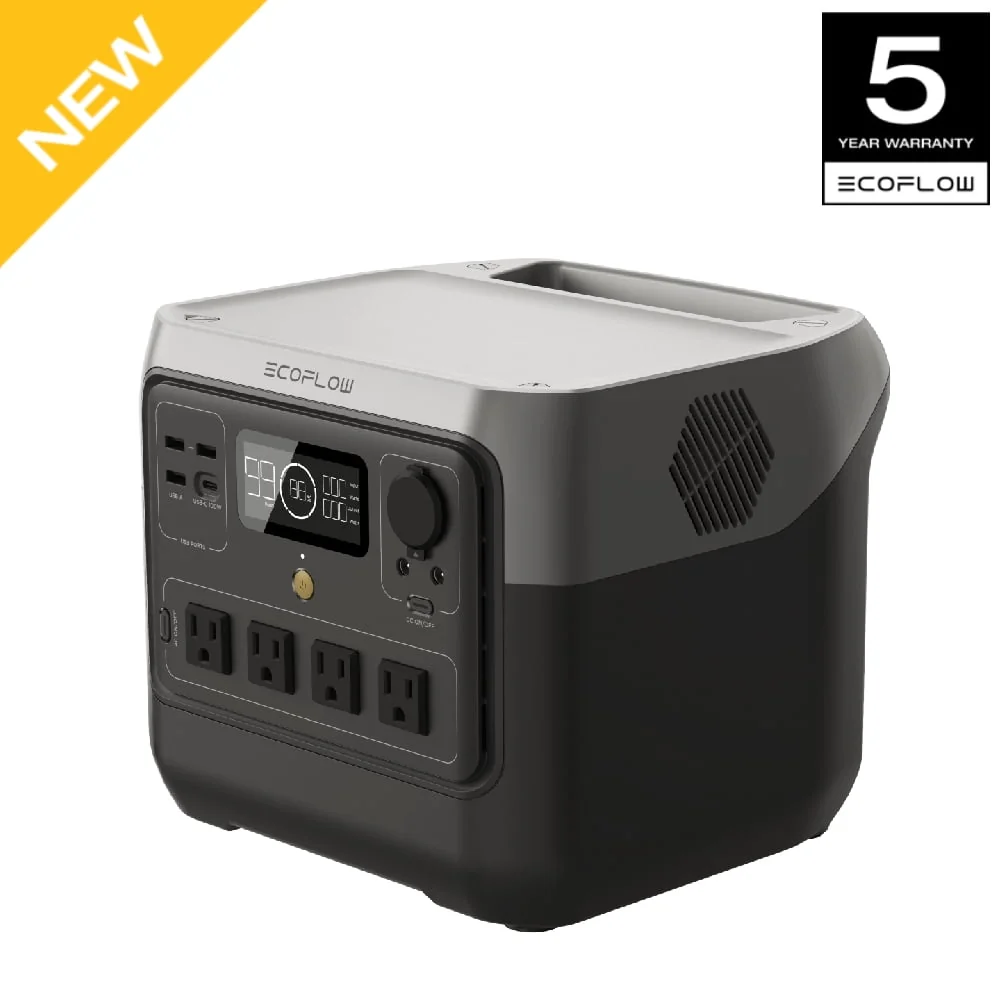
Original 2019 coverage put launch retail at $299 to $350. Asking prices for used and open-box units now spread from about $90 to $186 (eBay, October 2026). Editorial thresholds treat $50 to $70 delivered, after a proven runtime test, as attractive; $71 to $90 is fair if you need exactly this small size and port mix; over $100 favors a currently supported station. For comparison, a refurbished Anker SOLIX C200 DC lists at $139.99, a BLUETTI Elite 30 V2 at $279.99, and an EcoFlow RIVER 3 (230) at $189.
Sources
Manufacturer:
- Anker SOLIX PowerHouse 200Wh support and specifications
- Anker Japan A1702 technical specifications and 2019 release
- Anker SOLIX US warranty and refund policy
- Anker A1702 original user guide (Teklib)
Independent reviews:
- PCWorld bench test: 166 Wh and 6 h 52 min recharge
- Windows Central PowerHouse 200 review
- The Outdoor Gear Review: 12-hour outage use
- PCWorld 2019 Black Friday pricing context
Owner reports:
Parts and stores: