Audio & Electronics
Portable Power Stations
3 portable power stations compared side by side — specs, features and trade-offs, with current commerce details checked at the retailer.

Choose by what matters
Jump straight to what fits your situation — use-case chips point to products that match those features. Price/rating leader chips stay off until approved API data is available.
Every product we track
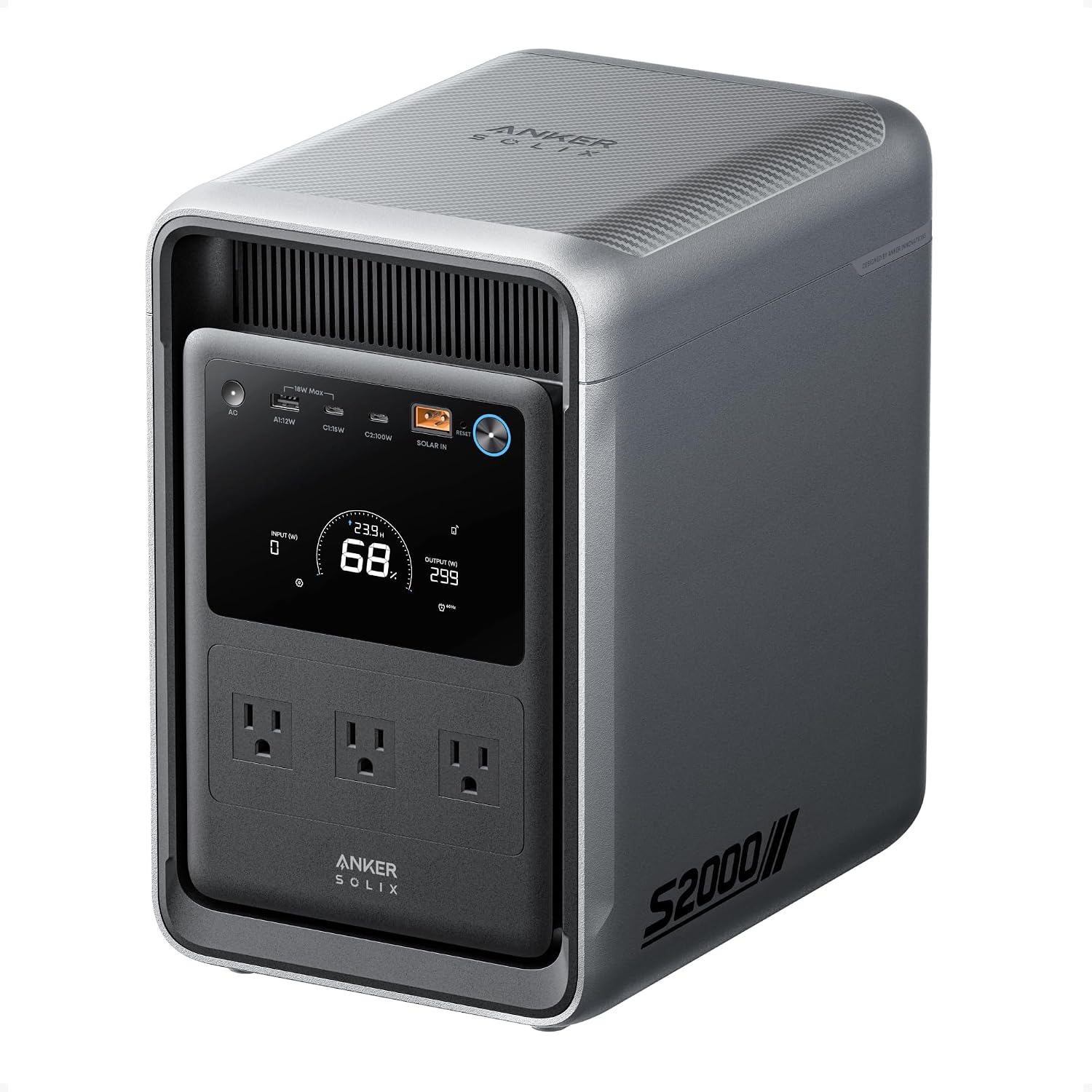

Tap a product to jump to its breakdown — specs and honest pros/cons. Verify current price and retailer rating at the retailer.
Buying guides for this category
Frequently asked questions
How do you size a portable power station for what you actually want to run?
Add up the wattage of the devices you'll run simultaneously, checked against each device's own rating plate, and compare that against the station's continuous output rating. Then check the battery's watt-hour (Wh) capacity against how long you need to run that load -- a 1,000Wh station running a 100W device continuously lasts roughly 8-9 hours after accounting for conversion losses.
Is LiFePO4 (LFP) battery chemistry actually safer or better than older lithium-ion for a power station?
Yes on both counts for this use case. LFP is significantly more thermally stable, with a much lower fire-risk profile, and is rated for far more charge cycles -- often 3,000 to 10,000-plus versus 500 to 1,000 for older NMC lithium-ion -- before capacity drops meaningfully, at the cost of being somewhat heavier per watt-hour. Nearly every current-generation power station in this price range now uses LFP for exactly this reason.
Can you run a refrigerator or CPAP machine off a portable power station overnight?
Yes for both, with the right sizing. A CPAP machine draws relatively little power, typically well under 100W, and can run many nights on a mid-size station. A full-size refrigerator's compressor draws more and cycles on and off, so check that the station's continuous wattage rating covers the fridge's startup surge, and that its Wh capacity covers as many hours of backup as you actually need.
Do portable power stations lose charge sitting in storage unused?
Yes -- all lithium batteries self-discharge slowly over time even unused, typically a few percent per month for LFP units. Manufacturers generally recommend storing at roughly 50-80% charge, not full or empty, and topping off every few months during long-term storage to protect long-term battery health.
Do you need to buy the matching brand's solar panels, or can any solar panel work?
Most stations accept generic solar panels as long as the voltage, current, and connector type match the station's solar input spec, commonly a barrel or DC connector with a defined voltage range. The brand's own panels are guaranteed plug-and-play and often support proprietary fast-charge input rates, but a compatible generic panel will still charge the unit, just not necessarily at the fastest advertised rate.