3D Printing
Filament Dryers
5 filament dryers compared side by side — specs, features and trade-offs, with current commerce details checked at the retailer.
Choose by what matters
Jump straight to what fits your situation — use-case chips point to products that match those features. Price/rating leader chips stay off until approved API data is available.
Buyer checklist
What matters with filament dryers
A dryer and a dry-storage box solve related but different problems. Start with the filament you actually use, then match temperature, capacity and storage behavior.
- Check maximum temperature against the filament manufacturer's drying guidance; engineering filaments can need substantially more heat than PLA.
- Capacity is about workflow, not just spool count: four-spool units are useful for multi-material setups, while one- and two-spool dryers take less space.
- Active drying removes moisture with heat and airflow; long-term storage still depends on sealing and desiccant performance.
- Dry-and-print feed-throughs matter if a hygroscopic filament will stay in the dryer during a long print.
- A humidity display is a useful indicator, but it does not by itself prove that the enclosure will maintain low humidity for days after heating stops.
Every product we track
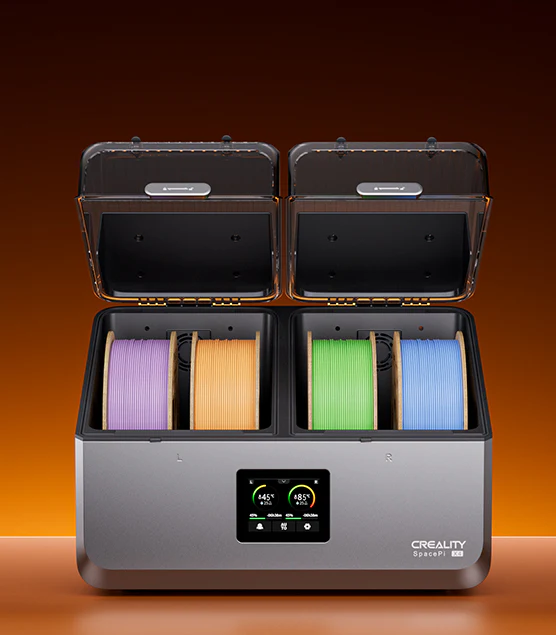
Creality SpacePi X4 4-Spool Filament Dryer
 Sunlu FilaDryer S4 4-Spool Filament Dryer
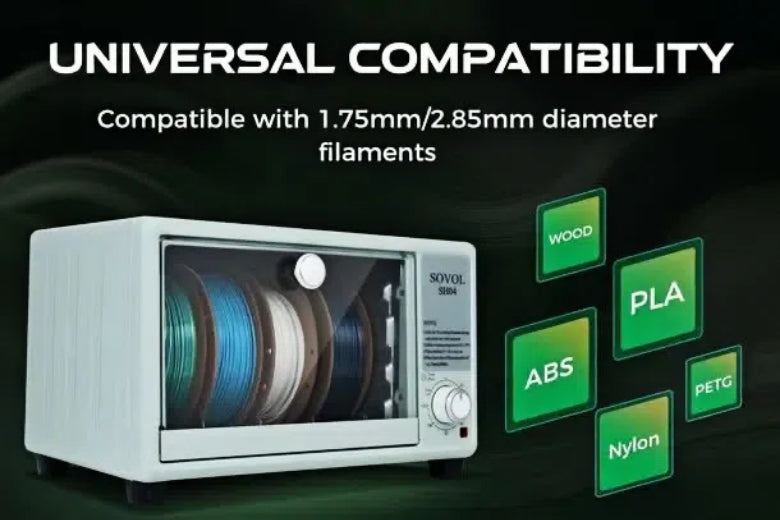 Sovol SH04 4-Spool Filament Dryer
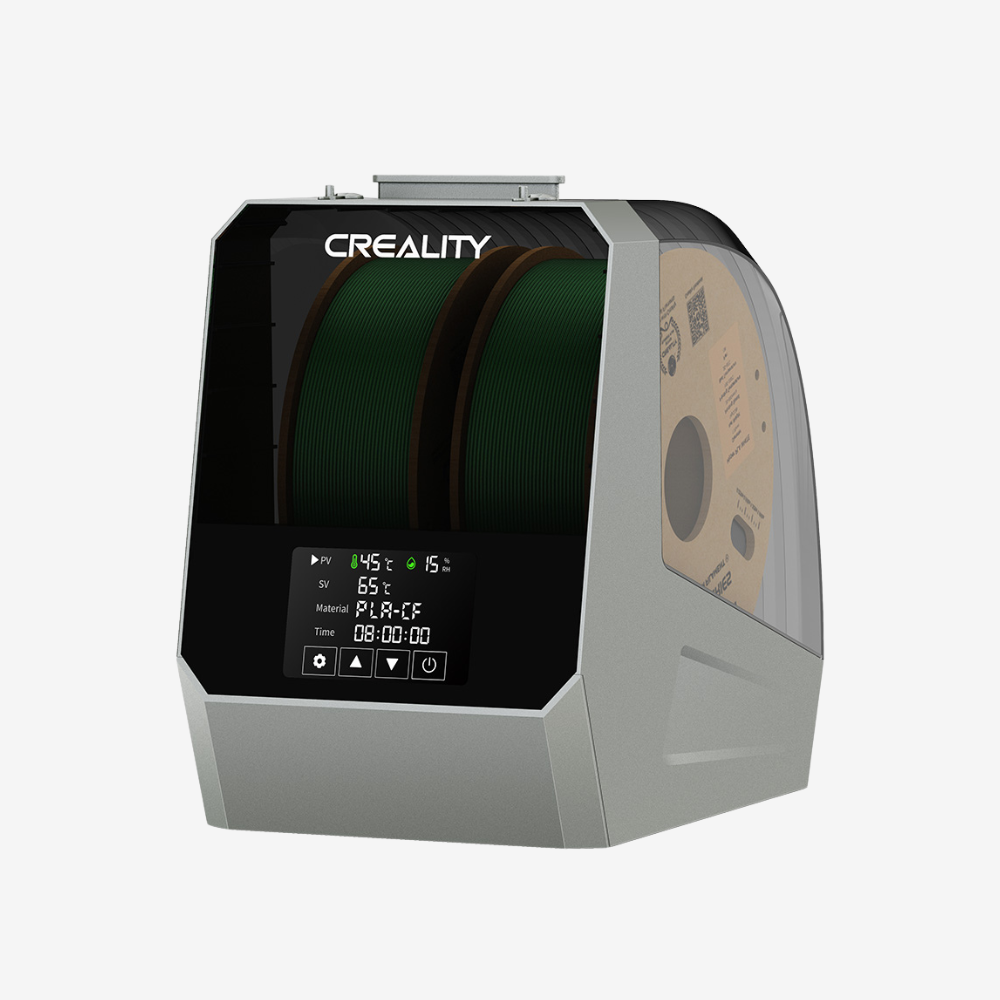 Creality Space Pi Plus 2-Spool Filament Dryer
 Creality Space Pi Single-Spool Filament Dryer
Tap a product to jump to its breakdown — specs and honest pros/cons. Verify current price and retailer rating at the retailer.
Frequently asked questions
Is a filament dryer the same thing as a dry-storage box?
No. A filament dryer actively uses heat and airflow to remove moisture from filament. A dry-storage box is mainly meant to slow moisture from getting back in after drying. Some dryers also advertise sealed-storage features, but storage performance depends on the enclosure, seals and desiccant rather than the heater alone.
What drying temperature do PLA, PETG and nylon need?
Use the filament manufacturer's recommendation first. As a reference, Creality's current SpacePi X4 guidance lists about 50°C for PLA, 60°C for PETG and 80–85°C for PA/PAHT and several other engineering filaments. Different formulations can require different temperatures or longer drying times.
Can you print directly from a filament dryer?
Many dryers provide filament feed-throughs or PTFE-tube ports so the spool can stay inside while printing, but this is model-specific. Check the outlet layout and whether it works with the path to your printer before buying.
Do you still need desiccant if you own a filament dryer?
For storage, usually yes. Heating can remove moisture already absorbed by filament; desiccant in a sealed environment helps slow re-absorption afterward. Some models, including the Creality SpacePi X4, include built-in desiccant and regeneration features, but that is separate from the active heating cycle.
Is a 70°C filament dryer enough for nylon?
Not for every nylon or every drying schedule. Some materials can be dried at lower temperatures for longer, but Creality's current X4 guidance calls for 80–85°C for PA/PAHT-class filaments. Follow the specific filament maker's instructions rather than assuming one temperature works for every nylon.