Comparison · 2026
Anker 737 vs Baseus Blade, EnerGeek GP12 and Anker Prime: Power Banks Compared
Researched by Dmitrii Pakhomov and Daria Govorina · SavingsHook editorial · Published October 16, 2026
The short answer
Verdict based on specifications, manufacturer documentation and owner reviews. We did not lab-test these products.
| Product | Key specs | Main drawback | Not for |
|---|---|---|---|
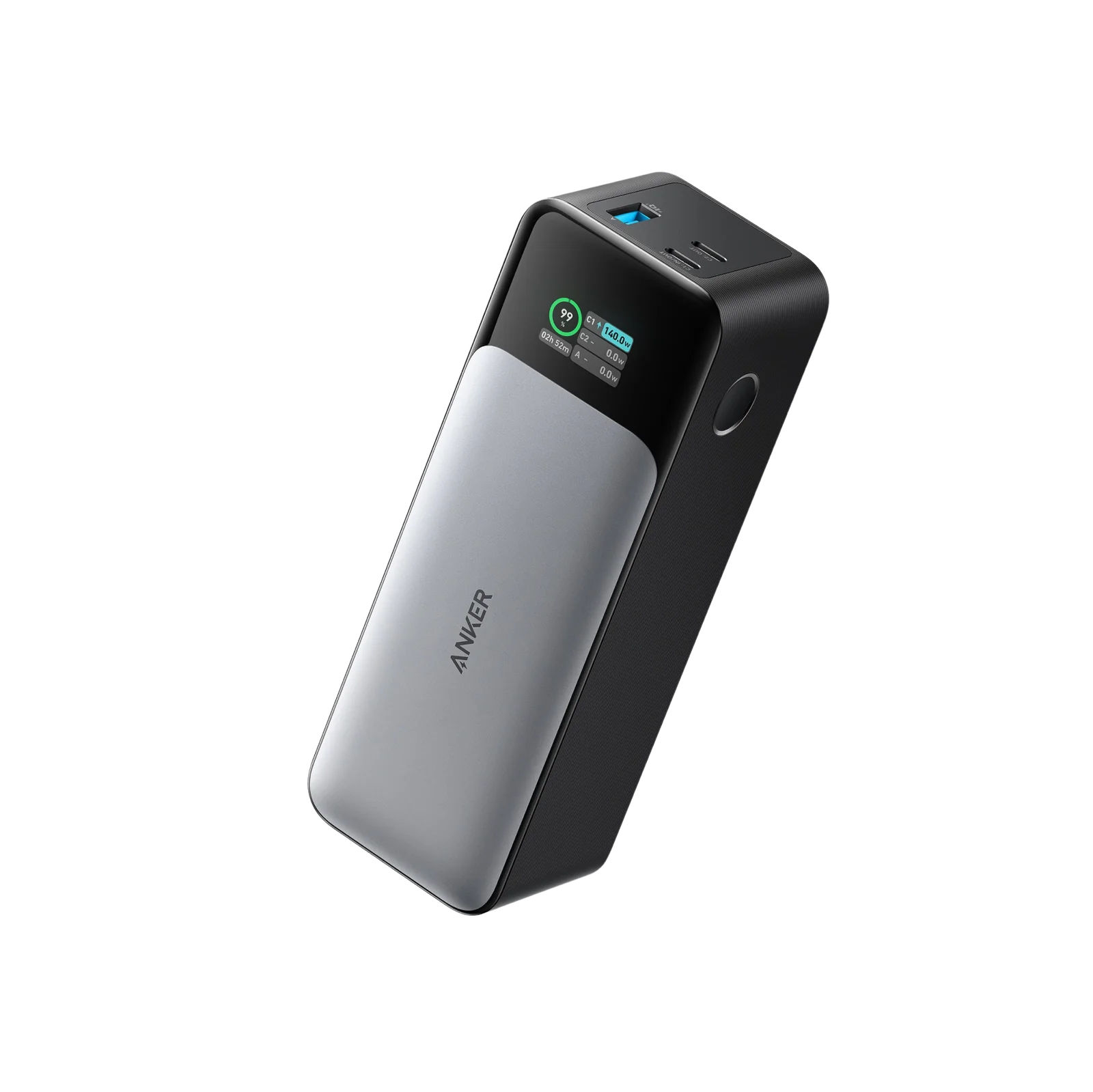
| Anker 737 Power Bank | 24,000mAh capacity 140W max output 2x USB-C ports, 1x USB-A port | All ports share one 140W ceiling, and the always-on screen can drain about 15% of the pack a day. | Phone-only buyers; it is a 630 g bag battery. |
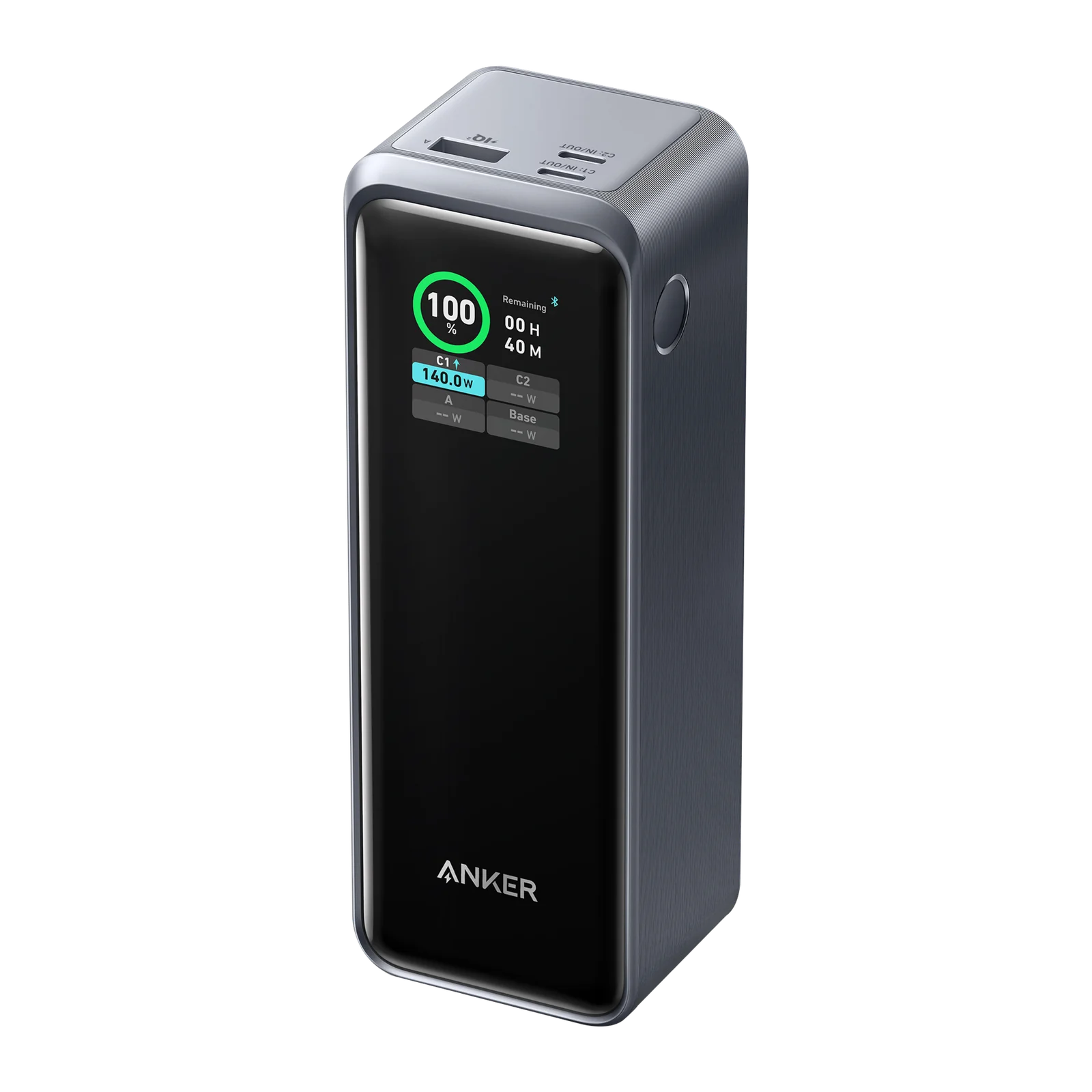
| Anker Prime 27,650mAh 3-Port 250W Laptop Portable | 27,650mAh capacity 250W total max output 2 USB-C + 1 USB-A ports | Sold out on Anker's US site, and owners report units arriving dead or throwing E107 undervoltage errors. | Buyers who cannot verify new, full-warranty stock. |
| Baseus Blade Laptop Power Bank 100W 20000mAh | 20,000mAh capacity 100W max output (USB-C) 65W max input (USB-C) | The 100W peak lasts about nine minutes before thermal protection cuts it, settling near 60–65W. | Anyone who needs sustained 100W for long sessions. |
How we picked these products
We compare product identity, specifications, pros/cons and retailer links. Until approved retailer API access is available, current Amazon price, star-rating and review-count data are not republished here.
Prices at a glance
| Product | Price | Stores |
|---|---|---|
| Baseus Portable Charger | Price not listed | 4 stores |
| Baseus Blade Laptop Power Bank 100W 20000mAh | Price not listed | 4 stores |
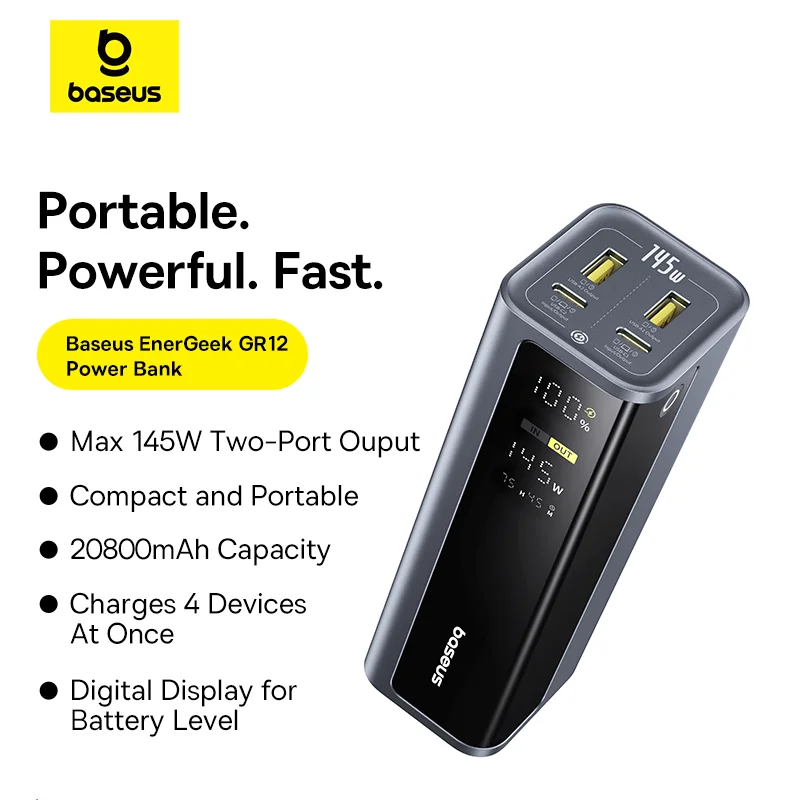
| Baseus 20800mAh 145W Portable Charger with 4 | from $56.28 · AliExpress | 6 stores |
| Anker 737 Power Bank | from $134.00 · eBay | 5 stores |
| Anker Laptop Power Bank 25K 165W with Built-in USB-C | Price not listed | 5 stores |
| Anker Prime 27,650mAh 3-Port 250W Laptop Portable | Price not listed | 6 stores |
Prices are snapshots. Check the current price with the store.
The Baseus Blade’s 100W lasts about nine minutes before thermal protection cuts it, and the EnerGeek GP12’s 145W has never been measured by an independent lab.
Baseus EnerFill Bipow2 Pro 10,000mAh
The budget phone pack, the only one here that fits a jacket pocket.
Specs & pros/cons
Key specs:
- 10,000mAh / 37Wh, 0.72 in thick, about 204 g
- 22.5W from the built-in cable; the USB-C and USB-A ports top out near 18W
- All three outputs together drop to a shared 5V/2.4A
- Built-in braided cable rated 10,000+ bends, doubles as a lanyard; LED display
- 18W recharge; no adapter in the box
Pros:
- Three devices at once, with a cable you cannot forget
Cons:
- No instrumented test of this exact model; a Newegg buyer reports output missing the advertised 22.5W
- A sibling Baseus model’s built-in cable reportedly stopped working
Baseus Blade 100W 20,000mAh
The slim laptop slab.
Specs & pros/cons
Key specs:
- 20,000mAh / 74Wh, 18 mm thick, about 506 g; 2x USB-C, 2x USB-A
- 100W peak measured at 99.9W; thermal protection cuts it after about nine minutes, surface 58–59°C
- Sustained output settles near 60–65W; two USB-C devices split 65W + 30W
- 65W recharge in about 1h23–1h30; 24-month warranty
Pros:
- Slides into a laptop sleeve; 74Wh is under the 100Wh airline limit
- ROG Ally owners report 1.5–2 hours of turbo mode per charge
Cons:
- ZDNET’s 2022 hands-on never saw 100W, settling near 60W
- The display tracks only one device at a time and cannot be switched off
Baseus EnerGeek GP12 20,800mAh 145W
The multi-device pick — and the only one no independent lab has measured.
Specs & pros/cons
Key specs:
- 20,800mAh, about 77Wh; 100W from one USB-C port, 145W across two
- Four ports (2x USB-C, 2x USB-A); 65W recharge in about two hours
- Smart display with live wattage and time estimates
- 650 g per Baseus, 523 g per another retailer
Pros:
- Four devices at once, with pass-through and a low-power trickle mode
Cons:
- Retailer sheets conflict: USB-A is 33W or 18W, the second USB-C 45W or 100W
- Brand-level Trustpilot reports mention a swollen battery and a unit that died after four months
Anker 737 Power Bank (PowerCore 24K)
The default laptop pick.
Specs & pros/cons
Key specs:
- 24,000mAh / 86.4Wh, about 630 g; 140W from a single USB-C port (PD 3.1)
- All ports share one 140W ceiling; USB-A is 18W
- Color screen: watts by port, time remaining, cycles, battery health
- Recharges in about an hour at 140W; 24-month warranty
Pros:
- TechRadar measured 70.5–77.1Wh of usable output and stable voltage at a 140W load
Cons:
- The always-on screen draws about 0.36W — Anker says up to 15% of the pack a day
- Owners report undervoltage shutdowns and black-screen no-output faults
Anker Laptop Power Bank 25K 165W (A1695)
The cable-free travel pick.
Specs & pros/cons
Key specs:
- 25,000mAh / 90Wh, 595 g; two built-in USB-C cables (retractable 70 cm, 30 cm lanyard) plus one USB-C port and a 33W USB-A
- 100W per USB-C; the 165W total needs two devices and more than about 78% charge
- Best Batteries measured 96W to one device; about 74Wh of the 90Wh delivered
- Self-recharge peaks near 90–92W; 18-month warranty
Pros:
- No cable to pack; the display shows per-port watts, temperature, cycles and health
Cons:
- A 2026 heise online report describes failed built-in cables, including one reported to have damaged a MacBook Pro mainboard; Anker is investigating, with no recall
- The unit is glued shut and the cables are not replaceable, so a cable failure is effectively terminal
Anker Prime 27,650mAh 250W (A1340)
The max-power pick.
Specs & pros/cons
Key specs:
- 27,650mAh / 99.54Wh, 665 g; 140W per USB-C, 250W combined across three ports
- ComputerBase measured 78.7Wh delivered at 15W and 85.2Wh at 90W
- Recharges in about 43 minutes from one 140W charger, 37 from two
- Color display plus Bluetooth app; 24-month warranty
Pros:
- 99.54Wh sits just under the FAA’s 100Wh carry-on limit
- Android Central’s reviewer used one daily for four months across phones, laptops and tablets without issue
Cons:
- Owners report units arriving dead, boot-looping or throwing E107 undervoltage errors
The wattage on the box is not the wattage you get
Across these six, the headline number is a ceiling, not a promise. The Blade’s 100W is a nine-minute burst. The GP12’s 145W is unverified. The A1695’s 165W needs two devices and a nearly full pack. The 737’s 140W is split across every port. The A1340’s 250W is a 24-minute sprint.
Who should buy which
- One fast laptop and a useful screen: the Anker 737.
- Laptop, tablet and phone at once: the A1340, if you can find it new.
- Four devices on a budget, spec sheet taken on faith: the EnerGeek GP12.
Prices and specs collected from manufacturer/retailer listings and public reviews; always confirm current price and stock on the linked page before buying.