Office Chairs
Office Chairs: A Side-by-Side Look
Compare 16 office chairs side by side: Duramont Ergonomic Office Chair with Lumbar Support, Branch Ergonomic Chair Pro, Hbada E3 Pro Ergonomic Office Chair…
How we picked these products
We compare product identity, specifications, pros/cons and retailer links. Until approved retailer API access is available, current Amazon price, star-rating and review-count data are not republished here.
Choose by what matters
Jump straight to what fits your situation — use-case chips point to products that match those features. Price/rating leader chips stay off until approved API data is available.
We don't crown a single "best" pick — this table lays out what's factually true about each option, side by side.
specific, listed things: adjustment count (14 points on the Branch Pro versus a fixed lumbar bar on the BestOffice), rated weight capacity (BIFMA commercial grade to 275 lbs), backrest type (all-mesh versus leather executive), and a real warranty behind the mechanism.
Duramont Ergonomic Office Chair with Lumbar Support

Specs & pros/cons
Key specs:
- 4D adjustable lumbar support and rollerblade wheels
- Breathable high-back mesh
- Thick seat cushion, adjustable armrests and headrest
- Reclines with adjustable tilt tension
Pros:
- 4D adjustable lumbar support (listing)
Cons:
- Fewer total adjustment points than the Branch Pro's 14-point, BIFMA-rated system
- No published commercial weight-capacity rating like the Branch Pro
- Mesh-only back, no upholstered option in this listing
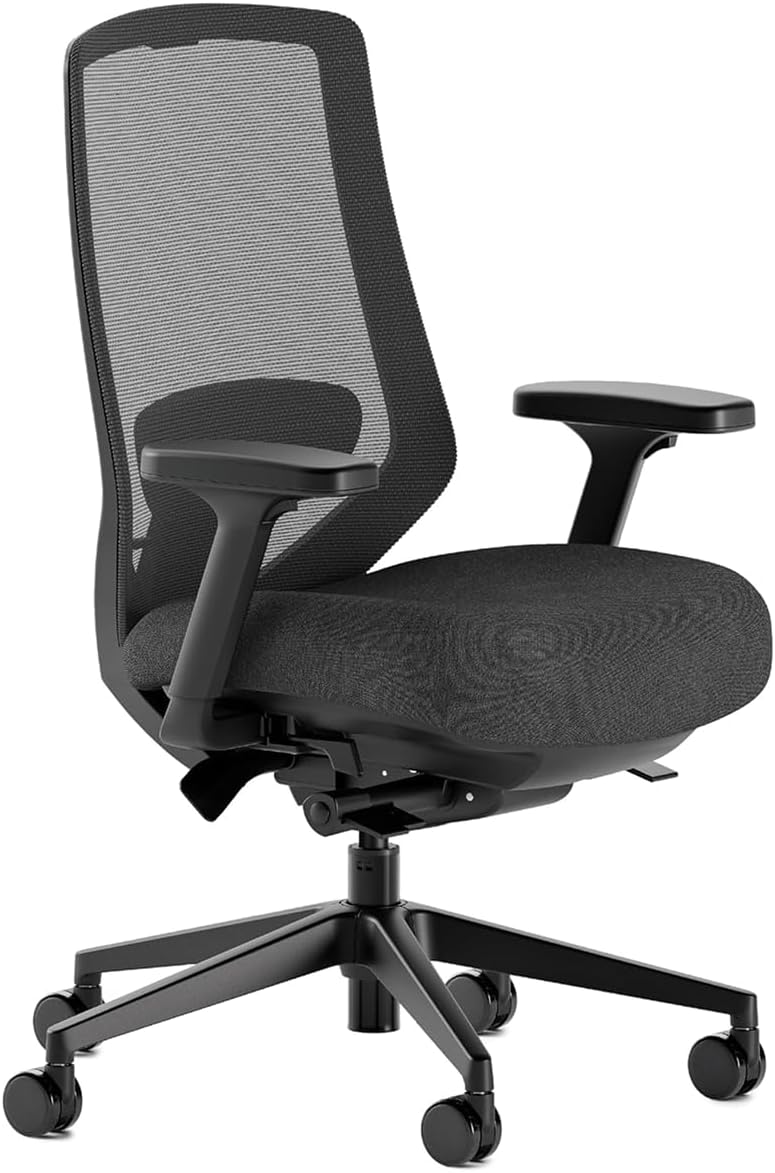
Branch Ergonomic Chair Pro
Specs & pros/cons
Key specs:
- 14 points of adjustment, BIFMA commercial-grade rated to 275 lbs
- 5D armrests
- Forward tilt plus smooth recline
- Two-way adjustable lumbar support
Pros:
- The most adjustment points here (14)
- Includes a forward-tilt function (listing)
Cons:
- No headrest included -- sold as a separate attachment
Hbada E3 Pro Ergonomic Office Chair

Specs & pros/cons
Key specs:
- 3-zone dynamic lumbar support
- 4D adjustable headrest
- 6D adjustable armrests
- Big-and-tall sizing
Pros:
- Only big-and-tall-rated chair here
- Most armrest adjustment axes here (6D)
- Dynamic, 3-zone lumbar support rather than a single fixed pad
Cons:
- No BIFMA commercial rating published, unlike the Branch Pro
Steelcase Series 1 Work Office Chair

Specs & pros/cons
Key specs:
- LiveBack flexor backrest system
- Weight-activated recline controls
- 3D microknit mesh back
- Tool-free assembly in about 2 minutes
Pros:
- The only chair here from a major commercial office-furniture brand with a long-standing warranty program
- Weight-activated recline needs no manual tension dial to set up
Cons:
- Fewer adjustment points than the Branch Pro's 14-point system
- Headrest sold as a separate accessory
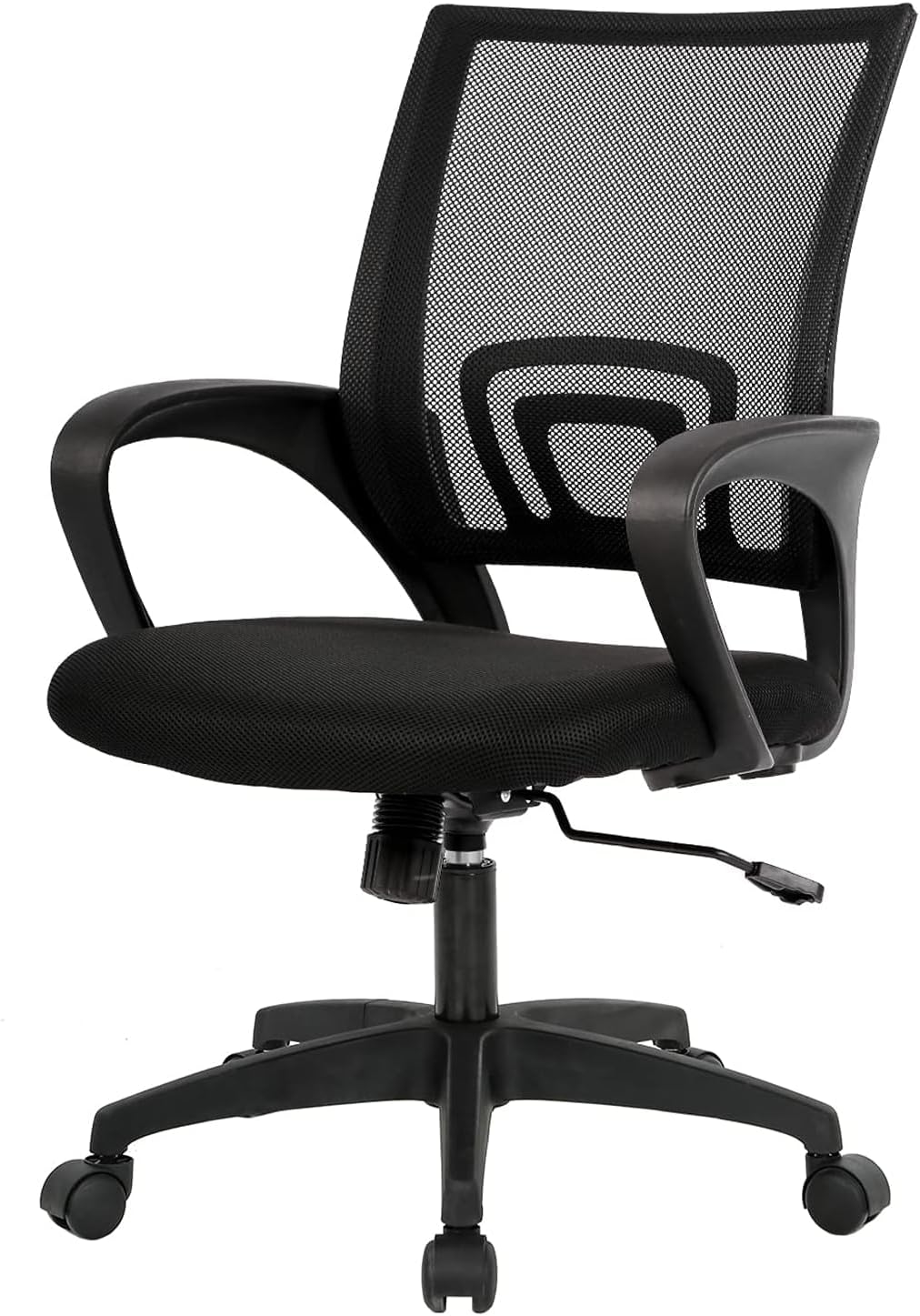
BestOffice Mid-Back Ergonomic Office Chair
Specs & pros/cons
Key specs:
- Breathable 100% ventilated mesh back (listing)
- Curved mid-back with lumbar support and ergonomic armrests (listing)
Pros:
- Ventilated mesh back for long sitting sessions (listing)
Cons:
- Mid-back only -- no high-back/headrest support like the premium chairs here
- Lumbar support is minimal -- TechGearLab notes it is not enough for genuine back issues
Sweetcrispy Executive Mesh Office Chair

Specs & pros/cons
Key specs:
- All-elastic premium mesh back with high-density sponge seat (listing)
- Pneumatic seat-height adjustment from 18.5 to 22.2 inches (listing)
- Multi-direction casters on a sturdy 5-star base (listing)
Pros:
- Budget price with an ergonomic mesh back and lumbar support (listing)
Cons:
TRALT Office Chair - Ergonomic Desk Chair with Adjustable Lumbar Support, Mesh Computer Chair, Executive Chairs for Home Office Comfortable Lumbar Support (Black)

Specs & pros/cons
Key specs:
- Adjustable lumbar support (manufacturer listing)
Pros:
- Adjustable lumbar support (listing)
Cons:
Short version: This dossier covers the black TRALT mesh ergonomic desk chair sold under ASIN B0CQD3K8PJ, not TRALT's similar headrest/gaming variants. The strongest verified proposition is a 330-lb-rated, 28-lb chair with adjustable lumbar support, breathable mesh back, foam seat, 360° swivel and 90–120° tilt.
Marsail High-Back Mesh Ergonomic Office Chair

Specs & pros/cons
Key specs:
- High-back breathable mesh with adjustable lumbar support (manufacturer listing)
Pros:
- 4.3 stars -- above the entry-level chairs here
- Straightforward assembly and a sturdy feel for the price (per reviews)
Cons:
- The seat runs firm compared with softer mesh chairs
- Best fit for users roughly 5'4"-5'10" -- taller or shorter buyers may find it less comfortable
YFO Brown Leather Executive Office Chair with Lumbar Support

Specs & pros/cons
Key specs:
- Brown leather executive styling (manufacturer listing)
- Lumbar support with adjustable height (manufacturer listing)
- Rubber casters (manufacturer listing)
Pros:
- Leather executive styling with lumbar support (listing)
- Rubber casters for hard floors (listing)
Cons:
GABRYLLY High-Back Mesh Ergonomic Chair with Headrest

Specs & pros/cons
Key specs:
- High back with headrest (manufacturer listing)
- Flip-up arms (manufacturer listing)
- 90-120 degree tilt lock (manufacturer listing)
- Wide cushion, big-and-tall sizing (manufacturer listing)
Pros:
- The only high-back chair here with a headrest and flip-up arms (listing)
- 90-120 degree tilt lock (listing)
- Wide cushion for big-and-tall users (listing)
Cons:
TRALT Gaming-Style Ergonomic Office Chair

Specs & pros/cons
Key specs:
- Lumbar support (manufacturer listing)
- Gaming-style design, office/desk hybrid
Pros:
Cons:
- Padding-first design trades away some mesh breathability
- TRALT already appears on this list with one other budget model
Short version: Budget ergonomic mesh-back / foam-seat chair with adjustable lumbar, headrest, flip-up arms, 90–120° recline, 330-lb stated capacity and metal five-point base. The clearest repeated weakness from independent owner discussions is the thin/firm seat cushion: multiple owners report butt/tailbone soreness within roughly an hour or during long sessions.
Upgraded Ergonomic Gaming Chair for Adults

Specs & pros/cons
Key specs:
- Gaming-style design for adults (manufacturer listing)
- Ergonomic features (manufacturer listing)
Pros:
- Gaming-style look at an office-chair price
Cons:
- Thin listing data: specific ergonomic features not detailed in this source
- No lumbar/headrest specs published
DUMOS Criss Cross Chair Wide Fabric Vanity Desk Seat

Specs & pros/cons
Key specs:
- Wide deep seat with high-density foam cushioning
- Armless design with padded backrest and U-shaped cushion
- Height adjustment, 360° seat swivel, tilt tension control
- SGS-certified gas lift, BIFMA-approved base up to 300 lbs
Pros:
- Armless criss-cross design fits tight spaces and desks without armrest collision
- Wide deep seat allows cross-legged sitting unusual for office chairs
Cons:
- Armless design limits arm support during typing
- No lumbar-specific adjustment -- backrest is a single padded panel
SIHOO M18 Ergonomic Office Chair with Mesh Back and Headrest

Specs & pros/cons
Key specs:
- Breathable mesh backrest (manufacturer listing)
- Adjustable headrest (manufacturer listing)
- BIFMA tested, 1136 kg static pressure test, up to 150 kg capacity
Pros:
- BIFMA-tested with 150 kg weight capacity
- Breathable mesh keeps back cool during long sessions
- Headrest included at this price point
Cons:
- SIHOO is a newer brand with less service infrastructure than Steelcase or Branch
- Assembly required
NEO CHAIR Ergonomic Mid-Back Mesh Desk Chair

Specs & pros/cons
Key specs:
- Breathable mesh mid-back with built-in lumbar support
- Height, tilt, and 360° swivel adjustment
- SGS and BIFMA certified materials, FSC-certified wood support
Pros:
- SGS and BIFMA certified at a budget price
Cons:
- Mid-back design: no headrest or high-back support
- Fixed armrests (no height/width adjustment mentioned)
ELABEST X100 Ergonomic Mesh Office Chair with Footrest

Specs & pros/cons
Key specs:
- Dynamic 3D lumbar support
- 5D flip-up armrests (height/width/forward/backward/rotate)
- Extra-wide 3D breathable headrest, 2-position angle footrest
- Dual-Stripe AirMesh: 38% better airflow than standard mesh
- 3-stage reclining with extendable 18" footrest
Pros:
- Footrest included for work-to-rest transition
- 5-year quality support with 15-minute tool-free assembly
Cons:
- Gaming-style aesthetics may not suit all home offices
Bottom line
basic lumbar bars, not 4D systems. GABRYLLY) adds headrests and flip-up arms for hybrid desks. If the chair is an eight-hour daily tool, the Duramont, Branch Pro and Steelcase tall users should start with the high-back entries.
Frequently asked questions
How much should you actually spend on an office chair?
For someone sitting 6+ hours a day, most ergonomic-focused reviewers put the useful floor around $150-200 (real adjustability, a mesh or cushioned back that holds up) and diminishing returns past roughly $600-900 unless you specifically need commercial BIFMA certification or a 10+ year warranty for heavy daily office use.
What does 'BIFMA rated' actually mean, and does it matter for home use?
BIFMA is a furniture-industry testing standard for stability, durability, and safety under repeated use and load -- it's mainly a signal of how the chair will hold up over years of commercial-grade daily use. For occasional home use it's a nice-to-have reassurance, not a strict requirement; for a chair used 8 hours a day, it's a genuinely useful data point.
Is lumbar support adjustability worth paying more for?
Yes for most people, if the fixed lumbar curve on a cheaper chair doesn't line up with your own lower back -- height-adjustable (and ideally depth-adjustable) lumbar support lets you actually match the support to your spine instead of the other way around. It matters less if a chair's fixed curve already happens to fit you well.
Mesh back vs padded/upholstered back: which runs cooler and which lasts longer?
Mesh backs breathe better and stay noticeably cooler over long sitting sessions, which is why most ergonomic-focused chairs default to mesh. Padded/upholstered backs can feel plusher initially but the foam and fabric are usually the first thing to visibly wear or flatten with years of daily use, while mesh tension tends to degrade more gradually.
How many 'points of adjustment' do you actually need?
Seat height, armrest height, and some form of lumbar adjustment cover the basics most people benefit from. Extras like armrest width/depth/pivot, seat depth, and headrest tilt matter more the more hours you spend in the chair or the more your body type differs from an 'average' fit -- they're comfort refinements, not strictly required for a functional ergonomic setup.
Other options we looked at
Before narrowing this comparison down, we also checked out these alternatives — here's the real reason each one isn't included above.
- Branch Ergonomic Chair (standard) — The listing found in September 2026 no longer resolved (404) at verification time -- superseded here by the Branch Ergonomic Chair Pro, a different SKU from the same brand that did verify live.
- Duramont Ergonomic Office Chair with Lumbar Support (executive/high-back line) — This older Duramont listing (ASIN B07KWDRGV3) had no working add-to-cart/buy-now button at verification time (September 2026) -- sold out. A different, still-live Duramont listing (Rollerblade Wheels line) was used instead.