How to Choose a Cutting Board in 2026
Published October 15, 2026
In this article
Choosing a cutting board looks simple until you realize how many ways to get it wrong. A board that is too small turns dinner prep into a juggling act. A board made of the wrong material dulls your knives within weeks. And one that is impossible to clean quietly becomes a hygiene problem you stop noticing. In our kitchen we have made most of these mistakes already, so this guide is about skipping them.
The useful way to choose a cutting board starts with three questions: what do you cook most often, what size do you actually have room for, and how are you willing to care for it. Everything else — thickness, wood species, juice grooves, feet — is a detail you settle after those three answers.
Material: the one decision that matters most
Cutting boards come in wood, plastic, and a group of materials you should simply avoid. The rule we follow at home: use only wooden or plastic boards. Stone, glass, and metal boards only look nice; they are not practical and they kill the edge. We have seen a good chef’s knife come off a glass board with a visibly rounded edge after one evening of carving. A sharp knife is a safe knife, and a board that destroys sharpness destroys safety along with it.
Wood is kind to knives, pleasant to cut on, and — when it is a closed-grain hardwood like maple — naturally resistant to bacteria when kept clean and oiled.
What you should not pay for: bamboo boards marketed as “eco luxury” (they are hard enough to be tough on edges), glass boards marketed as “hygienic” (they are knife killers), and thin decorative boards that slide around on the counter.
Rule of thumb: wooden board for daily vegetable and bread work, plastic board for raw meat and fish, and never anything harder than your knife.
Formats compared
| Format | Best when | Main drawback |
|---|---|---|
| Rectangular wooden board | You want one dependable all-round board | Heavy end-grain versions are hard to move |
| Plastic dishwasher-safe board | You need easy sanitizing for raw meat | Wears out and needs periodic replacement |
| End-grain butcher block | You chop hard and want the kindest surface for edges | Heavy, and needs regular oiling |
| Carving board with juice groove | You carve roasts and poultry | Juice grooves trap moisture and need scrubbing |
Size and thickness: buy for the meal, not for the board
Match the board to your typical cook, not to your ambitions. A board for two people chopping vegetables for a stir-fry does not need to be the size of a table leaf. But a board that is too small means onions rolling onto the counter and a constant fight for workspace.
As a practical guide: a medium rectangular board around 12 by 18 inches handles most weekday cooking. Go larger if you regularly carve whole chickens, slice long baguettes, or prep vegetables in bulk for the week. Go smaller only if counter space is truly scarce.
Thickness matters in two ways. A board under three-quarters of an inch feels flimsy, slides on the counter, and can warp as it dries unevenly. A board around one and a half to two inches thick stays put, feels solid under a heavy knife, and lasts for years. The tradeoff is weight: a thick end-grain board can be genuinely heavy, and if you plan to store it in a cabinet after every use, that weight becomes a daily tax.
If your board has a juice groove, check that you can scrub it easily. Grooves are useful when carving roasts, but they hold meat juice and need attention; a plain board without a groove is easier to keep clean for everyday work.
Rule of thumb: a board you can lift, that does not slide, and that fits your normal batch of food beats a bigger board that fights you every night.
Wood species and construction: what to look for
For wooden boards, hard maple is the benchmark. It is closed-grain, durable, and gentle on edges. Look for boards described as Northern Hard Rock Maple or premium-grade maple. Teak is a respectable alternative, provided it is genuinely end-grain and from a certified sustainable source.
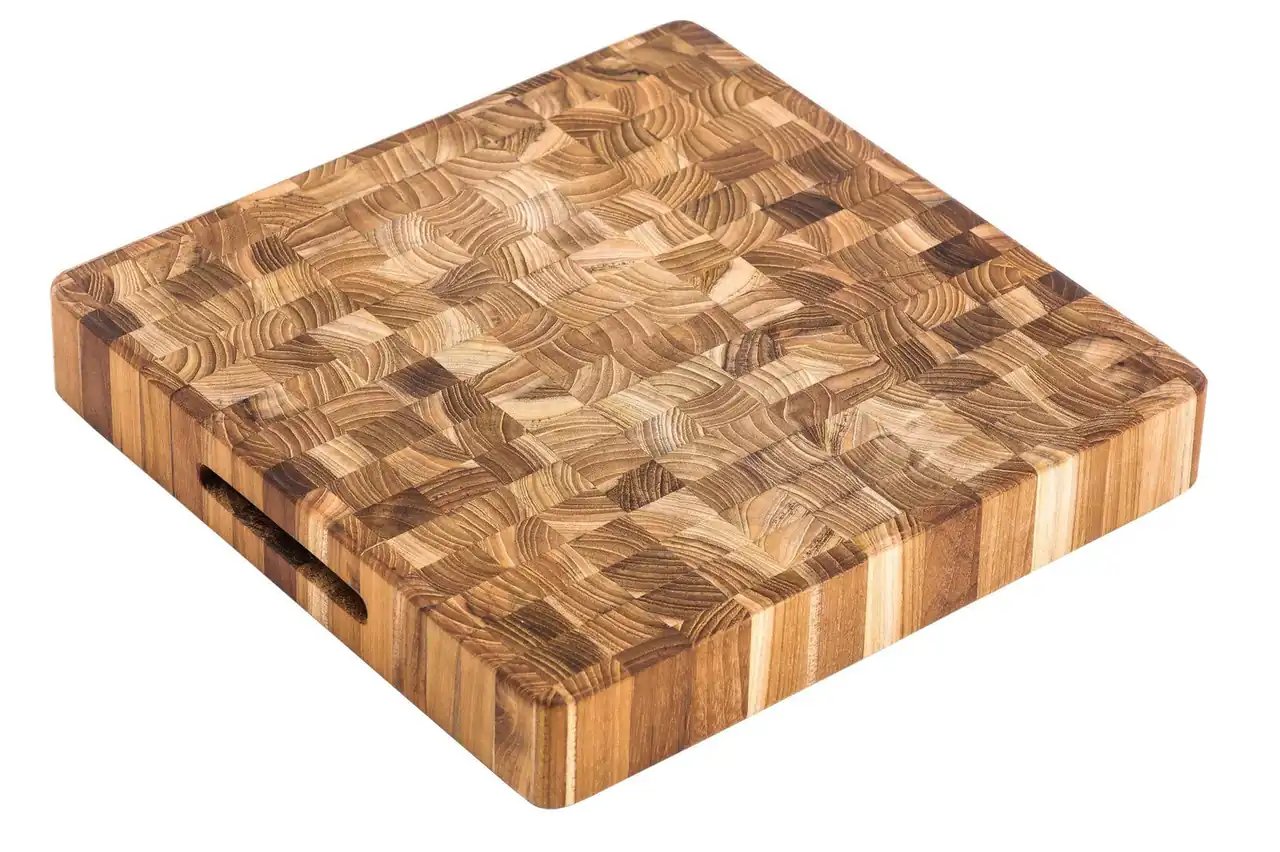
Two construction styles dominate. End-grain boards expose the end of the wood fibers, which are kinder to a knife edge and self-healing to a degree, but they cost more and are significantly heavier. For most home cooks, a solid edge-grain board is the smarter buy; end-grain is worth it if you chop hard every day and treat your knives as tools you maintain carefully.
Check the finish. A board finished by hand with food-safe oil is ready to use and easy to maintain. Boards joined with waterproof, food-safe adhesive are a good sign of build quality. If the board ships with non-slip feet, even better — a board that slides while you chop is a genuine safety hazard.
Care: the part nobody reads until it is too late
Here is what we do in our kitchen, and what we would tell any friend: never put a wooden board in the dishwasher, and never use it as a lid over hot pots or plates with steam. The board warps or comes unglued, and it happens faster than you expect. Wash wooden boards by hand with warm water and mild soap, dry them upright so both faces air, and feed them with food-safe oil when they start to look dry or pale — roughly every few weeks in a busy kitchen, less often in a quiet one.
Own several boards. We keep separate ones for meat, fish, and vegetables. A plastic board that goes through the dishwasher is a reasonable choice for raw meat; your oiled wooden board stays for bread, vegetables, and anything that will be cooked anyway. This separation is the single most effective hygiene habit in a home kitchen, and it costs nothing beyond a second board.
Plastic boards belong in the dishwasher when they fit, and they should be replaced when the surface turns gray and scarred — deep grooves are bacteria’s favorite address.
Rule of thumb: oil a wooden board when it looks thirsty, hand-wash it always, and retire plastic boards when their surface turns into a topographic map of old cuts.
Common mistakes
Choosing by looks alone. A beautiful board that kills your edges or slides on the counter is a bad buy no matter how it photographs.
Buying one board for everything. Cross-contamination is boring to think about and easy to prevent. Two boards beat one, every time.
Boarding on glass or stone because it is “hygienic.” Your knives pay the price, and a dull knife is the real hazard.
Ignoring where the board will live. A thick end-grain block is a commitment. Measure the counter, the sink reach, and the storage spot before you fall in love.
Skipping maintenance. A wooden board is not a buy-it-and-forget-it object. Ten seconds of oiling once a month is the whole job; ignoring it shortens the board’s life dramatically.
Paying for features you will not use. Juice grooves, finger grooves, and non-slip feet are each useful for someone. None of them is useful for everyone.
Who should buy what
Small households and students: A medium edge-grain wooden board plus a thin plastic board for raw meat covers everything. Light, cheap to replace, easy to store.
Serious home cooks: A thick end-grain maple board is the upgrade worth making. It is the kindest surface you can give your knives, and it will outlast several edge-grain boards.
Carvers and Sunday cooks: A large carving board with a juice groove earns its place when you regularly roast and carve meat for a crowd.
Hygiene-first kitchens: A set of color-coded plastic boards, one per food type, all dishwasher safe. Less romantic, more practical, easier to enforce.
- John Boos CCB Series Rectangular Wooden Maple Cutting Board – suits serious home cooks who want a 2-1/4-inch-thick end-grain maple board with recessed finger grips and reversible surfaces.
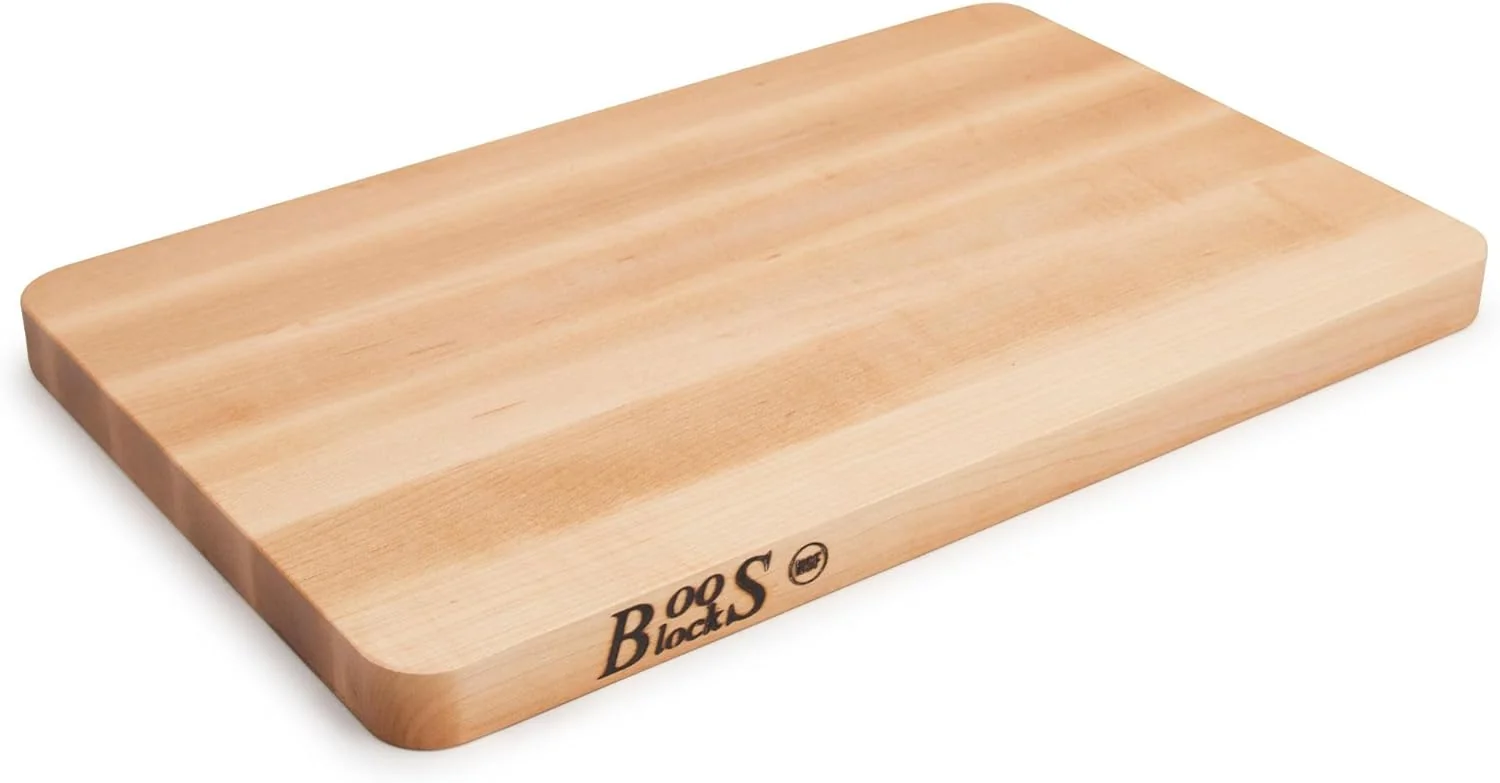
- John Boos Chop-N-Slice Series Rectangular Maple Cutting Board – fits everyday cooks who prefer a lighter edge-grain board at one inch or one and a quarter inches thick with eased corners.
- The Boardsmith Maple End Grain Cutting Board – matches buyers who want a made-to-order end-grain board with FSC-certified maple, hand-applied food-safe finish, and optional juice groove.
- Teakhaus Butcher Block Carving Board Large – designed for carvers who need a 24-by-18-inch end-grain teak surface for large roasts and poultry.
- John Boos R-Board Series Rectangular Wooden Maple Cutting Board – ideal for buyers who want a mid-weight edge-grain board with NSF certification for one-and-a-half-inch thickness.
The right cutting board is the one that stays put, respects your knives, and is already in the right place when you need it. Choose material first, size second, and let everything else follow from how you actually cook.