Comparison · 2026
Best 3D Printer Filament 2026: eSUN PLA vs Bambu PA6-CF
Researched by Dmitrii Pakhomov · Published November 9, 2026
The short answer
Verdict based on specifications, manufacturer documentation and owner reviews. We did not lab-test these products.
| Product | Key specs | Main drawback | Not for |
|---|---|---|---|
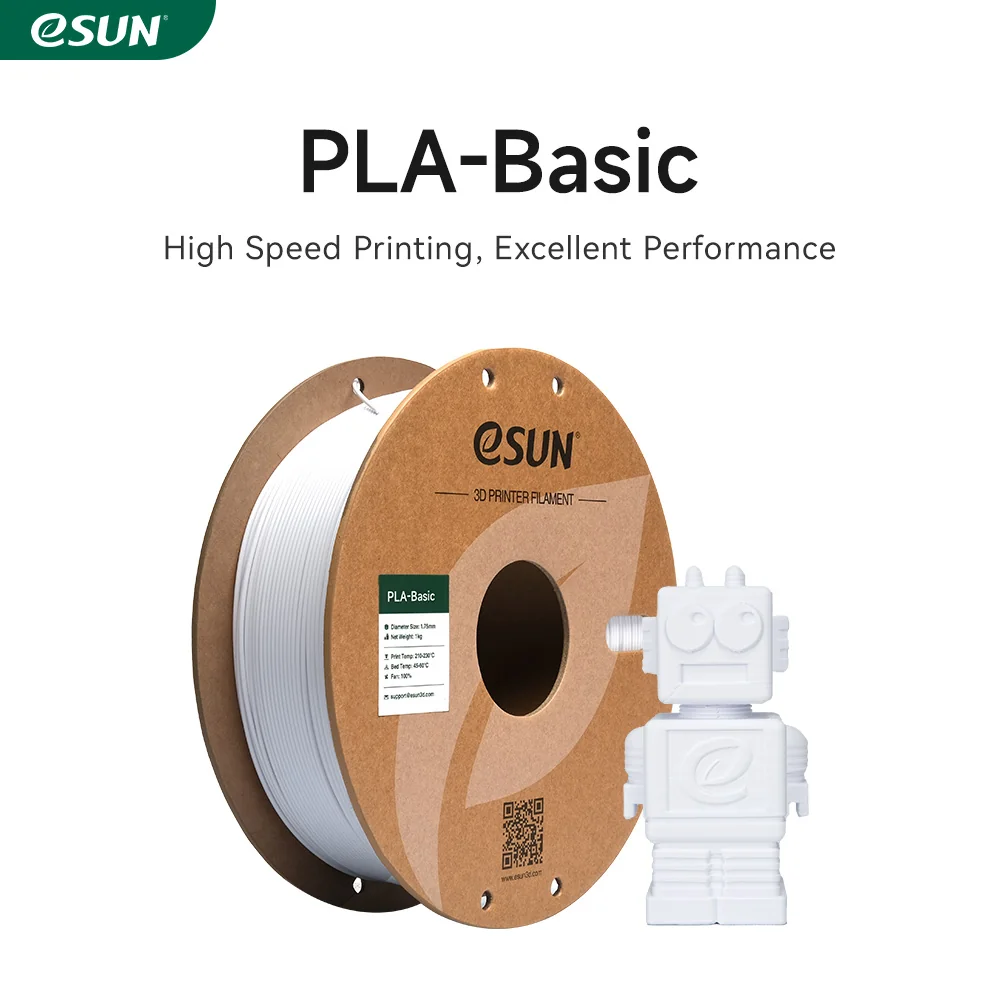
| eSUN PLA Basic Filament | Density 1.24 g/cm3 Extruder temp 210-230 C Bed temp 45-60 C | Bed temperature needs tuning on the first layer, some spools arrive wet, and colors can miss the product photo. | Anyone printing hot, outdoor or high-stress parts. |
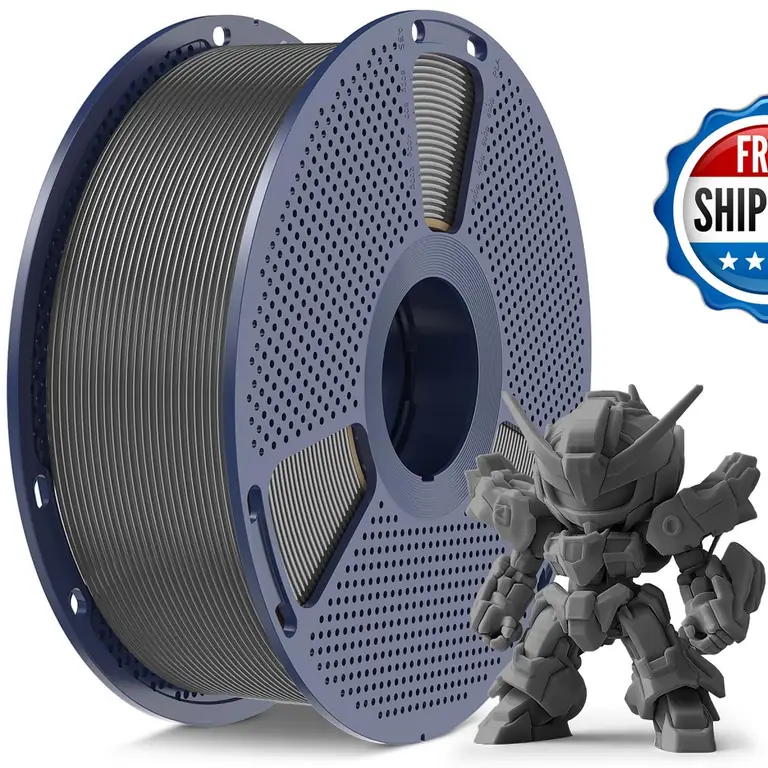
| SUNLU High Speed PLA Filament 1.75mm Meta Black 1KG | 1.75mm diameter, ±0.02mm tolerance 1 kg spool (2.2 lbs) Nozzle temperature 185-225°C | Anyone who needs verified dimensional accuracy at high speed. | |
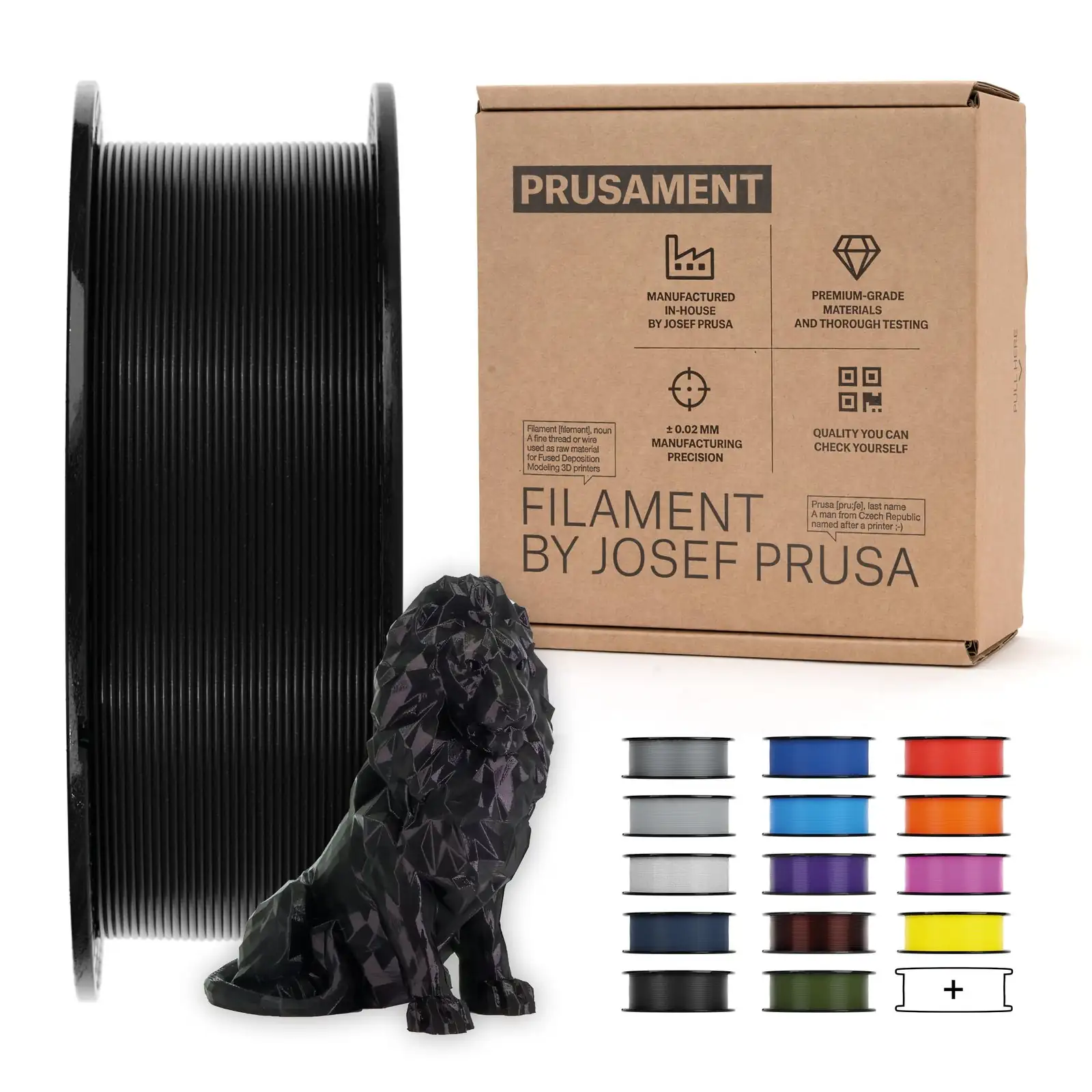
| Prusament Premium PLA Filament Jet Black 1.75mm 1kg | 1.75 mm filament diameter 1 kg spool PLA | Costs more than basic PLA, and owners report clogs and feed loops on some exact Jet Black spools. | Budget buyers who only need generic black plastic. |
How we picked these products
We compare product identity, specifications, pros/cons and retailer links. Until approved retailer API access is available, current Amazon price, star-rating and review-count data are not republished here.
Prices at a glance
| Product | Price | Stores |
|---|---|---|
| eSUN PLA Basic Filament | from $13.99 · eSUN | 5 stores |
| SUNLU High Speed PLA Filament 1.75mm Meta Black 1KG | from $13.99 · WoodArtSupply | 6 stores |
| Prusament Premium PLA Filament Jet Black 1.75mm 1kg | from $25.99 · Prusa 3D | 8 stores |
| Polymaker PETG Filament 1.75mm Magenta 1KG High | from $18.99 · Polymaker | 8 stores |
| OVERTURE TPU 95A Flexible 3D Printer Filament 1.75mm 1kg Grey | from $61.23 · Matildaco | 5 stores |
| Bambu Lab PA6-CF Filament (Carbon Fiber Nylon) | from $57.99 · Matterhackers | 7 stores |
Prices are snapshots. Check the current price with the store.
Price and heat resistance pull in opposite directions here.
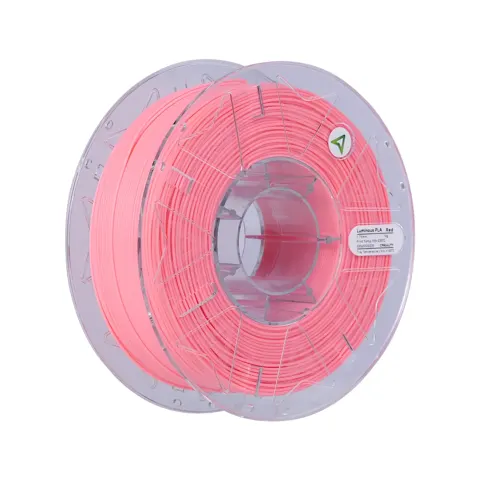
eSUN PLA Basic
Specs & pros/cons
Key specs:
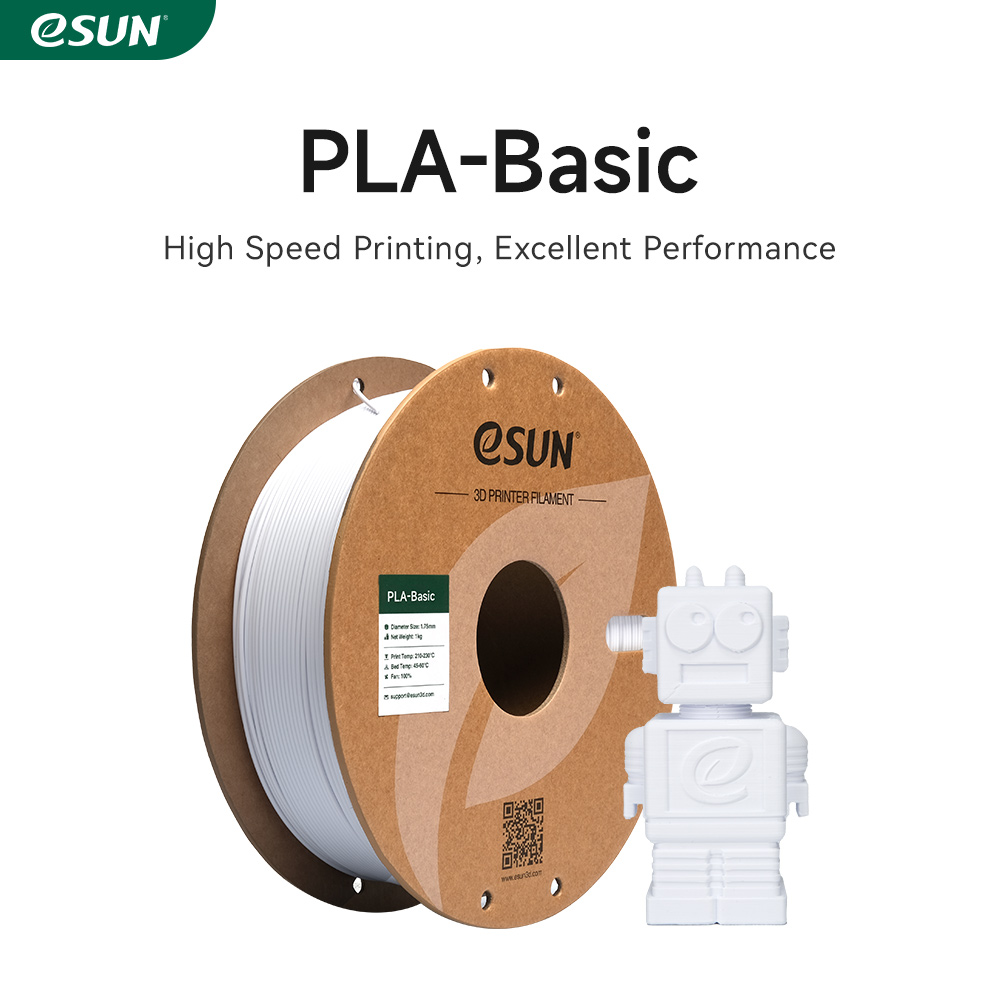
- Modified PLA, 1.75 mm diameter, 1 kg spool, about 29 colors
- 210–230 °C nozzle, 45–60 °C bed, 100% fan, heated bed required
- Rated below 300 mm/s; drying at 50 °C for 8–12 h
- Heat distortion temperature 53.65 °C; tensile strength 64.27 MPa in XY
Pros:
- Prints with standard PLA settings on Bambu Lab and Creality machines
- Low odor, low stringing and good bed adhesion with minimal warping
Cons:
- First-layer adhesion sometimes needs bed temperature tuning
- Some spools arrive wet or wound poorly, and tangles get reported
- Color accuracy slips on some shades, with Fire Engine Red often darker than the photo
- Strength and layer adhesion trail PLA+, and no independent instrumented test of this filament was found
See the current price and spool details
SUNLU High Speed PLA (Meta Black)

Built for speed: the spec sheet claims up to 600 mm/s and 30 mm³/s volumetric flow.
Specs & pros/cons
Key specs:
- 1.75 mm ±0.02 mm, 1 kg spool, about 330 m of filament
- Nozzle ladder: 190–210 °C at 50–150 mm/s, 210–230 °C at 150–300 mm/s, 230–260 °C at 300–600 mm/s
- Bed 50–60 °C, or 65–75 °C with glue; drying at 65 °C for 8 h
- Heat deflection temperature 57.3 °C; tensile strength 54 MPa
Pros:
- Manufacturer publishes diameter, flow, temperature and mechanical data for the line
- One 1 kg spool runs about 330 m, which covers long prints
Cons:
- Independent review material covers standard SUNLU PLA, a different product, so it does not transfer
- Bed temperature guidance splits between 50–60 °C and 65–75 °C with glue, depending on the plate
See the current price and spool details
Prusament PLA Jet Black

The pick for deep black parts where batch consistency matters more than price.
Specs & pros/cons
Key specs:
- PLA, 1.75 mm ±0.02 mm, 1 kg spool, glossy deep black
- Starting settings 215 °C nozzle, 50–60 °C bed, 0.4 mm brass nozzle; no enclosure needed
- Heat deflection temperature 55 °C; interlayer adhesion 17 ±3 MPa
- Spools redesigned from October 2025 carry a rewritable offline OpenPrintTag NFC tag
Pros:
- Measured diameter and a traceable spool code for repeatable visible parts
- Low warping and strong cooling suit large flat prints and fine detail
- Gloss shifts with temperature, so you can dial the sheen from matte to glossy
Cons:
- Owners report underextrusion and nozzle clogs on some exact Jet Black spools, including one failure after 6–7 hours
- Feed loops and stuck filament reported on two Prusa machines in May 2026
- PLA heat resistance is 55 °C and the material is UV-sensitive and relatively brittle
- Smaller-feature finish can be rougher than some other PLAs, and mild stringing persists for some users
See the current price and spool details
Polymaker PETG (Magenta)
The step up from PLA for parts that take abuse, heat or weather.
Specs & pros/cons
Key specs:
- PETG, 1.75 mm, 1 kg spool, AMS-compatible with hardened spool edges
- 240–260 °C nozzle, 60–70 °C bed, 20–60% fan; no enclosure needed
- Up to 300 mm/s, 500 mm/s with high-flow nozzles; 22 mm³/s on stock Bambu hardware
- Heat deflection temperature about 70 °C; drying at 60 °C for 6 h
Pros:
- Tougher and more heat-resistant than PLA, and the manufacturer describes it as UV- and water-resistant
- Feeds in multi-material systems because of the hardened spool edges
Cons:
- Very hygroscopic: wet filament strings and shows surface defects
- No independent test data, so mechanical properties and dimensional tolerance stay unverified
- Removing prints from textured PEI needs the bed cooled to room temperature
- The manufacturer states it has no food safety data and that no 3D printing material is FDA food-safe compliant
See the current price and spool details
Overture TPU 95A Flexible (Grey)

Specs & pros/cons
Key specs:
- Thermoplastic polyurethane, Shore 95A, 1.75 mm, 1 kg spool, 19 colors including grey
- Elongation at break 332.1 ±15.9% in XY; tensile strength 30.1 ±3.7 MPa
- 210–240 °C nozzle on the product page, 210–230 °C in the TDS; drying at 70 °C for 7–8 h
- Direct drive recommended; not compatible with AMS or AMS lite
Pros:
- Forgiving on direct-drive printers at the TDS speed of 20–40 mm/s
- Good layer bonding and bed grip on textured plates, and the maker states oil resistance
- Consistent diameter tolerance across long prints
Cons:
- Stringing on travel-heavy models, and blobs when printed too hot
- Jams on poorly constrained Bowden feed paths
- Moisture damage after humid exposure shows up as popping and rough surfaces
See the current price and spool details
Bambu Lab PA6-CF (Carbon Fiber Nylon)

The stiff one. Carbon-fiber-reinforced Nylon 6 for functional parts in a dry environment.
Specs & pros/cons
Key specs:
- Nylon 6 with carbon fiber, 1.75 mm ±0.03 mm, black, 0.5 kg and 1 kg spools
- Heat deflection temperature 186 °C at 0.45 MPa and 164 °C at 1.8 MPa; tensile strength 102 ±7 MPa in XY
- 260–290 °C nozzle, 80–100 °C bed in the TDS, chamber 45–60 °C, under 100 mm/s
- Drying at 80 °C for 8–12 h; storage under 20% RH; hardened steel nozzle required
Pros:
- Documented dry-state stiffness and strength, with a heat deflection temperature far above PLA
- In one creator test it beat Bambu PA6-GF on tensile break load, layer adhesion and vertical shear
- Reusable spool with downloadable TDS and MSDS documentation
Cons:
- Not a drop-in filament: it needs an enclosure, a hardened steel nozzle, glue for bed adhesion and a drying routine
- Not compatible with AMS, and 0.2 mm nozzles are out
- Water absorption of 2.35% means drying and sealed storage are mandatory
- No independent instrumented test of this exact filament exists, and large parts warp
See the current price and spool details
Which filament fits your printer
Start with the machine, not the material. An open-frame printer without an enclosure rules out the PA6-CF, and a Bowden feed path rules out the Overture TPU. A printer with an AMS rules out the TPU and the PA6-CF, while the Polymaker PETG is built to feed in one.
Then match the part to the numbers. PLA is fine for indoor models and organizers, and both the eSUN PLA Basic and the SUNLU High Speed PLA print on stock settings with a heated bed. If the part has to bend, the TPU at 95A stretches to 332% elongation at break. If it has to live in a hot car or take real load, the PA6-CF’s 186 °C heat deflection and 102 MPa tensile strength in XY are the reason to spend the money and set up the hardware.
Moisture is the shared failure mode. The eSUN PLA wants 50 °C for 8–12 hours, the SUNLU spool 65 °C for 8 hours, the PETG 60 °C for 6 hours, the TPU 70 °C for 7–8 hours, and the nylon 80 °C for 8–12 hours. Skipping that step is what turns filament into stringy, blobby waste.
Prices and specs collected from manufacturer/retailer listings and public reviews; always confirm current price and stock on the linked page before buying.
See also: Filament & Resin under $50 (2026) · Filament & Resin under $100 (2026)